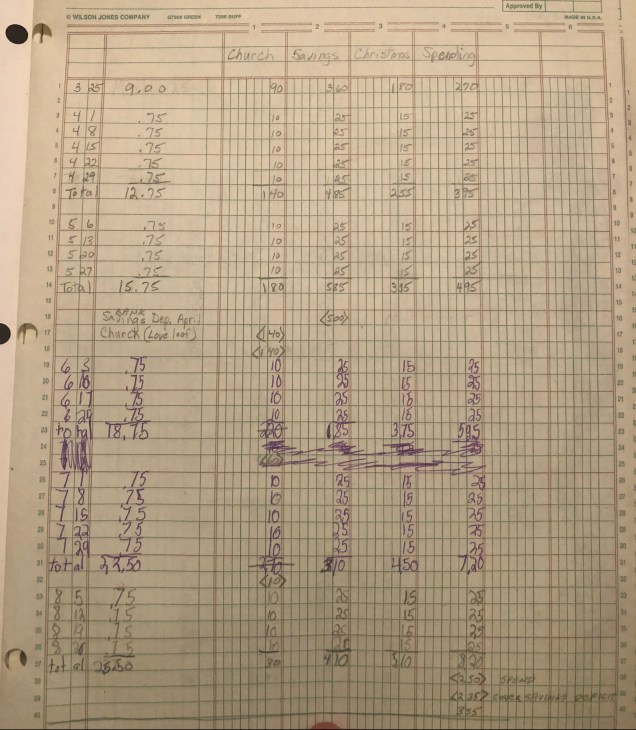
From an early age, I appreciated money and wanted my own. My parents weren’t the type to hand us money if we wanted to go see a movie or wander the mall with friends. I understood that if I wanted something, I’d have to buy it with my own money. I also understood quickly that my $1 weekly allowance, divvied up, wasn’t going to grow as quick as I wanted to do or buy things.
My dad worked for a large company in IT, and my mom worked as a teacher. Dad worked your typical business hours, sometimes putting in extra time because of his work ethic, showing you did whatever it took to get the job done. It’s those little things, leading by example, that you don’t realize you’re learning/teaching until long after the fact.
Mom was home for us after school, as she worked the same hours, and this allowed us to build a tight family unit because mom was there to support us in our our extracurriculars both in and outside of school.
It was mom being home in the summer that catapulted me into entrepreneurship.

I grew up in a developing neighborhood, and we saw an opportunity to capitalize on it. My brother and I rolled our radio flyer up and down the street to the many houses being built around us, stocked with a cooler full of sodas. Fifty cents for a cold mountain dew was a nice refreshing treat to the construction workers battling through the summer heat.
It was a rude awakening when mom took some of our earnings to buy more soda, so not all of that 50 cents was profit! Boooo. Lesson 1.
I later graduated to mowing lawns, pushing the mower all over the neighborhood, hitting up the 6-8 houses I was tasked with taking care of each summer for $15-$20 each. Most of this money got saved, as 15 year olds don’t have a lot of expenses. I didn’t have video games growing up, technology hadn’t advanced very far with other toys that interested me, and I spent time playing sports into the wee hours of the night or seeing movies at the dollar theater with neighbor friends.
My family did not go see new releases.
Once I was old enough, I started working at a local country club. It turned out to be the perfect job for a high school and college student. I liked playing golf, I got to be outside, and I got to watch the lives of these affluent members (and befriend some) and create a vision I wanted to reach for later in my life. Oh, and I got to play free golf for 5 years. I worked between 50 and 60 hour weeks all summer, and worked as much during the school year as my parents would let me.

I loved being at work; I loved the people; and I loved the paycheck (overtime pay kicked in after 40 hours). I made so much money I didn’t know what to do with it. I wasn’t a big spender, and I loved watching my savings account grow. Who knows what my life had in store, and I wanted to have something saved up in case I needed it.
Mental Toughness
This is when I needed to be mentally strong. People didn’t like how I spent (well, didn’t spend) my money. People didn’t like what I assigned value to and what I deemed wasn’t worth it.
I was called cheap or something similar, on the regular.
My parents set the stage by giving us a comfortable, but not extravagant lifestyle. Down the road, I’m not sure how the mental strength sustained, and it certainly wasn’t easy nor did I maintain my cool at all times, but I never wavered on my principles when faced with adversity.
In college, I drank beers before leaving the house, so as to not spend $6 on a ‘craft’ beer at the bar. I didn’t go out to eat for every meal. Now that I had to start paying for golf, I played during twilight or weekdays. (who wants to play a 6 hour round on a Saturday morning anyway?)
There were a number of things I did to take the path less traveled, but ill get to those in a later post.
My philosophy didn’t change once I graduated college, and the ridicule hasn’t really lessened. I’m lucky enough to have a wife that’s been on board. Sure, we’ll splurge and go out to eat once in a while, but she’s not out shopping regularly, getting her hair done every 6-8 weeks, or getting her nails done every two weeks. She also values her money. We value the time we spend together traveling, or simply staying home and playing board games with friends, rather than going downtown every weekend for dinner and drinks.
Why is it other people’s business how I prioritize my dollar? While this has become a theme for the last decade and a half of me being a W2 employee, I just keep telling myself that my family’s well-being is worth the ridicule. I’ll have the last laugh when I retire in my 30s and the others have to work into their 60s.
My favorite quote since getting into the financial independence movement:
“Do what others won’t so you can live like others can’t.”