May Financial Update

RENTAL PROPERTIES

We paid $2,850 in extra principal towards the main mortgage we’re paying down, leaving that mortgage with a balance of $5,500. We had a $4k flooring purchase on another house that has set our pay off timeline a few weeks back, but we’ll still have that mortgage paid off in the next couple of months. We have a rental property that we purchased in 2016 that has flooring that’s at least that old. The carpet has long passed its useful life, and the linoleum in the kitchen and laundry room has started to peel up at the seam. Typically, we wouldn’t want to replace flooring while a tenant still lives there, but they’ve lived with this for almost a year, and they’ve been our tenants since we purchased the house. As a means of keeping the tenant happy, we agreed to replace the flooring in all the rooms except the bathrooms.

We had two of our tenants not pay rent by the 5th, as required by the lease. They’re the two that are typically late, and they’re typically not up front with telling us about it. We’ve said several times that we’re really flexible landlords, but we can’t be flexible if we’re not told what is happening. With one tenant, who had just recently irked us with a plumbing issue and being incommunicado, we didn’t even reach out for information. We’ve had enough of their antics and having to chase them for rent. So I simply sent them their notice of default letter, outlining all their rights as tenants as now required under COVID-related procedures. I received an email letting me know that they’d pay on the 7th. I love their nonchalant response, like they hold the power and will pay whenever they feel like it (hmm). For the other tenant that was late, she texted to say she’d be late with the payment on the 7th, and then on the 7th only paid part of the rent due. She said she was in a car accident and there was an issue with her sick leave pay out, but she’d get it to us when it got fixed. She resolved it on the 12th, although still without the late fee.

We were able to get the invoice on the HVAC replacement for one property, which meant we paid our partner the $3,288 we owed him, on top of his usual $2,167 that we pay out for him to pay the mortgages and then his share of the profits (since I manage all the rent collections).

OUR SPENDING

Our credit card balances are high for several reasons. The $4k flooring purchase; as well as the insurance for one of our properties that isn’t escrowed because we paid off that mortgage, which was $436; an expensive gift purchase that isn’t transparent in the cash and credit line items because that cost was split 3 ways (i.e., we received 2/3 of that cost back in cash, but it’s still reflect in the credit line); and our travel.

We booked a camp site for the end of the month that required payment up front. We just got back from a trip, which increased our spending. But I’ll note that when we travel, we’re not eating expensive meals. Our interest is in the experiences and activities, rather than exploring sit down local restaurants. Our food for 5 days cost us $161 as a family of 4. We also ended up only paying for 2 of the 4 nights in the hotel because the air conditioning was broken, even after they came to ‘fix’ it, and then, when I was checking under the bed to see if any toys or socks got left behind as we were leaving, I found a large, dead roach. We didn’t ask for any comps; one was automatically reflected in my final invoice without my prompting, and then when the manager was speaking to Mr. ODA about his stay, he volunteered removing another night.

We opened a new credit card to take advantage of the bonuses since we knew we’d have this travel and the flooring cost to meet the $4,000 spending threshold for their bonus. This credit card has an annual fee of $95 and no 0% interest period, which goes against our norm when looking to open a new credit card. However, the bonus can be transferred to our Chase Rewards Portal, where we can use it to book travel at 50% the cost. We also received a $50 grocery credit.

ROUTINE UPDATES

  • My husband and I cashed in the last of his savings bonds that we got as children, so that was an extra $735 that we brought it that wasn’t planned.
  • We paid about $6,074 for our regular mortgage payments. Several of our properties had mortgage increases due to escrow shortages. I haven’t figured out which I dislike more: planning for tax and insurance payments, or the large escrow increases that seem to happen year after year. I think it’s the escrow though.
  • Every month, $1100 is automatically invested between each of our Roth IRAs and each child’s investment accounts. I should also note that I don’t speak to other investments because they happen before take-home pay, but my husband maxes out his TSP (401k) each year as well, which I had also done when I was employed.
  • Our grocery shopping cost us $700. Honestly, I don’t even know how to explain that cost jump. I think it’s because my husband shopped some deals at Kroger and Costco, so we stocked up on some things that aren’t part of our routine purchasing.   
  • We spent $200 on gas. Two trips to Cincinnati, our trip to Atlanta, and then more-than-usual trips around town. 
  • $400 went towards utilities. It’s higher than last month because we paid 3 months of our cell phones, which gets us back on quarterly billing as a family. Utilities include internet, cell phones, water, sewer, trash, electric, and investment property sewer charges that are billed to the owner and not the tenant. We still haven’t sought reimbursement from the builder on our electric bill, but this month’s bill was even less than the last month’s. 
  • Our entertainment costs included baseball game tickets for our trip as well as two games later this summer, parking for the games this past weekend, a new shirt for our son, activities for the kids, and the hotel. This past month, we spent $650 on things I’d classify as entertainment related. I also included boarding for our dog ($100) in this total.
  • Speaking of our dog, he had his annual appointment (shots and the year’s worth of preventative medicines), and that cost us $500.
  • We spent $292 eating at restaurants and ordering take out. We utilized a Door Dash credit on one of our Chase credit cards, which was about $30.
  • But! I killed it with running errands this month and actually returning things that needed to be returned. I returned $150 worth of items one day!
  • We paid our State taxes during this period too. Between two states, that was $954. Also, anecdotally, I’ll share that we spent $6.40 to mail our Virginia tax return. We processed our taxes through Credit Karma, as we had done last year. We got through the federal e-file and moved onto the state filing, only to find out that if you’re filing partial states, Credit Karma doesn’t support it. I had to print 70 pages of our federal return, sign it, and ship it off to Virginia.
SUMMARY

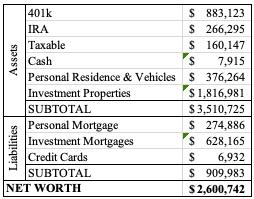
Our net worth actually dipped this month. The stock market is the main factor in that, but the house valuation estimates are starting to level off and look more realistic as well.

Between our personal lives and our business life with these rental properties, we were sure kept busy. We expect the Spring months to be a busy time of year, and honestly it feels good to be active again. While we’ve loosened the purse strings for the summer months, especially after having done hardly anything for the last year, it was still a shock to see just how much we spent in these categories. But that’s the benefit of looking at your finances regularly. We can either choose to remain on course with our summer plans, or we can dial it back if we feel this was more than we expected.

Since we know we’re on top of our finances and have set up a healthy mentality when it comes to spending, we’re comfortable looking at this information once a month. If you’re currently developing these money habits, you may want to do these types of check-ins more frequently.

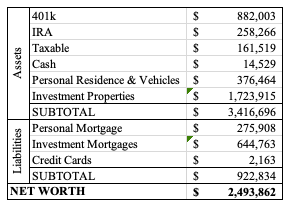
April Financial Update

This month had a lot of money movement – tax payment out, stimulus check in. As I’ve shared before, we don’t budget. But you can start seeing how we’re pretty consistent on where we spend out money. This is because we have a spending mentality that we use to make each decision, rather than giving ourselves a ceiling in each category. I believe some may see a ceiling as a definitive amount to spend (e.g., if I’ve allocated $100 for restaurants this month, and by the last week I still have $75 in that budget pot, then I’m going to go spend it). If you know your long term goals and take responsibility for your decision-making, then you don’t need to pay close attention to each dollar.

With that said, my family came to visit for a week. It was our second’s first birthday, and my dad is helping us finish our basement. With 3 more adults in the house, we spent more than typical feeding them and eating at restaurants versus cooking after spending the day working in the basement. Mr. ODA and I share the same birthday, so we splurged for a nice meal that night. We actually spent about $300 at restaurants over this last month, but thanks to our Chase credit card, we received statement credits for $188 worth of these purchases!

We have also spent more on entertainment. We went to a winery and a brewery, purchased tickets for the local horse race season, and have done other activities now that the weather is nice. The pandemic and winter had our spending lower than our usual amounts, but I expect our spending to be more than it had been in these coming months. We’ve already put together our summer bucket list for travel.

We had all the tenants pay their rent on time, except one who eventually paid. Our rental income is $12,353, and we pay our business partner about $2,100 (we collect the rent and then pay him to cover the mortgages he holds and his half of the ‘profit’ after the mortgages are deducted from rent). We had to replace the HVAC in a rental. Luckily, this rental is owned with a partner, so only half the cost will affect us. We haven’t paid the bill yet, so that will hit next month.

  • We paid about $5,972 for our regular mortgage payments. We put an additional $5,000 towards an investment property mortgage, which now has a balance of $8,665. We also put $5,000 towards one of the properties that we have with a partner, which he matched, leaving that balance at $42k.
  • Every month, $1100 is automatically invested between each of our Roth IRAs and each child’s investment accounts. Our stimulus checks that we received for the kids went directly into the kids’ UTMAs.
  • Our grocery shopping cost us $539.  
  • We spent $91 on gas.
  • $290 went towards utilities. This includes internet, cell phones, water, sewer, trash, electric, and investment property sewer charges that are billed to the owner and not the tenant. We still haven’t sought reimbursement from the builder on our electric bill, but this month’s bill was significantly less than the previous months.
  • About $1300 was spent on supplies for the basement bathroom work. We registered the kids for swim lessons, registered our son for pre-school in the Fall, did more activities with the nice weather, and I made several gift purchases (current birthdays, baby shower, next Christmas (I like buying when I find something that makes me think of a person rather than a mad dash in the Fall to buy gifts)), so that was about $400.

SUMMARY

Our net worth has increased over $123k since last month due to our investment accounts and property values increasing. Our cash balance is starting to dwindle down to what we typically carry as ‘cash.’ And our mortgage balance is decreasing more than average due to our goal of paying off two of the mortgages that we’re carrying.

Contrarian View on an Emergency Fund

There are many teachings out there that talk about a safe, sustainable, and efficient way to wealth being many streams of income. This diversifies and provides multiple avenues for growth, but also mitigates risk and protects your larger portfolio against any one stream failing.

Our financial portfolio meets those goals. Instead of having an emergency fund sitting in a savings account earning 0.03% interest (that’s literally our savings account interest rate, and that’s the ‘special’ relationship rate), our money is put to “work,” earning more money for us.

INDEX FUNDS

Probably the simplest and most common example of multiple streams is index fund investing. A quick read of JL Collins’ “The Simple Path To Wealth” will teach you that through index fund investing, you have an ownership share of every company the index fund covers. Some are matched to S&P 500 companies, some to International, some to the DJIA, and most to the “Total Market.” Mr. and Mrs. ODA invest in the “Total Market Index Fund,” through Fidelity, in our IRAs and taxable investment portfolio. By owning a small part of every publicly traded company, we own that many streams of income. Any one company going belly up will only be a blip on the radar of that index fund, and, over enough time, it will go up, and up a lot. This is as risk free of a true investment as you can get. 

Being Federal Employees (Mrs. ODA no more, though), we both have access to the Thrift Savings Plan (TSP) for our 401k’s. The TSP provides a group of 5 index funds to choose from: Government Securities, Fixed Income Index, Common Stock Index, Small Cap Stock Index, and International Stock Index. 

In times of market upheaval, we can ‘escape’ to the Government Securities fund, and pending a nuclear winter or alien attack, is guaranteed to be paid (TSP.gov). However, with this little risk also comes little reward, so it won’t grow fast. With index funds and a safety spot, our TSPs are about as low risk a retirement investment as you can have. Note that Index Funds through Fidelity or Vanguard (for example) and the TSP have the industry’s lowest fees on their funds, so we won’t lose our nest egg to management costs either. 

REAL ESTATE

Outside of anything related to the stock market, we have 12 single family rental properties. Each of these houses operate as their own small business, with long term tenants in most of them (that have thankfully all been able to maintain rent payments through the pandemic). If one or two houses did lose their tenant, or have an AC break, or a roof needing replaced all at the same time, the other houses (businesses) can pick up the financial slack. A few of the properties are owned outright, so the lack of a mortgage certainly helps the whole portfolio’s cash flow. And actually, we did have to replace/repair multiple roofs and HVAC units at the same time in the summer of 2020! On top of the individual homeowners insurance we have on each house, we have a Commercial Liability Umbrella Policy covering anything above and beyond the individual policies.

DIVERSITY

We also have some money tied up in more actively managed mutual funds – investments we owned before we discovered index fund investing – and individual stocks. However, I can’t bare the capital gains taxes required if I were to sell them and shift that money over to an index fund. But – they’re there in case of an emergency.

That Federal job I mentioned – I’m lucky to have about as much job security as any W2 employee can have in this great nation. Through the shutdown a couple years ago, I had 2 paychecks delayed, but my rental properties made it so that I didn’t have to worry about our finances. Otherwise, a safe, consistent paycheck is something I can count on – with health insurance for our whole family that comes with an annual out of pocket maximum of only $10,000.

So we have a W2 income, 12 rental property small businesses providing monthly cash flow, and a slew of stock investments diversified across all markets. We have diversity that mitigates risk and shields us from small “emergencies” manifesting themselves as such.

We view “medium” emergencies as something that can be solved with a new credit card deferring needing to truly “pay” for our expenses until life gets back to normal. You’ve seen a past post discussing our perspective on strategic credit card usage (and the Chase cards specifically). Twelve to fifteen months of no interest on a credit card can get anyone out of a financial bind when emergencies hit. We haven’t found a reason to NEED this option, but know that it’s always out there if the perfect storm of bad luck were to ever hit.

For these “small” and “medium” emergencies, stocks could be sold before we would need to be faced with something like not being able to pay utilities, buy food, or get foreclosed on. We simply don’t view a “large” EMERGENCY cropping up with any higher than a near non-zero probability given the shielding and structure we have built out of our total financial portfolio.

I can’t fathom what that perfect storm would look like. Six months of expenses can easily be found in selling our stocks if all of our tenants suddenly stopped paying rent, for example. But if a pandemic isn’t going to make that happen, what would?

All this to say – Mrs. ODA and I keep very little cash liquid to cover our “emergency” fund. Outside of a couple thousand in our checking account to cover regular monthly/cyclical financial obligation fluctuations, we don’t have any dollars NOT “working for us.” Whether it be investing in index funds, contributing to IRA/401k, or paying down mortgages to eventually achieve more cash flow, we put all our money to work. We see the rewards of this strategy far outweighing the risk of encountering a debilitating financial emergency, and therefore don’t follow the traditional personal finance advice of keeping X months’ living expenses in cash handy at a moment’s notice.

March Financial Update

I realize that some of the items that I share each month will be repetitive, but I’m catering to new readers that may not have seen the previous month’s details. As always, feel free to reach out if you have any questions about this information.

SPECIFIC LARGE CHANGES FROM LAST MONTH’S UPDATE

Paid $8,000 towards an investment property mortgage. This property’s mortgage balance is just under $14k, and we expect to have it paid off in the next 6 months. It would be earlier, but we’re also paying off another mortgage at this time, so we’re putting money towards that one next.

Mr. ODA cashed a few savings bonds that were mature, so we brought in $622 that wasn’t planned.

MONTH’S EXPENSES

Every month, $1100 is automatically invested between each of our Roth IRAs and each child’s investment accounts.

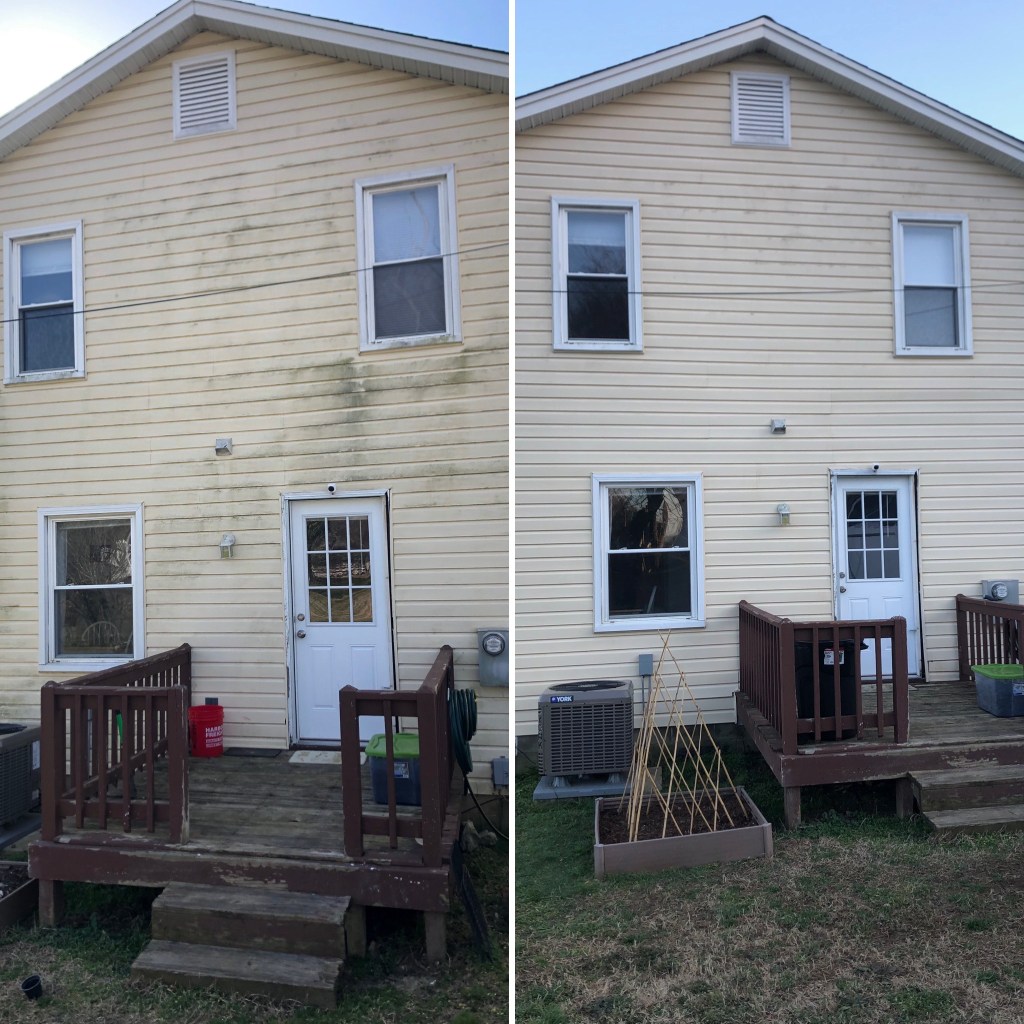
We had all the tenants except two pay their rent on time, and the other two houses paid on the 12th (typically when a tenant is late, the balance is paid on the next Friday of the month – pay day). Our rental income is $12,353, and we pay our business partner about $2,100 (we collect the rent and then pay him to cover the mortgages he holds and his half of the ‘profit’ after the mortgages are deducted from rent). We made it through the month with no investment property costs! We did have a tenant power wash our house out of the kindness of their heart though.

  • We paid about $5,900 for our regular mortgage payments.
  • Our grocery shopping cost us $500. We did the trial period for Walmart+. Unfortunately, the first two weeks of that trial period were destroyed by back-to-back ice and snow storms, so we couldn’t ever get deliveries scheduled within a couple of days. Once life went back to normal, there were plenty of delivery times available, even same day. While it was convenient, it wasn’t worth the annual fee and tipping the driver each time, so we cancelled it.
  • We spent $57 on gas, and $83 eating take-out.
  • We made some purchases that aren’t typical: ski season pass for next year ($119), medical bill ($70), and some furniture and odds and ends for the house (~$1,500).  
  • $464 went towards utilities. This includes internet, cell phones, water, sewer, trash, electric, and investment property sewer charges that are billed to the owner and not the tenant. Last month I shared that our electric bill was very high. We learned through the course of 6 HVAC company visits that our unit was not running properly, and that meant our heat strips were essentially on since we moved in ($$$). We will seek financial compensation from the builder once our next electric bill comes in.

SUMMARY

Our net worth increased by $45k from last month’s update. This change is mostly due to the value of our houses increasing and our mortgage balances decreasing.

Two Years of Changes

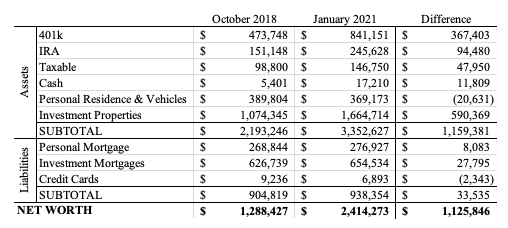
On the surface, a jump of $1.1 million in just over 2 years seems impossible, but here’s the break down of how things changed in our finances during our child-rearing hiatus.

The highlights:
– Mrs. ODA left her job;
– We purchased three new properties;
– We sold one property;
– We paid off two mortgages and significantly paid down two others;
– Our investments grew based on market fluctuation, as well as our continued investment; and
– The value of the properties we own appreciated.


401K

Since I met Mr. ODA, I maxed out my Thrift Savings Plan (TSP, the Federal government’s 401k) contributions each year. Before that, I had been putting money into the TSP, but hadn’t maxed it out. I left my career position in May 2019, at which point I stopped contributions to my TSP. However, we put in as much as we could for the year before I quit (if Mr. ODA has his way, we’d have maxed out my contributions); I contributed $13,070 over the first 4 months of 2019. My balance on June 30, 2019 (it’s a quarterly report) was $300k. I have gained $127k over 19.5 months based on my investment strategy for the account with no new contributions. Mr. ODA continues to max out his contributions of $19,500 per year. His account balance has increased due to annual contributions, a loan repayment, and market fluctuations.


IRA AND TAXABLE

A Roth IRA has maximum contribution limitations per year. For 2019, 2020, and 2021, that amount is $6000. We each put $500 per month into the Roth IRA to max out the contributions. We have maxed out the contribution limitation every year we’ve known each other (10 years), and Mr. ODA had done so before Mrs. ODA knew such a thing. We don’t time our contributions throughout the year because we don’t want to stress about when the perfect time is and then possibly end up throwing five grand in when December rolls around. We have taken the ‘set it and forget it’ (essentially dollar cost averaging) approach to the Roth IRA investment.

Dollar Cost Averaging – Since we know we want to put $6,000 in for the year, we break it down into $500 a month and contribute on the 30th of every month regardless of individual pricing. This eliminates the need to pay attention to, and the effect of, volatility in the market. Some may say that dollar cost averaging is not a prudent idea because the market always goes up over time (essentially you’re setting yourself to pay higher and higher per share as the year progresses, on average), but I just can’t handle the psychology of dropping $6k on January 1 and not having anxiety for the rest of the year that it was the right decision.

As for the taxable accounts, this includes accounts we have set up for our children – UTMAs (however, the growth of these funds are not taxable to us because they are taxed at the minor’s rate – 0% for us). An UTMA is the Uniform Transfers to Minors Act. It allows an account to be set up in the child’s name without the child carrying the tax burden of the money. The IRS allows an exclusion from the gift tax up to $15,000. We put $50 per month, per child, into the account. This is also ‘set it and forget it’ with automatic deductions from our checking account.


CASH

Our cash balance really has no meaning. We bring in income and we pay our bills. We don’t purposely keep a savings account balance (as I shared in the Leveraging Money post, we’re not interested in maintaining 3x our monthly income in a savings account at 0.01% interest rate). We don’t purposely project how much to put towards mortgage principal.

We currently have a larger-than-normal cash balance, which is left over from selling our primary residence in September. It hasn’t been dwindled lower yet because we have a fence install that needs cash and we were paying down the last of our large credit card. Now that most of these things have happened, we’ll put more of our cash balance towards the investment property mortgage we’re currently paying down.


PERSONAL MORTGAGE

In October 2018, we had been living in our previous house for just under 3 years. In January 2021, we had only made 1 mortgage payment on our new home. While our current home cost slightly less than our last home and we put 20% down for each house, we had more years of principal pay down in October 2018 than we currently have.


PERSONAL RESIDENCE AND VEHICLES

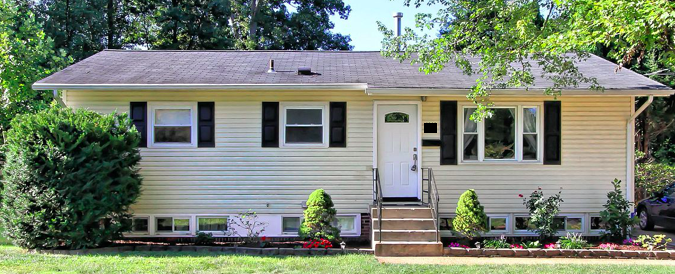
We sold our Virginia home for $400k in September 2020. The valuation of that home rose significantly over the 2019-2020 years due to lower inventory with high demand in the Central Virginia area (probably all over the country, but I don’t know those details).

Also in September 2020, I traded my vehicle in for a van (and I couldn’t be happier :)!). That increased our vehicle valuation since the van is 3 years newer and a higher cost than my previous vehicle.

Even though my vehicle value rose slightly, Mr. ODA’s vehicle’s value continued to decline, and we purchased a home in a lower cost of living area, therefore having a lower value.


INVESTMENT PROPERTY VALUES

Since October 2018, we’ve purchased 3 properties, increasing the total property value of our portfolio. Additionally, all of our properties continue to increase in value. The Virginia homes have increased significantly over the last two years. In the table below, I’ve provided each property’s change in value from January 2020 (oldest snapshot per property I have) to February 2021.

Note that this is a projection based on the internet’s valuation and not an exact science. The only house that we have a recent appraisal on is the one that we refinanced in January 2020. That house’s appraisal was $168,000; we paid $112,500 in July 2017.


INVESTMENT MORTGAGES

Of the three most recent purchases, one was purchased with a partner, split 50/50, and the other two were the last two KY houses purchased. These three added $215k of new debt. However, you see that our mortgages on investment properties have only increased by $27k, which doesn’t exactly say “we bought 3 new houses.” That’s because we’ve paid down (and sold) about $150k of mortgages in addition to 2+ years worth of mortgage payments going towards these loans.

In May 2020 and January 2021, we refinanced two properties. Quick tidbit – we signed the refinance papers in May under a tent in a parking lot, and we signed the January refinance at our kitchen table with a traveling notary. While the interest rate and monthly payment decreased, the loan balances increased because we rolled closing costs into the principal and took $2,000 cash out (the maximum allowed) in each case.

We sold one property that we had been paying down the mortgage on; in October 2018 it had a balance of $11,142, and we sold it in January 2019. We had been paying down the mortgage because it was our lowest balance. When we made that decision, selling the house wasn’t in the immediate future. An opportunity presented itself, and we sold it.

We’ve paid off two mortgages during this period. One was in January 2019 with a balance of about $44k, and another was in April 2020, which also had a balance of about $44k in the October 2018 calculation. Our intent to paying off mortgages was two-fold. It increases our monthly cash flow that helps Mrs. ODA stay home with the kids, and it gets Mr. ODA closer to being able to leave his job. Plus, due to Fannie/Freddie requirements of having no more than 10 conventional loans, it creates the opening for us to get a new mortgage if the opportunity arose. The downside is that it de-leverages the house’s financials and creates a smaller cash-on-cash return for the property.

We have also paid down 2 mortgages over the last two years that aren’t completely paid off.
– One of those properties is the one that we purchased after October 2018 with a partner. It has our highest mortgage rate. The affect on the numbers here just shows that the principal balance of that mortgage is smaller than it was originally, thereby not increasing the mortgage total ‘fully,’ if you will. The principal pay down on that mortgage has been $44k total, but we’re only responsible for half of that.
– On the other mortgage, we’ve paid almost $28k towards principal between October 2018 and now.


CREDIT CARDS

We open new credit cards with 0% interest for an introductory period when we have large purchases looming. Not only is the 0% interest beneficial to us for an introductory period of 12-15 months, but we strategically choose new cards that come with a welcome bonus (points or cash) when you reach a moderate spend level in the first several months. Given the strategic timing of a new card before a large purchase, this bonus is easy to achieve. When we have large balances on credit cards, it’s because we’re purposely carrying a balance month-to-month at 0% interest. We have never paid interest on a credit card balance.


LIFESTYLE

Despite Mrs. ODA leaving the workforce, our net worth increased for all the reasons listed above. The one unmentioned piece, because its not directly tied to any accounts, is lifestyle. While our net worth, rents, and investments have increased, our lifestyle has not creeped. We still make strategic decisions, spend money mainly on needs, look for wants that provide our happiness without breaking the bank, and generally keep our financial future at the forefront of our daily lives. We live like no one else does so eventually we can live like no one else can.

Living intentionally allows us to get to where we want to be.

Leveraging Money – Mortgage is not an ‘Eight Letter’ Word

Dave Ramsey has convinced (too many) people to pay off their mortgage and be “debt free.” Then you have Robert Kiyosaki telling people not to buy a house because its a liability, but never seems to address that you still have to pay for a roof over your head somehow. We subscribe to a different view – make your money work for you. There are certain types of debt that could truly benefit you, and a mortgage is one of those.

If we worried about paying down our mortgage, we wouldn’t have near the savings and investments we do, and wouldn’t be able to establish enough rental income to replace Mrs. ODA’s income, and being well on our way to replacing Mr. ODA’s. 

We lived below our means, took some loans, and bought a house in one of the more expensive regions of the country – DC suburbs (oh, and while paying for a wedding). We knew we’d have no trouble qualifying for a mortgage and paying the monthly payment, but we didn’t want to pay Private Mortgage Insurance (PMI), which meant coming up with 20% to put down (i.e., about $80,000). In fact, we were pre-qualified for double the purchase price of a house than we were comfortable with because we were more focused on our down payment threshold than what we could support as a monthly payment (which is how a bank will pre-qualify you based on your other monthly debt payments).

Our first, expensive, little house that jumpstarted our investing before we even knew

Our primary goal to enhance our savings in the months leading up to the house purchase was to keep the cost of our daily food intake below $10 between the two of us. We were cautious with how we spent money on groceries, whether we ate out (meaning no buying lunch during the work day), and the types of activities we did. While most of our meals consisted of macaroni and cheese and pb&j, we did ‘splurge’ a little more once in a while (read splurge as meaning “2 for $20” at Applebee’s, not steak dinners). That year of actively watching what we spent paid off in ways we wouldn’t know down the road.

Three and a half years later, we sold our house for a $60,000 profit and purchased a home in the Richmond area for less than what that first house cost us when we bought it. That left a substantial balance in our savings account that needed to get to work. 

We’re not interested in preparing for doomsday. In an emergency, there’s hardly anything that can’t be put on a credit card. If we can’t pay off the credit card, we have money in the stock market that can be liquidated within 24 hours to pay it. This perspective is particularly possible because we live a lifestyle that allows for a high savings rate while Mr. ODA is still W-2 employed, which means we’re even more unlikely to need stock liquidation to cover expenses. We weigh the risk of a possible emergency against not having our money make more money, which gives us the ability to live less conservatively. Since we’re not interested in maintaining 3x our monthly income in a savings account at 0.01% interest rate, the next option to discuss is paying down our primary residence mortgage. 

Our mortgage rate was 2.875%, a very cheap lending rate [this was a 5-year Adjustable Rate Mortgage (ARM), a topic we can discuss in a future post on weighing mortgage options]. The question we had to ask was whether paying down the mortgage at a low interest rate was more beneficial than the income we could bring in with a rental property. If we paid more than 20% for our new primary residence’s down payment, was that going to provide us a greater cash flow to leave our careers before typical retirement age? 

No, it wouldn’t allow us to leave our careers. So, we put the balance of money from the sale of our first home into the stock market and investment properties to make it generate income instead. 

Our first investment property purchase was in February 2016. Since then, we’ve purchased twelve other investment properties, with the most recent two being in September 2019. Mrs. ODA’s income was replaced by our rental property cashflow by the time our son was born in August 2018; that’s within 2.5 years after we purchased our first investment property. 

Of our 12 investment properties, two have mortgages paid off. First, there’s a maximum of 10 mortgages you can have when lending under Fannie Mae. There are ways around this in theory, but that’s another post. One of the mortgages we paid off because it had a balloon payment coming due. Another mortgage was paid off because it had a low balance and was one of the higher interest rates among our properties. Currently, we’re working to pay down two other mortgages due to their relatively high interest rates (5.1% and 4.95%), and each have a balance around $26,000 now. We’re choosing to pay down mortgages in this season instead of purchase new rental properties because we are not finding properties in decent condition that meet the 1% Rule. Plus, not having a mortgage on a property immediately increases your cash flow if you want to live off that monthly income rather than W-2 employment. 

Had we chosen to pay down our primary residence mortgage instead of leverage our funds through mortgages, we’d still have a mortgage payment of over $1,500 per month and no other income strings. Instead, we still have a mortgage payment for our primary home, but we also have the cash flow that replaced Mrs. ODA’s six-figure income.