House 4 Turnover

We had a long term tenant in this house, who moved out last Spring. We luckily had someone lined up looking for a place to live. There were a few red flags from the beginning, but I went with him because he was a friend of an old tenant of ours. Rent was always paid on time, and everything went fine. Unfortunately, there was a public incident at work in the Fall and he was let go. He asked if he could be released from the lease so he could move back home.

I wasn’t interested in making anything more difficult for them. I didn’t ask for a lease break fee; I just asked that they continue to pay rent until we found someone who could take over the property. It was winter and holiday time, which is least favorable time of year to be finding a renter. They gave notice at the end of November and we listed to house right away. We did our due diligence to get someone in there as best we could, considering it was Christmas time and the middle of winter. The tenant paid January rent on the 1st, as required. Luckily, we were able to get someone moved in on January 5th. The tenant didn’t do anything wrong to the property, so I gave back his security deposit and the January rent they had paid.

TURNOVER

The original tenant had essentially vacated the property, so we were able to get in and do some work to it. The entire place was painted and had extensive maintenance needs met over last summer (after the long term tenant), so this was an easy task to get it ready for a new tenant.

We received a notice from the city that the yard needed to be cleaned up, so we had the tenant go over there and do the work. There was a tree limb that had fallen (and wasn’t reported), so we had someone go clean that up and the rest of the yard for $100.

Several years ago, we had replaced most of the windows in the house. There were 3 windows that were either fine or oddly shaped, so we didn’t replace them. That was a mistake. We ended up spending the same amount on 3 windows this year that we did several years ago for 6 windows.

The front porch of the house is seldom used. The driveway is in the back of the house and leads straight to the kitchen door. The entire front of the house is fenced in too (the house has a huge front yard and small back yard). Due to the age of the house, that it’s a rental, and that the front porch is rarely used, it wasn’t in great condition. It was finally time to replace it. We had our handyman rip out the stairs, banisters, and floorboards to replace it all; it cost us $1,640.

The kitchen faucet wasn’t working right, so we had our plumber replace it. He also tried to flush the water heater to extend the life, but it was broken enough to replace it. We needed a special size because it fits under the counter in the kitchen, so that was $1500.

Other than a clean from our cleaner, that was all that we needed to do.

TENANT SCREENING

We had 4 sets of people show interest in the property. One withdrew her interest form after checking the sex offender registry (understandable, but it is a city home, so that’s not surprising). I was interested in another guy who was retired and seemed handy, but as time wore on, there were several red flags. Another person tried to convince us that his day-trading of stocks qualified him to pay us rent each month, so he was disqualified for not meeting income requirements. Finally, a couple showed interest, and my property manager said they seemed like a decent option in person, so we went with them. At the time, I didn’t really comprehend that one of the tenants was only 20 years old. That comes into play when he shows his age and inability to handle a mature conversation about rent payments a couple of months later.

Due to the unexpected timing of turning over this house, we ended up with an 18 month lease. We didn’t want a 12 month lease, leaving us with another winter turnover. Even though their lease started January 5th, I counted the full month and ended the lease on June 30, 2025. I like a May 31 or June 30 lease ending the best because it seems to be when the most people are looking to move. Once you get to July 31st, most people (in the southern states, at least) are looking to have already been settled in the school district they wanted.

TENANTS THUS FAR

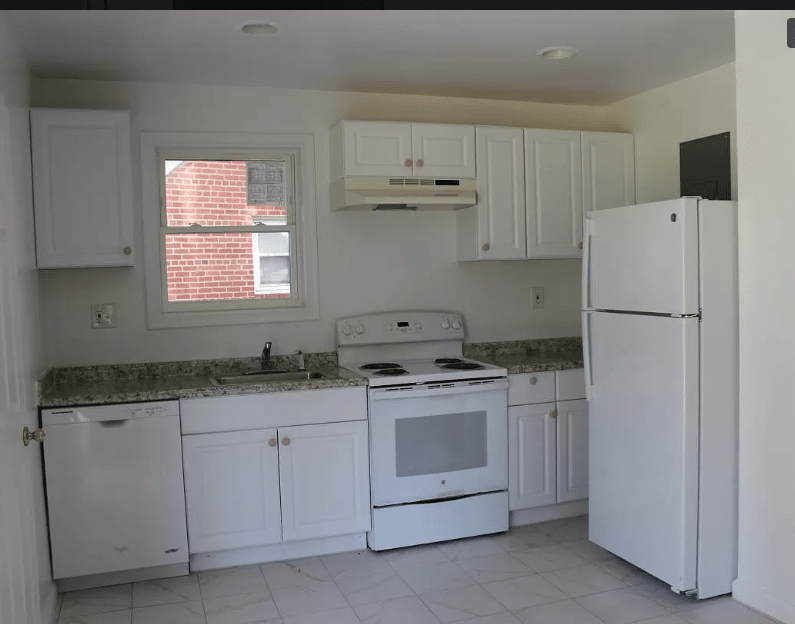
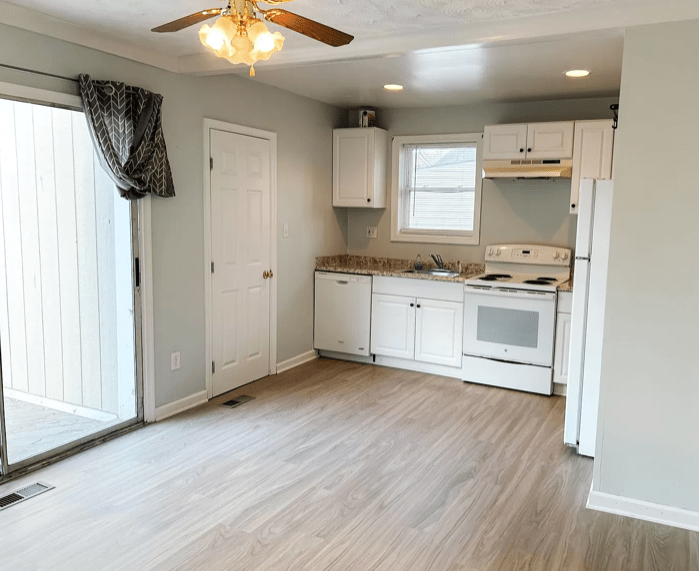
Well, since I had plenty of posts teed up, I’m only getting to post this now, months since they’ve moved in. That means I have a sample size of their tenancy to share, and it’s not good. They’ve had a lot of complaints, which is interesting to me since the previous tenants didn’t seem to have many issues with the house. It’s a 1943 house. It’s not perfect. It’s not spacious. But I assure you, the house is exactly what you see when you first tour it. It’s a cute, little, old house.

The tenants used Venmo to send the first sets of payments when moving in. For some reason, they decided to switch to Zelle; in doing so, they didn’t follow the instructions I gave them, and are sending them to an account I’d prefer them not to, but oh well. In March, rent arrived on the 6th. I was bothered by it, but I let it go. Then for May’s payment, we hadn’t received it by the 5th in the evening. Our property manager reached out to them to ask if they planned on paying that night. They said they had already paid on the 2nd. We explained that we hadn’t received it, and we still see no indication of it arriving electronically. He sent a screenshot of his bank’s information, which did confirm a payment on the 2nd. We said ok, thanks, and we’ll check in the morning.

He then went off the deep end. He attacked us, as if we just sit around pretending we don’t receive money so they’ll send more money. At no point did he stop, think, logically read our messages, and respond politely. He continued to berate us and the property manager over this, where we carefully explained that sometimes there’s an additional verification step required so that this 3-5 day hold doesn’t affect when rent is due. He kept saying he was completely verified and that it’s our bank not accepting the money. That’s not how banks work, but ok.

He eventually agreed to use Venmo. I went back to his January payments, liked them, and ‘friended’ him on the platform so that he’d have the right account in front of him. He did pay June’s rent on time and via Venmo.

In his berating of the house, he talked about how the house was awful. The house that they walked through and agreed to rent. The house that is very small and very old, but is clean and operational. The house is nothing special, but it’s a house with rent under $1000 in 2024 and decent access to the activities in the city.

They complained that the light in the oven was stuck on. They didn’t want to pay to run that electricity in a house that already had a high electric bill. It’s an 800 sf house; if you’re paying $350 per month for electricity, I’d say you’re doing something wrong. All systems in the house have been serviced and/or replaced recently. All the windows in the house are no more than 5 years old. We had our plumber lined up to handle this for us (he’s a good guy!), but they figured out what to do differently to get the light to turn off. What frustrated me the most about this complaint was that they acted like I purposely broke their oven 3 months after they moved in (and I live in a different state), and yet I’ve been very responsive to all their requests for maintenance.

SUMMARY

Overall, everything is fine. They have a lot of growing up to do. I hope at some point they learn that you catch more bees with honey. For now, they’re there until the end of April. We’ll see how the next several months go, but at this point, I’m interested in finding someone else. Based on their hatred of the house, I expect they’ll move out on their own accord regardless.

House 7 Turnover

Our turnover this year has been higher than usual. However, it’s been for good reasons, and not just because someone is looking to rent from a different landlord, so I’ll take that win. In this case, the tenant was house hunting. We knew that a year ago, and we had set up our lease to allow them to break it. Since April was their last month in this current lease term, there was no “lease break fee” associated with their notice. They gave us notice at the end of February, which requires 30 days worth of payment. March rent was paid.

They had moved out of the house early though, which ended up being very helpful. The house needed a lot of work. There was a lot of deferred maintenance on this house. We bought the house as a flip. It looked fine on the surface, but we knew it wasn’t going to hold up. Our last couple of turnovers happened really quickly, so we didn’t put much effort into the turnover process. With the extra time, we knew we needed to address some issues.

PAINT: $2,750

First, we finally got the flat roof addition fixed on this house last summer. The flippers before us had added a laundry room to the back of the house. They used the existing covered deck infrastructure, and it was horrible. They didn’t tie it into the house correctly, so we endured several leaks into the laundry room. We struggled for years to get a roofer who would address it for us. We even hired a roofer, highlighted the flat roof issue, and missed that his contract didn’t do anything except replace the shingles on the main house roof. There was plenty of saga once we finally found someone to rebuild it, but it’s done. We hadn’t fixed the drywall from the leaks, so that needed to be done now (a.k.a. deferred maintenance).

We found a painter who repaired the drywall, repainted the ceiling, and painted the walls. He also painted most of the trim in the house to white (there was some damage on the baseboards that needed fixed) and all the walls Green Tint by Benjamin Moore.

Two tenants ago, we had given an offer that if she wanted to paint any of the rooms, we’d offer a rent concession. That was part of the deferred maintenance; most of the house was dingy white that took a beating over the years, but we never had the time between tenants already lined up to paint everything. She took us up on that offer. She even painted the bathroom vanity and medicine cabinet. It was a beautiful robins egg blue, but we didn’t have the paint to do a few touchups on the side of the vanity that were needed. Our painter added that to the work at no cost. He absolutely didn’t need to do that! But everything has a fresh coat of paint now, and I’m so happy at the facelift it gave.

FLOORING: $6,613

When we first bought this house, the bedrooms on the first floor had dingy carpet in it. The prospective tenant we had requested we replace the carpet. I can’t remember the series of events, but we determined it was better to refinish the hardwoods underneath the carpet than to continuously replace the carpets every 3-6 years. They’ve held up pretty well, but they are starting to show wear at 7 years in.

Regardless, we didn’t touch the carpet on the stairs or on the second floor of the house. It’s blue indoor/outdoor carpet. I truly can’t believe we’ve been able to house renters in this place with this carpet still in place. We’ve put it off because re-carpeting stairs is just so expensive relative to doing a whole room. One of the bedrooms on the second floor even has wood paneling, which just made it even more amazing that anybody wanted this house. It was not the most aesthetically pleasing place.

We replaced all the carpet. With the fresh carpet and fresh paint, it’s looking so much more inviting.

Then we move on to the kitchens and bathrooms. The first floor bathroom and kitchen floor were clearly just lipstick-on-a-pig situations by the flippers. The subfloor was clearly bowing and making all the cheap tile crack. The humidity issues in the bathroom (I’ll touch more on in a moment) weren’t helping matters in there.

Here you can see the kitchen (and its pink knobs!) with the tile floor. The tile had all cracked by this time.

The upstairs bathroom was original 1970s linoleum. Here’s a snip of it in its glory.

Trying to match/add the hardwood was not an option. We considered ‘luxury vinyl tile,’ but that was more expensive than I wanted to put in a rental property. I didn’t want to retile it because I just personally don’t find tile floors to be warm and cozy for a house. The only reasonable option left is ‘luxury vinyl plank.’

We requested a quote from Home Depot. Their quote was cheaper than the one we ended up going with, but we didn’t use them for good reason. We had a subfloor issue in another house. Home Depot was extremely difficult to work with. Not only were they doing questionable work, they also just threw their hands up at the subfloor issue. Luckily, we had a friend that was able to help us repair it (because we didn’t live there). We know for a fact that there’s subfloor issues here (we can see the bow in the floor at the sliding door), so we wanted to go with a contractor who could handle everything.

We picked a local company. They did both the carpet and the LVP. They were so easy to work with. I didn’t love that they wanted me to pay for the entire job up front, but it ended up being great. They had to come back to finish a few tasks, and they did it all perfectly. I’m really happy with the process and their product.

Another miscellaneous flooring issue was that the vent covers were rotting. The finish on them were peeling. This could be explained by humidity in the bathroom, but that doesn’t really explain the issues in the kitchen and living room also. Our handyman was able to pop those out and get new, clean looking ones in for us.

RANDOM WORK

We had to call on our handyman for random jobs. He had to tighten the front porch banister. It’s likely the original banister and has just corroded at the connections. He also had to tighten up the screen door (which, if it were to break would be removed; having to maintain non-essential pieces of a rental is no fun). Some light fixtures needed major TLC. We replaced the light fixtures in both second floor bedrooms, the sconce type light fixture in the half bath upstairs, and the main bathroom’s vanity light (it was all corroded and looked bad).

The upstairs half bathroom had a brown accordion door. The pieces were falling off and it just generally looked bad. The space is tight, and an accordion door style was definitely the best solution for the area, so we had a white one put in. It’s still less than ideal, but it looks much better.

The previous tenant didn’t clean up the yard as they were supposed to, so we had to hire out that work. We also asked him to clear the gutters, which was very necessary because it looked like trees were growing out of them with how many twigs were stuck. He charged me $250 to rake the leaves from the yard and flower beds, mow the yard, and trim the bushes. Then he added on $50 for the gutter clean out. We also did a final mowing before the new tenants moved in, and he charged me $60 for that.

I’m not exactly sure what the issue is, but for some reason we had water damage in the main bathroom. It wasn’t water damage in the sense of standing water. It was just too much moisture. The mirror was corroded; the tub faucet handles were corroded; the caulk was all moldy (and we knew it was fine a year ago); the walls had water streaks on it. I don’t know how it was fine for years and now it’s not, but I’m guessing the only answer is that last tenant just liked really hot showers and didn’t use the vent or window. The tub knobs were so corroded that they had to be sawed off and new valves and such installed. Luckily our plumber was able to handle it timely and it looks better now, but that was a minor inconvenience.

The back sliding door had always been questionable. No one ever pushed us on it though, so we didn’t know just how bad it was. I don’t know that the door ever fully locked. There was a block used to hold it shut for security measures (although I feel like everyone who has a sliding door uses something like that). I finally wanted it replaced. It was likely the original door (think nickel type finish), and it was overdue. We did this through Home Depot because I knew their prices were reasonable and it should be an in/out job. It was $1063.

NEW TENANT

Our property manager showed the property to several candidates. Only two provided their interest form timely. An interest form is a way to gather background documentation on the potential tenant without the tenant having to spend any money. It’s a way for the prospect to divulge any negative remarks on their credit or background check. It’s a good gesture that we allow them to fill this out before spending money on an application fee that will identify disqualifying information. We have found that some people don’t tell us anything, and then they’ve spend $43 for us to say they don’t qualify.

Both prospects submitted their interest forms on April 18. Unfortunately, both of them were interested in a mid-May lease start date. They both offered to do a 2 year lease as a compensating factor though, which was a nice gesture. I also appreciated that both of them were well spoken and up front with a lot of information.

We chose someone and ran her background check. Several “unlawful detainers” (a.k.a. evictions) came through, which hadn’t been disclosed. We told her that her credit score was slightly below 600 and the unlawful detainers would disqualify her. She then wrote back a very nice note explaining all the data that we found and asked us to reconsider. We agreed to rent to her and to take a higher security deposit as a compensating factor. She agreed to the 1.5 times a month’s rent as a security deposit.

Unfortunately, the house was vacant for a month and a half. Luckily, during that time we were able to get a lot of work done in the house. I hope that this tenant takes good care of the home and that we’re pleasantly surprised with her tenancy regardless of her history of late payments and court filings.

Lease Break Agreement

Last March, it was time to make a decision on renewing the tenant’s lease on House9. There were several variables at play, and we ended up adding “lease break” terms to the renewal agreement. Here’s how and why we did such a thing.

LEASE BREAK CLAUSE

All of my leases are set up as a lump sum fee. This means that if the rent is $1,000 per month, then the lease is a legal binding agreement for $12,000 for the year. If you wanted to leave 6 months into the agreement, I could hold you accountable for the entire sum. In reality, this wouldn’t happen. I’d have to show a good faith effort to re-rent the property once the tenant vacated the property, and they’d only be responsible for the time it was vacant, at most.

The point here is that there is no section of my lease agreement template that allows the lease to be “broken,” and the tenant to leave “early.” In some instances, a tenant will request the flexibility to leave early, and we typically charge up to a month’s rent for that ability. We most often use this for tenants that expressed interest in buying a home. There are some other fee structures that we use depending on the circumstances, but this will focus on those instances where we know in advance that this is a possibility.

ORIGINAL LEASE AGREEMENT TERMS

The tenants had signed their original lease in June 2020. From the beginning, they were clearly money savvy. They had said from the beginning that they were looking for a place they could live until he finished his schooling, which was about 2 years away. They negotiated a two year lease for $1,280. In September 2021, so 6 months before their lease was set to expire, he reached out with an offer. His program was set to end in May 2023, but they didn’t want to commit to any longer than that since he could be placed anywhere upon graduation. He asked to go month-to-month after that.

We agreed to extend their lease until May 2023, but it would be $1,300 (instead of $1,280) between 7/1/2022 and 5/31/2023. We decided not to engage in the month-to-month conversation that far in advance, which he understood.

In March 2023, we started discussions on their status. They were about to have a baby, the market had cooled for buyers, interest rates were high, etc. They didn’t want to rush their buying process. Instead of paying the premium for a month-to-month lease, we decided on another year-long lease, but it would have a “lease break clause.”

NEW LEASE AGREEMENT TERMS

The new lease was executed for $1,350 per month, which was still a bargain for their property. However, we added lease break provisions, as seen below.

The thought process here was that we were protecting our financial interests based on the time of year. First, we required a month’s notice. Our original lease already states that we can have access to the property to show it to prospective tenants, so that wasn’t repeated here (although it is worth noting that this in our lease agreement, since renting while a unit is occupied is not always a given; we struggled with our property manager in KY getting access to our properties (that was a property manager issue)).

I don’t know if there are facts to back this up, but it seems (through my own years of renting, as well as all these years as a property manager) that most people are looking for a rental to be somewhere between May 1 and July 1 as the start. A quick search tells me that the common months are May to September. However, in the south, we start school in mid-August. If you’re not moved by August 1st, I’d venture to say you’re not preferring a September 1st start date.

If the tenant left in the summer months, then the fee was only 1/2 of a month’s rent. We had a good chance of being able to re-rent the property if it was during the summer and before everyone focusing on back-to-school in the end of August/September. If they requested a lease break between September and the end of March, then it was a full month’s rent. This was due to the fact that the turnover process was going to be longer than our typical turnaround, and it would put us at a disadvantage in re-renting the property down the road. We then put that there would be no fee if they left in the last two months of their agreement because 1) we’d likely be able to rent it quickly, and 2) as a way of showing that we’d meet in the middle since they were such great tenants.

EXECUTION OF THE LEASE BREAK AGREEMENT

The tenant had used our property manager as their Realtor for a new home purchase. She tipped me off that they’ve be giving their notice shortly, sometime at the beginning of November. I naively thought that meant they were newly under contract, but by the time their notice was given, they had already closed on their new home. They purposely waited to give their notice so that they had time to move their belongings without being rushed (which is fine; I don’t know why that reads negatively). On November 24th, they let us know that they’d be leaving by 12/31.

While the fee was due upon notice, per the lease agreement, it wasn’t something I was willing to fight. If you’re a good tenant and hold the lines of communication open, I’m happy to treat you as an equal. They paid the fee on 11/29, and then they paid their December rent on 12/4.

LESSONS LEARNED

Honestly, it worked just as planned. We weren’t able to rent the house for January. The lease break fee alleviated the pressure to settle for a tenant just to fill the house because we had the month’s income already accounted for. We’ve done something similar in the past, and this set-up has worked well for us. It gives a little grace to the tenants and real life needs, while still protecting our interests as business owners.

We put the same type of clause in another tenant’s lease. They executed the clause on February 23rd, letting me know they’ll be leaving by the end of March. If they broke their lease in March or April, there was no fee (their lease was set to expire April 30th, so it’s one month early).

Their are times where a tenant doesn’t know up front that they’re going to find a house they love or a job is going to move them. We handle each on a case-by-case basis. Generally, it’s either going to be a month’s worth of rent as the fee or it’s going to be a fee of $250 (the amount I pay to the property manager) and they pay rent until we find a new renter (which has never taken more than 6 weeks, and is typically a few days turn around for me).

2021 Rental Terms and Lease Expirations

Spring is a time for lease renewals or preparing to re-rent a house.

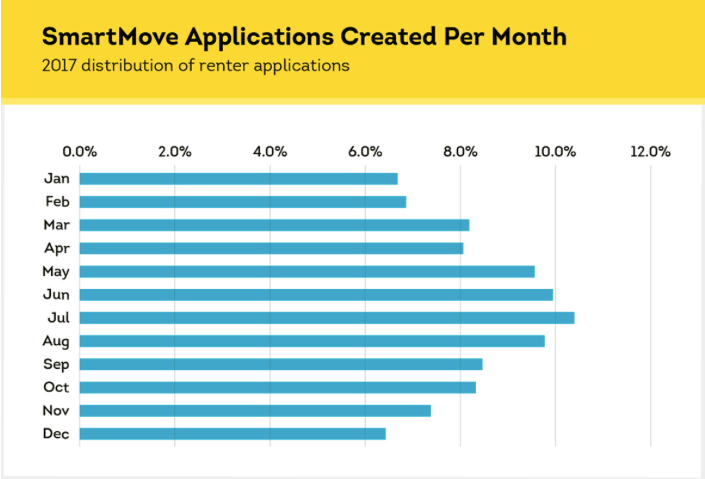
Spring and Summer are times when people are most active in the real estate market. It’s the best time to be listing your house for sale and for rent, which may yield you a better sale/rent amount because of greater competition. This timeframe is likely most active because of the better weather for moving and the school year – if a family is looking to move, they’re more likely to do it when they don’t have to transfer their kids to a different school district mid-school-year. Personally, when I was in college, nearly all the rentals were available in May or June. I remember being frustrated that I couldn’t get an August lease and had to pay for the summer months even though I’d be back living at my parents’ house. Now that I’m older and have more experience, it all makes sense. Below, you can see the increase in applications processed by SmartMove (the way we process tenant applications) that occur during the summer months, which indicates the most active time in the market.

We have seen this reflected in our days-on-the-market and rent prices. When we can list a house in the Spring months, we’re able to get it rented with very few days vacant. Houses that we’ve closed on at the end of the Summer (when school starts) and in the Fall have taken us more time to find a tenant, and we’ve had to reduce our asking monthly rent amount.

For those houses that we had purchased in a less-opportune time of year, we’ve worked to get them back to a Spring-time market for renewal.

  • We purchased two in September 2019 that we weren’t able to get rented until November 1st that year; we offered those tenants an 18 month lease so that their lease expiration would become May 31st.
  • We did similar with a house that we purchased in August. After that first year, a prospective tenant tried negotiating the list price for rent, and we said we were willing to reduce the rent a bit for an 18 month lease; they agreed, and we got our rental on a Spring renewal.
  • We recently had a tenant break their lease (with our concurrence), so that house has a lease expiration of October 31st now. We intend to offer a 6 month lease term to that tenant when the time comes.

With that said, we have lots of activity at this time of year.

We have 9 houses in Virginia and 3 in Kentucky. These markets are so different for us. We do our best to work with our tenants to encourage them to continue renting with us. I wrote about this in detail in my Tenant Satisfaction post.

Here’s a break down of how we handled all the leases that are expiring at this time of year.

In Kentucky, one lease was set to expire at the end of April and another at the end of May. These two properties are under a property manager. She attempted to increase the rent for a new lease term, but the tenants pushed back. Landlords don’t have a lot of leverage in a pandemic. Since the property manager is the one who handled the communication, I don’ t know what the details were. We believe both these houses are rented for less than market value, so that’s unfortunate. But, we’re grateful that both tenants renewed their lease for a year, so we don’t have to work to turnover the houses. Within reason, we’d always rather rent for a few bucks under market value than to handle turnover and lost rent (vacancy) by trying to maximize monthly cash flow.

In Virginia, we have an array of situations. Richmond was quick to acknowledge the property value increases that have occurred over the last year or so. This means that they increased our assessments, which effectively increases our property taxes.

We have the first two properties that we bought in that market, which are next door to each other and both have long term tenants (one since we before we purchased it, and the other is the second tenant who moved in a year after we purchased). We inherited their rent at $1,050, and then we increased it to $1,100 two years ago. With the property assessment increases, it was time to raise their rent again for this July. I initiated a letter to each of them stating the rent will increase as of July 1, which gave two options: they could leave the property by June 30th in accordance with their lease, or they could sign on for another year at the increased rent rate. Both chose to stay in the property, and they signed another year at $1,150. This is still below market value for the houses, but we’re happy with the lack of maintenance needs in these houses over the last 5 years. We’re in the middle of replacing the flooring in one of the houses. That house has a family of 5 and a dog living in it, so it’s not surprising that it’s worn out faster than the identical one next door with one person in it.

We have a 2 bed, 1 bath house that rents at $795. She’s been in the house since July 2018, which means that her lease ends June 30th of this year. Based on the 1% Rule (i.e., we’re looking for the monthly rent to be 1% of the original purchase price) for this house, our rent goal is $635. Since we’ve exceeded that goal for the life of our ownership, and the house hasn’t cost us much in maintenance, we chose to not increase her rent if she wanted to renew for another year, which she did. She has also spent some of her own money to spruce up the house and make it her home, and we recognize the value to us that her efforts also bring.

Another house reached out to us and asked if we were willing to renew her lease for another year. She’s been there since we purchased the house in 2017, and we’ve never increased her rent. She usually pays rent early and doesn’t ask for anything. The 1% Rule puts us at $660, and we’ve been collecting $850. Since we’ve been lenient on rent increases, I thought it a good idea to re-evaluate her terms. I plugged all the numbers into Mr. ODA’s calculation sheet to see how we were doing since the taxes increased so much on this house. Our cash-on-cash return (which we aim to be at 8-10%) came back at 19.8%. A rent increase for the sake of increasing rent isn’t worth it for such a good tenant, so we agreed to renew her lease for another year at the same rent. She wrote back: “omg thanks so much for the good news!” Happy tenants = good tenants, remember?

As for the others that I haven’t mentioned:

  • Two of our houses were put under a two year lease last year, so they didn’t require any action from us this year.
  • We have another house in KY that has a lease ending 7/31 and is under a property manager. We’ll offer a renewal option for them (i.e., we’re not interested in asking them to leave), but we haven’t worked out those details yet. Since we’re very hands off for our KY houses, we don’t know the satisfaction level of those tenants to gauge. Historically, we’ve had trouble renting this unit, costing us long vacancy times, so if we can renew their lease for even the same rent, we’re happy. Plus, having a 7/31 end date starts pushing us closer to the Fall for any future year-long rental agreements.
  • One of the houses that we have with a partner has a difficult tenant. I mention the tenants almost every month in the financial updates because they don’t pay their rent on time, and getting information out of them is like pulling teeth. They’ve rented there long before we owned the property, and their rent has always been $1,300, which is well below market value. We plan on offering them a drastic rent increase and a new lease term (we’re still managing under the previous owner’s lease agreement) in July for their September 30th expiration term.

While we don’t have any houses to turn over, we’re going to get into each house this summer. Since so many of our houses don’t typically have turnover, we don’t get into them as often as we should to make sure things are running correctly (i.e., don’t want small issues to go unnoticed and cost us in the long run). Specifically, we need to make sure that the HVAC filters have all been changed and verify there aren’t any red flags. I plan to give the tenants at least a month’s notice before we enter, so that if there are any maintenance activities they should have been performing, they have time to get it situated. I’ll walk through with our typical move in/out inspection form and note any concerns or areas of interest. I also understand that by being visible, I’m opening myself up to being asked for things that a tenant may not necessarily ask for via email or text, but I’ll cross that bridge when I come to it. For now, we’re just grateful that we have no houses to turn over and no expected loss of rental income for the year thus far!