House 10: Creating a Partner

This house was purchased in 2018, and it was actually purchased by our Realtor and friend, under the plan that we would formalize the partnership after closing. Mr. ODA had been searching for another investment property, but we had 10 mortgages already (9 investment properties and our personal home), which is a Fannie Mae cap (see the Selling Guide, section B2-2-03). One of our loans was a commercial loan, and we had hoped that it didn’t count against the 10 mortgage limit, but it did. Fannie says that the cap is the number of properties being financed, regardless of type, when looking to originate a new loan. Our Realtor had one rental property on his own and had mentioned how he wanted to purchase more properties to create an income stream through that option.

Mr. ODA and our partner went to see the house without me in March 2018. After the initial visit to see the house, they requested the information for the tenant that was living there. We received their applications, current lease, move in check list, and rent roll. They had started living there October 1, 2015, and while they had been late, they had always eventually paid rent with the late fee. During some of our initial searches, we had someone tell us that rent on the 6th was more profitable because they’re pay with a late fee. While we don’t encourage late payments (and we’re actually really lenient with late fees in general), this eased our tension when we saw late payments.

The house is a 4 bedroom, 2 bath, with a fully finished basement. The condition of the house was probably slightly lower than what I would have accepted based on the pictures, but I hadn’t seen the house in person. I actually had only seen one room of this house before our walkthroughs this past July. Our partner and Mr. ODA said that the pictures didn’t do the house justice, and it was worth purchasing.

After our partner purchased the house in April 2018, we established a Limited Liability Corporation (LLC). My last post goes through the details of why we established an LLC for joint ownership, but we don’t use LLCs for our personally owned properties at this point.

LOAN TERMS

We requested three different options for the mortgage numbers: A) 20 year fixed with 20% down was 5.125%; B) 20 year fixed with 25% down was 4.75%; or C) 30 year fixed with 25% down was 4.875%.

All of the options included ‘points’ without us being told upfront or requesting it. We questioned the reason for the quotes having these points and were given a half-hearted response that sounded sketchy. We ended up with a 30 year fixed, no points, and a rate of 4.875%. There wasn’t an incentive to go with a shorter loan (and therefore a higher payment each month) at a higher rate just to put 20% down. We went for the 30 year instead of the 20 year to increase our cash flow opportunity since we have a partner on the house and are only getting 50% of the income and taxable expenses.

PARTNERSHIP

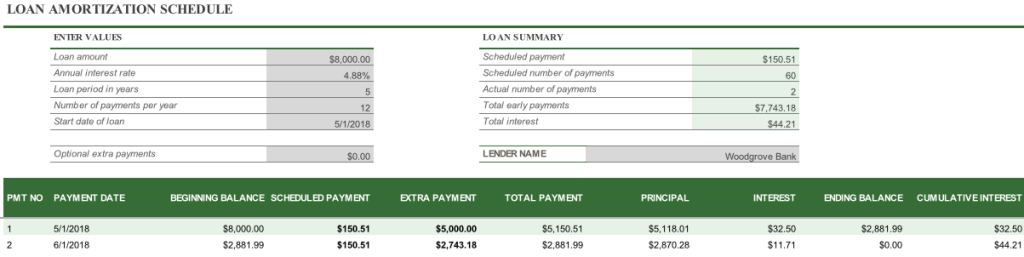
Our partnership actually started with a loan for the down payment of this house. Mr. ODA and our partner agreed to allow us to pay him back over time for our 50% of the closing costs. We didn’t have the amount needed liquid, but we knew we could make up the amount owed over a short period of time instead of liquidating money from our investment accounts. We were able to pay most of what was needed for his closing, but we “took” a loan from him for $8,000. I used a loan agreement template that I found online and manipulated it for our purposes.

We established the loan terms to be the same as the mortgage he was entering into (4.875%). Most personal loans are for five years, so we chose that timeframe, even though we knew we’d pay it off much earlier than that. We could have just agreed to the terms and not documented it based on our relationship, but I’ve always felt better having things overly documented. I was basically an auditor in my career, and I’ve seen how “gentlemen’s agreements” over rental-related things haven’t worked out. I formalized the process through this contract and had all of us sign it. While the contract was mostly for our partner’s benefit (to make sure we paid him and he received interest), this was the only documentation we had that once he closed on the house, he then had to give us 50% share of the property ownership.

I established a simple amortization schedule through Excel’s templates. We established the loan terms as 5 years (60 months) at 4.875% (same as the mortgage being executed). When I made extra payments to him, I logged them in the spreadsheet. We only made two payments to him, but he made $44 for not having to do anything except accept our money. 🙂
We had to establish an LLC to be able to claim the tax benefits on this house for our 50% share. The attorney required us to have the tenants acknowledge the transfer of ownership to the LLC since we hadn’t executed a new lease in our names. The attorney then took care of the establishment of the LLC with the State and transferring the deed of this house to the LLC.

RENT COLLECTION

We’ve had the same tenants since we purchased the house. We inherited the tenants, who had moved in 2.5 years before we purchased it, and had rent established at $1300.

As a reminder, we purchased the house in April 2018. They paid that July’s rent late, and despite reminders about the late fee, they didn’t pay it. And so began this constant story with them. The main frustration was that they wouldn’t tell us to expect rent to be late, so we kept having to follow up with them. After two months in a row of it being late at the beginning of 2019, Mr. ODA actually explicitly said: In the future, it’s better to communicate issues with rent payment up front to see if there’s an opportunity for us to work with you. We had been lenient and informally requesting the status of rent, but this was their warning that we’d be sending notices of default going forward.

In January 2021, we hit a wall with rent payment. I sent the notice of default on the 6th of the month like usual. However, because of the pandemic, I had to adjust my verbiage to highlight all the rent relief options available and remove the late fee requirement. My understanding is that a late fee can still be collected in Virginia, but I can’t proceed with eviction just because they don’t pay the late fee portion (which isn’t something we’ve ever held any tenant to regardless). While the rent payment is typically due within 5 days from notice, Virginia now required me to give them 14 days to request a payment plan or pay rent owed. We then had to text and email them several times and never got a response. I finally sent an email with the following at the beginning:

We are very flexible landlords and willing to work with all our tenants. However, we are unable to work with anyone who does not preemptively share possible rent payment delays nor respond to requests for information. Please respond to this email by noon Sunday January 24, 2021 or pay the rent owed by that deadline to prevent proceedings for eviction filing with the court. 

Virginia was very lenient with rent payment throughout the pandemic, but they were also fair. The lack of response from a tenant or the tenant not working with the landlord didn’t protect them from eviction. I finally got a response that the rent would be paid that week.

Since then, we’ve been told that rent will be late. We’re simply sent an email that says “you’ll receive rent on 2/12. Sorry for the inconvenience.” It’s as if they feel they have the upper hand and control. We hadn’t received any late fees until I finally sent an email in response to their “you’ll receive rent when we get to it” email for August’s rent that there’s a late fee due.

In 3 years, they’ve been late 14 times. When I put it in that perspective, it doesn’t seem that bad. In the moment, it seems like it’s a constant battle with this house. That’s probably because a majority of our houses pay rent without making it a painful process!

RENT INCREASE

We hadn’t raised rent in the 3 years we owned the house, and they had been paying $1300 since they moved in on October 1, 2015. That’s a great deal for them! Depending on our ownership costs, we would typically look at raising rent every 2 years, and likely around $50. We’ve raised the rent on only 2 tenant-occupied houses we have (meaning, raised the rent on people who continued living there, versus raising it between tenants); both were rented under market value when we inherited the house, and both have received a $50 increase every two years. We typically raise the rent during vacancy times, which has worked out pretty well for most of our other properties.

For a 4 bedroom and 2 bath house, $1300 is low. We mulled over our options. The house is currently on an October 1st renewal, which is a poor time to be looking for new tenants. I wanted to get the house on a spring lease moving forward. My original proposal to our partner and Mr. ODA was to offer them a 6 month lease (ending 3/31/22) at $1400. Our partner said we should include our expectation that we’ll be raising the rent to $1500 for a year long renewal as of 4/1/22. I struggled for weeks on the verbiage for this double proposal. Eventually, Mr. ODA said we should just risk it. We should lay out an 18 month lease at $1450 to split the difference, and if they don’t want it, they can leave or attempt to negotiate.

We offered them just that, and they accepted. Of course, true to form, they were a week late in meeting the deadline to sign the selection that they want to continue living there at the increased amount. Now the rent will be $1450 as of October 1, 2021, and their lease will run through March 31, 2023.

MAINTENANCE

We started with a clogged drain right off the bat. We had our partner go over there and try to unclog it with store-bought items, but it didn’t work. We ended up hiring a plumber for $300 to work on it. We’ve had several plumbing issues in this house, including a clogged sink that backed up and flooded the kitchen and basement. We ended up needing to have the line jet blasted and a camera put through it for $550! This plumber’s quote for the ‘fix’ was $6k. Mr. ODA sent the video footage to another plumber, and that guy said he didn’t see that anything was needed, so we didn’t proceed with the ‘fix.’ The jet blasting appears to have worked, and we haven’t had any damage reported. The other plumbing issues included fixing leaks in the basement bathroom and replacing that toilet.

The inspection didn’t identify active leaking on the roof, but our insurance company was hounding us over the condition of it. We ended up sending our roofer out there to do the items that came up on the inspection report. This was $350.

We then had several more issues with the roof that cost us $125 before we just decided to replace it. The replacement was quoted at $5,500 and surprisingly that’s what we paid. We expected to have additional costs for plywood replacement due to all the damage we had seen.

Interestingly, while not communicating about rent nor paying rent, they felt the need to tell us the washing machine wasn’t working. We ended up replacing the washing machine for them. We try to not supply any non-required appliances because then it’s on us to fix them or replace them, but since the tenants already lived there when we bought the house, we inherited that the washer and dryer are our responsibility. More interestingly, as I was writing this post and going through my receipts, it dawned on me that the washing machine that was in the house when I did my walkthrough last month isn’t the one that we just sent them in February.


While collecting rent has been frustrating with this house, and we’ve had a lot of plumbing and roof expenses, the house is still profitable and worth our investment. The house is in an area of Richmond that’s being revitalized, yet at the same time it’s in its own pocket of the city that’s also protected from big changes and is mostly original owners. Appreciation has really taken off, so even though our maintenance issues have eaten big chunks out of our cash flow, this house will be well worth it when we eventually sell it and move on to a new investment.

Risk Mitigation – LLC or CLUP

Not that I expect you to know these letters right away, but bear with me.

There’s a common question that comes up with rental properties: have you formed an LLC? An LLC is a limited liability company. This is a business mechanism in which you create an official business for your properties, thereby separating them from your personal finances.

That’s the positive to an LLC – an LLC separates the rental properties from your personal finances. This protects your personal finances in the event of a tenant suing you through one of your properties. However, for this protection to really work for you if you have multiple properties, each property would need to be within its own LLC. For example, if you put 12 properties in an LLC, then yes, they’re separated from your personal finances, but they’re not separated from each other. Meaning, if someone sues you, they can go after your entire portfolio.

Mr. ODA and I have discussed grouping a few houses in different LLCs, but we don’t see the benefit of the costs that go along with it. There are fees to form the LLC, put properties into the LLC, and then an annual fee ($50 in Virginia). We have an LLC for the two properties we have with a partner, but we went a different way for the properties that we own ourselves. We pay $250 annually for a Commercial Liability Umbrella Policy (CLUP).

CLUP

A Commercial Liability Umbrella Policy (CLUP) extends the limits of your primary liability insurance policies. Our CLUP is through State Farm, but our individual policies are not necessarily through State Farm. There are many nuances to how it works; for instance, you cannot have a CLUP on top of commercial liability insurance. We have individual personal insurance policies on all our houses, required to cover $500k, so we can have the CLUP extend those coverages. Each property is listed in the CLUP, even the ones we have with a partner because our ownership had to be at least 50% for it to be covered (which it is).

While the cost will vary based on each scenario and coverage, we pay $250 annually for a $2 million policy. Every 3 years, we’re expected to weigh in on our policy, which includes sending individual homeowners insurance policy documents, each policy’s 3 year loss report, and current pictures of the front and back of each house to our agent. We’ve only had one claim on a property, and that was a car accident that took out our air conditioner in House 1.

CREATING A PARTNERSHIP

We do have an LLC that has two houses in it, but that’s because we own them with a partner.

There’s a cap of 10 mortgages that an individual (or a couple, in our case) can have. When we reached that threshold, we asked our friend and Realtor about other houses we were interested in. Our Realtor purchased two houses as an individual, and then we put them in an LLC to give us ownership. After the first house purchase, we had our real estate attorney set up an LLC. Then after the second house closed, we just had to add that house to the same LLC.

When our partner went under contract on the first house, we created an agreement with him. We owed him half of the down payment and closing costs to be 50% partners on the property. At the time, we didn’t have the cash liquid, and he agreed to allow us to pay him monthly, with interest. So he paid the funds-to-close, and we structured an amortization schedule at the market rate to pay him back. It only took us two months to pay him the balance based on our cash flow, which equated to about $44 in interest for him.

I now manage most of the maintenance, collect all of the rent, pay all of the bills except the mortgage payments that our partner has on automatic billing, and pay him out his 50% share each month.

SETTING UP AN LLC

To establish the LLC, we paid our real estate attorney $393 (split 50/50 with our partner). We answered a few questions, and then we met in their office to sign the paperwork during a half hour meeting. The attorney handled filing all the paperwork with the state and were set up as the “Registered Agent.” A Registered Agent is an individual or business entity that accepts tax and legal documents on behalf of your business.

A year after the LLC was established, I received a bill from the attorney’s office. The bill was for $100 – comprised of $50 for the LLC fee from the state and $50 for the attorney processing the payment. If you’ve read more than one of the posts in this blog, you’ll know that wasn’t going to fly; we don’t pay extra for things that we can do ourselves. I started researching the purpose of a Registered Agent and who could serve as such a person, and I found out it’s not required to be an attorney.

I outlined my proposal to our business partner, and he agreed that we didn’t need to have the Registered Agent as the attorney. He would prefer his other LLCs be managed through them so nothing gets missed, but since I keep a pretty well organized business, I have mechanisms in place that will trigger a reminder of payment if I don’t receive the bill in the mail. We paid the $50 processing fee that year, and then I filed a change with the State Corporation Commission to eliminate the middle man.

LLC AFFECTS

One of the concerns with putting a new mortgage into an LLC was that the bank could “call” the mortgage through the “due on sale” clause. A due-on-sale clause is a provision in a loan that enables lenders to demand that the remaining balance of a mortgage be paid in full if the property is sold or transferred. Transferring a mortgage to the LLC risks triggering the “due on sale” clause, although there were historically very few times a lender would call the mortgage due to an LLC transfer.

Another weird nuance to owning a property in an LLC is that homeowners insurance companies charge more for the same house, with the same human clients, simply because its ownership is placed in an LLC compared to in personal names. For example, after we transferred one of our properties to LLC ownership, the same company increased our annual rate from $484 to $874. We have not been able to figure this one out. Presumably, the biggest source of risk to an insurer is the fact that the people living in the house are not the owners, although when we don’t have a house in an LLC, the insurance company still knows that it’s used as a rental. If there’s anyone out there that can help us understand this behind the scenes insurance nuance, please drop the info in the comments. We were able to find an insurance company with a reasonable price, but it’s still an odd nuance.


For our risk tolerance, we’ve decided that a CLUP is enough coverage in the event of a catastrophe ($500k in regular insurance plus $2M in umbrella). We haven’t established any other LLCs because the cost of establishing individual LLCs is more than we want to take on. However, we did use an LLC where we needed to establish a joint property ownership and be able to legitimately claim expenses for tax purposes. We have two houses, both of which are with the same partner, in one LLC.

August Financial Update

This has been a crazy month. We went to St. Louis and New York, we tiled the basement bathroom that we’re building, I refinished a desk that I purchased 6 years ago, and we had several activities to occupy our time. Being that we’ve been so busy, we haven’t set any new goals and are still talking through what we think the next few years look like. We are still managing sleep disruptions with our nearly 3 year old, and that takes a lot of time from my day and night. Anyway, here’s how things shook out over the last month – very high credit card bills to cover many large expenses.

just for fun – my before and after of the refinished desk that I bought for $15
  • Utilities: $240. This includes internet, water, sewer, trash, electric, and investment property sewer charges that are billed to the owner and not the tenant. I find it interesting that it’s not routine to have irrigation in Central KY, and that’s led to surprisingly low water bills. Our water, sewer, and trash is all together each month, and it’s only $53 in the middle of the summer!
  • Groceries: $390. On top of that, I had a charge for a 4 month supply of the vitamins that I take, which I pay for up front because I don’t want to pay a surcharge to pay monthly (if I can afford to pay $300 now, I’d rather pay that then end up paying $340 for the same product at the end of 4 months).
  • Gas: $230
  • Restaurants: $215
  • Entertainment/Travel: I broke down the St. Louis trip costs in my previous post. We booked our flights to NY through the Chase portal using points. It was the equivalent of $833 for 3 round trip flights (our daughter as a lap child). We paid for parking at the airport ($36), and that was it. On top of those costs, we had several sports fees and activities that we paid for. I didn’t add up the details, but I estimate that those cost us about $300 this past month.
  • I paid $3,800 worth of medical bills (high deductible plan… we got there).
  • We spent about $175 on tile supplies for the bathroom, which includes returning about $40 worth of materials.
  • Rental work cost us a good bit this month.
    • Our plumber made his rounds to 3 of our houses on one day to address items that I found during the walk throughs in July; this cost us $730.
    • Somehow (very unlike us), we had an outstanding pest control bill from December. When I called to schedule another appointment, they requested payment (rightfully so!). We spent $290 on pest control then.
    • We purchased a hot water heater and a refrigerator for a rental property after our property manager did her walk through. We also purchased a fan and had that installed (we would have done it, but we don’t live there anymore), but we split that cost with our partner. These cost us $2,317.
    • As usual, two houses were late on rent. One paid on Friday and actually included the late fee (10% of rent). Another gave us a letter about a car accident she was in and said she wouldn’t have rent until she received the settlement money from that. It’s the 16th and we still don’t have rent. The positive here is that we have several other properties worth of income that cover the expenses on this house (mortgage), so we’re not floating the mortgage with our own money for this one house.

Here’s a tidbit of my spending. I don’t have Amazon Prime. Rarely do I need something in 2 days or less than $25 that I would need to pay for this service. I search Amazon for things that I eventually want, put it in my cart, and then when I need to hit the $25 free shipping threshold, I add the items to the cart to check out. This is how I handle Christmas shopping basically. I have thoughts on what to get for people, keep it in my “save for later” section, and then order it when I place an order. I actually have several Christmas gifts already purchased.

NET WORTH

Since I’m not able to find the time to coordinate updating all our accounts with Mr. ODA, this is just a rough update of our financials. Our net worth has increased about $58k. I’ve paid down the very high balance on our Citi card already this month, so this snapshot in time isn’t showing that I’ve already made $5k worth of payments towards that. About half of that increase is attributed to an increase in property values. The rest is attributed to the usual mortgage payments and investment balances increasing.

Visit St. Louis

While I plan on sharing all about our summer of travel at the end of the month, we thought this last trip deserved a post with more detail than what that post will entail. We went to St. Louis from 8/1 to 8/5. It’s 4.5-5 hours from Central Kentucky and a really easy drive on I-64.

When we mentioned to people that we were going there, it was usually a negative reaction. I was starting to get concerned about how safe it would be, but the moms in one of my Facebook groups always raved about their trips out there. I was concerned enough that I didn’t book our lodging until the day before we left.

LODGING

We went back and forth on whether our dog would take the trip with us, which affects our lodging options. Our usual sitter (through Rover.com… and if you’ve never used it, let me know because I could save you $20) wasn’t available for our trip dates, so it left us in limbo on what we wanted to do. Taking the dog with us hinders our ability to be out all day, but the more we thought about the logistics, it seemed none of our plans were for a full-day activity at once. I searched through Rover to see if there was anyone available for about $25-30 per night either near our home, or in Louisville, or in St. Louis. I came up with nothing. I contacted 3 different people in St. Louis who had availability on their calendar, but then they said they were busy.

Knowing that we’d have the dog with us, I went back and forth with whether to go for a hotel or AirBnB. At a hotel, I felt more confident that we’d have a clean and comfortable experience, plus we’d have the amenities of a pool and breakfast provided. St. Louis reinstated their mask mandate as of 7/26, so that may have limited the breakfast options to bagged food rather than something substantial. The pet-friendly hotel that I was looking at was about $700 for our stay to include the dog. I started looking at AirBnB and VRBO options. The pro to that type of option is that I can have separate bedrooms so that: 1) I can black out the windows with multiple layers of curtains for my children, and 2) we can still hang out in the house once the kids go to sleep.

If you’re looking at AirBnB in the area, stay away from any of the listings by “The Stay.” While one of their properties may have good reviews, nearly all of their properties have very bad reviews. I’ve never experienced as many listings with negative reviews as I did when searching this area. I’m used to deciding between someone with a 4.8 star or a 5.0 star review. “The Stay” had many negative reviews, and then there were even others in the area that had 3.0 star reviews. “The Stay” had all the same issues – the property wasn’t the same as the one pictured (that they circumvent by saying in their listing that pictures are of similar units), they provided the bare minimum on towels and linens, their doors were questionable if they closed and locked, and some units were even dirty.

I searched several times. The morning before we left, I found one that I hadn’t seen before. It was a 2 bedroom and pet friendly; she had a rating of 4.85, but the reviews were all glowing. I decided to go for it and messaged the host, who accepted our reservation request within the hour! Even better, it was only $585, where I was earmarking about $700 for lodging.

ACTIVITIES

St. Louis has a lot to offer. Many activities/attractions seem to have adopted a model where entry is free, but you pay for parking. There are many parks to explore, including the massive Forest Park, which is larger than Central Park in acreage. The parks have lots to offer – from sports to the arts, and they’re free. When we were in Atlanta, we explored parks, but the parking was always a beast, entry cost a bit, and the park was dirty and overused. Conversely, St. Louis’ parks are used, but not overused; parking is free, and there’s plenty of it; and they’re clean.

We visited the Gateway Arch, which is a staple. We made reservations online and paid their fee to ride to the top, which was $35 (2 adults, both kids were free). Their website includes a link to a nearby parking garage that is $9 for 5 hours of parking. The garage was about 3 blocks away from the entry to the Arch. Note that if you click the link, it auto populates for one hour; you need to manually change it to a 5 hour reservation. If you don’t make it a 5 hour reservation, then you’re charged for going over that 1 hour. We learned through experience. The parking garage was so nice about it though, and they refunded us for our screw up on the reservation when we had to pay for going over time.

There’s a museum that’s free under the arch; you still need to go through security, but you don’t need a reservation or have to pay the entry fee to see it. Once you get through the museum, you get in line for the ride to the top of the arch (either the north side or south side, based on your reservation). Strollers are permitted everywhere except here. We simply left our stroller at the bottom, and it was there when we returned. They give you some history about the arch and show you a video about the 60s and building the arch before you get in line for the elevator. Then you get in a little “pod” that takes you to the top. It’s little. It’s confined. It only has 5 seats. It’s “scary,” but only a 4 minute ride to the top. You spend a few minutes looking around, and then you head back down when the next group arrives. You’re assigned a “pod” number, so they make sure you leave with the group that you arrived with.

The Science Museum (pictured above with our itty bitty daughter waving to the dinosaur) is free! The parking is $12, which we paid. There were spots outside the museum on the street that were free, but we didn’t feel the need to seek a spot out. It was a last minute decision to go here. They closed at 5:30, and we wanted to get in as soon as possible since we were already arriving about 1:30. They had a lot to do there. Our almost-3-year-old had a great time exploring. They had dinosaurs, puzzles, arcade games, infrastructure exhibits, space exhibits, and a fire show to see. Everything was hands-on, and we had a great time. We really didn’t expect to spend nearly 4 hours there, but we did!

The Zoo is free! And it’s incredible! Parking in their lots (one on the south side and one on the north side) is $15. But we parked on the street in Forest Park and walked 0.4 miles to the entrance for free. Honestly, we planned on paying the $15, but we don’t like sitting in long lines to get somewhere. When we saw the line, we checked the map, saw it was about a 10 minute walk, and we just parked the car right there. It worked out perfectly. The zoo was well maintained and very shaded. We were impressed by the aesthetics of the exhibits for all the animals (e.g., grass, blending of tree protection instead of wire cages). We spent about 4 hours there, moving at a fairly slow pace. We contemplated purchasing the “Adventure Pass,” but decided against it. There are several activities within the zoo that you can pay for individually, or you can buy the Adventure Pass. For example, it’s about $8 per person to ride the train. That’s something that our son would really enjoy, but that seems steep. So we thought about the adventure pass, which is about $15 per person and includes the train, carousel, sea lion show, stingray exhibit, 4D theater, and a dinosaur exhibit. Our son would have loved all of those things, but as we wandered the zoo, we noticed all the lines were really long. Our two kids would not have enjoyed standing in long lines in the heat, so we decided to see how far we got without the activities. Since that brought up to nap time for our daughter, we decided to just go back to the AirBnB at that point.

We did a brewery tour at Anheuser-Busch. Tickets were $33 total for the adults. The tour was 75 minutes long with a lot of walking (and a lot of time spent outside). At the end, they gave us a bottle of beer to take home that was fresh off the production line (yet ironically we haven’t drank it yet), and then they gave us a beer from the tap to enjoy in the biergarten. Their food options were expensive though. We looked into an appetizer to enjoy with our beers since it was about lunch time, but chose to pass. The kids ran around the picnic table while Mr. ODA and I chatted and enjoyed our beers.

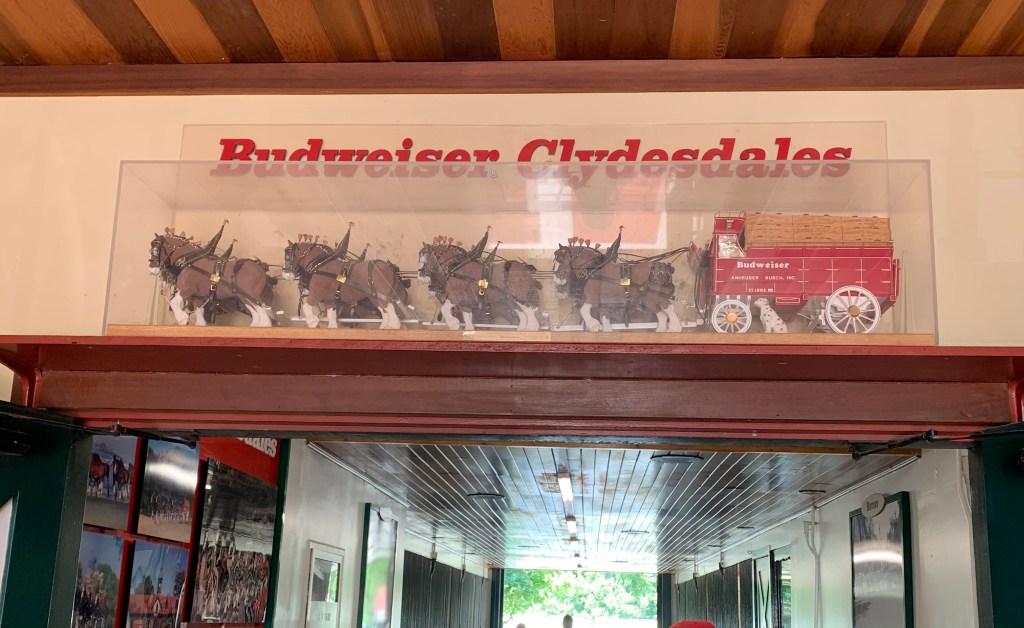
While on the tour, they mentioned Grant’s Farm. Their website hadn’t been very clear on what the experience entailed, so I had written in off. We decided to risk it. It was free admission, but you had to pay $15 for parking. We arrived and were still lost on what to do! We went to see the Clydesdales in their barn, and then we walked across the parking lot to a bridge. When we got to the other side, we were in a queue and still really lost – haha. We ended up getting on a tram that took us on a 20 minute ride through their property. We got to see a lot of animals like a safari tour (e.g., water buffalo, bison, several types of deer, yak), and then they dropped us off at the end. It was a zoo of sorts with a bunch of animals to look at, and some that you could feed for a fee (milk bottle for goats… which was only $2 and I would have done if it didn’t involve standing in a really long line with two kids in the heat; and pellets for llamas, cows, and goats in another section). They offered other things, like parakeet feedings ($7) and camel rides ($10). At the end, you enter a little german-looking village that had food for sale and some horses to see. Most interestingly, it had two free beers per adult. So again, we enjoyed our beers while the kids ran around the table and ate some pretzels!

The reason we picked this timeframe was because the Braves were in town playing the Cardinals. We bought tickets on StubHub for $23.80. We paid the $9 for the Arch parking garage for a 5 hour window; the garage is one block from the stadium. I still can’t believe it worked because game day parking was actually $25 or $30 for the garages on that block. We got to the garage at 5:30 for a 7:15 game, so we got a great parking spot that was easy to leave from (no long queues after the game lets out!). We explored the Ballpark Village before the game. There were lots of restaurants, but we had already eaten, so we just played with the giant games (Connect4, Jenga) in the center of the Village. We walked the whole stadium, as we like to do when visiting a new one. While it was nice, it wasn’t anything special. We really like how the Braves have a section for their history that you can visit, and we were surprised that this was a newer park and didn’t have such a section. The Braves won, so we ended on a great note.

FOOD

I’ve mentioned before that we don’t spend a lot of time or money on food when we travel. We’re not “foodies,” looking for the eclectic options of a region. We usually rotate between fast food options while we’re racing between activities. However, we purposely spent more time on this trip to spread everything out, so we ended up having an evening free. We went to the “Delmar Loop” to try a place that had good reviews: Blueberry Hill. We were disappointed. We tried fried raviolis, which claims to be a St. Louis “must have,” but other than that, it was just regular bar food (that was overpriced). The “Delmar Loop” was cool to walk down after dinner, but the drive to get there was sketchy.

SAFETY

There are areas of the city that are run down with boarded up buildings, just like with any city. While we drove through a couple of these areas, it wasn’t our destination. Even driving through it didn’t feel overwhelmingly unsafe (as it did in certain areas of Detroit). Our destinations were always in safe-feeling areas that were clean and well-lit. Whether we were downtown or in the suburbs (where our AirBnB was), we weren’t concerned.

As for the pandemic concept, the mask mandate was put into effect again right before we arrived. We had to wear masks for all indoor activities, regardless of vaccination status. Some places also required masks during entry (like at the zoo) or in crowded areas.

A FUN MIDWEST TOWN WITH A BUNCH TO OFFER

The whole trip was amazing. There was obviously a great selection for a family with young kids, but many more things to do if your traveling party is just adults. Bars, the Arts, Local Food, Museums, etc. There are even more things available to do (Botanical Gardens was one on our list if we had the time). The people we interacted with were all very pleasant, and the price was right. It’s worth putting on a travel list if you haven’t been!

Bathroom Build

We’ve been super busy knocking out our to-do list on completing our basement bathroom build. There’s more to come on it, specifically the financials of us doing it ourselves (with the help of my dad at the beginning), but for now, here’s a sneak peak of where it stands.

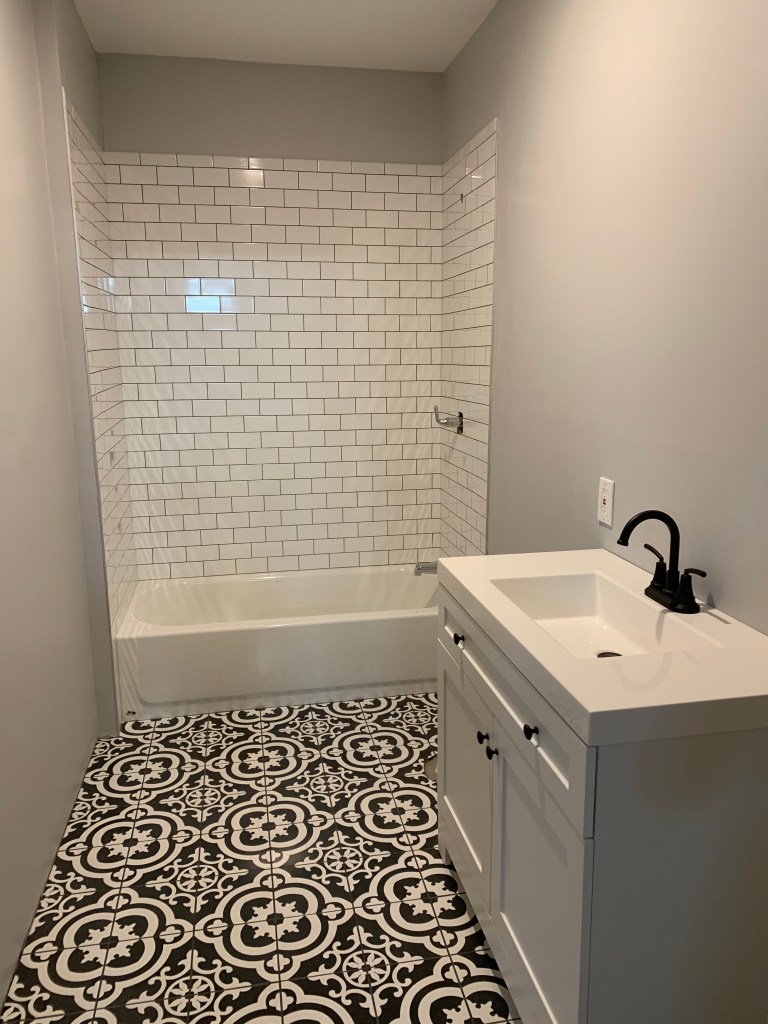
Our new house had an unfinished basement. We deliberately delayed finishing it until our “6 month” builder’s meeting, which only recently happened. My dad helped us frame the bathroom, set up the plumbing, and get the drywall up. Mr. ODA and I have worked on sanding the drywall (terrible job), priming, painting, laying the floor tile, grouting the floor tile, and laying the shower wall tiles (which unfortunately also entailed wall touchups and repainting). I still need to grout the wall tiles, hook up the plumbing, install a light, install closet shelves, and install baseboards. Hopefully the grout will be completed this week, so this is why I don’t have any new posts completed.

Property Walk-throughs

Early on in our investing in real estate, we were told to make regular walk throughs of the properties. We were taught to use changing the HVAC filters as the guise to get into the property and look around once a quarter, even if changing the filters was put in the Lease Agreement as the tenant’s responsibility. Realistically, we have mostly great tenants that will tell us what goes wrong in the house and take good care of it. But this isn’t always the case. Plus, once we added two kids to our lives and I no longer worked (i.e., no longer have a set schedule for being out of the house), the rental properties moved to the back burner unless a tenant brought something up specifically.

After our experience with House 9 – both the hoarder and the guys who just turned off the gas to the stove instead of telling us about a gas leak (yea….), we decided it was important to get into these houses at least once a year. In many instances, either one of us or our handyman is in the house at least once a year for a repair, so it’s not a big deal. But there a couple of houses we hadn’t seen in a while. Add in the pandemic, and we really haven’t been in houses all that much.

We moved out of Virginia, where we have 9 properties, last Fall. That means getting into these properties is more of an effort that needs to be properly planned and orchestrated now. We already planned to be in Virginia for a wedding in September. However, the issues that stemmed from the flooring replacement in House 3 made it imperative that we get there as soon as possible.

I emailed all the tenants to let them know that I planned to walk through the property for a quick inspection. I asked if they had any definitive times of day or times of the week that they would prefer I not arrive (e.g., works night shift, child’s nap time). I let them know that they didn’t need to be present for the walk through, that I would send them a document outlining anything I noted, and that I would try to avoid their times of being unavailable, but didn’t guarantee it.

Of the 9 properties, 3 are with a property manager. We took two off the list after they responded positively about how they replace the filters, had several conflicts around the holiday weekend, and we have been in these houses for repairs in the last 6-9 months. One is a house that we had been in regularly and knew she was treating it like we’d treat our home, and the other had our handyman in it recently, who said, “they seem to be by-the-book people.”

While there, we took pictures of the front and back of each house to give to our insurance company. We have a commercial liability umbrella policy, and the underwriters like to update the file every 3 years (details in a future post!). So instead of posting pictures of all the “dirty laundry” (literally and figuratively) I encountered, here’s a picture for this post that’s of our nice, pretty house with great tenants. (Note – Mr. ODA tucked in that piece of vinyl on the back right just after I took this picture!)

HOW DID IT GO?

Well, I started in a house that I’ve only seen one room of since we bought it (this is owned with a partner – he and Mr. ODA have handled most issues to date). I was overwhelmed. There were 5 full/queen size beds in the house, where the lease holds a husband/wife and adult daughter. There was stuff everywhere. We just replaced the HVAC in the house, but they had all the windows open, fans on, and the HVAC running. I knew that there was water damage from a plumbing issue, but I didn’t realize that it had affected the kitchen and the basement (thought it was just a part of the basement). It was a hard way to start. I should have started with an easy one that I knew would be in great condition. 🙂

From there, it went pretty well though. Most people obviously cleaned and changed the filter because I was coming. This is a good thing and a bad thing. If I don’t show up for a year, is the house cluttered and a mess? Then there was a house that I went in, where he didn’t bother picking a single thing up for my arrival. Dirty socks, things strewn about. It wasn’t to the point of hoarding, and I didn’t find any food laying around to attract pests, but it wasn’t how I would manage a household.

I ended two days of seeing 7 houses with a lengthy to-do list. Plumber, HVAC technician, roofer, electrician, pest control, and then a random assortment of things that I don’t know who to call for (e.g., replacing bedroom doors, closing in literally 2 sections of chain link fence that are missing). I also made note of things that will require our attention during a turnover, but that don’t necessarily require attention right now (e.g., removing old caulk around the tub and re-caulking it).

TENANT FOLLOW UP

I sent an email to each tenant. I thanked them for their time, outlined the items that I noted needed attention (e.g., vacuum HVAC filter cover, vacuum dust build up on bathroom, unblock exits), documented anything we did while we were there (e.g., gutter clean out, caulking), and sent a list of reminders that are the lease items we see most frequently broken (e.g., only adults that have passed the background check and are on the lease may reside there; any fines incurred by lack of yard maintenance will be passed onto the tenant who is responsible for yard maintenance per the lease; change air filters no less than every 3 months; all surfaces are to be cleaned and remain clear of food particles as to not attract pests).

Contractors are scheduled a couple of weeks out, so nothing is moving very quickly, but at least we’ll get into these houses for some preventative maintenance.


Lesson learned that when life gets in the way and active management of rental properties becomes a little too passive, the to-do list grows pretty long. There was nothing critical that we weren’t aware of, and we could handle these things during turnover, but I’ll try to get ahead of some of it in the near term, especially where we have long term tenants.

July Financial Update

We paid off a mortgage! Reaching this accomplishment was threatened once again when I was told another rental property needed the HVAC replaced ($3,900), but we were able to cover the cost of the unit replacement and pay off the last $3,000 on the mortgage. This gives us $391 worth of positive cash flow each month going forward.

Our two usual suspects are late on rent. One said that her bank account was frozen, and she has no idea why. With a history of forgery, fraud, and domestic abuse, I can’t imagine how this could have come about (sarcasm..). The other just casually emails us and says “Rent will be late. Sorry for the inconvenience.” Lovely. They also don’t pay the late fee, although I’m tracking that to be able to recoup it from the security deposit.

Last month, I mentioned that we had credit card rewards expiring without our knowledge. After several unanswered phone calls, it was resolved through a checking account credit.

  • Utilities: $420. This includes internet, cell phones (we pay quarterly, so this is a big bump from last month’s total), water, sewer, trash, electric, and investment property sewer charges that are billed to the owner and not the tenant.
  • Groceries: $590.
  • Gas: $327. We traveled to Virginia this month, so that caused a higher use of gas. Mr. ODA’s work trip also caused an increase in gas usage, but that’s covered through his employer.
  • Restaurants: $275.
  • Entertainment/Travel: $1,167. But this includes $485 worth of Mr. ODA’s work hotel that was reimbursed. This also includes $535 for our hotel stay in Virginia for 5 nights.
  • Investment: $1,100
  • Rental work cost us about $150 in supplies, and I paid one house’s quarterly HOA dues of $240.

Our net worth has increased again this month thanks to the stock market and property values. We’re down to 7 mortgages. We’d like to pay off one of the houses that our partner holds the mortgage on, but we need to re-evaluate our finances together first because that equates to about $20,000 for each of us.

ANNUAL TRACKING

I don’t love the format of these posts, so I’m brainstorming ways to share updates going forward. For now, I created a chart to show our spending so far this year and how it has changed month-to-month. I have a feeling I’m not categorizing our spending consistently after seeing this information, so I’m going to dive in deeper. At the end of each year, Mr. ODA asks me what our spending by category is, and I need to recreate that information each time. I thought I was being better about it this year with these monthly updates, but I’m not.

That’s my lesson learned for this month – while tracking your spending, track it consistently and look back at previous months. I thought $300 in gas was consistent with previous spending, but now I see that it’s much higher. While we did travel to Virginia this month, is that really representative of such a drastic increase? We may be ok with the entertainment that driving more has given us, or we may decide we want to scale back our spending in this category. It’s also important to know that some spending is seasonal. While our gas usage is high during the summer, we knew we were planning several trips and wanting to be out of the house more than we were over the winter.

Overall, I don’t feel like I have a good grasp of our spending after seeing this graph, and I plan to dig deeper into the costs. I’m glad I looked at it in this format halfway through the year, before I would have to go back through all 12 months of spending! It’s easy to see an increase in net worth and be complacent, but I’d rather be more intentional with our spending than we have been over the last few months.

Hear more from Mrs. ODA

Back in May, I was a guest on Maggie Germano’s Podcast, “The Money Circle.” I shared some of our background and how we started investing in real estate. We brushed on topics like establishing an LLC, tax advantages, and how you don’t need to start big to just get started. It was a brand new experience for me, but I’m passionate about our real estate experiences, and I loved being able to share. I hope you’ll check it out!

The Duds – Walking Away From Contracts

I just shared the details of the home inspection contingency in the real estate purchase agreements in my last post. I was laying the foundation to share what we’ve encountered to invoke the termination clause of the home inspection contingency.


COMMERCIAL PORTFOLIO

There was a time where we were trying to grow fast. We wanted to work smarter not harder, so we investigated commercial portfolios instead of buying one single family house at a time. We worked with our Realtor’s office’s commercial team to find an off-market deal of several houses. The owner of all these single family houses had lumped several houses in his portfolio by geographic area of Richmond, VA. He had provided us with 13 ‘sub-portfolios’ to review, but he was willing to sell individual houses.

We went through the entire portfolio to decide which houses we were interested in. We were able to eliminate several from the start because his rent to purchase price ratio were far from the 1% Rule we aim for (the monthly rent amount (e.g., $1000) is 1% of the purchase price (e.g, $100,000). We identified 10 houses we wanted to see and met up with the owner’s property manager to get into each house. Afterwards, we went through the list of houses, the comps we could find for purchase price, and discussed the condition of each house as we saw it. We ended up making an offer on 5 houses.

We received the ratified contracts on May 9th of that year, and we immediately contacted our home inspector to come through the houses with us. We met with the property manager, our home inspector, and our Realtor to inspect the 5 houses in one day. We negotiated with our home inspector that he didn’t need to write a report for each of the houses; I would take notes as we went through everything, and he wouldn’t charge us full price for the inspections.

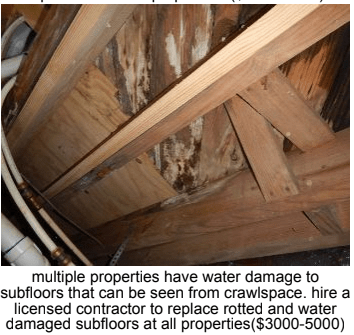
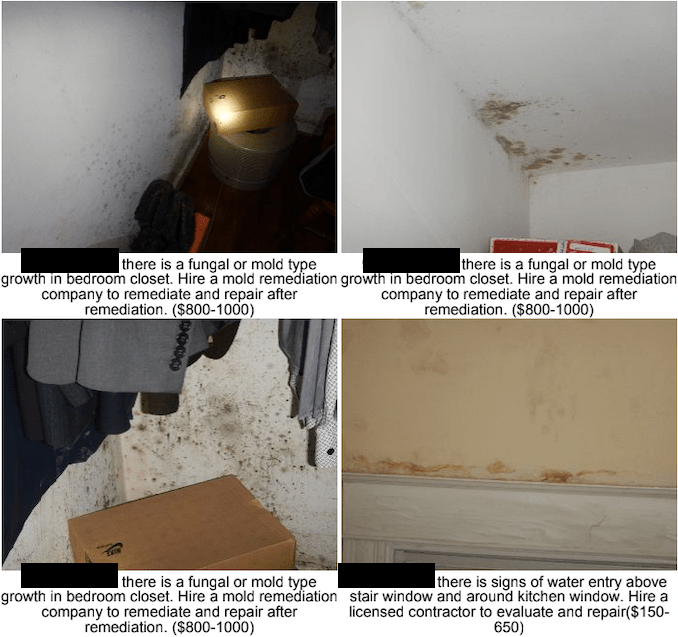
We knew the houses weren’t in great shape, but we weren’t prepared for all the details we found in the home inspections. During our time at the houses, the tenants were quick to complain about the maintenance on the properties, saying things would take a long time to get fixed or they wouldn’t ever be addressed. The inspection found strong evidence of mold, patch jobs in structural beams in the crawl space, appliances not in full working order, windows screwed shut, and several other minor things.

We attempted to negotiate by the seller providing $10,000 per house in seller-paid closing costs. We didn’t ask for anything to be fixed because we saw the work that had been done in these houses, and we wanted it done right. The seller denied our request for funds to address the home inspection issues, and we walked away from all of the contracts.


FIRE DAMAGE

This was a hard one for me to walk away from. The house itself was in a high-crime neighborhood of Richmond. However, only THREE! parcels away, houses were being torn down, rebuilt, and sold for significantly higher than purchased. I saw the potential of the area’s revitalization. But we were not in the business of flipping houses nor doing major repairs. Not only were we not interested in that because we wanted to be able to create the cash flow as fast as possible, we also want to be able to hold these properties as rentals instead of flipping them so we maintained a continuous income stream.

There were several concerns when we walked through the property. The kitchen was a mess, there were signs of water damage in multiple places, the floor felt soft upstairs, the upstairs deck didn’t seem stable, the house needed a lot of TLC with the overgrowth, and then best of all – clear fire damage to the structure of the home when we went in the basement.

This isn’t a picture from when we were looking at the house, but this is the condition 3 years later, which shows just how ‘great’ of a house it was. 🙂 This is the backyard.

We were under contract for $72,500 in May 2017. The house recently sold for $296,000. Although it seems we missed the opportunity that I felt was there, I found pictures of a failed flip attempt in 2019/2020 that uncovered even more damage behind the walls than we even knew (although we suspected), and none of the houses around it have sold for nearly $300k. Therefore, we don’t believe that was a reasonably-expected sale price had we taken this beast on. And what’s not known in those numbers is just how expensive the flip was to that owner, both in headaches and wallet!


A KENTUCKY MESS

Mr. ODA went to see a house in Winchester, KY without me (it was easy because he was working near there, and it wasn’t worth me packing up our baby to go walk through a house that we may not even want). He and our Realtor walked the house and decided it was worth putting an offer in. The house had two units set up inside it, which was a goal of ours (duplex = one building the maintain with two income streams). The cash flow on it was great, so he probably turned a blind eye to too many negative issues during that first visit.

The inspection was $500. I was there for the event, but didn’t walk the house with the inspector. He ran through everything with me after he was done, but the tenants were present, and I didn’t want to bring my baby into their smoke-infested house (first red flag because we don’t allow smoking in any of our properties).

The first thing the inspector said was that the roof needed replaced. He pointed out that several tree limbs were in contact with the roof, and the roof had considerable algae growth on it. Basically, everything on the outside of the house needed repaired or replaced: siding, decks, roof, gutters, removal of vines on the house, negative slope of ground towards the house. The doors and windows were old and broken, so none had the proper seal to prevent water infiltration, in addition to not being able to maintain temperature.

On the inside, there were several code violations with how the kitchens were built (e.g., venting for range), and several large cracks in the walls, some of which were patched poorly and never repainted. There were five or six electrical issues that needed to be addressed immediately because they were a fire hazard. There were signs of water damage in the ceilings, as well as in the bathrooms where the peel and stick tiles were ‘floating’ and warped.

As if that wasn’t enough, the straw that broke the camels back for me was the head room given for the upstairs unit entrance. The required head space by code is apparently 6’6”, and we only had 5’6”. This seemed to be a big problem because an average man is 5’9”, and the average height of women at 5’4” doesn’t exactly give much wiggle room.

I was worried about all the work that needed to be put into this house. The tenants weren’t taking good care of the house, so it wasn’t worth putting a lot of money into it, just for them to destroy it. They had been there for a while, so it wasn’t like they were going to leave voluntarily any time soon. The neighborhood wasn’t in great condition, so a fully renovated house wasn’t called for when it came to resale or the type of client looking for a rental there.

It was a difficult balance, but the house had way too much deferred maintenance, way too many things poorly fixed/maintained when there was an attempt, several unfinished projects, and too many code violations to move forward. Mr. ODA really wanted to buy a house in this area before the summer was up, and he was pushing for the cash flow side of it since it had two separate units bringing in income. But that cash flow is non-existent if you’re having to put it back into the house.


These are the three main stories that have stuck with me. We learned a lot about houses through the process, and we feel we made the right decision on each of them to walk away. Through these experiences, we solidified our decision-making to focus only on houses that have been properly maintained and require little work to get rented. Having a unit already rented with long-term tenants isn’t always the “diamond in the rough” that you think it is.

The inspection is buying you information. Once you find out that information, the money is a sunk cost, and you should use it to now choose if the house is still worth owning or not. While inspections aren’t exactly cheap and aren’t tax deductible if we don’t buy the property (if you have a legal strategy, drop it in the comments please!), that information gained is important. That $500 “lost” is better off because you’re not buying a money pit that will cost a lot more in the long run. Remember, this is a business, and it’s best to keep your emotions out of it. Don’t pinch pennies and end up costing yourself big dollars later on.

Most times you’ll do an inspection, find some things to fix or negotiate down on the purchase price, and even find yourself in a situation where the inspection “pays for itself.” Other times, it doesn’t work like that. Life lessons can cost money, and inspections can help point out duds so that those lessons don’t end up costing a lot more.

Happy investing!

Home Inspection Clause

I’ve mentioned that you shouldn’t be afraid to [legally] walk away from a contract on a house that isn’t going to work. I thought it would be fun to run through the duds (houses) that we walked away from and why, but first, what is the home inspection clause and how does it work?

The home inspection contingency is a clause within the real estate contract that allows the prospective buyer to enter the home and inspect it before closing. The clause usually has an expiration date on it, meaning the inspection and any negotiations need to be done within X days of the contract ratification (ratification is once all parties have signed). I would recommend using a professional to look at the house, versus you thinking you can find the signs of a major a problem. It will cost you 1-2 hours of time and about $300-$600.

It’s important to note that even if a house is sold “as is,” you can still inspect it, ask for corrections, and/or walk away from the contract. “As-is” just means that the buyer should not enter the contract with the intent of the seller doing anything for them. But really, anything in life is negotiable, right?

Additionally, putting a home inspection clause in the contract doesn’t mean you have to perform a home inspection. So put the clause in there as a means to ‘escape’ if you need it.

THE LEGAL LANGUAGE

I was going to share a screenshot of one of our contracts, but the home inspection section is over a page long, so I’ll paraphrase. The contract was subject to a home inspection, and the Purchaser had to “provide the seller with all inspection reports, cost of repairs and Purchaser’s written repair request no later than 10 days after the Date of Ratification.” It continues to state that the inspection is paid for by the Purchaser, and the Purchaser cannot require the Seller to perform any inspection or pay for it. Then there is an outline for how long each party has to review the request and return it to the other party (e.g., negotiation period). Finally, there’s the clause that allows the Purchaser to walk away.

In one of our Kentucky contracts, it also states that all inspections must be ordered and paid for by the Buyer, and that the Seller must provide reasonable access to the property to perform inspections. Interestingly, the Kentucky contract focuses heavily on removing any responsibility from the Realtor(s) during the inspection process. I hadn’t noticed that nuance before, and now I’m curious how much has gone wrong in Kentucky that there are several sentences along the lines of “The parties hereto release the above Realtors and real estate companies from, and waive, any and all claims arising out of or connected with any services or products provided by any vendor.”

The Kentucky contract’s home inspection contingency is as follows. “The BUYER hereby agrees that he/she has inspected the property and hereby accepts the property and its improvements in its present “AS-IS” condition; with no warranties, expressed or implied, by SELLER and/or Realtors. BUYER may have the property inspected and may declare the contract null and void, with earnest money returned to the BUYER, by notifying SELLER or SELLER’s agent in writing within 15 days from contract acceptance. Failure to have inspection and notify SELLER or SELLER’s agent in writing within said time shall constitute a waiver of this inspection clause and an acceptance of the property in its “as-is” condition. The time frame established in this paragraph is an absolute deadline.”

I’ll say it again: I applaud Virginia’s plain language use in their contract templates. While the home inspection clause is lengthy in Virginia’s template, it’s written in an easy way to read and understand, unlike this Kentucky paragraph. I’ve also read New York’s template, and it’s even more painful to read and is written in legal jargon.

Quick aside. Virginia is a “buyer beware” state. This means that the seller does not have to disclose anything about the condition of the property to you. Whereas Kentucky requires the seller to fill out a form that identifies all known issues. Know the requirements where you’re purchasing/selling.

THE INSPECTION

Remember that you need to have the inspection completed and the inspector’s report written up with enough time for you to review it with your Realtor and decide how to proceed (e.g., ask the seller for repairs), all within the timeframe established in the contract (e.g., 10 days from ratification). If you want the house inspected, you should look to hire that individual within the first day of ratifying the contract.

When you hire a home inspector, they’re going to look through the house and identify any deficiencies. They’re looking at all the major mechanics of the house, identifying any safety issues, recommending repair/replacement, and making note of items that aren’t currently a concern but may develop into one. You should have a good understanding of the house’s foundation, roof, plumbing, HVAC, electricity, and appliances through the inspection.

While it’s not required for you to be there during the whole inspection, I’ve found it to be more helpful if you are. We’ve done it where we were present through the entire thing, but there’s a lot of down time for that, and we’ve been there just for the end to get a walk through of the findings. If you’re not there to see it in person, the pictures and explanations may not be completely clear.

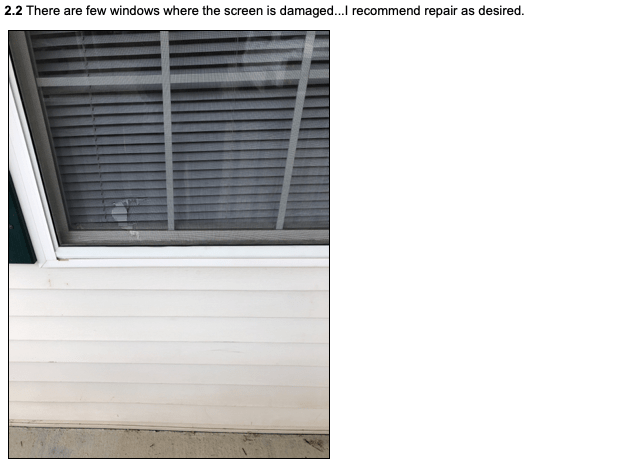
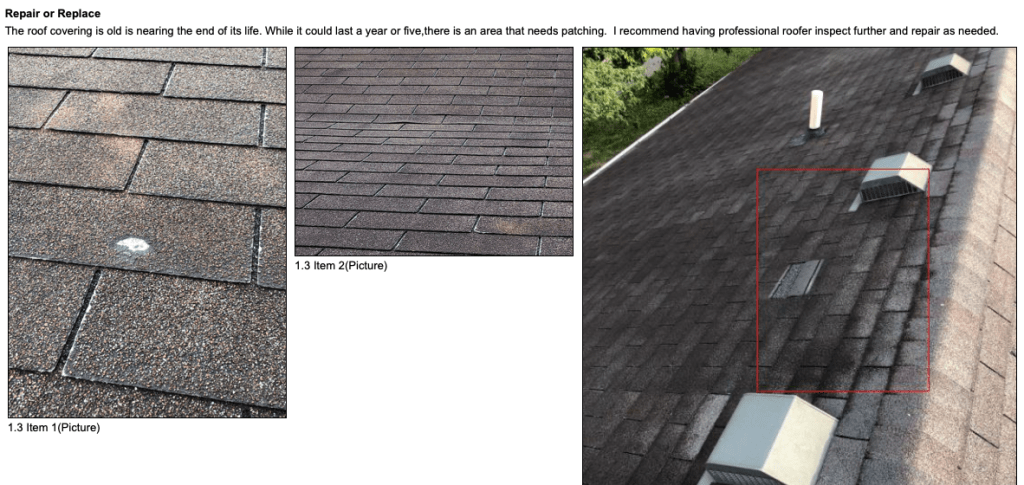
The inspector will provide you with a detailed report within a couple of days of the inspection, which has pictures of the deficiencies and possibly an estimated cost of repair. The issue could be as small as paint imperfections, or as big as a structural issue. Here are some examples we’ve had on homes we did purchase.

BUYER’S NEXT STEPS

  • You can accept the deficiencies identified and take no further action. Sometimes there’s a contract addendum that’s required where you state you completed the home inspection and are requesting nothing from it.
  • You can request repairs from the seller, or you can negotiate the contract price to compensate for the deficiencies. The seller is unlikely to address superficial notes (e.g., painting), but may take notice for any major issues (e.g., gutters, roofing, HVAC). You can request the seller to repair any item from the list, but understand that you’ll catch more bees with honey. If you submit every item to them, they’re more likely to say no to many items on the list, and you no longer hold the control of what’s getting fixed. If you provide a short list that appears important, they’re probably going to accept the repair list. The list should be formally submitted (i.e., signatures) to the seller, and the seller should have to sign the list, agreeing to the repairs, within a certain period of time. As good practice, the buyer should be walking the property within a day or two of closing; you want to verify that the house is still in working order and the same condition as when you signed the contract to purchase. We did have an issue where the seller was not performing the tasks agreed to on the home inspection request form, and we had to make a few trips to the house to ensure it got done.
  • In extreme cases, you can invoke the termination clause and walk away from the contract. We did this on a house that several maintenance issues that were deferred and a structural issue; on another house that had several issues that were fixed poorly and one tenant showed us a huge mold issue in a closet; and on another house that had fire damage that was never fixed. Sometimes the seller will request the home inspection report. It’s a service you paid for, so you’re not required to provide it (but check your contract language to verify you’re not required to turn it over).

HOME INSPECTION MINDSET

If fatal flaws are uncovered through the inspection, you may feel like you’re committed once you’ve spent $500 on a home inspection; think of it in terms of how much you’ll save in headaches and costs down the road fixing all the things that you were made aware of through that process. Real estate investing is a business, and sometimes there are just costs of doing business that may not feel good, but are worth you moving forward in a positive direction in the long run. Just know that the home inspection contingency is a tool in your tool belt as a buyer.