We bought this house in September 2019. Based on the comps in the neighborhood and time of year, I thought listing it for rent over $1000 wouldn’t yield quick results. I had the property manager list it at $975, which would have been easy to get in a Spring market. When it was still sitting 3 weeks later, we dropped it to $875. It took another 2 weeks to get it rented. Honestly, I blame the property manager. I have yet to find a company-driven property manager rent a unit of mine in less than 6 weeks, where I’ve had mine rented myself in a matter of one-two weeks (with a recent exception tha took 3 weeks). There were some concessions we gave to make it happen (no payment until November 1st), and the tenant would pay half of rent the month before it was due and the other half on the first. There were numerous errors made on executing the lease by the property manager, and I don’t believe the tenant was vetted correctly, so I eventually took over management.
There were a couple of rent increases along the way, to where she was paying $975 per month as the lease expired. She lived there for a couple of months shy of 6 years. Going into the final walk through, we were leaning towards selling the house. But we had people hunt us down (either on the street, finding my phone number, or through Facebook) to tell us they wanted to rent it. It was crazy. This outdated house with street parking and only one bathroom. Your neighbor has a whole kitchen in his front yard. It was really hard to understand.
MAINTENANCE HISTORY
In 6 years, we spent less than $5k on maintenance on the house. She was really slow to report issues. We did a few plumbing fixes over the years, replaced the back deck that was basically in shambles, and replaced the roof through an insurance claim. The insurance claim also yielded us being dropped by that company because there was a trampoline in the backyard. I had to threaten the tenant with that removal for about a month, but it eventually was taken away.
When Mr. ODA would go there, he would note things that looked like a temper caused damage (the handle on the screen door was snapped), but it’s hard to point that finger. There were red flags all over the place, but I didn’t know the extent of the issues until a neighbor got our attention on a drive by check. I knew they weren’t the best tenants and that there were surely issues they weren’t reporting, but it’s hard to get a true gauge when you don’t see the day-to-day activities. Apparently the cops had been called multiple times for fights in the street and there were rumors that she was having her fun with the married neighbor.
She had people living there who weren’t on the lease, so that really yielded no reporting of issues. The neighbors claimed that she had moved to Ohio in May of 2024 and had her adult kid and her friends living there. When we weren’t the one to vet her or know her for the first several years, it’s so hard to then develop that relationship with a tenant. Rent was always paid on time, and we were there to at least see it was still standing a couple of times per year.
THE TURNOVER
She said they’d be out on July 22nd. We drove by on the 21st and saw that their vacancy was to just throw all their trash on the front yard. It ended up taking me 2 hours to sort through, get into bags, and either get it to the side of the house for a future available trash can or into a trash can at the curb (which was ironically empty and very clean). A neighbor was listing their house later that week, and their Realtor found out my phone number, and she called me to ask if I’d have it cleaned up for their listing pictures (she assured the owner that our house wouldn’t be in any pictures).
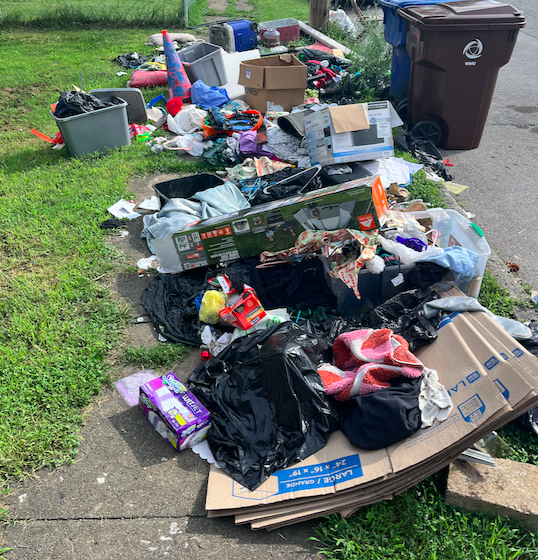
Surprisingly, we only spent about $1700 on repairs (outside of the fridge). It took a lot of our time though.
We showed up to work one day and I was hearing a weird sound in the back bedroom. It turned out that the water heater supply line was busted and there were several inches of water in the crawl space. The city actually called us to let us know (once we turned it off) that it had been running since midnight. They had Mr. ODA bring in the receipt to show it was fixed and knocked the $500 bill in half, so that was pretty sweet.
We had to replace the refrigerator because that was disgusting. The gasket around the door was sliced like someone just needed something for their utility knife to do. A tray and drawer were missing. That was $530.
There were random jobs that needed to be done, like replacing the sink sprayer, replacing broken light fixtures, replacing shower tiles that they had put mosaic tile in with caulk (why?), installed tracks for the bifold closet doors (where did they go?), fixing a stair tread that was broken.
One of our bigger concerns was the smell of urine. We spent weeks trying to get the house to not smell. It was bad in the bathroom, so Mr. ODA replaced the wax ring on the toilet. It was bad under the stairs (we think they kept a dog kenneled there), so we spent weeks laying baking soda, sucking it up, laying more, etc. We hung Arm and Hammer air cleaners. By the end, it didn’t hit you like a ton of bricks when you walked in the door, but I’m not sure we were 100% successful if you went looking for the scent.
FLOORING
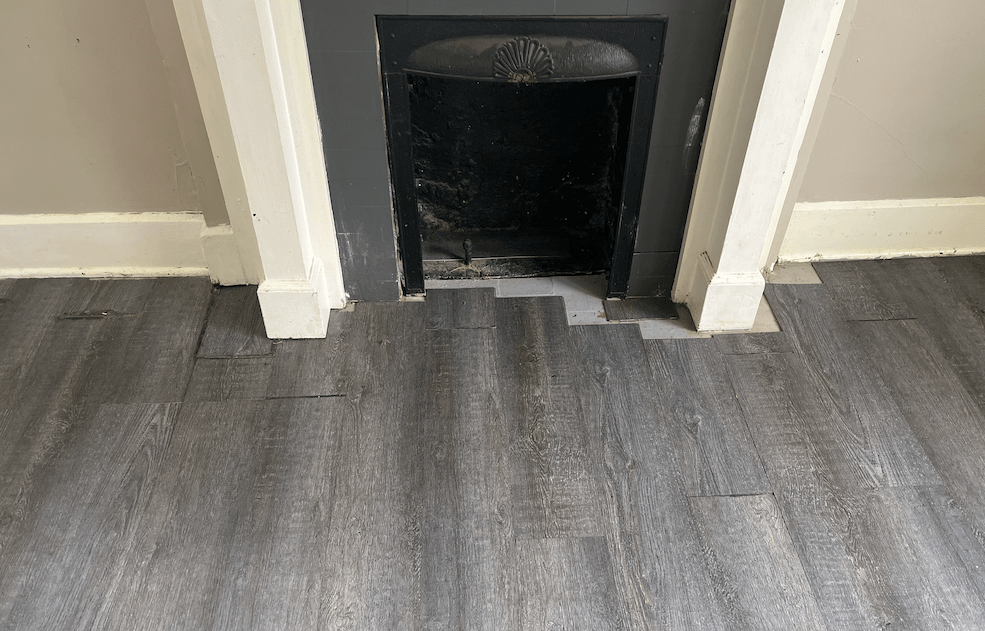
The house has painted floors. The tenant must have been annoyed by the paint being scratched up because of her dogs, so she laid luxury vinyl plank. It was one of the worst jobs I’ve seen. She was really proud of it and was concerned about getting her security deposit back, so she kept pointing out that she laid the floor on her own dime. I kept pointing out she didn’t have approval to do that. It’s one thing to lay the floor that would just be labor to get it up, but instead of moving furniture to lay it, they just used their black caulk to cover the edge. Well, in many places except here, where this was apparently a worthy job.
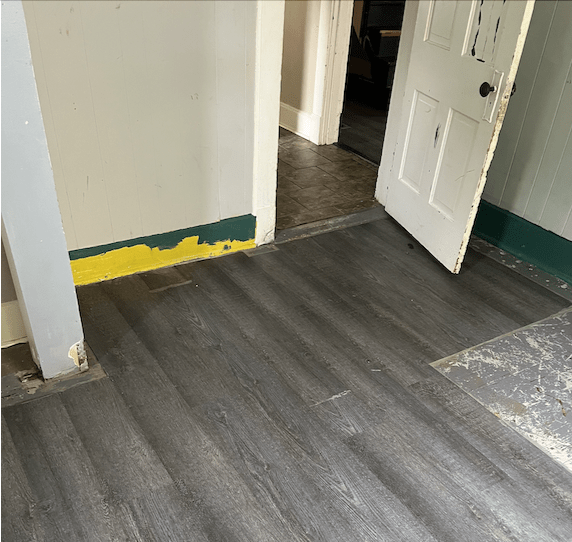
And the floors are basically the subfloor also, but we couldn’t lay flooring over it because then the doors wouldn’t work, but we couldn’t shave down the exterior door because then it would be drafty. We decided to go with deck paint on the floors. They looked great, but they’re not going to hold up. We also painted all the walls and a few of the ceilings. The house was so dirty and not taken care of. The walls had a lot of tape and holes in them, so there was a lot of patching that needed to be done before painting even took place.
PAINTING
Someone painted the bathroom black, so I used some of my left over navy to repaint that room. I had to paint the ceiling in there because of water splatter marks and their inability to actually paint a room correctly, so the black wall paint was all over the ceiling. Someone also painted 85% of the trim in the living room black, so that was quite a few coats of white trim paint.
One of the bedrooms was painted wood paneling, so that took a lot of effort to get painted. All of the doors needed to be painted and nearly all the trim had to be painted because of their abnormal wear and tear.
DOORS
The biggest expense was the back door. Over the years, people had shimmed the door jamb and hinges. There was no coming back from that. We hired someone to replace the whole door. It turned out the door wasn’t a standard size, being about a foot shorter than normal, so it was a whole fiasco. That cost us over $1000.
We also had to replace the bathroom door because it was destroyed. We patched up the other doors that were also broken because of that temper I mentioned earlier.
EXTERIOR
When the original tenant lived there, she cared a lot about the outside. She put effort into a garden and even made a koi pond (absolutely against the lease). But a garden left unattended becomes an eyesore. We had to pull weeds and bushes, and it made a big difference to how the house looked. We also had to spray down the porch and paint that. That’s not something we really wanted to spend time or money on, but it’s the first thing you see when you walk in, so it had to be done.
THE LISTING
The house was vacant for a total of 67 days, but that was mostly because of the work we had to do to it. We listed it on the 20th, showed it to several people, and had the listing removed on the 23rd. We got it rented at $1,150. Mr. ODA wanted to go higher, but I was worried about the time of year and all the loss we had already taken on it. We probably could have gone higher. At least so far the tenant has been great.
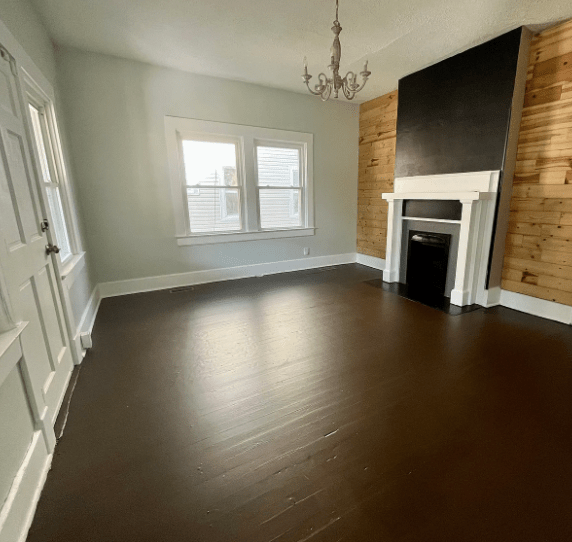
The living room was my favorite transformation. This picture doesn’t truly capture the time that went into this room, but the end result is adorable. That wood feature wall was another thing the original tenant did without approval, but it’s not in terrible shape at least.
 One Dollar Allowance