Contrarian View on an Emergency Fund

There are many teachings out there that talk about a safe, sustainable, and efficient way to wealth being many streams of income. This diversifies and provides multiple avenues for growth, but also mitigates risk and protects your larger portfolio against any one stream failing.

Our financial portfolio meets those goals. Instead of having an emergency fund sitting in a savings account earning 0.03% interest (that’s literally our savings account interest rate, and that’s the ‘special’ relationship rate), our money is put to “work,” earning more money for us.

INDEX FUNDS

Probably the simplest and most common example of multiple streams is index fund investing. A quick read of JL Collins’ “The Simple Path To Wealth” will teach you that through index fund investing, you have an ownership share of every company the index fund covers. Some are matched to S&P 500 companies, some to International, some to the DJIA, and most to the “Total Market.” Mr. and Mrs. ODA invest in the “Total Market Index Fund,” through Fidelity, in our IRAs and taxable investment portfolio. By owning a small part of every publicly traded company, we own that many streams of income. Any one company going belly up will only be a blip on the radar of that index fund, and, over enough time, it will go up, and up a lot. This is as risk free of a true investment as you can get. 

Being Federal Employees (Mrs. ODA no more, though), we both have access to the Thrift Savings Plan (TSP) for our 401k’s. The TSP provides a group of 5 index funds to choose from: Government Securities, Fixed Income Index, Common Stock Index, Small Cap Stock Index, and International Stock Index. 

In times of market upheaval, we can ‘escape’ to the Government Securities fund, and pending a nuclear winter or alien attack, is guaranteed to be paid (TSP.gov). However, with this little risk also comes little reward, so it won’t grow fast. With index funds and a safety spot, our TSPs are about as low risk a retirement investment as you can have. Note that Index Funds through Fidelity or Vanguard (for example) and the TSP have the industry’s lowest fees on their funds, so we won’t lose our nest egg to management costs either. 

REAL ESTATE

Outside of anything related to the stock market, we have 12 single family rental properties. Each of these houses operate as their own small business, with long term tenants in most of them (that have thankfully all been able to maintain rent payments through the pandemic). If one or two houses did lose their tenant, or have an AC break, or a roof needing replaced all at the same time, the other houses (businesses) can pick up the financial slack. A few of the properties are owned outright, so the lack of a mortgage certainly helps the whole portfolio’s cash flow. And actually, we did have to replace/repair multiple roofs and HVAC units at the same time in the summer of 2020! On top of the individual homeowners insurance we have on each house, we have a Commercial Liability Umbrella Policy covering anything above and beyond the individual policies.

DIVERSITY

We also have some money tied up in more actively managed mutual funds – investments we owned before we discovered index fund investing – and individual stocks. However, I can’t bare the capital gains taxes required if I were to sell them and shift that money over to an index fund. But – they’re there in case of an emergency.

That Federal job I mentioned – I’m lucky to have about as much job security as any W2 employee can have in this great nation. Through the shutdown a couple years ago, I had 2 paychecks delayed, but my rental properties made it so that I didn’t have to worry about our finances. Otherwise, a safe, consistent paycheck is something I can count on – with health insurance for our whole family that comes with an annual out of pocket maximum of only $10,000.

So we have a W2 income, 12 rental property small businesses providing monthly cash flow, and a slew of stock investments diversified across all markets. We have diversity that mitigates risk and shields us from small “emergencies” manifesting themselves as such.

We view “medium” emergencies as something that can be solved with a new credit card deferring needing to truly “pay” for our expenses until life gets back to normal. You’ve seen a past post discussing our perspective on strategic credit card usage (and the Chase cards specifically). Twelve to fifteen months of no interest on a credit card can get anyone out of a financial bind when emergencies hit. We haven’t found a reason to NEED this option, but know that it’s always out there if the perfect storm of bad luck were to ever hit.

For these “small” and “medium” emergencies, stocks could be sold before we would need to be faced with something like not being able to pay utilities, buy food, or get foreclosed on. We simply don’t view a “large” EMERGENCY cropping up with any higher than a near non-zero probability given the shielding and structure we have built out of our total financial portfolio.

I can’t fathom what that perfect storm would look like. Six months of expenses can easily be found in selling our stocks if all of our tenants suddenly stopped paying rent, for example. But if a pandemic isn’t going to make that happen, what would?

All this to say – Mrs. ODA and I keep very little cash liquid to cover our “emergency” fund. Outside of a couple thousand in our checking account to cover regular monthly/cyclical financial obligation fluctuations, we don’t have any dollars NOT “working for us.” Whether it be investing in index funds, contributing to IRA/401k, or paying down mortgages to eventually achieve more cash flow, we put all our money to work. We see the rewards of this strategy far outweighing the risk of encountering a debilitating financial emergency, and therefore don’t follow the traditional personal finance advice of keeping X months’ living expenses in cash handy at a moment’s notice.
Mortgage Evaluations

Rate Sheet Options from your Lender

When reaching out to a loan officer, there are a lot of options to choose from. I’m hoping to break down the decision-making here. I’ll share how we ended up with several different options, too.

Basically, it boils down to: 

  • Put enough down to avoid paying Private Mortgage Insurance (PMI)
  • Don’t pay more than 20% unless there’s a decent incentive. 
  • Don’t pick a loan term shorter than 30 years unless there’s a decent incentive. 
  • Carefully evaluate any Adjustable Rate Mortgages (ARMs).

PMI

I broke down PMI in a previous post: PMI – Private Mortgage Insurance. We suggest doing whatever you can to meet the requirements to avoid paying this. The cost of PMI can be a couple hundred dollars per month, which is money that can be put towards the principal balance of your loan or other bills, rather than in the bank’s pockets. There are also hoops to jump through to remove PMI early, which may include paying for another appraisal on the house ($400-$700!).


LOAN TERMS

A conventional loan will likely require 20% to avoid paying PMI. There are some loan options out there that may allow a smaller down payment without a ‘penalty’ (e.g., PMI, higher interest rate), but 20% is the standard, and is usually required when purchasing an investment property.

There may be an option to put down more than 20% or you may think you can afford to pay a higher mortgage each month, so you’re interested in a shorter loan term. Unless there’s an incentive (e.g., lower interest rate, better closing costs), stick with the bare minimum to get the loan.

If there is an incentive, you’ll need analyze the math and your goals to determine if committing extra money to a higher down payment or a larger monthly payment is worth it. If you have extra cash each month, you can pay more towards your principal rather than pigeon holing yourself into a higher monthly payment. Plus, if you have more cash liquid, you may be able to purchase another rental property, which will increase your monthly cash flow.

While we evaluate the loan terms on every house purchase, I’ll share the details of the two most “unconventional” options we chose. Two things to note: 1) lenders add a ‘surcharge’ to the rate for it being an investment property, typically around 0.75%, which means the rates aren’t going to be the great, super-low, rates being advertised; and 2) the term “point” means a fee of 1% of the loan amount.

HOUSE #2

For House #2 (purchased in 2016), we were informed that if we put 20% down instead of 25%, the rate would increase 0.25% on average. If we assume a 30 year conventional loan, 20% down at 4.125% equates to about $69,700 paid in interest (assuming no additional principal payments); 25% down at 3.875% equates to about $60,800 paid in interest. By putting an additional $5,850 as part of our down payment, we saved about $9,000 in interest over the life of the loan.

Once we determined that we’ll put 25% down, we then had to figure out the appropriate loan length. On this particular offer, 30 year amortization wasn’t an option for us because we would have had to pay a point to get a competitive rate. We chose a 20 year amortization because the house already came with a well qualified tenant, we didn’t expect a lot of maintenance and repair costs due to the house’s age, and we didn’t have an immediate need for a higher monthly cash flow based on our place in life at the time.

While our long term goal was to have rental property cash flow replace our W2 income, this house was early in our purchasing. At the time, we were focused more on paying off House #1 (higher rate and a balloon payment after 5 years). Frankly, we didn’t truly understand the power of real estate investing at this time, and didn’t know how much it would accelerate the timeline for us to meet our goals. By decreasing our loan length, we increased our monthly payment, but also lowered the total interest paid over the loan’s life by over $22k. Since more of our monthly payment is going towards principal reduction than had it been a 30 year amortization, this loan isn’t on our priority list to pay off early.

HOUSE #3

For House #3, we evaluated the rate sheet for the loan term, interest rate, and down payment percentage again. This house was purchased a few months after House #2, so those rate decisions were fresh on our minds. We were quoted several options: 1) 20% down at 4.25% for 20 or 30 years, 2) 25% down at 3.75% for 20 or 30 years, or 3) 25% down at 3.25% with 0.5% points for 15 years.

As you can see, there’s no incentive to pick the 20-year term because it’s the same rate as a 30-year term. If we have additional cash, we can make a principal-only payments against the 30-year term rather than unnecessarily tying up our money.

At first, we thought paying points was an absolute ‘no.’ However, points aren’t a bad thing. Paying down your rate up front can save you an appreciable amount in interest. Plus, points are tax deductible.

Now for the breakdown of each options. Let’s say the house purchase was $110,000 (because it wasn’t an exact number, and it’ll just be easier to use a ‘clean’ number like this). Microsoft Excel has an amortization template where you can plug in the loan terms and see the entire amortization schedule. 

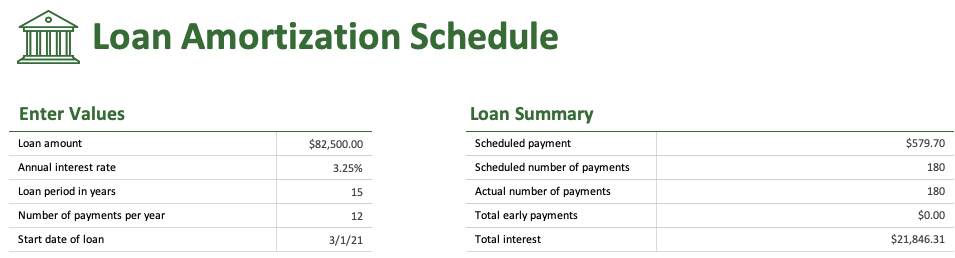
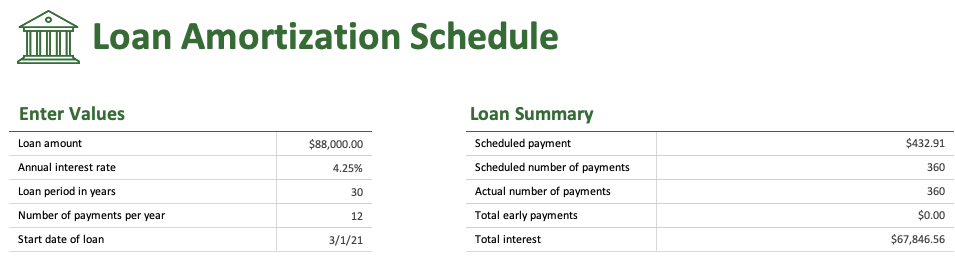
Option 1: 20% down payment equates to a loan amount of $88,000; the annual interest rate is 4.25%; the loan is for 30 years, with 12 payments per year. If we make no additional payments, this totals about $67,800 worth of interest paid over the life of the loan.


Option 2: 25% down payment equates to a loan amount of $82,500 at 3.75%. If we make no additional payments, this totals $55k worth of interest paid over the life of the loan. This requires an additional $5,500 brought to the closing table, but saves almost $13k in interest. It also decreases our monthly principal and interest payment (i.e., not including escrow) from Option 1 by $50.


Option 3: 25% down payment, 3.25% interest, and 15 years (instead of 30 years) equates to just under $22k paid in interest. To obtain the 3.25% rate, it required “half a point.” If a point is 1% of the loan amount, that would be 1% of $82,500. This rate only required 0.5%, so that meant paying $412.50 as part of closing costs along with the additional $5,500 of down payment required for 25%. However, the shorter loan length means that monthly payment is increased (between Option 2 and Option 3, the difference is $197.63).

For about $6k, we pay a higher monthly payment, but we also save a significant amount of interest over the life of the loan. The short loan term of 15 years means this one is also not on our radar to pay off while we focus on paying down other, higher interest and higher balanced, mortgages. In this case, the benefits of the big picture math outweighed the increase in monthly payment.

We are five years in on this mortgage and are already seeing significant reduction in the outstanding principal due to the amortization schedule becoming favorable more quickly. In 10 short years more, our house will be fully paid for, through rent collection, without a single dollar of extra principal payments from our other financials. What a great feeling.


ADJUSTABLE RATE MORTGAGES (ARMs)

An adjustable rate mortgage can be beneficial depending on the terms and how long you expect to own the house. For us, we expect to hold our investment properties for a long time, so it wasn’t worth the risk of an ARM. Many times lenders won’t even offer an ARM on an investment. However, when we purchased our DC suburb home, we knew we didn’t expect to be there for more than 5 years, so we chose a 5 year ARM.

After a positive experience with that decision, we also chose an ARM on our second primary residence. We chose a 5 year ARM, even though we expected to be there longer than 5 years. We figured we would either accept the new rate, if there was one, at the end of the 5th year, or we would refinance when necessary. As a result, Mr. ODA monitored rates and refinance options over the last year or so. Unexpectedly, we sold that house 3.5 months shy of the end of the initial ARM term so we didn’t have to do anything.

I break down all the details of an ARM and our decision making in a recent post.


SUMMARY

When I reach out to my lender to ask what the rates of the day are and begin the process of locking a rate on a new loan, I ask for options. These options are in the form of a “rate sheet.” When you ‘lock’ a rate, you’re actually locking the ‘rate sheet,’ not the individual decisions of loan length and percent down. For every house, we evaluate the rate savings that can come from doing something less “conventional” than a 30-year fixed at 20% down mortgage. Our decision is based on what’s best for our goals and our cash in-hand.

As shown above, in our early decisions, we favored shorter loan terms for rate savings. but since House #3’s purchase, we noticed how much more we cared about low monthly payments and low down payments to allow us to buy more properties along the way. Every investment property loan since House #3 has been the ‘standard’ 30-year fixed at 20% down. Because of this perspective shift, we were able to buy six properties in 2017, which gives us about $2,000 in monthly cash flow that we can then use to pay down mortgages.

Chase Rewards Portal

GENERAL THOUGHTS

We have several Chase credit cards, both that are active and ones that we used in the past. As we shared in the past, we open new credit cards when we have one or several large purchases to make, so we’re typically looking for a 0% introductory rate for at least 12 months, a sign-on bonus, and no annual fee. We also do a little bit of travel hacking, so even if the card doesn’t hit these typical ‘requirements’ of ours, we’ll open a card if it comes with a sizable sign-on bonus.

Chase offers several cards that have specific rewards categories (e.g., airlines, Disney). However, our general thought process is that if you earn “cash,” you have more flexibilities than being tied to one specific category. Weigh your lifestyle; if you’re the family that does Disney every year no matter what, then maybe a Disney bonus is worth it for your finances.

CHASE CREDIT CARDS

I highlight several of the Chase cards and their main bonuses in a previous post. We currently are using:
– Chase Sapphire Reserve: Has an annual fee, comes with a statement bonus after spending a certain amount after opening, $300 in statement credits as an annual reimbursement for travel, earn 3X points on grocery store purchases per month, dining, and travel booked after the statement credit is earned, and several other bonuses.
– Chase Freedom (now called the Freedom Flex): No annual fee, rotating 5% cash back reward categories each quarter (e.g., gas, internet, grocery).
– Chase Freedom Unlimited: The offerings on this card are slightly different than when we opened them, so I’ll focus on what’s currently available. Sign-on bonus of $200 cash back when you spend $500 in the first 3 months from account opening, no annual fee, 5% on purchases made through Chase Ultimate Rewards, 3% on dining and drugstore purchases, and 1.5% on all purchases.

We’ve also been able to utilize their business card options. However, since several reward categories overlap with others that we have, these are no longer active. We met the requirement for the sign-on bonus, then slowly paid down the balance on the card (while always making more than the minimum payment) over the 0% introductory period, ensuring we had a $0 balance before the interest rate’s introductory period expired. We typically leave a credit card open, but don’t use it, when we’re no longer benefiting from the card’s rewards (e.g., when the reward overlaps with another credit card we use frequently), but we did close the Ink Business Preferred because of the annual fee.
– Chase Ink Business Unlimited: Earn 1.5% cash back for business purchases, offers a sign-on bonus and introductory 0% interest, and has no annual fee.
– Chase Ink Business Preferred: Earn 1% points for all purchases and 3X points for shipping, advertising, internet and phone, and travel. This card has an annual fee of $95.

THE REWARDS PORTAL

We utilize several Chase cards for differing types of bonuses. Chase allows you to transfer points earned from different Chase cards into one account. This is a big bonus for us because we have the Chase Sapphire Reserve card, which offers 50% more value on the points earned when they’re redeemed for travel through Chase Ultimate Rewards than if you took them out based on their straight cash value (e.g., 50,000 points are worth $750 toward travel). That means we’re earning more cash back on those categories and then more when we use those points for travel costs.

Here’s an example: Currently we get 5% cash back on internet with the Chase Freedom card. We pay our internet bill of $45 each month for this quarter. We earn $2.25 cash back or 225 points that gets transferred to the Sapphire Reserve travel portal, where it’s now worth $3.375 for booking travel costs.

We have used the portal several times to book our hotels, car rentals, and flights. Most recently, we searched for a hotel stay. We were able to search for the lodge, review the different types of rooms, and book using our points. Here’s the breakdown of our purchase within the portal.

Chase is also offering 50% more value (100 points equals $1.50 in redemption value) when you redeem points for grocery store, dining, and home improvement store purchases, as well as donations to select charitable organizations. We utilized our points to give ourselves statement credits for several restaurant purchases from the past 90 days that were made on our Sapphire Reserve card.

SUMMARY

We’ve strategically opened new Chase cards over the last 10 years. I wouldn’t recommend opening 3 new cards at once, but, like us, open them as you have a need to cover large purchases. A large purchase looming allows you to meet a fairly high spending threshold to earn the sign-on bonus (e.g., spend $4,000 in the first 3 months to earn a bonus), and opening a new card should give you a 0% introductory interest rate so you can give yourself a free loan for a year or sometimes longer.

Chase offers an array of cards, which have different reward offerings. A positive to Chase’s portfolio is that you can merge your rewards earned on different cards into one portal. This has been especially beneficial because we have the Sapphire Reserve, where your “points are worth 50% more when you redeem for airfare, hotels, car rentals and cruise lines through Chase Ultimate Rewards®.”

DISCLAIMER: Chase has no affiliation with this post; we just love what they have to offer. Be sure to read all fine print on the cards discussed here, and don’t assume we’ve covered all the details that are required to earn the bonuses. All Chase card names and their rewards portal name are registered trademarks of JPMorgan Chase & Co.

ARM – Adjustable Rate Mortgages

An ARM is when the interest rate applied to the loan balance varies throughout the loan. The loan is typically amortized over 30 years like a conventional loan would be, but the interest rate is variable. There is an initial fixed interest rate for a pre-determined period of time (e.g., 5, 7, 10 years). The rate then adjusts based on prime rates, with a maximum amount allowed for the increase each period of time (e.g., a maximum 1% increase each year for 5 years). This is where people find ARMs alarming, but note these two important points: 1) an ARM can’t jump an egregious amount at the end of the initial fixed term (usually no more than 1% or 2% in one year, outlined by the lender at the beginning), and 2) the rate is based on interest rates at that point in time.

Usually, the benefit of an ARM is a much lower interest rate during the initial term. If you know that your ownership in the property will only be for 5, 7, 10, etc. years, then this is where the benefit is realized. Amortization schedules ‘front-load’ the interest** (e.g., your monthly payment is the same total ($500); your payment in year 1 will be broken out as $375 interest and $125 principal; year 20 will be broken out at $150 interest and $350 principal).

**Every dollar of your loan is being borrowed for a length of time determined by the outstanding principal on the loan. At the beginning of your loan, all 30 years are being borrowed, so the proportion of principal to interest of each monthly payment results in far more interest being paid. Every month you pay a little bit of principal, gradually decreasing your outstanding principal amount, meaning you are no longer borrowing it and will pay slightly less interest with each monthly payment.**

Therefore, if your interest rate for the initial term is less with an ARM than it would be with a fixed rate loan, you’re saving considerable interest for the time that you own the property. You’ll need to compare the interest rate savings during the discounted initial term of an ARM with the 30-yr fixed quote your lenders offers. Also evaluate an ARM based on how long you anticipate owning the house. If you’re looking to hold a property for more than 7 or 10 years, an ARM’s benefit is probably too risky since interest rates after that timeframe are unknown. Also, the more years your ARM offers for an initial fixed period, the less the discounted interest rate is.

In our current very low interest rate environment of 2020/2021, ARMs are rarely beneficial compared to a 30 year fixed rate.

An ARM is identified by 2 numbers. A 5/1 ARM means that the initial rate period is 5 years, and it can change every year thereafter for the life of the loan. A 5/5 ARM means that the initial rate period is also 5 years, but it can only change the interest rate every year for the 5 years after the initial term expiration. Here’s an example of a 5/1 ARM quote. It shows that the initial period is 60 months (5 years) and the maximum the rate could ever be is 5% more than the initial term, but that doesn’t mean there’s a guarantee of an increase since the interest rate is still based on the rate sheet at that time.


We found ARMs to be beneficial for our primary residences. We had several people try to talk us out of locking in an ARM. However, once we investigated the loan terms, we learned that there are strict parameters around your rate changes that absolved some of the risk others were using to dissuade us from the option. Yes, it’s a gamble, but interest rates have remained fairly steady or decreased over the last 10 years of our home ownership.

When we moved just outside of DC, the move was solely to get back to living together because our jobs had separated us. Being in the Federal government, the easiest way for both of us to get a job was the DC area, but we didn’t want to live in that metro area with the higher cost of living and a lot of traffic for very long. The rate terms offered were 4% on a 30 year fixed, or 2.5% on a 5 ARM. We owned the house for 3 years and 2 months. Over 38 months, we paid just over $23k in interest. Had it been the 4% on a 30 year fixed, it would have been over $37k in interest, which is a $14k savings. By paying less interest, that means that more of each monthly payment went towards principal than it would have, resulting in $4,700 more to principal. Additionally, by having a lower interest rate, our monthly payment was $250 less. Over 38 months that’s $9,500 less we had to pay, freeing it up to save and invest in other ventures.

For our second primary residence, we also had an ARM. We expected our time outside of Richmond, VA to be longer than the DC area, but not forever. I was uncomfortable with a 5/1 ARM and wanted the 7/1 ARM, but Mr. ODA picked the 5/1. We owned this house for 4 years and 9 months. Our interest rate was 2.875%. At the 61st month, it could have risen by 2% for the first year and 1% for each of the next 4 years. Had we gone with a conventional 30 year loan, the interest rate was going to be 4.125%; we would have paid $54k in interest during our ownership. With the ARM, we saved $17k in interest, put $5,300 more towards principal, and paid over $11k fewer in monthly payments.

We purchased our current residence a few months ago. We have a 30 year fixed conventional mortgage at 2.625%. Since interest rates are so low now (you can see how previously, we’d be around 4% for a conventional and got lower than 3% by choosing an ARM, whereas now interest rates are less than 3%) and we plan on being here for a much longer time, we didn’t pick an ARM.

As illustrated in the examples for the first two properties we lived in, ARMs can be a powerful option in strategizing your mortgage to work most efficiently for you. They are not without risk, so pros and cons must be weighed along with future forecasting of your life situation. If used in the best circumstances, they can help you shift tens of thousand of dollars away from interest and towards principal and other investments to aid in reaching financial freedom.

Doing Your Own Taxes: Set Yourself Up for Success

I manage all the financials for my family. Mr. ODA makes the maneuvers, and I record them. Excel is where our organization lives and dies. Sure, I have a degree in Finance and Information Technology Management (i.e., Excel), but it doesn’t need to be complicated or difficult to make tax prep easy for you.

This level of organization allows us to do our own taxes. After the first year of purchasing rental properties, we thought we’d have to hire someone to do our taxes because it would be complicated. It’s not any different than filing your own personal taxes. The software systems available online walk you through the entire process. Each property’s income and expenses have to be entered separately, which is time consuming if you have several properties, but it isn’t difficult.

The most important thing to be ready for your taxes is to make it a whole year activity. If you record income and expenses as they occur, it’s less of a hurdle when the year is over. By recording the activity all year, it then becomes a verification process when the year is over, thereby reducing the possibility of missing something or recording something wrong.

At the beginning of each year, I create a projection of income and expenses, which helps Mr. ODA adjust his W2 tax bracket throughout the year so that we break as close to even or owe very little when it comes to tax filing. Let me dive into that aside quickly.

Go back to Mr. ODA’s tax posts:
TAXES! Part 1 – What are Marginal Tax Brackets?
TAXES! Part 2 – Is Your Bonus at Work “Really” taxed more?

Taxes Part 2 is what I’m particularly referring to, but you may need the lesson in Part 1 to know what that means. There are IRS penalties if you fail to pay your proper estimated tax (when you don’t pay enough taxes due for the year with your quarterly estimated tax payments, or through withholding, when required). Title 26 of the United States Code covers the penalties. Essentially, the IRS is saying, “You have to estimate your annual taxes owed, and you’re not allowed to only pay us taxes on April 15th every year, but you have to pay the taxes over the course of the year.” People get excited to receive a refund from their taxes, but really that’s just an interest-free loan you’ve given the government. Perhaps some people do need that forced savings, but wouldn’t it be nicer to have that extra money in your pocket throughout the year?

Back to the point…

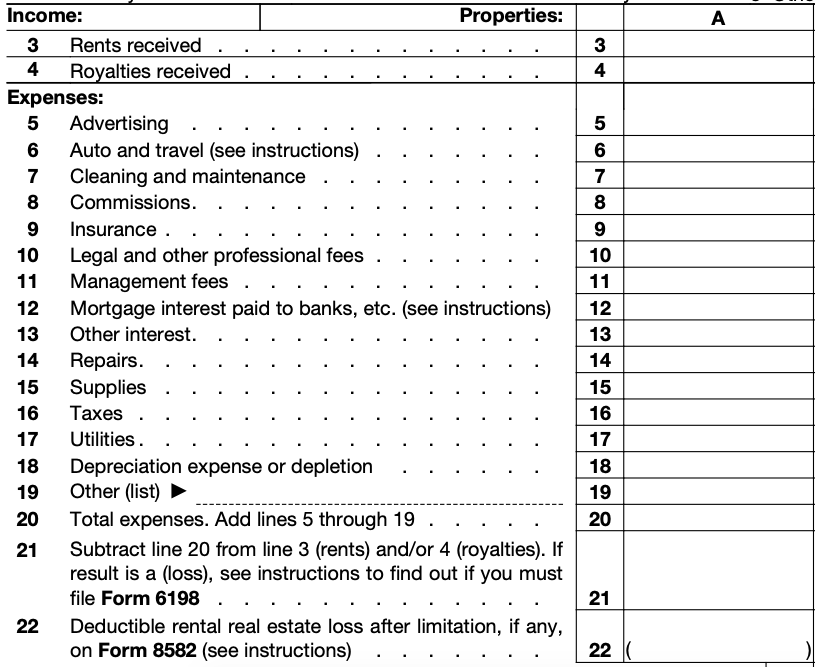
I create a new workbook every year with each house having its own spreadsheet. Schedule E is going to require you to put your income and expenses, per property, not as a whole, so it’s important to have expenses assigned to a particular house. I set up each spreadsheet in an Excel workbook to identify all known costs for the coming year. Not all of these apply, but these are typically the categories of my known costs for each year: property management, HOA, utilities (City of Richmond bills the owner (not tenant) for sewer fees), property taxes, insurance, annual mortgage interest, cost basis depreciation, and prepaid points depreciation. There’s also a chance that you’re carrying appliance depreciation costs (meaning, the purchase of a washer, dryer, refrigerator, etc. aren’t recorded as an actual expense in the year purchased, but are required to be depreciated over its useful life).

As the year goes on, I record any mileage (record the actual miles along with the mileage cost) and maintenance costs. The IRS posts the standard mileage rate for each year here. If a roundtrip to a rental property is 40 miles, then the expense is calculated as 40 miles multiplied by the standard mileage rate, which is $0.56 for 2021. I’ve learned over the years that the software systems just request your miles and do the calculation for you (which is smart and safer on the calculation side), but we want to know what the calculation is going to be, so I enter it as $22.40 in my spreadsheet.

You’ll be expected to input the days your property was vacant, so record that once it’s known.

Each spreadsheet is linked to a master sheet at the beginning of the workbook that shows the net income and expenses for each property. The difference of these amounts are what Mr. ODA uses to adjust his W4 deductions.

I personally assign costs month by month so I can keep track of them, but it doesn’t even need to be that fancy. A running list of these expenses are enough.

The categories are based on what’s going to be requested through Schedule E.

Then in January/February of the following year, I go through my filing cabinet and my email to ensure I’ve captured all of the expenses that I have receipts for, and vice versa to ensure that if I’ve recorded an expense, I have a receipt for it. Having already captured the expenses throughout the year serves as ‘checks and balances’ and doesn’t make the task feel too overwhelming.

Using Credit Cards

Credit card rewards can be lucrative. In 2020, we earned $1,616 in cash rewards based on our credit card usage. That’s money in our pockets that we did nothing except spend other money to get. Plus, over $1,000 of those rewards are in the Chase Sapphire rewards account where the points are worth 50% more when redeemed for travel (i.e., they’re really worth $1,500).

I understand that credit cards can be trouble for some people, but I struggle to believe that people can’t learn how to use them properly and reap the benefits. I’m not here to provide personal financial advice, but perhaps our use of cards and our experiences can help you form your own opinion.

The most common excuse I hear is, “I don’t trust myself.” It takes discipline, but the internet has made tracking your balance even easier. Instead of having to go to the bank/ATM or wait for monthly statements in the mail to know your account balance, you can check it online whenever you want. Either keep a check register to manage your expenses on your credit card as if it’s using a checking account, or get in the habit of checking your balance daily. Heck, as soon as you spend something on the credit card, go into your checking account and pay that amount towards your credit card immediately. If you’re someone who regularly gets hit with insufficient funds fees, this probably isn’t the first step in your money journey.

We don’t pay cash for anything. Everything goes on a credit card unless it’s prohibited or there’s a service charge that outweighs our rewards.

We pay off the balance of every credit card every month. We have never paid interest on a credit card balance.

CASHING IN ON REWARDS

The simplest way to collect rewards is to have an all-category-cash-back credit card (e.g., 1% cash back on all purchases). However, we have several credit cards, and each have a different purpose. It’s more work to keep track of the spending categories and know which card to use in which situation, but if you take those few seconds to think of the right card, it can pay off in the long run. Over the years, the categories for each card have blended together as card companies compete for business and expand their reward programs, so we use fewer cards than we used to. We still have 5 that get used regularly.

Typically, one of our requirements is that it have no annual fee. However, we do break our own rule with one of the cards. If you look closer at the benefits the rewards cards offer that require an annual fee, you can compare to your lifestyle and decide if that fee will be worth it. I highlight each card we use here, but there will be an upcoming post specifically geared towards Chase rewards.

Chase Freedom: This card has different spending categories per quarter that it offers 5% cash back on, and you’re required to activate the rewards each quarter to earn those bonuses. The current category includes purchases at wholesale clubs, internet/cable/phone services, and select streaming services. Typically, we use this card the most when it’s a gas-spending category, which is usually one quarter per year. Other reward categories we have seen are grocery stores, restaurants, entertainment, or department stores, for example. There is a maximum amount of rewards that can be earned each quarter. There’s a lot of fine print associated with this type of card, so you need to make sure you’re aware of what counts and what doesn’t within that category.

Chase Sapphire Reserve: This card has an annual fee – $450. This seems steep at first, but the benefits of this card make it worth it for us. For one, you automatically get $300 worth of credit for travel-related charges (e.g., AirBnB, flights, hotels). The credit happens instantaneously when the charge hits. You earn 3% points (one point is the equivalent of a penny if cashed out) on all travel and dining purchases and 1% points on everything else, but if you redeem the points earned through their travel portal, you get a 50% bonus. We’ve booked several hotels, rental cars, and flights through their portal with the points earned. Right now, they’re also offering the 50% bonus on grocery store, dining, and home improvement purchase credits. You’re given access to select lounges at major airports through Priority Pass, get reimbursed on the fee for TSA Pre-Check or Global Entry, and earn an annual $30 credit on Door-Dash purchases. There are many more perks for this card that you can find on their site.

Citi Double Cash: The card provides 1% unlimited cash back for all purchases, plus 1% unlimited cash back for all payments made. We quickly learned that taking the rewards as a statement credit didn’t count as a ‘payment,’ so we didn’t earn 1% back for that. Since then, we transfer our rewards every month or so into our checking account, essentially giving us 2% back on all of our “everyday purchases.”

PNC Everyday Rewards: This card isn’t offered anymore, but a similar card (PNC Cash Rewards) is available. Our card offers 4% cash back on gas, 3% on cinema/movie rentals, 2% on groceries/restaurants/fastfood, and 1% on almost everything else. We use this card mostly for gas purchases now that we have the Chase Sapphire Reserve (used for restaurants and travel). This card also offers several worthwhile bonuses each month, but it’s on you to activate the reward before using it. For example, I currently have 10 days left on a Panera offer to “earn 10% cash back on your Panera Bread purchase, with a $2.00 cash back maximum.”

Bank of America: This card isn’t offered anymore. We’re earning 3% on online purchases, 2% at grocery stores and wholesale clubs, and 1% on all other purchases. When Mr. ODA got the card, the 3% category was used for gas, but BoA recently created the ability for the customer to choose their 3% category. Since PNC has 4% for gas, we were never able to take advantage of that for BoA and thus changed it to online purchases. So now, every time we order from Amazon we get 3% back! Before we were even dating, Mr. ODA didn’t appreciate that Mrs. ODA didn’t have a rewards credit card. He signed her up for this credit card the first moment he could. It literally went like this: Mr. ODA opens a computer and says to Mrs. ODA, “what’s your social security number?” We’ve since let my card close because we had the same card, and his card was more useful because if he deposits the rewards earned into a BOA checking account, he gets a 10% bonus on them. (Note: We let it close due to inactivity versus actively seeking closure on it because that card’s credit limit and history were useful to Mrs. ODA’s credit score. We’ll get into strategizing credit scores in a future post.)

Think about your lifestyle. Do you have a credit card that maximizes each activity or category of spending that you need (travel, dining, grocery, utilities, subscriptions, online purchases, gas, etc.)? Try and find the happy medium between the number of cards you need and your sanity in keeping up with them. Remember that even 1% cash back on purchases is better than $0. Try to use the cards that hit the most categories for how you spend most of your money.

OPENING NEW CREDIT CARDS TO MAXIMIZE REWARD BONUSES

Back in the summer of 2017, we were faced with a tough decision – find a way to pay for In-Vitro Fertilization or stop our quest to have a child. We had already spent thousands on infertility, and IVF was the next step. It was a minimum $22,000 to the doctor on top of what we already paid, and that didn’t include the medicine that was purchased separately. We were offered a personal loan through the doctor’s office – at 7% interest. Technically, we could pay for the procedure with cash, but we didn’t really want to liquidate stocks, we certainly didn’t want to pay 7% interest when it wasn’t absolutely necessary, and we thought it best to earn rewards on such a balance. That’s where a credit card came in.

We opened a new credit card that offered an introductory 0% interest rate. We basically gave ourselves a free loan. We also selected a credit card that provided an introductory bonus of some sort (e.g., spend $5,000 in the first 3 months and receive a $300 statement credit).

To utilize this approach, you need to be able to pay the monthly minimum requirement; if you miss a payment, you lose the introductory rate and have to pay the interest that would have accumulated on the balance from the beginning. On top of being able to pay the monthly minimum, you also need to have an idea of your financial status over the next year because if you only pay the monthly minimum, you’re going to be looking at a big balloon payment at the end of that introductory term.

Then in December 2019, my pregnancy with our second child became high risk. We knew that we would be meeting our deductible of $3,000, plus any other medical costs associated with my hospital stays and delivery. We opened another credit card at 0% interest to cover those expenses. We then had several expenses that we didn’t expect, but were able to put them on this 0% interest credit card (cars needed work to pass inspection, rental properties needed large investments (main water line replacement, roof, HVAC replacement), and insurance premiums). We paid over $25,000 of expenses between February 2020 and February 2021 on this card.

Each time, we could have paid off the card within the first few months if we wanted to push it. However, we kept our funding more liquid to make it work for us instead of going towards 0% interest debt. We paid well more than the minimum each month, and as we got closer to the end of the introductory period, I projected out our finances to ensure that we didn’t use our money to pay down mortgages when we would need it to pay off that credit card.

Basically, within reason, anytime we know a big purchase is coming, we open a new credit card to maximize the new account bonuses and not having to pay off or pay interest on those purchases for 12-15 months. This usually happens about once a year to 18 months. We find this is an appropriate spread of time to keep up with tracking, not having too many hard inquiries on our credit, and not violating restrictions that credit card companies have on opening too many accounts in too short of a time period.

If you’re smart with credit cards, they can be a powerful tool to wealth building, free travel, and creating other financial flexibilities.

Tenant Satisfaction

A tenant moves out. Days without a tenant in the house equate to less income. On top of that, you probably have to touch up paint or repaint. You have to clean the carpet. You have to clean all the appliances and bathrooms. You may have to replace an appliance. Then there’s the extreme, that you may have to hire a junk removal company to get rid of the debris left behind and then hire a cleaner that charges a hazmat fee on top of the cleaning fee (does it sound like I’m speaking from personal experience?).

Turnover is when one tenant moves out and another moves in. The goal is to make that period of time as short as possible, or even non-existent. There aren’t always scenarios that you, as the landlord, have control over, but making a tenant feel appreciated and heard can keep them living under your roof for more than the initial lease term.

When a tenant leaves, in the best case scenario, you’re losing 1 or 2 days of income ($80). However, it’s also taken us up to 2 months to get a unit rented. That means you’re making 2 mortgage payments without income to offset them. When calculating your cash-on-cash return, the assumption is typically 5% vacancy rate, or about 18 days per year without rental income.

Then there’s the work you need to do to get the unit ‘rent ready’ again. Again, the best case scenario is cleaning the house and paint touch up. We now pay someone to come in and clean the house between tenants; it became worth the $100 to have someone come in, with the right tools, and be done a lot faster and better than I could do. The preference is to not have any carpet in a house, but we do have a few that have carpet that will need cleaned between tenants ($125). We do our own paint touch ups, so it’s typically no cost except my time because we have a standard paint color, and therefore left over paint. Quick tip: if you’re not painting the whole wall, use a paint brush to touch up the areas that need it, and then go over it with a roller to help blend it together, then you won’t see those touched up spots.

However, there may be more work to do than those quick, simple tasks that you can have lined up for 1 or 2 days. Even if the tenant treats the house great, appliances and carpeting have a useful life and may need to be replaced, which involves ordering and scheduling installation.

The end goal: keep tenants happy and not wanting to move means more money in your pocket. Find compromise and don’t always focus on your bottom line – and your bottom line will likely end up thanking you.

In 5 of our properties, we haven’t had any turnover (owned anywhere from 1.5-4.5 years). In 3 cases of turnover, the tenant left due to a job relocation. We’ve had 2 evictions. Our turnover rate for the average years we’ve owned the properties is 1.75, so the majority of the time the tenants renew their lease.

How do we do it? We create a relationship that says we’ll be responsive and listen to issues, we’re reasonable and fairly lenient with paying rent on time with sufficient notice and justification, and we provide houses that are in good condition.

We had a tenant vacate a house due to a job relocation. She had such a good experience with us, that she set us up with a new tenant for their house. Then a year later, she moved back into town and reached out to me. She said they had such a terrible experience with a landlord that if they were to rent again, it would only be from us. We just happened to have a tenant moving out because that tenant was buying her own house, and our newly vacated house fit all the parameters she wanted. That meant we had 2 days of turnover and didn’t have to list the property.

That house really needed a new paint job. We hadn’t painted it when we purchased it, and now it’s 3 tenants in. We didn’t know that until the tenant moved out and didn’t have time to paint the whole house before the new tenants were moving in. To show that we knew the house wasn’t perfect, we offered the new tenant $50 per room and $25 per paint can if she wanted to paint on her own. She was thrilled because she planned to paint some rooms to begin with, but now there was a financial incentive for her.

As for rent payments, if the tenant usually pays rent without issue and they preemptively reach out to tell us that they’ll need more time to pay rent, we’ll usually waive the late fee. Our calculations for the year don’t anticipate collecting late fees, so it’s not a loss of ours to waive the fee, but it makes them feel like we care about them as people. If you’re a tenant: communicate regularly with your landlord. Your landlord doesn’t want to evict you, doesn’t want to tarnish your record, and doesn’t want to put you in a position of financial hardship, but we can’t work with you if you don’t communicate with us.

We had a tenant ask us to put in a backsplash in the kitchen. He explained that he cooks regularly, and food is splattering on the wall, which was painted in a flat paint and didn’t wipe well (painted before we owned it). This is unconventional because it’s more than a request to fix a leaking sink or an inoperable appliance. However, we saw the benefit to install a backsplash in the longevity of the kitchen’s life and the tenant feeling like they got a ‘win.’ We agreed to do a peel’n’stick backsplash, which met the goal of a wipeable surface without being labor intensive. We even gave them options to choose from that matched the house’s color scheme. It cost us $68 and about 90 minutes of our time to install it. This tenant still lives in the home, which we’ve owned for nearly 5 years now.

We allow pets in the properties. Back when we were trying to rent an apartment for ourselves to live, few allowed pets; if they allowed pets, there was an astronomic fee associated with it. We decided to not eliminate the average 50% of pet owners by mandating a pet-free property, and we wouldn’t charge monthly pet fees or high initial fees (though we still charge some) associated with having a pet. Honestly, I have kids and a dog; my dog has never done anything wrong in our home, but my kids sure do make a mess and spill things. We have had issues with pets in our properties, but the owners have done other things wrong, so it was a poor tenant issue, not necessarily a pet issue.

I also feel that if we provide a house that looks clean and well-kept, then the tenant is more likely to keep it in that condition. We’re setting the expectation that this is the type of house that we’re renting, and we expect it to be in similar condition when we get it back. We understand paint scuffs happen, pictures get hung, and there may be a couple new stains on carpet, but the house is to be returned to us clean and put together, which is even stated in the lease. If we handed over a house that was dirty or had dingy paint and carpet, the tenant is likely to not put as much effort into keeping it in pristine condition. This isn’t foolproof. But we charge the security deposit for anything outside of normal wear and tear, and they understand this will happen from the lease signing, as well as the unspoken expectation made by the condition we hand the house over in. People are more likely to take care of properties when its condition is good enough to feel pride in, and will typically not respect it if it’s apparent the landlord isn’t taking care of it either.

Property Management

Property management can be useful and worth the 10% cost, but sometimes it’s not worth having the middle man. Here, I’ll break down our experiences with 3 property managers, but first, the terms of our management agreements. We have three properties in KY under a management company and three properties in VA with a property manager. In VA, we had 5 managed at one point in time, but we sold one property, and another is now managed by us since we knew the tenant and handled all the showings and lease set up.

FEES

Management fee: 10% monthly income. This is standard. If the rent is $900 per month, then you’re paying the management company $90 each month. If the unit isn’t rented, then they get $0.
Leasing fee: 1/2 a month’s rent in KY and $300 per new lease in VA (based on the fee structure of our individual property managers). Standard seems to be one-month’s worth of rent, so we have better fee structure there. In KY, half a month’s rent is about $400. In VA, we rent the houses for more than our KY homes, so half would be more like $500, meaning our $300 fee is a great deal.
Lease renewal fee: $0. We don’t pay either property manager for a renewal. The KY company had 10% of a month’s rent as the renewal fee, but we negotiated out of it. We don’t feel that renewing a lease is outside of the monthly management responsibility.
Maintenance fees: In KY, the agreement template had a 10% markup on all bills paid by the management company. We asked what the monthly management fee covers if not organizing repairs; with no clear answer, the company agreed to remove this fee. However, I have to request the 10% back every time there’s a maintenance fee because their system automatically adds it, and they’re not on top of removing it for our account. Our agreements also include a minimum dollar amount that they can spend on maintenance without our prior approval. This is meant that they can manage small repairs without having to coordinate with us, thereby making the process more efficient.
Unoccupied unit fee: KY also had a $50 per month fee for the months that the unit wasn’t rented. We felt that this disincentivized moving the unit quickly, and we negotiated the removal of this fee.

In all management cases, there’s also a stipulation that the company we sign with has first right of refusal for listing the house for sale.

RESPONSIBILITIES

The property manager is responsible for rent collection, coordinating maintenance calls, move in and move out inspections, distributing notices to the tenant (e.g., late notice), and any legal matters on behalf of us as the owners (which has happened).


VIRGINIA

In Virginia, we have a property manager for a few of our houses. The relationship began because her husband is our home inspector and handyman. Her experience was managing a few higher end properties, and she wasn’t part of a management company, but she is a Realtor. We were buying houses fairly quickly, and we decided it would be worth our time and effort to have someone managing the ones that were further away from our primary residence, mostly to handle the showings.

At first, the property manager would physically collect rent and deposit it into an account we set up just for the rentals. We chose a bank that was near her and us so that it was more convenient. Over the next couple of years, our tenants organically decided they would all pay electronically. We accept rent via Venmo, PayPal, and Zelle. We closed the bank account, since it required a $500 minimum balance, and now only collect rent online.

We’re more hands-on than your typical investor. This agreement allows charges up to $200, but the property manager calls us for everything. Most times, we want the opportunity to fix it ourselves. No reason to pay a plumber $125 for a service call just to replace a toilet flapper. But then 2 kids entered the picture while Mr. ODA works full time, and doing those types of maintenance calls have gone by the wayside. Two hours including driving time, the trip to get supplies, the possibility of multiple trips to resolve the issue, etc. were all reasons that we now rely on maintenance people to handle much of the work.

We learned a lot about the Virginia Code thanks to our property manager and her experience as a Realtor. We also had several filings and appearances in the court system for evictions that she handled on our behalf.

KENTUCKY MANAGEMENT COMPANY #1

Our first house purchase was in Kentucky, while we lived in Virginia. We required a property manager because we didn’t want to spend an indefinite amount of time showing the unit nor handling maintenance issues in a market where we had no connections yet. The first property manager was awful; we picked the company because their rates were the cheapest. We paid for that in the long run.

We had some struggles renting the unit that first go around, but we were told we had an agreement with a tenant for her to move in on April 1st. After a week, we weren’t told that the lease was executed, and when we followed up on it, he said she was coming in the following week to sign for April 15th start. He didn’t acknowledge the difference in what we were originally told. We then had to ask several questions on how we’d receive our rent. It was as if they had never had a property owner expect to see the income monthly. Their expectation, as well as it was defined through emails, was that the money would go into an account they set up, they’d draw down anything needed for management and maintenance, and we may or may not see a ledger. When we asked to be a signatory on the account, they acted surprised that we’d want access to the money. Once we stumbled through account set up, I then had to ask for the statement of expenses month-after-month. There was no automatic process, and it was just when a specific employee got around to writing up the statement.

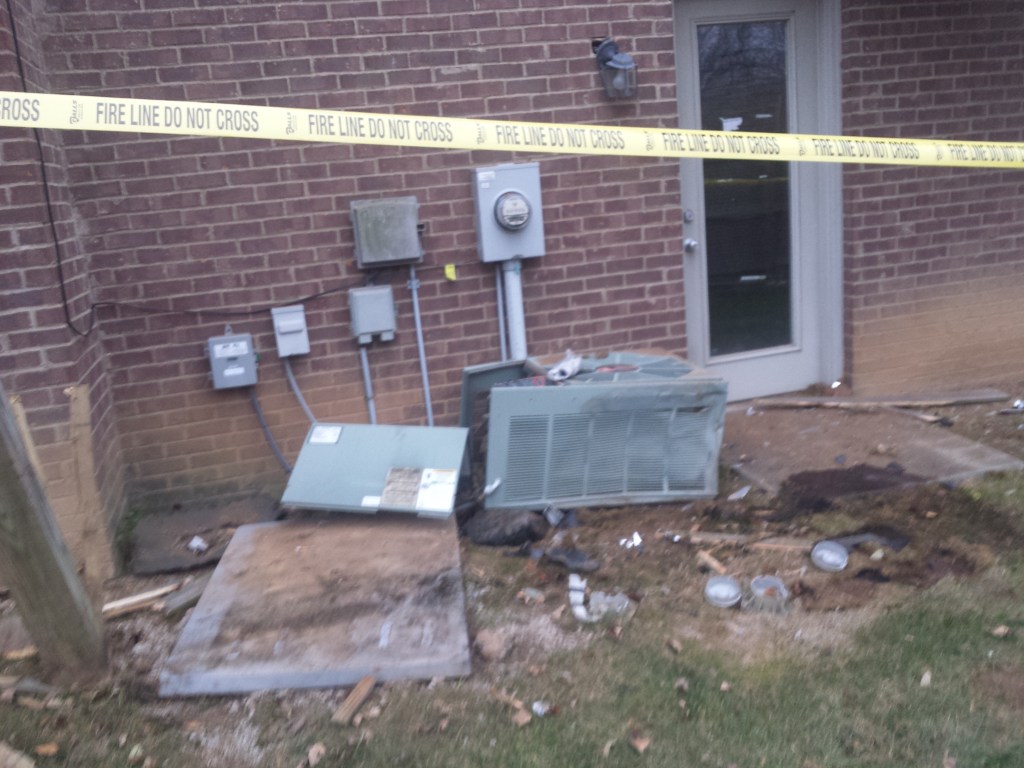
Then, an intoxicated driver drove into our property. Our property manager was out of town and couldn’t check on the unit. We expected someone else in the company to be able to take over when our specific manager was out of town, and that wasn’t the case. We had Mr. ODA’s family go take pictures of the wreck to ensure we got them ASAP.

After raising our concerns about response time to the property manager’s supervisor, we received this response: On a side note, [manager] has become very busy with his role in the company and taken on a very large property so I think this is attributing to some of his slow response times, although that doesn’t make it right or give him an excuse not to answer your questions. After that, we had several issues with the rental rate and whether it was listed for rent. Then, they didn’t push to uphold the lease, which allows us to enter to show the property with 48 hours notice, which would assist in not having a long turnover period of vacancy. They allowed the tenant to deny access over and over again, and they didn’t even start showing the unit until a week after she vacated it. After several more rounds of confusion about what it should be listed at and their complete inability to communicate with us, the contract was terminated.

The tenant moved out mid-April. We had a new property manager in place in mid-May. A two-year lease was executed for June 1st.

KENTUCKY MANAGEMENT COMPANY #2

This company now manages the townhouse and two new properties we acquired in September 2019. It has not completely been smooth sailing, but communication has been better than the previous company and we haven’t felt forgotten about. As I shared previously, we negotiated out of the 10% markup on invoices in our management agreement. However, their system automatically adds the 10%, so I need to stay on top of the charges to make sure they’re at-cost with no markup.

We’ve had issues with the lease terms meeting what we agreed upon. For example, we charge a one-time pet fee and a pet deposit. We expect to receive the fee as income, but it was put in the security deposit account. With the way it was written in the lease, we can’t access that fee until the tenant moves out now. There were conversations about 18-month leases, but then one lease was only executed for 12 months. Luckily, the tenant was amenable to entering a 6-month extension on her lease.

All in all though, it’s worked well that they handle rent collection and depositing the balance of the rent after their fees in our account each month. While there have been hiccups, it’s been nice to know that they have processes in place and we don’t feel like we’re starting from square-one. Even though we now live in Kentucky, we find their management fees to still be worth the cost and don’t plan to manage these properties on our own at this time.

House #1: Off market purchase

Our first investment purchase was a townhome in central Kentucky (while living in Virginia) in February 2016.

At this point, we had purchased and sold our first primary residence, and had purchased a new construction home. Our first home sold for $62,500 more than what we purchased it for and we walked away from the sale with over $130,000. Our new home needed about $70k for closing, leaving $60k that we wanted to use for investment properties.

PURCHASING FROM FAMILY

Mr. ODA’s brother-in-law had purchased a foreclosed townhome while he was in college and rented a room out to his friend – excellent forethought and financial decision making there! When him and his wife got married, they were ready to look into a home with more space and less stairs, so we offered to purchase the house. About 2.5 years after he had purchased it, we set him up to make $16,500.

Their Realtor suggested listing at $90-95k. The comparable sales in the area were suggesting 95-100k, but the townhouse in question had a lower PVA than the others recently sold. There was another townhome in the community listed for sale at $100k, but it had been on the market for 4 months at that time, meaning the market wasn’t interested in it at that price. Additionally, this deal was being done off market, which automatically yields a higher net for the seller because there were no Realtor commissions and minimizes the risk of a listing. They didn’t need to get it ‘show ready’ or have to leave the house for an indefinite number of showings. We removed the uncertainty of how long the house would be listed and therefore how many mortgage payments they’d still be paying before it sold. We also eliminated the possibility of an appraisal and home inspection negotiation during the contract period. For all those reasons, we offered $85,000. We settled on $87,000 with $2,000 in seller-paid-closing-costs. A family member, who’s a lawyer, sent us a template for a contract, so we used that as a starting point, and I wrote up our own contract.

We first looked into a loan assumption. We started with several questions regarding how he was paying PMI (whether we’d have to assume the PMI, whether the PMI would be recalculated for the new appraised value based on our purchase, and whether there would be a penalty if we paid down the balance faster to eliminate the PMI), how the loan balance would transfer cleanly, and whether they needed to cash out escrow. After asking all these types of questions, we learned that PNC wouldn’t allow a loan assumption of an FHA loan since our intent was to use it as an investment property.

We did not do our own home inspection. We figured the HOA would cover the exterior, and we reviewed the home inspection he had completed two years prior. There had been a few upgrades since the initial home inspection, and there wasn’t anything that needed our immediate attention. We bought a new washer and dryer since the unit didn’t have any, and I painted most of it before it was listed for rent.

THE LOAN PROCESSING

Both sides of the transaction were able to sign the purchase contract electronically. We went through the whole loan processing without having to visit Kentucky. The attorney shipped the loan documents to us, we invited a notary over to watch us sign the papers, and then we FedEx’d the papers back to the loan officer for the sellers to sign.

While the closing itself went smoothly, we had several issues with our loan provider.

Our loan was a portfolio loan, which means that it’s a loan on the primary market and not backed by Fannie/Freddie. The interest rate was 4.5%; it was amortized over 30 years, but it had a balloon payment after 10 years. We paid careful attention to this loan (e.g., made many, frequent principal payments) because that meant we’d owe over $59k in 10 years.

It was amortized by 365/360 Rule (i.e., by the day) rather than the way it works in a traditional mortgage (annual rate divided by 12). In a traditional mortgage, the principal and interest difference is based on an annual APR, which creates a consistent amortization that gradually reduces the amount of interest in each month’s payment compared to the principal that will be paid. In the 365/360 Rule, each month’s principal and interest applied to the loan is different because it’s based on the number of days in the individual month. For example, in March, we paid February’s 28 days of interest, and in April, we paid March’s 31 days of interest; therefore, more of our March payment was applied to principal.

Here’s a snapshot of the amortization schedule, reflecting the changes of interest and principal by month.

The bank’s system was antiquated in that we could not make online payments unless we had a bank account with their bank. Being that this bank was in Kentucky while we lived in Virginia, we weren’t interested in opening a bank account and funding it just to pay this loan. This meant that all of our payments had to be sent by check to their location for keyed entry. The people responsible for entering these payments were not aware of the principal-only concept, and we spent almost the entire first year of the loan having to call every single time we sent a principal payment to have them reverse it, apply it as principal-only, and credit us the days worth of interest it cost us. After several months of this occurring and the response being that the teller doesn’t know how to enter it (then teach them…), we filed a complaint with the Better Business Bureau. We received all the interest owed to us as a result and all future payments were applied correctly.

Due to the poor relationship with the bank and the impending balloon payment, we paid off the loan faster than the 10 years. The loan was issued February 2016, and we made our final payment in April 2020.

PROPERTY MANAGEMENT

We hired a property manager since we were not local and didn’t want to manage showings or maintenance issues in an unknown market. The property management fee is 10% of the monthly income. We actually had several issues with the first property management company, but ‘managing the property manager’ is another post. We released ourselves from that first contract and negotiated with another company, who has been managing the property for the last 4 years.

We have also had to manage the HOA company to address water leaks that stemmed from the brick facade. Both times, the issue presented was eventually resolved, but never in a timely manner. Unfortunately, we are responsible for interior fixes (e.g., drywall) caused by the exterior cracks, which are covered by the HOA since it’s a townhome.

One final interesting story about this house. In November 2016, just a few months after we purchased the house, an intoxicated driver crossed the center line, hopped the curb, drove through the fence, and drove into the back of our townhome, destroying our HVAC unit and taking out a post of the 2nd story deck. It was a Sunday morning. We didn’t pay anything for this incident. The HVAC and a broken light were covered by the insurance company; the deck was repaired by the HOA’s management company. It was an incredible incident.

The townhouse hasn’t been easy to rent. We actually looked into selling it, but our property manager, who is also a Realtor, thought we could only list it at $90,000, which was not something we were interested in, having purchased it at $85k. Once the place is rented, we don’t have issues with maintenance, rent payment, or tenant-related issues. It just takes a month or two of vacancy before we find a qualified applicant. We have offered incentives for leases longer than 12 months to help eliminate our turnover rate and number of days vacant.

PMI – Private Mortgage Insurance

Don’t pay it. Get creative for your down payment. Here’s a brief on how PMI works and how we avoided paying it.

What is PMI?

A lender typically requires PMI when the loan is greater than 80% of the loan-to-value (LTV) ratio because it’s higher risk for them. If a buyer has less of their own money as equity in the property, the bank views this as a higher probability the homeowner will default on their loan. With that, the PMI is required until the borrower reaches at least 80% for the LTV ratio and the loan is in good standing for at least 5 years. This typically means that a borrower needs 20% of the purchase price as a down payment. There are a few exceptions, but overall, if you don’t have a 20% down payment, you’ll be paying PMI.

PMI can be up to 2% of the loan balance. The lender uses your credit score/history, the down payment amount, and the loan term to evaluate your risk and set the PMI rate.

While there are requirements that the PMI must be removed when your loan hits 78% and 5 years in good standing, you can request the removal of PMI earlier if your house value has risen (e.g., market fluctuation, improvements you made). If you request the removal of PMI, you may be required to pay for the new appraisal, which is an added cost. You should weigh the cost of the appraisal against the remaining payments. In a broad example, if the appraisal costs $450, and your monthly PMI is $120, then as long as you have more than 3 months left before hitting the 78% LTV ratio, it’s worth paying the appraisal fee to have PMI removed. There is also a risk that the appraisal doesn’t come back with a high enough house value, so you should be confident in your home’s value before requesting said action.

How did we avoid paying PMI?

While we were more than qualified to purchase a home in the D.C. suburbs based on our debt-to-income ratio, we restricted ourselves to what we could afford as the down payment.

A bank qualifies you based on your debt-to-income ratio. If you have low recurring monthly bills, then you’re qualified for a larger loan. At the time, our only recurring monthly payment was on my vehicle, at about $350/month. The bank pre-qualified us for about $700,000. Sure, we could “afford” a monthly payment on a $700,000 mortgage, but then we couldn’t eat, sit on furniture, or do anything else. 😉 We’d also be paying PMI because we didn’t have 20%, or $140,000, to put down.

Also due to our low debt-to-income ratio, we couldn’t qualify for any programs that would allow anything less than a 20% down payment for a mortgage. We set our purchase limit at $350,000, which meant we would need $70,000 for the down payment, plus closing costs. Due to the limited inventory at that price in the DC suburbs and the knowledge that we were pre-qualified for double what we were searching for, our Realtor kept pushing us to raise our purchase price. However, we advocated for ourselves and kept our focus on what we could afford as our down payment so we wouldn’t pay PMI. After months of searching and seeing places that were literally missing floors and walls, we increased our search to $400,000, hoping that if we found something in the 350k-400k range, we could negotiate it to 350k.

Our move to the D.C. area was not in our original plans. Mr. ODA had been saving through high school and college, expecting to buy a house in a lower cost of living locality. When we moved to D.C., we knew that we would need to change our expectations and day-to-day actions. We rented an apartment in Fairfax, but we didn’t want to be putting over $1600 per month towards rent for long, and we’d prefer to be paying towards a mortgage and building equity in a home. Positives to owning a home: mortgage tax deduction, appreciation, and the equity building that you get back when you sell the home.

While we rented, we were conscious of our spending. We aimed to spend less than $10 per day on food between the two of us, and we limited how much we ate out. We did activities with Groupons or restaurant.com coupons.

We moved to DC in December, and over the summer, we put an offer on a flipped foreclosure. The listing was $384,900; our offer was $380,000 with $2,000 in closing costs. It was denied by the bank, as we were told we were the 2nd best offer of 3. The next day, we got a call that the bank countered our offer. Apparently, the first offer attempted to negotiate their offer further, and the bank moved on to us. They countered $380,000 with no closing costs; we accepted. We now had to scrounge up about $80k for closing. 

We looked into a Thrift Savings Plan (Federal government’s 401k) loan. Many warned us against the idea, but our research showed it wasn’t as much of a concern as others let on. The details of this loan option are on another blog post. We decided to each take a residential loan from our accounts. I took a $15,000 loan and Mr. ODA took a $25,000 loan. We also borrowed $5,000 from Mr. ODA’s parents and paid it back within a couple of months. We avoided PMI.

An argument heard about not owning a home is that it costs a lot to maintain a home. While owning the home for 3.5 years, we gutted the main floor bathroom ($4,000), replaced the AC ($3,600), replaced the hot water heater ($1,100), resolved termite issues with treatment and wall replacements ($2,000), laid carpet in the basement living area, improved the yard through grass maintenance and purchased a shed, and painted a few rooms. We sold the home for over $60,000 more than we purchased it for (tax free since it was our primary residence the whole time), far more than the minimal expenses we put into it.

Key takeaways from our experience:

  • The efforts we put in to avoid paying PMI meant we had another $100-200 in our pockets per month. Instead of padding the bank’s ‘pockets,’ we paid ourselves back with interest into our retirement account.
  • We lived below our means, saved, and kept focus on the big picture.
  • We pushed ourselves to our financial limits to begin building equity in a home, rather than paying rent to a landlord (or in our case, an apartment company). The efforts put in that year have paid off time and time again, starting with selling the home 3.5 years later for a profit that led to some of our first rental purchases.