Hear more from Mrs. ODA

Back in May, I was a guest on Maggie Germano’s Podcast, “The Money Circle.” I shared some of our background and how we started investing in real estate. We brushed on topics like establishing an LLC, tax advantages, and how you don’t need to start big to just get started. It was a brand new experience for me, but I’m passionate about our real estate experiences, and I loved being able to share. I hope you’ll check it out!

The Duds – Walking Away From Contracts

I just shared the details of the home inspection contingency in the real estate purchase agreements in my last post. I was laying the foundation to share what we’ve encountered to invoke the termination clause of the home inspection contingency.


COMMERCIAL PORTFOLIO

There was a time where we were trying to grow fast. We wanted to work smarter not harder, so we investigated commercial portfolios instead of buying one single family house at a time. We worked with our Realtor’s office’s commercial team to find an off-market deal of several houses. The owner of all these single family houses had lumped several houses in his portfolio by geographic area of Richmond, VA. He had provided us with 13 ‘sub-portfolios’ to review, but he was willing to sell individual houses.

We went through the entire portfolio to decide which houses we were interested in. We were able to eliminate several from the start because his rent to purchase price ratio were far from the 1% Rule we aim for (the monthly rent amount (e.g., $1000) is 1% of the purchase price (e.g, $100,000). We identified 10 houses we wanted to see and met up with the owner’s property manager to get into each house. Afterwards, we went through the list of houses, the comps we could find for purchase price, and discussed the condition of each house as we saw it. We ended up making an offer on 5 houses.

We received the ratified contracts on May 9th of that year, and we immediately contacted our home inspector to come through the houses with us. We met with the property manager, our home inspector, and our Realtor to inspect the 5 houses in one day. We negotiated with our home inspector that he didn’t need to write a report for each of the houses; I would take notes as we went through everything, and he wouldn’t charge us full price for the inspections.

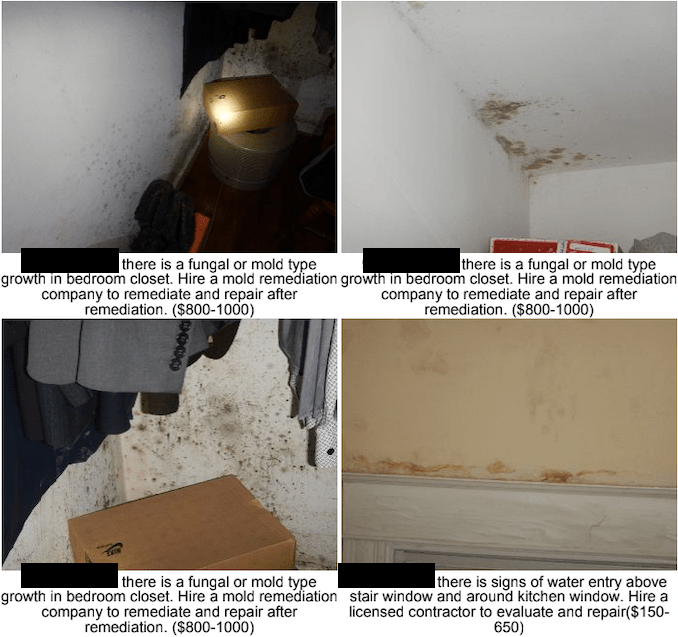
We knew the houses weren’t in great shape, but we weren’t prepared for all the details we found in the home inspections. During our time at the houses, the tenants were quick to complain about the maintenance on the properties, saying things would take a long time to get fixed or they wouldn’t ever be addressed. The inspection found strong evidence of mold, patch jobs in structural beams in the crawl space, appliances not in full working order, windows screwed shut, and several other minor things.

We attempted to negotiate by the seller providing $10,000 per house in seller-paid closing costs. We didn’t ask for anything to be fixed because we saw the work that had been done in these houses, and we wanted it done right. The seller denied our request for funds to address the home inspection issues, and we walked away from all of the contracts.


FIRE DAMAGE

This was a hard one for me to walk away from. The house itself was in a high-crime neighborhood of Richmond. However, only THREE! parcels away, houses were being torn down, rebuilt, and sold for significantly higher than purchased. I saw the potential of the area’s revitalization. But we were not in the business of flipping houses nor doing major repairs. Not only were we not interested in that because we wanted to be able to create the cash flow as fast as possible, we also want to be able to hold these properties as rentals instead of flipping them so we maintained a continuous income stream.

There were several concerns when we walked through the property. The kitchen was a mess, there were signs of water damage in multiple places, the floor felt soft upstairs, the upstairs deck didn’t seem stable, the house needed a lot of TLC with the overgrowth, and then best of all – clear fire damage to the structure of the home when we went in the basement.

This isn’t a picture from when we were looking at the house, but this is the condition 3 years later, which shows just how ‘great’ of a house it was. 🙂 This is the backyard.

We were under contract for $72,500 in May 2017. The house recently sold for $296,000. Although it seems we missed the opportunity that I felt was there, I found pictures of a failed flip attempt in 2019/2020 that uncovered even more damage behind the walls than we even knew (although we suspected), and none of the houses around it have sold for nearly $300k. Therefore, we don’t believe that was a reasonably-expected sale price had we taken this beast on. And what’s not known in those numbers is just how expensive the flip was to that owner, both in headaches and wallet!


A KENTUCKY MESS

Mr. ODA went to see a house in Winchester, KY without me (it was easy because he was working near there, and it wasn’t worth me packing up our baby to go walk through a house that we may not even want). He and our Realtor walked the house and decided it was worth putting an offer in. The house had two units set up inside it, which was a goal of ours (duplex = one building the maintain with two income streams). The cash flow on it was great, so he probably turned a blind eye to too many negative issues during that first visit.

The inspection was $500. I was there for the event, but didn’t walk the house with the inspector. He ran through everything with me after he was done, but the tenants were present, and I didn’t want to bring my baby into their smoke-infested house (first red flag because we don’t allow smoking in any of our properties).

The first thing the inspector said was that the roof needed replaced. He pointed out that several tree limbs were in contact with the roof, and the roof had considerable algae growth on it. Basically, everything on the outside of the house needed repaired or replaced: siding, decks, roof, gutters, removal of vines on the house, negative slope of ground towards the house. The doors and windows were old and broken, so none had the proper seal to prevent water infiltration, in addition to not being able to maintain temperature.

On the inside, there were several code violations with how the kitchens were built (e.g., venting for range), and several large cracks in the walls, some of which were patched poorly and never repainted. There were five or six electrical issues that needed to be addressed immediately because they were a fire hazard. There were signs of water damage in the ceilings, as well as in the bathrooms where the peel and stick tiles were ‘floating’ and warped.

As if that wasn’t enough, the straw that broke the camels back for me was the head room given for the upstairs unit entrance. The required head space by code is apparently 6’6”, and we only had 5’6”. This seemed to be a big problem because an average man is 5’9”, and the average height of women at 5’4” doesn’t exactly give much wiggle room.

I was worried about all the work that needed to be put into this house. The tenants weren’t taking good care of the house, so it wasn’t worth putting a lot of money into it, just for them to destroy it. They had been there for a while, so it wasn’t like they were going to leave voluntarily any time soon. The neighborhood wasn’t in great condition, so a fully renovated house wasn’t called for when it came to resale or the type of client looking for a rental there.

It was a difficult balance, but the house had way too much deferred maintenance, way too many things poorly fixed/maintained when there was an attempt, several unfinished projects, and too many code violations to move forward. Mr. ODA really wanted to buy a house in this area before the summer was up, and he was pushing for the cash flow side of it since it had two separate units bringing in income. But that cash flow is non-existent if you’re having to put it back into the house.


These are the three main stories that have stuck with me. We learned a lot about houses through the process, and we feel we made the right decision on each of them to walk away. Through these experiences, we solidified our decision-making to focus only on houses that have been properly maintained and require little work to get rented. Having a unit already rented with long-term tenants isn’t always the “diamond in the rough” that you think it is.

The inspection is buying you information. Once you find out that information, the money is a sunk cost, and you should use it to now choose if the house is still worth owning or not. While inspections aren’t exactly cheap and aren’t tax deductible if we don’t buy the property (if you have a legal strategy, drop it in the comments please!), that information gained is important. That $500 “lost” is better off because you’re not buying a money pit that will cost a lot more in the long run. Remember, this is a business, and it’s best to keep your emotions out of it. Don’t pinch pennies and end up costing yourself big dollars later on.

Most times you’ll do an inspection, find some things to fix or negotiate down on the purchase price, and even find yourself in a situation where the inspection “pays for itself.” Other times, it doesn’t work like that. Life lessons can cost money, and inspections can help point out duds so that those lessons don’t end up costing a lot more.

Happy investing!

Home Inspection Clause

I’ve mentioned that you shouldn’t be afraid to [legally] walk away from a contract on a house that isn’t going to work. I thought it would be fun to run through the duds (houses) that we walked away from and why, but first, what is the home inspection clause and how does it work?

The home inspection contingency is a clause within the real estate contract that allows the prospective buyer to enter the home and inspect it before closing. The clause usually has an expiration date on it, meaning the inspection and any negotiations need to be done within X days of the contract ratification (ratification is once all parties have signed). I would recommend using a professional to look at the house, versus you thinking you can find the signs of a major a problem. It will cost you 1-2 hours of time and about $300-$600.

It’s important to note that even if a house is sold “as is,” you can still inspect it, ask for corrections, and/or walk away from the contract. “As-is” just means that the buyer should not enter the contract with the intent of the seller doing anything for them. But really, anything in life is negotiable, right?

Additionally, putting a home inspection clause in the contract doesn’t mean you have to perform a home inspection. So put the clause in there as a means to ‘escape’ if you need it.

THE LEGAL LANGUAGE

I was going to share a screenshot of one of our contracts, but the home inspection section is over a page long, so I’ll paraphrase. The contract was subject to a home inspection, and the Purchaser had to “provide the seller with all inspection reports, cost of repairs and Purchaser’s written repair request no later than 10 days after the Date of Ratification.” It continues to state that the inspection is paid for by the Purchaser, and the Purchaser cannot require the Seller to perform any inspection or pay for it. Then there is an outline for how long each party has to review the request and return it to the other party (e.g., negotiation period). Finally, there’s the clause that allows the Purchaser to walk away.

In one of our Kentucky contracts, it also states that all inspections must be ordered and paid for by the Buyer, and that the Seller must provide reasonable access to the property to perform inspections. Interestingly, the Kentucky contract focuses heavily on removing any responsibility from the Realtor(s) during the inspection process. I hadn’t noticed that nuance before, and now I’m curious how much has gone wrong in Kentucky that there are several sentences along the lines of “The parties hereto release the above Realtors and real estate companies from, and waive, any and all claims arising out of or connected with any services or products provided by any vendor.”

The Kentucky contract’s home inspection contingency is as follows. “The BUYER hereby agrees that he/she has inspected the property and hereby accepts the property and its improvements in its present “AS-IS” condition; with no warranties, expressed or implied, by SELLER and/or Realtors. BUYER may have the property inspected and may declare the contract null and void, with earnest money returned to the BUYER, by notifying SELLER or SELLER’s agent in writing within 15 days from contract acceptance. Failure to have inspection and notify SELLER or SELLER’s agent in writing within said time shall constitute a waiver of this inspection clause and an acceptance of the property in its “as-is” condition. The time frame established in this paragraph is an absolute deadline.”

I’ll say it again: I applaud Virginia’s plain language use in their contract templates. While the home inspection clause is lengthy in Virginia’s template, it’s written in an easy way to read and understand, unlike this Kentucky paragraph. I’ve also read New York’s template, and it’s even more painful to read and is written in legal jargon.

Quick aside. Virginia is a “buyer beware” state. This means that the seller does not have to disclose anything about the condition of the property to you. Whereas Kentucky requires the seller to fill out a form that identifies all known issues. Know the requirements where you’re purchasing/selling.

THE INSPECTION

Remember that you need to have the inspection completed and the inspector’s report written up with enough time for you to review it with your Realtor and decide how to proceed (e.g., ask the seller for repairs), all within the timeframe established in the contract (e.g., 10 days from ratification). If you want the house inspected, you should look to hire that individual within the first day of ratifying the contract.

When you hire a home inspector, they’re going to look through the house and identify any deficiencies. They’re looking at all the major mechanics of the house, identifying any safety issues, recommending repair/replacement, and making note of items that aren’t currently a concern but may develop into one. You should have a good understanding of the house’s foundation, roof, plumbing, HVAC, electricity, and appliances through the inspection.

While it’s not required for you to be there during the whole inspection, I’ve found it to be more helpful if you are. We’ve done it where we were present through the entire thing, but there’s a lot of down time for that, and we’ve been there just for the end to get a walk through of the findings. If you’re not there to see it in person, the pictures and explanations may not be completely clear.

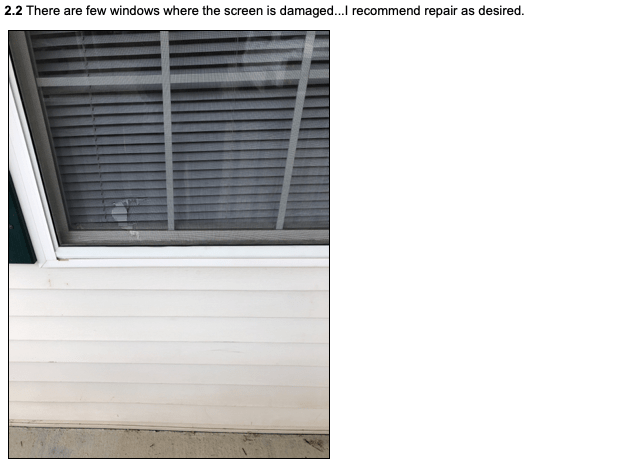
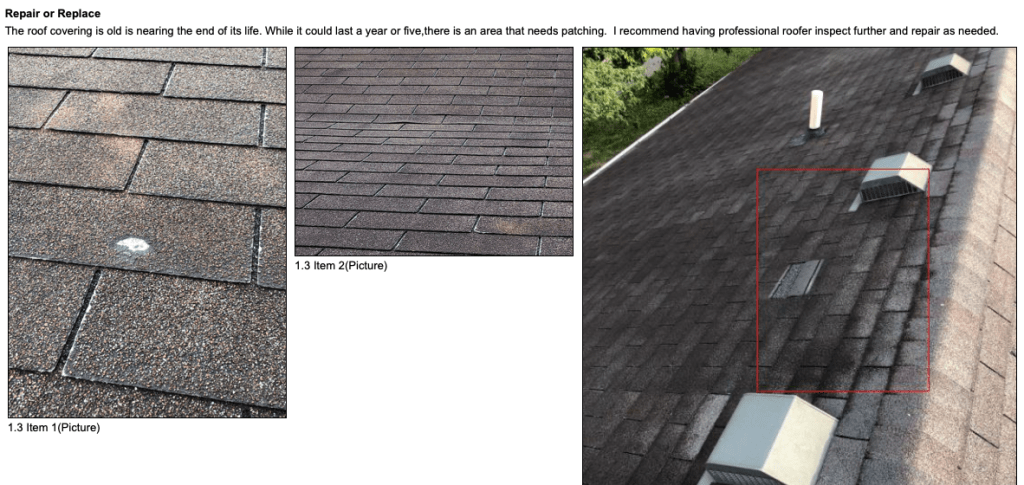
The inspector will provide you with a detailed report within a couple of days of the inspection, which has pictures of the deficiencies and possibly an estimated cost of repair. The issue could be as small as paint imperfections, or as big as a structural issue. Here are some examples we’ve had on homes we did purchase.

BUYER’S NEXT STEPS

  • You can accept the deficiencies identified and take no further action. Sometimes there’s a contract addendum that’s required where you state you completed the home inspection and are requesting nothing from it.
  • You can request repairs from the seller, or you can negotiate the contract price to compensate for the deficiencies. The seller is unlikely to address superficial notes (e.g., painting), but may take notice for any major issues (e.g., gutters, roofing, HVAC). You can request the seller to repair any item from the list, but understand that you’ll catch more bees with honey. If you submit every item to them, they’re more likely to say no to many items on the list, and you no longer hold the control of what’s getting fixed. If you provide a short list that appears important, they’re probably going to accept the repair list. The list should be formally submitted (i.e., signatures) to the seller, and the seller should have to sign the list, agreeing to the repairs, within a certain period of time. As good practice, the buyer should be walking the property within a day or two of closing; you want to verify that the house is still in working order and the same condition as when you signed the contract to purchase. We did have an issue where the seller was not performing the tasks agreed to on the home inspection request form, and we had to make a few trips to the house to ensure it got done.
  • In extreme cases, you can invoke the termination clause and walk away from the contract. We did this on a house that several maintenance issues that were deferred and a structural issue; on another house that had several issues that were fixed poorly and one tenant showed us a huge mold issue in a closet; and on another house that had fire damage that was never fixed. Sometimes the seller will request the home inspection report. It’s a service you paid for, so you’re not required to provide it (but check your contract language to verify you’re not required to turn it over).

HOME INSPECTION MINDSET

If fatal flaws are uncovered through the inspection, you may feel like you’re committed once you’ve spent $500 on a home inspection; think of it in terms of how much you’ll save in headaches and costs down the road fixing all the things that you were made aware of through that process. Real estate investing is a business, and sometimes there are just costs of doing business that may not feel good, but are worth you moving forward in a positive direction in the long run. Just know that the home inspection contingency is a tool in your tool belt as a buyer.

The 4% rule – How does Real Estate Play In?

The common goal in the FI/RE (Financial Independence, Retire Early) community is to reach a point where your net worth is 25x your annual spending, meaning your expenses are 4% of your net worth. This is an extreme oversimplification of things because of the number of variables associated with where your net worth might be, and how to access it. For example, retirement accounts have requirements to be met before drawing funds; while you may have hit the 4% expense to net worth ratio, it may not mean that you have that money liquid to cover your spending.

When the ODAs started down the path of FI/RE, we did it with a real estate rental portfolio. This path of net worth growth really doesn’t fit the traditional mold. It provides regular cash flow, rather than an account with a balance that’s drawn down. 

As mentioned in previous posts, there are numerous ways to make money in real estate. The path we have taken is probably one of the simplest and most repeatable for anyone. We own a portfolio of single family rental houses, most of which were bought straight from the MLS. These basic properties are in basic neighborhoods with regular tenants. Nothing special. We acquired these properties by focusing on the 1% rule in real estate – try to secure 1% of the property’s purchase price in monthly rent. Another oversimplification of how things really go, but if we were able to find a $100k property that rents for $1,000 a month, we know we’re going to make money long term. 

For these properties, we typically put 20%-25% down and finance the rest through a conventional mortgage. We find a tenant, and then the 4 ways to make money in real estate go to work for us: appreciation, tenant mortgage pay-down, tax advantages, and most importantly for our situation and FI/RE – cash flow. 

I want to talk about how we can reach a FI/RE number through real estate cash flow differently and more quickly than using traditional stock market investing. 

The $100k house had a 20% down payment and mortgage rate at 5% interest, which brings the monthly principal and interest payment to $429. Add another $121 for taxes and insurance (using round numbers here!), $100 for maintenance and capital expenditures savings, and $100 for a property manager; this comes to $750 worth of monthly expenses. At $1,000 per month of income, you have $250 per month of cash flow in your pocket. $250 per month equates to $3,000 per year of cash flow. With the $20,000 down payment and about $5K in closing costs, it means that our $25k investment nets us $3k per year in cash flow. 

Circling back to the 4% rule for stock market investments, $3k in cash flow requires a savings of $75k. But we only had to invest $25k! We’re banking on the monthly cash flow, rather than a “stagnant” savings.

We took that math and ran with it. Our rental portfolio has 12 houses in it. While we’ve shown in prior posts that each house’s numbers aren’t as clean and simple as this example (some better, some worse), if we take that $3k annually and multiply by the 12 properties, we have $36k in annual cashflow for only $300k invested. 

What would you rather need to produce $36k income – $300k or $900k?

Can you scale a rental portfolio to reach enough annual cashflow such that you can live off the cash flow? 

Rental property investing is not completely passive. We have tenants to manage, properties to maintain, property managers to manage, income and expenses to track for taxes, lending efficiencies to explore, and the list goes on. But if you’re willing to put in a little work to reach financial independence (the FI part), you can do it substantially faster by finding strong properties to provide significant cash flow than if you were to take the totally passive route of simple stock market (index fund) investing. 

Note, there’s nothing wrong with that – we have a substantial position in the stock market due to the tax free growth benefits of retirement accounts. The power of real estate investing saw our net worth grow faster than we’d have ever dreamed since we bought our first rental in 2016. The proof is in the pudding and we advocate to anyone to just get started!

New Flooring

I had this post teed up to share at the beginning of the month. I thought the story line was going to be that I went on vacation while all new flooring was installed in a home 500 miles away with little effort by me. It’s no longer a positive story. This post is to share that there’s struggles, but they’re only a few weeks of the year. It’s not a cumbersome year-long process to have rental properties.

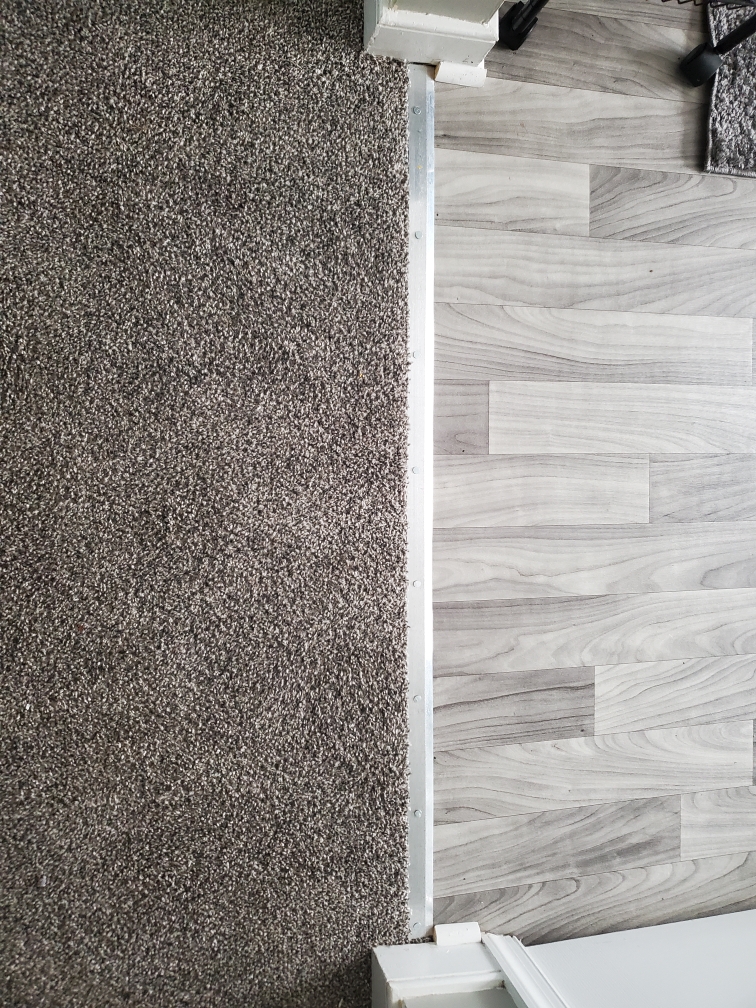
This house has the same tenants in it from the time we purchased it in 2016. They’re a family of 5 with a dog, so it’s not surprising that the carpet reached its useful life. I don’t know when the carpet was installed, but I assume it was right before these tenants moved in, which was a few months before we purchased the house. The carpet was matted down in the high traffic areas, and it was starting to separate at the seams. The vinyl between the kitchen and laundry room was also peeling back. While I wouldn’t typically look to do such a large project while tenants are still living there, we made the exception to keep them happy and wanting to stay even longer. We decided to replace all the flooring in the house, except for the bathrooms.

My first lesson learned: keep these major projects to vacant houses. While there are exceptions, such as these long term tenants, the tenant just doesn’t understand the work that’s going to go into it. We had a bad experience that dragged this out for multiple weeks, but even with that, the tenant had a lot of complaints about having to move their closet things and move their furniture. I kept reiterating that it’s short-term ‘pain’ for long-term gain, but he kept wanting to tell me how much work it was. It was hard to not retort that he asked for this and we could have said no.

PURCHASE PROCESS

The experience to purchase the carpet was less than satisfactory. We’ve had several positive experiences, so I wasn’t going to name the company over this one incident, but it just keeps getting worse, so here it is: Home Depot. Eight phone calls before installation, and that doesn’t count the mess I’ve managed for the last two weeks. Typically, I would just go into the store to make the purchase. However, our closest store is now a half hour away, and they have an 800 number, so I thought it would be fine. I should have just driven down to the store after the measurement was done.

I was trying to compare replacing all the flooring with vinyl plank against putting sheet vinyl and carpet back in. In a previous house, we spent slightly more by tearing up the old carpet and refinishing the floors under it. We saw it as a long-term investment. Instead of replacing carpet every 5 years, we just needed to mop the floors, and they’d last longer. For this house, since I knew vinyl installation was expensive (relative to carpet), I thought maybe it would be better for us to spend more to get hard surface flooring installed throughout the house instead of replacing in-kind. The house was built in 2007, so I didn’t have the prospect of beautiful hardwood flooring already being under the carpet.

Home Depot’s process to compare the two was painful at best, so I gave up on the comparison between carpet/vinyl and hardwood/vinyl plank.

They run a promotion that carpet is free installation if you spend $600. Apparently, that’s only for non-in-stock carpets. So I asked, “which aren’t in stock?” Their response? “I don’t know; we just need to try SKUs to find out.” Quite an inefficient process. Our carpet and installation came to $1.24/sf, so I quickly priced out of the SKUs that were less than that without installation in our trial and error process of finding carpeting.

The sheet vinyl always comes with a high installation price tag, so I was ready for that. I wasn’t ready to be told that several of the first ones I tried weren’t eligible for installation. I was left with one option, but luckily it’s a pretty gray-wood-look.

I finally approved the carpet and sheet vinyl options after 3 phone calls and the measurement appointment.

The receipt I received after I paid said that there were some items to pick up. Well, if I’m paying double the cost of the material for it to be installed, I don’t intend to go pick up product. That took 4 phone calls to get squared away. And honestly, it wasn’t even any of the calls I made that solved it; someone from the store called me to ask if I wanted to move forward with my quote (that I had already accepted and paid for in full), and she got it all figured out so that it was right. Or so I thought.

INSTALLATION DAY

The installer showed up to the house without the material. He missed the note that he had to stop and pick up the items because, for some reason, that’s not the norm. I truly am confused that I pay for the installation of a product, and it’s my responsibility to gather all the materials (lifting, carrying, organizing, storing) until the installation day. I hadn’t encountered this before. In the last house that we put vinyl in, we purposely saved $75 by borrowing a friend’s truck and bringing the vinyl there. That was an active decision to change their norm of delivery, so this was surprising.

The installer removed the vinyl in the kitchen, and then went to the local Home Depot and gathered the materials. He was gone from the house for 2.5 hours to do this, with the store 10 minutes away. When he returned to the house, he got the carpet completed (which honestly was impressive) in the rest of the house, and then around 7 pm told the tenant he couldn’t do the vinyl because of damaged subfloor in the laundry room. I’m frustrated because 1) he could have done the kitchen part and returned for the laundry room part, since there once was a seam, and I don’t think they would have tried to cut and mold around a doorframe to keep it all one piece; and 2) he could have told me this when he removed the vinyl before noon, so I didn’t lose a business day trying to get the subfloor taken care of.

I didn’t even know the whole story. I had to call the installation company (i.e., not Home Depot) to ask why I hadn’t been told the next steps. The customer service representative didn’t know what I was talking about. She had to call the installer to find out the story. The installer claimed that there was a “huge” “pool” of water on the floor and water was just continuing to pour into the house at the door jamb. I found this hard to believe. These tenants call us over every single weather crack in the drywall; there’s no way they had water coming into the house and didn’t tell us about it. Regardless of my frustration, the result was the same: I had to find someone to fix the damaged subfloor.

Our handymen options that we’ve used were unavailable for weeks, so we asked a friend of ours if he wanted to make some money and take care of it. He did a great job! He cut out the rotted wood and laid new plywood and luan. We would have preferred the installers handle this. It’s surprising because for a roof replacement, we sign off that they will repair any damaged plywood during their installation and bill us for each piece laid. Why can’t the flooring be the same set up? It became especially frustrating when we heard that the next installer was cutting wood on site.

INSTALLATION DAY: ROUND 2

Now we needed to reschedule the installation. I called as soon as our friend finished the job, and they said they had an installer who could be there the next day (a Friday)! I should have known it wasn’t a good thing that they could fit me in last minute. The arrival window, for this man coming from Maryland to Richmond, VA, was 10-1. At 12:30, he told me he was almost at Home Depot to get the materials. Well, the materials were at the house, which I told him. So then somehow, he took his sweet time, and at 1:30, he called to ask me where the address was. I told him the address and that no one else had an issue finding this house. He told me he had arrived at about 1:45.

At 4:00, my tenant called me to tell me that he helped the installer move all the appliances into the living room and that he hadn’t been in the house yet because he was outside cutting wood in the rain. Wait. I just had to repair my subfloor because of water damage, but you’re out there cutting wood in the rain to put into my house while it’s wet? I was also irritated that all the appliances were moved before the job was ready to be started. I called the installation company, and I was livid. I was already frustrated with the communication and process to date, and this was just icing on the cake.

As I was complaining to them about the situation, I received a text from my tenant saying that the installer said he was quitting for the day because of the rain and MAY be back tomorrow. He left, leaving the appliances in their living room, with no certainty that the job would be completed the next day. So my tenants were left without an operable kitchen (violation on me at that point) and with a cluttered living room, with no certainty it would be put back together the next day. Plus, this was originally a two day job. One day was already taken with ripping up the vinyl and replacing the carpet, meaning only a few hours should be needed to lay the vinyl. To be told this is going to be a two day job just for this installation is wrong.

The installation company tried to tell me to be patient because the installer is coming from Maryland. It’s not on me to account for this man’s 2-3 hour commute. I can’t work in DC, but live outside of DC (like many do), and say to my employer, “I live 3 hours away, so I can’t start before 11.” No. That man should leave his house at 6 to account for that difference, or you shouldn’t assign this man a job that’s too far away. Don’t inconvenience your customer, making a 3 hour job into a two day job, because your installer lives outside the region.

The company made the installer go back to the house to fix it that night. Instead, he just picked up the wet wood and tools, and left the appliances for my tenant to return to the kitchen.

INSTALLATION DAY: ROUND 3

I was adamant that installer #2 was to not return to the house. The next available date was a week later, and I said I’d rather it done right than fast. The new installer came and finished the job in under 3 hours.

RESOLUTION

The flooring is in. The communication and process was horrific. While managing the installation company, I also had to manage the tenant’s expectations and hear out his complaints. It took more effort than I anticipated, but it’s now over, and I shouldn’t have to deal with flooring in this house for another 5+ years.

This was self-inflicted. I chose to replace the flooring while a tenant was still in there because the flooring was degrading and they’ve been good tenants for over 5 years. In the future, I’d prefer to hold off until there’s tenant turnover, or I will more clearly communicate how the process works and how much effort it will take to manage while living there.

BONUS: TAXES

Quick teaching moment. The entire cost of full flooring replacement cannot be captured in this year’s taxes. The IRS expects the cost of flooring to be depreciated over its useful life, which is 5 years.

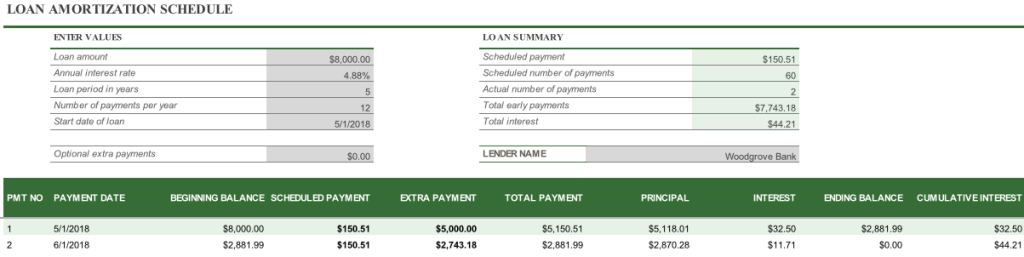
We’ll say the entire cost of the purchase was $4,000. I divide $4,000 by 60 months, which is 66.67 per month over the 5 years of depreciation.

Since I made this purchase in May 2021, I will only capture May through December for this year’s cost. The monthly cost of $66.67 is multiplied by 8 months (inclusive of May), which is a repair/maintenance cost of $533.33 for 2021 taxes.

For the years 2022, 2023, 2024, and 2025, I will capture 12 months worth of the depreciation monthly cost, or (66.67*12) $800.04. For 2026, I have 4 months left of the total cost that haven’t been claimed on my taxes, or the balance of the total cost that I incurred in May 2021, $266.68. However, if I claim this total, it will over-claim the total cost by $0.17, so this final amount should be adjusted to 266.51.

When filing your own taxes, the software typically calculates the depreciated amount for you. We enter the total cost, that we’re do a 5-year straight-line depreciation, and the amount already claimed on previous year taxes. The system will auto-calculate the amount to be claimed for the year. It’s important to keep track of these expenses year after year, to ensure you’re not claiming more than you spent.

June Financial Update

We’re continuing our spring/summer of travel and activity, which is why there are fewer posts and lots more spending.

The stock market has increased, which has been the main factor in our net worth change. We paid $2,000 towards the mortgage we’re paying down, leaving a balance of $3,300. This mortgage will be paid off once all our rent is collected for July; it was pushed back a little bit because of the flooring replacement that occurred in one of our rentals, which is why our credit card balance is much lower than last month. We’re also still waiting for half of one property’s rent, which is the norm these days.

  • Utilities: $250. This includes internet, cell phones, water, sewer, trash, electric, and investment property sewer charges that are billed to the owner and not the tenant.
  • Groceries: $518
  • Gas: $268
  • Restaurants: $165. Our credit card reimburses for many of these expenses; we received credits totaling $120.13 in the last month.
  • Entertainment/Medical: $1,093
  • Investment: $1,100
  • Insurance Costs (personal and rentals): $845

VIGILANCE ON CREDIT CARD REWARDS

Mr. ODA discovered that our PNC credit card rewards balance was decreasing, despite earning new rewards this cycle. He investigated further and noticed that we had been losing rewards for a few months now. PNC has a policy that they don’t issue their rewards until you hit $100 worth of rewards. Once we hit $100, PNC sends us a check in the mail. Since they send a check, we still receive paper statements, even though we regularly check our financial accounts online. Over the past few months, both of us checked the balance to see “ok, we’re nearing $100,” but didn’t put any more effort into knowing the details of the balance. Mr. ODA happened to notice that the statement didn’t make sense.

$89+3 somehow equals $82. There isn’t a single section on our statement or via our online account that identifies the loss of rewards Mr. ODA called PNC to ask for more details and learned that our rewards expire after 2 years, despite their policy of not issuing a check until you hit $100. They basically said, it doesn’t matter that your account is over 10 years old, or that credit has been used less in the last year due to the pandemic, or that they don’t clearly identify the expiration of rewards and just identify a lower balance. As a comparison, and I keep going back to Chase, but Chase changed up their reward categories to allow the consumer to earn more rewards during the pandemic (e.g., in addition to giving rewards in the travel category, since consumers weren’t traveling, they added grocery and home improvement stores as major reward categories).

The PNC customer service representative reinstated 60 days worth of lost rewards and issued a statement credit. We don’t want a statement credit because we no longer want to use this credit card, earning rewards that we’ll never be able to capture. If we use this credit card to use up the statement credit, that’s rewards that could be earned on a different credit card. Now Mr. ODA is fighting for the credit to be applied to our checking account or to have a check sent to us (which is the preference on our profile) and fighting for the reinstatement of the rest of the rewards lost.

Without PNC, we’re down to 4 credit cards in our regular rotation. We have 3 cards that we use for categories (gas, grocery, restaurants, travel, home improvement stores), and then we have the Citi Double Cash card that is for “everyday purchases.”

May Financial Update

RENTAL PROPERTIES

We paid $2,850 in extra principal towards the main mortgage we’re paying down, leaving that mortgage with a balance of $5,500. We had a $4k flooring purchase on another house that has set our pay off timeline a few weeks back, but we’ll still have that mortgage paid off in the next couple of months. We have a rental property that we purchased in 2016 that has flooring that’s at least that old. The carpet has long passed its useful life, and the linoleum in the kitchen and laundry room has started to peel up at the seam. Typically, we wouldn’t want to replace flooring while a tenant still lives there, but they’ve lived with this for almost a year, and they’ve been our tenants since we purchased the house. As a means of keeping the tenant happy, we agreed to replace the flooring in all the rooms except the bathrooms.

We had two of our tenants not pay rent by the 5th, as required by the lease. They’re the two that are typically late, and they’re typically not up front with telling us about it. We’ve said several times that we’re really flexible landlords, but we can’t be flexible if we’re not told what is happening. With one tenant, who had just recently irked us with a plumbing issue and being incommunicado, we didn’t even reach out for information. We’ve had enough of their antics and having to chase them for rent. So I simply sent them their notice of default letter, outlining all their rights as tenants as now required under COVID-related procedures. I received an email letting me know that they’d pay on the 7th. I love their nonchalant response, like they hold the power and will pay whenever they feel like it (hmm). For the other tenant that was late, she texted to say she’d be late with the payment on the 7th, and then on the 7th only paid part of the rent due. She said she was in a car accident and there was an issue with her sick leave pay out, but she’d get it to us when it got fixed. She resolved it on the 12th, although still without the late fee.

We were able to get the invoice on the HVAC replacement for one property, which meant we paid our partner the $3,288 we owed him, on top of his usual $2,167 that we pay out for him to pay the mortgages and then his share of the profits (since I manage all the rent collections).

OUR SPENDING

Our credit card balances are high for several reasons. The $4k flooring purchase; as well as the insurance for one of our properties that isn’t escrowed because we paid off that mortgage, which was $436; an expensive gift purchase that isn’t transparent in the cash and credit line items because that cost was split 3 ways (i.e., we received 2/3 of that cost back in cash, but it’s still reflect in the credit line); and our travel.

We booked a camp site for the end of the month that required payment up front. We just got back from a trip, which increased our spending. But I’ll note that when we travel, we’re not eating expensive meals. Our interest is in the experiences and activities, rather than exploring sit down local restaurants. Our food for 5 days cost us $161 as a family of 4. We also ended up only paying for 2 of the 4 nights in the hotel because the air conditioning was broken, even after they came to ‘fix’ it, and then, when I was checking under the bed to see if any toys or socks got left behind as we were leaving, I found a large, dead roach. We didn’t ask for any comps; one was automatically reflected in my final invoice without my prompting, and then when the manager was speaking to Mr. ODA about his stay, he volunteered removing another night.

We opened a new credit card to take advantage of the bonuses since we knew we’d have this travel and the flooring cost to meet the $4,000 spending threshold for their bonus. This credit card has an annual fee of $95 and no 0% interest period, which goes against our norm when looking to open a new credit card. However, the bonus can be transferred to our Chase Rewards Portal, where we can use it to book travel at 50% the cost. We also received a $50 grocery credit.

ROUTINE UPDATES

  • My husband and I cashed in the last of his savings bonds that we got as children, so that was an extra $735 that we brought it that wasn’t planned.
  • We paid about $6,074 for our regular mortgage payments. Several of our properties had mortgage increases due to escrow shortages. I haven’t figured out which I dislike more: planning for tax and insurance payments, or the large escrow increases that seem to happen year after year. I think it’s the escrow though.
  • Every month, $1100 is automatically invested between each of our Roth IRAs and each child’s investment accounts. I should also note that I don’t speak to other investments because they happen before take-home pay, but my husband maxes out his TSP (401k) each year as well, which I had also done when I was employed.
  • Our grocery shopping cost us $700. Honestly, I don’t even know how to explain that cost jump. I think it’s because my husband shopped some deals at Kroger and Costco, so we stocked up on some things that aren’t part of our routine purchasing.   
  • We spent $200 on gas. Two trips to Cincinnati, our trip to Atlanta, and then more-than-usual trips around town. 
  • $400 went towards utilities. It’s higher than last month because we paid 3 months of our cell phones, which gets us back on quarterly billing as a family. Utilities include internet, cell phones, water, sewer, trash, electric, and investment property sewer charges that are billed to the owner and not the tenant. We still haven’t sought reimbursement from the builder on our electric bill, but this month’s bill was even less than the last month’s. 
  • Our entertainment costs included baseball game tickets for our trip as well as two games later this summer, parking for the games this past weekend, a new shirt for our son, activities for the kids, and the hotel. This past month, we spent $650 on things I’d classify as entertainment related. I also included boarding for our dog ($100) in this total.
  • Speaking of our dog, he had his annual appointment (shots and the year’s worth of preventative medicines), and that cost us $500.
  • We spent $292 eating at restaurants and ordering take out. We utilized a Door Dash credit on one of our Chase credit cards, which was about $30.
  • But! I killed it with running errands this month and actually returning things that needed to be returned. I returned $150 worth of items one day!
  • We paid our State taxes during this period too. Between two states, that was $954. Also, anecdotally, I’ll share that we spent $6.40 to mail our Virginia tax return. We processed our taxes through Credit Karma, as we had done last year. We got through the federal e-file and moved onto the state filing, only to find out that if you’re filing partial states, Credit Karma doesn’t support it. I had to print 70 pages of our federal return, sign it, and ship it off to Virginia.

SUMMARY

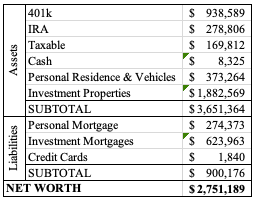
Our net worth actually dipped this month. The stock market is the main factor in that, but the house valuation estimates are starting to level off and look more realistic as well.

Between our personal lives and our business life with these rental properties, we were sure kept busy. We expect the Spring months to be a busy time of year, and honestly it feels good to be active again. While we’ve loosened the purse strings for the summer months, especially after having done hardly anything for the last year, it was still a shock to see just how much we spent in these categories. But that’s the benefit of looking at your finances regularly. We can either choose to remain on course with our summer plans, or we can dial it back if we feel this was more than we expected.

Since we know we’re on top of our finances and have set up a healthy mentality when it comes to spending, we’re comfortable looking at this information once a month. If you’re currently developing these money habits, you may want to do these types of check-ins more frequently.

April Financial Update

This month had a lot of money movement – tax payment out, stimulus check in. As I’ve shared before, we don’t budget. But you can start seeing how we’re pretty consistent on where we spend out money. This is because we have a spending mentality that we use to make each decision, rather than giving ourselves a ceiling in each category. I believe some may see a ceiling as a definitive amount to spend (e.g., if I’ve allocated $100 for restaurants this month, and by the last week I still have $75 in that budget pot, then I’m going to go spend it). If you know your long term goals and take responsibility for your decision-making, then you don’t need to pay close attention to each dollar.

With that said, my family came to visit for a week. It was our second’s first birthday, and my dad is helping us finish our basement. With 3 more adults in the house, we spent more than typical feeding them and eating at restaurants versus cooking after spending the day working in the basement. Mr. ODA and I share the same birthday, so we splurged for a nice meal that night. We actually spent about $300 at restaurants over this last month, but thanks to our Chase credit card, we received statement credits for $188 worth of these purchases!

We have also spent more on entertainment. We went to a winery and a brewery, purchased tickets for the local horse race season, and have done other activities now that the weather is nice. The pandemic and winter had our spending lower than our usual amounts, but I expect our spending to be more than it had been in these coming months. We’ve already put together our summer bucket list for travel.

We had all the tenants pay their rent on time, except one who eventually paid. Our rental income is $12,353, and we pay our business partner about $2,100 (we collect the rent and then pay him to cover the mortgages he holds and his half of the ‘profit’ after the mortgages are deducted from rent). We had to replace the HVAC in a rental. Luckily, this rental is owned with a partner, so only half the cost will affect us. We haven’t paid the bill yet, so that will hit next month.

  • We paid about $5,972 for our regular mortgage payments. We put an additional $5,000 towards an investment property mortgage, which now has a balance of $8,665. We also put $5,000 towards one of the properties that we have with a partner, which he matched, leaving that balance at $42k.
  • Every month, $1100 is automatically invested between each of our Roth IRAs and each child’s investment accounts. Our stimulus checks that we received for the kids went directly into the kids’ UTMAs.
  • Our grocery shopping cost us $539.  
  • We spent $91 on gas.
  • $290 went towards utilities. This includes internet, cell phones, water, sewer, trash, electric, and investment property sewer charges that are billed to the owner and not the tenant. We still haven’t sought reimbursement from the builder on our electric bill, but this month’s bill was significantly less than the previous months.
  • About $1300 was spent on supplies for the basement bathroom work. We registered the kids for swim lessons, registered our son for pre-school in the Fall, did more activities with the nice weather, and I made several gift purchases (current birthdays, baby shower, next Christmas (I like buying when I find something that makes me think of a person rather than a mad dash in the Fall to buy gifts)), so that was about $400.

SUMMARY

Our net worth has increased over $123k since last month due to our investment accounts and property values increasing. Our cash balance is starting to dwindle down to what we typically carry as ‘cash.’ And our mortgage balance is decreasing more than average due to our goal of paying off two of the mortgages that we’re carrying.

House 7: Two broken leases that have worked out

This one has been pretty easy, but we did have an interesting issue arise with the first tenant.

This is our largest house at 4 bedrooms and 1.5 bathrooms, and 1281 square feet. It’s a cape cod style house, so the upstairs has slanted ceilings, the half bath is not anything to write home about, and the HVAC struggles to work up there. The carpet on the stairs could really be replaced (but it hurts me to spend money on stairs because they’re soooo expensive compared to carpeting a room!). But the house has a huge fenced-in yard with a nice deck that’s a great selling point.

The kitchen was renovated at some point, so that’s held up well – and lets face it, who doesn’t choose baby pink knobs for their new kitchen cabinetry? But the plumbing and roof have been painful.

I’ve already told many of the stories about this house through other teaching posts, so bear with me if things sound familiar.

LOAN

The house is in Richmond, VA, and the purchase was very simple. We offered $109,000, and the seller countered with 112,500 and 2,000 in seller subsidy (i.e., closing costs), which we accepted. It was listed on June 22 at $119k, and we offered on June 25, so I’m actually surprised we got the contract agreed to so quickly.

Quick note here: after reviewing real estate contracts in NY, KY, and VA, Virginia wins. Sure there are several states that I haven’t ventured into, and this is an extremely small sample size. The paperwork is simple yet thorough, all while being in plain language. So if you’re needing a template to work off of, look up Virginia’s purchase agreement.

We settled on a 30 year conventional loan at 5.05%. We received a $200 lender credit since we closed on several properties in a short period of time. This is the house that we refinanced and received an appraisal of $168,000! We had already started with equity in the house because it appraised at $114,000 at closing.

INSURANCE

Interestingly, we couldn’t insure the house through the company that we had gone with because they have a 5 rental limit. Our agent was able to quote us through another company though, so our process appeared seamless. However, the quote was much higher than we anticipated. We went through a friend to insure it, but shortly after closing (literally a week), we were able to find an even cheaper option – that was awkward.

THE NEIGHBORHOOD

Not a category that usually gets mentioned. I discussed the neighborhood of the one house we sold already, which was because I didn’t realize it was in a higher-than-average crime area that tenants honed in on. But this neighborhood is worth mentioning.

Rentals aren’t prevalent here. In fact, many of the homes are the original owners. While working on the house when we first purchased it, the neighbor across the street approached me. He as-politely-as-possible threatened me that this is a nice neighborhood, that everyone keeps up their property, and that they don’t want any trouble. I assured him we have good standards as landlords, and we haven’t had any neighbor complaints for any of the tenants we had in our houses.

The location also comes into play for our first tenant.

TENANT #1

This house is under a property manager for 10% monthly rent.

As with most of our tenant searches, no one fits perfectly into our requirements. We offset this by a higher security deposit or having another signatory on the lease. We had two prospective tenants – one was a mother/daughter combo (an adult daughter) and both had bankruptcies in the last year; the other was a man and his family that had an eviction 7 years prior. We chose the one with an eviction. His application actually said that he “will also respect the property to the utmost.” Boy did he.

He first requested that the carpet be replaced. It was actually a reasonable request because it wasn’t the best. Here’s the carpet on the second floor. Old, bottom of the line padding; a gorgeous blue; lots of wear spots.

We decided to refinish the wood floors on the first floor because 1) he wasn’t moving in for two weeks, and 2) it would save us in the long run to put that investment into the floors instead of carpeting every few years (and risking someone completely ruining it before its useful life was up). It was $1850 and the company was able to start immediately and get it done before the tenant moved in (granted, it was the day he moved in, but it did get done). And the refinish turned out great!

He asked us for a screen door, but we said that wasn’t a necessity. He asked if he could install one himself. We agreed, as long as it didn’t prohibit our access (e.g., he can’t lock it, give us a key). This later becomes an issue because he locks it after vacating and we need it rekeyed.

This tenant had a few late rent payments and struggled with paying rent on time, but overall he was a good tenant to have. He took care of the property and let us know when he ran into issues (it’s amazing how many people don’t tell us of a problem in a timely fashion).

Just as we did on House 5, we offered this tenant the opportunity to pay rent in two installments each month. His rent was $1150 from August through February. He took the opportunity and we executed an addendum to change the rent to $600 twice a month. Again, it’s an inconvenience to us to collect two rent payments, but it theoretically should save the tenant money if they’re constantly in a position that they owe late fees (if he usually pays $1150+115=1265, then 1200 is a better position).

And then the fun happened!

I was at WORK one day, answered my work phone, and someone on the other end asked to speak to the owner of [this house’s address]. I barely used my work phone for work calls, so to receive a personal call on my work phone was very surprising. I informed her that I was the owner. She then went on to ask me questions about the tenant occupying the residence. I couldn’t answer a single question – hah! I let her know that I really didn’t know who was living there or the status of the home because I have a property manager. She was very nice and understanding, and she called my property manager.

She was with the school system. Apparently, our tenant had moved into the City public school district, but kept his kids in the adjacent county school system. It was April. I thought it was ridiculous that the school system would investigate this with 6 weeks left of school, but technically, he was in the wrong. And get this – he blamed me for it! Our nice tenant turned on us and went crazy. He claimed that he could just walk away from the house …. honestly I don’t remember his reason for it, but somehow he thought he had a case.

Virginia has a wonderful statute that says if the house is vacant for 7 days, the owner takes possession without any court interference. There’s also a statute that says we can’t collect double rent, and we need to be doing our best to rent it out if given notice. We tried to keep communication lines open with the tenant, but he was silent. We had told him that we were willing to release him from his lease obligations if we found another tenant, which we did. He was responsible for May’s rent and late fees, and we would have a new tenant move in June 1. We also informed him that he would be responsible for the leasing fee associated with finding a new tenant, which was basically considered the ‘lease break fee’ and is fairly generous ($300 instead of a standard two-months rent that’s typically seen as the fee). It kept going south from there.

On top of the rent owed, he had several lease breaches – room painting (clarification: rooms are allowed to be painted as long as it’s a neutral color or painted back to a neutral color before vacating), wall patching and painting, house cleaning, mowing, re-keying, and utilities since he turned them off. By mid-June, he still owed us $874.76. We made an arrangement with him that he’d pay a certain amount each pay check, but he failed several times. We finally threatened to take him to court, which would affect his credit score and increase the balance owed since court fees would become his responsibility. Since he had been working to rebuild his credit since his bankruptcy, we thought this would light a fire under him.

We went to court.

Court also added a 6% interest charge on the outstanding balance, which now included the $58 court fee.  

It took him over a year to pay the balance. By the time the court judgment arrived, his balance (after paying $50 here and there was $660. The court doesn’t put a timeframe or process on the judgement, but leaves it to the two parties to determine the payment schedule. He didn’t adhere to it well, but we did eventually get the whole balance paid. Mr. ODA also took this opportunity to have fun with calculating interest payments on a declining ‘principal’ balance that isn’t getting payments on a predictable schedule!

TENANTS #2 & #3

These tenants were/are much easier. The second tenant in the house had several large dogs, but we didn’t see any damage to the house. She eventually broke the lease to buy her own house in November 2020; we can’t fault someone for wanting to take advantage of low interest rates! She gave the appropriate amount of notice, but the lease was going to be broken as of 10/31, which isn’t a great time to have a rental come open. She ended up being very gracious with the situation, paid us one month of a lease break fee, and we kept her security deposit.

Right after she gave us notice, we had an old tenant reach out to us. They had moved back into town (I’ve mentioned them several times) and asked if we had a 4 bed/2 bath house available. Amazingly, we did. We showed them the house and they signed a lease within a few days.

Since turnover was fast, and I didn’t really know the status of the house, I didn’t get a chance to paint the house. All the rooms had been white except for the one room that I repainted after the first tenant had painted it lime green. The house really needs a whole paint job, and so I offered her an incentive. If she wanted to paint any of the rooms, she could knock $75 off the rent per room. So far she’s painted three rooms.

MAINTENANCE AND REPAIRS

The plumbing in this house has been horrendous. We had the tub snaked as soon as the first tenant moved in ($150). We then had issues with hot water, which required several adjustments to the water flow rates to coincide with the tankless hot water heater ($325). We had the upstairs toilet serviced ($120). Then a year later, we had to service the hot water tank again ($570). Tenants had complained that the upstairs sink drained slowly. We had attempted to snake it and fix it several times, but it never seemed to work. We finally just bit the bullet and replaced the plumbing – from the second floor to the crawl space. That work and the drywall patching cost us $1563.

Then there’s all the roof work. Shingles had flown off during a storm, so we had those replaced ($350). We also had a leak in the flat roof over the laundry room. We had a roof guy come out, and he said the roof hit its life expectancy. He replaced the pitched roof ($4135), and not the flat roof. So we’ve still had issues there that will need to be addressed.

SUMMARY

That sounds like a lot of money, but we’ve owned this house for 4 years now with our rent being double the mortgage (slightly better now too with the recent refi). When purchasing properties, any good investor is going to build maintenance and capital expenses into their numbers that determine if it’s a worthy investment. Rent cash flow wins out, and all the rest is just the cost of running our business – not to mention the $60k of appreciation we have on paper in just 4 years. It’s also worth noting that these things took up about 10 days worth of action from us over those 4 years, so most months, we just collect the rent with no other action required from us.

No property is going to be perfect, and this business relies on people, the tenants, to make the business profitable. No path will take a straight line, and being flexible to the ebbs and flows of rental property investing help make it fun too!

House 4: Small, but it works

This little house has been made home by two families. It’s a 2 bedroom, 1 bath that is 719 square feet. While there have been a few issues with the house, it’s been pretty easy to manage because of the tenants taking great care of it.

I feel like the bathroom’s blue tile, patterned floor, and that peek at the door knob exemplifies the age of the house.

The first thing we did was remove this prison-like wall mounted sink and install a new vanity from Ikea. During my installation of the vanity, I had a good scare. The house’s orientation yields to using the back door more than the front door (and the fact that the gate at the front of the yard was padlocked and there’s no concrete walk to get to the front door). Someone knocked on the back door, but I ignored it. Then that person went to the front door (through a side gate) and knocked there. That’s incredibly persistent of someone who shouldn’t know anyone’s here. Then he went to the back door and knocked again. I panicked. I called the non-emergency police line, and two officers came out. The man had left by the time they got there, but the officers knew exactly who it was. There is a man who lives around the block that has suffered multiple strokes, but he likes to mow everyone’s grass, so he was looking to see if he could mow ours. While innocent, I still won’t be answering any doors while I’m working on a house alone though.

LOAN

We locked the loan at 4.95% and 0 points. We also received a $200 credit in closing costs due to closing on several houses in a short period of time. Our attorney also lowered their fee from $395 to $350 due to several closings. It never hurts to ask if there’s a discount, especially when we’re a multi-repeat customer!

We closed on the house in June 2017. The purchase price was $63,500, and we put 20% down. We paid off this loan in January 2019.

TENANT SEARCH

We listed the house for rent through HotPads, Zillow, and Trulia. We received a lot of interest. After setting up showings for another house, we learned to do more of an “open house” style showing. It’s amazing how many people confirm a showing time and then don’t show up. I first sent everyone who contacted me an “Initial Interest Form.” It was used as a first-pass look at their income, credit, and whether they disclosed a felony and/or eviction. I still told them about the open house schedule, but the future use of this form will be to weed out non-qualified people before we set up showings.

On the form, we list our standards.

I shared in the email when I sent the form that I would be at the house from 3-5pm on a Saturday for them to come see it. If they told me they couldn’t make it, I responded that I would make another time available pending the results of this open house.

Based on the interest forms received and being one of 3 couples to show up, we selected a couple that was most qualified. They requested to move forward with an application. We utilize SmartMove, a tool we found through Bigger Pockets, to screen our tenants. This process allows the tenant to provide personal information directly to the website, pay the entity directly, and eliminates us as a middle man. We also share that the application fee is non-refundable, and that’s why we give an Initial Interest Form to be filled out first, which is their opportunity to disclose any information that would disqualify them, causing them to ‘waste’ their application fee.

In our case, the background and credit check revealed that one of the individuals filed Chapter 13 bankruptcy. Upon further research, Chapter 13 is used to restructure debt. It wasn’t that she had delinquent accounts, and it appeared after asking her to explain, that this was a proactive approach to managing her debt from a divorce than an inability to pay debts. Since they had already paid their two application fees, we felt we’d take on this risk and rented to them. To mitigate our risk, we required 2 months of rent as the security deposit.

They lived in the house for a year before he graduated grad school and moved out of the area. However, at the same time, she had a family friend looking for her own place. We ran her background and credit check, and we were able to approve her easily. She took over their lease term in the Spring of 2018 and has been there ever since. We haven’t raised her rent since lease inception because at $795, it’s over the 1% Rule, and it’s full cash flow since the mortgage was paid off 2 years ago.

Even better, the couple that moved away from the area came back recently. They reached out to us for a bigger house to rent, saying they had such a terrible experience with their last landlord and would only rent from us again. We were actually able to accommodate exactly what they needed, and now they’re in House 7. While at this time I haven’t discussed our 7th house, I did mention their story in the Tenant Satisfaction post.

Treat your tenants fairly, and even give a little where you may not want, and it’ll make your life much easier.

MAINTENANCE AND REPAIRS

The house has a stackable washer and dryer, but it’s actually on the exterior of the main building in a little closet-type addition. It is unfortunate that an individual needs to go outside the house to do their laundry, but I suppose it’s better than having no hookups and going to the laundromat. Remember, the house is only 719 SF! Well, that little closet wasn’t well insulated, and in February 2019, we had a very cold two weeks where we endured several pipes bursting or freezing across our rental portfolio. The washer line froze. The fix was just to wait for the thaw, but we did add insulation to the closet to help prevent it in the future. Later that summer, the washer actually stopped agitating, and we replaced the whole stackable unit. The frustrating thing about stackable units – even though the dryer was perfectly fine, it’s all one unit so we had to replace the whole thing.

The furnace drain line was frozen in January 2018, so we had a plumber thaw it. It happened two weeks later again, and so the plumber installed heat tape around the drain line and sealed it.

We dumped new gravel in the driveway area. The gravel had become muddy, and we saw it as an easy fix to make the tenant happy and improve her experience. Plus, she said she was going to do it, but we felt it was our expense to incur, not hers.

We’ve had long term plans to replace the bathroom, but the contractor we met with in October still hasn’t given us an estimate. It’d also be tricky since the house only has 1 bathroom and she has a toddler living there too. The tub was painted before we purchased the house, and it hasn’t held up to the last 4 years of use, so we see the benefit in fixing up the bathroom, but we just haven’t been able to tackle the logistics yet.

Our tenant pays us every month and doesn’t ask for much. She’s made it her home, which is a good sign from a tenant. Our cash flow being $795 every month (minus semi-annual taxes) with very little repairs and no mortgage is a great scenario.