Tax Returns

Typically, I write a post around this time of year on how we handled submitting our taxes. This year, I’m going to focus on the return itself, and the concept that a large return is somehow “gaming” the system.

OUR TAX FILING

First, I’ll remind you of our process. I spend all year getting ready to do our taxes. This isn’t a last minute activity where I’m trying to find all the income and expenses and recreate data. I know more than one small business owner that constantly files for an extension because they’re not ready. Make it a routine all year to be organized. This way, once the year is over, you’re just verifying you have everything recorded, instead of compiling all paperwork and documentation for the first time. It’s less stress and you’re doing less work (because it’s still work to file the extension).

Most people have just their W2 income, maybe a little other income, and a standard deduction. However, if you have any more than that, you should make it a whole-year process. I have a spreadsheet that I keep for each rental property. I copy the template over each year for a new workbook, keeping the basics (rent income, routine utility costs, taxes, insurance, etc.) and deleting the extra maintenance costs that went into the houses (plumbing calls, HVAC repairs, etc.). As expenses occur through the year, I input them into the appropriate tab in the spreadsheet. At the end of the year, I verify I have all my receipts/invoices recorded.

Then Mr. ODA sits at his computer while I read off each house’s totals from my spreadsheets. This year, I think we hit a record in that it only took about 90 minutes to do our taxes! That’s probably the quickest we’ve done it since we’ve had all these houses. Actually, let me back track for one second there. I’ve spent all year preparing for tax season by inputting information as it happens. Then I spend about 2-3 hours reviewing all the data to ensure I haven’t erroneously recorded data, haven’t missed data, or haven’t omitted recording an expense or income. But the actual time that it took to go from spreadsheet into software and press file was 90 minutes.

“THE GOVERNMENT IS SAVING FOR ME”

A financial friend asked for “financial wins” recently on Instagram. Someone responded that they received a $5,000 tax return. He then said that he had several people comment that this isn’t a win, but he came to this person’s defense that some people need the government to do their savings for them. He said that, for some people, if they had an $100 each week of the year, they would have spent it frivolously.

I actually think that’s an excellent thought process. I see where he’s coming from there. Instead of someone thinking “let me set aside $100 this week to put towards debt,” it just becomes part of the pot of money that goes out with each pay check. That’s also easy to see as not worth putting towards a separate financial goal because it feels like not enough.

My frustration with the thought process of wanting a large return is that people think they’ve gamed the system and done something special to obtain (or earn) that amount, rather than realizing it was “their money” all along. You can project your tax burden for the year; it’s not a secret formula. Paycheck withholdings throughout the year simply allow you to work with your employer to gradually meet that tax burden as you earn your salary.

We project our tax burden each year. Sometimes Mr. ODA doesn’t listen to me on what our net for the rentals is going to be, and then we owe a lot come April, but that’s our own fault for not projecting with the right variables. For most people, the projection is a much simpler formula.

AIM FOR A $0 TAX RETURN

If you are someone who is going to put that $5,000 towards something productive, rather than frivolously spending it just as you would have all year, then that’s fine. However, I encourage a look at your opportunity costs.

Did you receive your tax return and go buy a 75″ tv? Was that a necessity? Did the money that went towards that tv have a better financial purpose?

Did you spend the whole year living paycheck to paycheck and worrying about the next bill to come in? Did you pay bills late because you needed funds from a future paycheck to cover the balance?

Did you spend the year carrying credit card debt, paying 26% interest on the balance, and then wait for your tax return to pay towards your balance? If you did, then maybe realize that the $5,000 you got in a lump sum could have saved you in interest costs had you just put $400 extra per month towards your credit card balance.

If you pay $200 per month (assuming a 26% interest rate):

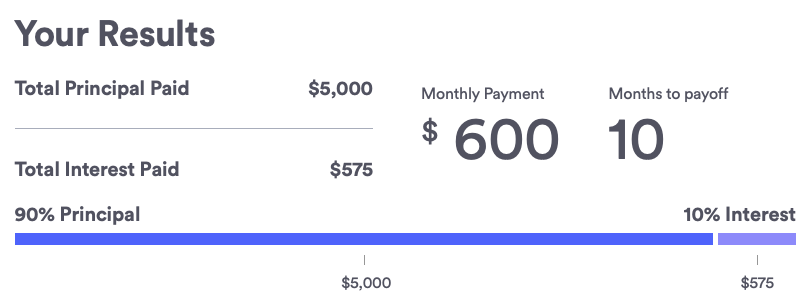
If you pay $600 per month (that extra $100 per week that went into your taxes paid instead of into your pocket all year, causing a $5000 return):

You’ve paid off the balance in less than a year, and saved $1704 worth of interest payments. If you had paid $200 per month for a year and then used your tax return to pay off the balance, you’d have paid about $1,100 of interest, and then would be putting over $3800 of your tax return to pay it off. You also have the benefit of not having a bill hanging over your head at some point within that year, instead of worrying about meeting the minimum payments and continuing to accrue interest.

SUMMARY

So that’s my angst with the “financial win” of the tax return. Something as large as $5000 is an entirely different ball game than $500. Looking to get some money back and using the taxes as a ‘forced’ savings is an option. Perhaps you use that to take the only vacation in your year. But that should still be a reasonable vacation. Spend $1000 or $1500. You don’t need a $5000 vacation when struggling to pay bills or having debt that’s accruing interest.

So while I agree that the forced savings could be an excuse for a large refund, once someone receives a large refund, there should be an evaluation of their financial standing and an education on how that could be turned into a true, productive financial goal.

Lack of Rental Payment

I was going to include this in a financial update post, but it was too long and complicated to include there. I really want this to be a lesson for anyone reading this – mostly on the renter end, but perhaps for a budding landlord as well. We tried really hard to work with the tenant, but we can’t work with someone who doesn’t communicate up front and doesn’t keep her word constantly. When using statements like “I need to keep the water and electricity on for my kids,” understand that the roof over their head isn’t a given. I’m a private landlord and be lenient, but an apartment complex type situation isn’t going to allow you to not pay for months on end; they’re going to file for eviction on the first day 6.

THE DETAILS

After this house was flooded by a tenant, we got it fixed up and on the market. The options at the time were limited; plenty of people were interested, but they weren’t qualified. The area called for $2,200, but I wanted it to move quickly, so we listed at $1600. The previous tenant was paying $1200, so this felt like a huge jump. No one qualified for the property. We had two options that were close enough to our requirements.

We chose a single mom who worked two jobs herself to be able to afford this place. Honestly, kudos to her for her effort. She lost both those jobs (we knew about one, but not both) and ran into some other troubles. She has worked hard to get herself back on track. I commend all that. She’s wonderful like that. Her communication (or lack thereof) was infuriating.

At the beginning of October, she said she’s back on track now with a steady income (replacing both jobs), but with all the outstanding bills, she’s going to need time to catch up. I’m a very understanding person and work with my tenants as long as they work with me. Instead of telling me WHEN I should expect to see payments, she left it open ended with “sometime in October.” I gave her the benefit of doubt. Then two Fridays passed with $0 paid. I asked for an update through our property manager.

On the 16th, she sent over $300 (after we had to ask for payment), and wrote, “I will be sending another payment this upcoming Friday and typically Fridays going forward.” Typically. She reiterated that October would be paid before the end of the month, and then she’d need about two weeks to pay November’s after that. She did pay $500 that following Friday, and then missed the next Friday.

My property manager had to follow up with her 3 times before she actually received an answer. The tenant claimed she had been too busy to respond. Excuse me, but keeping a roof over your head should be a priority in your life (this will be a theme). I asked for a payment plan instead of this open-ended concept of payment. On November 1st, she finally responded that she was going to pay $400-700 every Friday, going forward, unless she needed to pay other bills. Again. “I’ll pay you when I pay you, unless I don’t pay you.” This isn’t appropriate.

She paid $700, as goods and services, on November 3rd. All fees are the tenant’s responsibility, so now she owed another $15. She ended up sending $50 over that same day. At this point, it’s November 3rd, and she’s still $60+ short on October’s rent and $0 towards November. As expected, Friday November 10th came and went with no communication and no payment. She ended up sending an email in the early morning hours of the 11th stating she’s waiting on a deposit to clear, so she’ll pay something on Monday. She did pay that Monday. However, she had said she’d pay every Friday, and the 17th came and went with no payment. Again.

On the morning of the November 18th, I sent the notice of default. It said she had 5 days to pay the entire balance or we’d file for eviction. She threw a little tantrum, claiming she wanted to end her lease. It doesn’t work like that. My property manager had a good idea and was able to articulate our frustration sternly, yet professionally. The property manager said that “forgetting” and “life” getting in the way were not acceptable responses, and it was time to be responsible for herself and her bills, perhaps by setting alarms or utilizing her calendar for reminders. The offer included our waiving of December and January late fees ($160 each) if the tenant continued to pay every Friday without us having to follow up. I thought the incentive was great. The tenant then paid $700 on the 24th and $600 on 12/1. At that point, she was caught up on October and November (sans late fees though), while paying into December’s rent owed.

She paid the first two Fridays in December, missed the 22nd, and paid on the 29th. At the end of December, she had a balance owed of just over $500, which included all late fees, so that was a decent position. Then things went downhill again. She paid nothing until January 17th, and it was only $100 that day. She claimed an issue with the amount she was able to send over, but stopped trying. When we asked why she mentioned $400 in $50 increments, but only sent over $100, she acted like we did something wrong. Over the next week, she ended up sending $300. At the end of January, she owed $1,863.40.

TENANT VACATES THE PROPERTY

In mid-January, seeing that communication was getting worse, and payments weren’t even being made, we asked her to leave. I was really trying to get through February so that we’d have a more favorable market time to list it. She said she didn’t want to leave. That’s a bold statement from someone who owes a lot. On January 25th, we sent her the 5 day notice until eviction document, which showed her balance due. We offered her the ability to leave the house by the end of the month with minimal damages, and we’d just keep her security deposit. Her initial response was that she wants to finish interviews she has scheduled, and she didn’t want to leave.

Within 24 hours, she decided she did want to leave. For the first time in all of this, she fully explained her situation. She gave good reason to have until February 4th to leave (instead of the end of January). We allowed it, but she’d be responsible for those days of rent in February.

As a final goodbye, she told us she would be able “to make another payment that first week of February.” As I suspected, she meant the week of February 5th, and not the 1st or 2nd. She didn’t pay. On February 9th, she “kindly” asked for an extension for the final payment, since she was expecting her tax refund in the next two weeks.

I don’t need to tell you at this point – two weeks came and went. She did end up paying over $500 on 2/29 though. That was more than I ever expected. I don’t know how she arrived at her number (she did email an explanation, but the numbers didn’t add up), but I’m accepting it.

TURNOVER

She actually left the house in great condition. She had sticking LED light strips in a bedroom that said they were easily removed. However, when she removed them, paint came with it. I had to have someone touch that up. She bought blinds, but didn’t hang them, for ones that were damaged (she had asked us to pay for them when she first moved in, so that was a nice gesture to uphold the integrity of the request), so I had to have someone do that. Then I paid someone to clean the house, which is normal. Overall, she was difficult to communicate with, but I do believe she meant well.

BACKGROUND & EXPECTATIONS

I have a track record of being very lenient and very understanding. I promise. I can provide lots of examples where I’ve let people know to take their time, prioritize back to school necessities, waive the late fee, etc. I can not work with you if you don’t talk to me. I don’t know what you need. I don’t know you as a person and whether you’re “good for it.” I need to know your expectations, needs, and plan. Talk to me without me hunting you down for information. I don’t know where I’ve said this before in this blog, but I’m positive you can find that or a very similar statement made throughout. Understand that in nearly all other scenarios, a landlord is not going to be patient for 4 full months to try to get you to pay rent owed.

She said phrases to me that were generally that she has kids so keeping the water and electricity current is her priority (isn’t keeping a roof over their heads equally important?), or that she asked for grace and patience (what have I been doing? I could have issued you the first step of the eviction process on October 6th, and I didn’t, even though you didn’t pay a penny towards rent until the 16th). It’s things like that get under my skin and make my efforts feel unappreciated, making not want to work with you going forward. Take the time to acknowledge how gracious I HAVE been, that I have bills to pay in addition to you having bills to pay, that I deserve to be given regular updates and information without having to follow up and beg for information.

My property manager says “she’s young” and “she’s learning.” There have been learning opportunities, but it’s also not my role to mentor a tenant on how to be an upstanding citizen and uphold your commitments. There were two other late rent moments this summer where my property manager said that if there’s any issues with rental payment, we need to know ASAP, without us having to make phone calls or send emails. My property manager reiterated this expectation on October 31st over the phone – don’t miss a Friday rent payment, assume we know you’re not paying anything, and leave it at that (I already played the “benefit of doubt” game through October when we received $0 for half the month).

LESSON

Communicate with the landlord. Don’t put the landlord in a position where they’re having to keep track of your financials and whether you’re paying timely. Pay regularly or communicate up front. All of my leases state that rent is due without demand. My having to regularly ask for an update or why you haven’t paid a single penny halfway through a month is not in any realm an acceptable way of doing business.

Renters need to understand that landlords have bills to pay. Those bills (that mortgage) are not as lenient as I’m trying to be with you. If I don’t pay my mortgage, there’s a late fee and it’s immediately reported on my credit. They also don’t accept partial payments. If I don’t pay for long enough, it becomes a foreclosure. As a tenant, you don’t know if I have funds to cover that payment. Assume I don’t. If I don’t pay my mortgage, the house is foreclosed, and you’re kicked out anyway. You’re getting by without any credit hits, as you’re now two to four months behind on rent. I’m floating mortgage payments on your behalf. Lucky for you, I’m on top of my credit and paying these bills even if you’re not paying me, but that isn’t an assumption you should make.

Your actions have consequences. You can mitigate those consequences by upholding your word and keeping in regular communication on what’s happening (again, up front, not after the deadline passes).

April Financial Update

I had this post mostly written by Wednesday, but we traveled earlier this week, and I haven’t kept track of the day very well. This is the first I’ve been able to update our net worth and get this done. Ironic, considering how I started this post when I expected it to be on time. And now..

This past month has been exhausting on me. I knew March was going to be busy. We had a bunch of sports schedules to manage, lots of kids birthday parties, hosting my dad for a long weekend that coincided with 3 family birthdays and the first anniversary of my mom’s passing, an assortment of Easter activities, a trip, and random other events. On top of managing these day-to-day things for our family, our deck replacement started, and we had to work on a massive turnover of a rental property. I’m in a perpetual state of tired these last few weeks.

DECK REPLACEMENT

On July 2nd of last year, a storm blew threw that destroyed our neighborhood. Honestly, we’re surprised by how little actual structure damage there was for our neighborhood because it looked like a war zone with the amount of trees down. A couple of houses had a tree fall on their roof, but only cause minimal damage that resulted in shingle replacement. We appeared to bear the brunt of the worst, which was a tree falling on our deck, crushing our furniture, moving all the supports, and cracking the concrete blow it. Another tree missed falling on one of our cars by centimeters, but that limb ended up cracking our driveway apron. We struggled communicating the extent of the damage with our insurance company, and they eventually realized what was needed and paid out on it five months after the incident. Our construction started on March 18th.

It hasn’t been an easy process. It’s emotionally draining on me because there were communication issues with our contractor that he wasn’t taking responsibility for. Then there were minor issues, but issues nonetheless. For instance, they installed waterproofing so the patio would be a dry area, but they cut through one of the barriers. Instead of realizing that was going to be an issue and fixing it themselves, I had to point it out. Then we went out there while it was raining to check it, only to see that there are 3 spots where water is just pouring through the seams. That just takes a lot out of me to have that conversation. They cracked off the top of our sewer cleanout, which not only made a mess in the yard, also caused a backup into our basement tub and toilet once it was glued back on because of a pressurizing issue (we think).

Then there are those hidden things that take energy, such as managing how to move money out of savings (while not exceeding the maximum of six transfers) and keeping track of all the bills, while ensuring the checking account has the right amount of money to cover the bills paid.

RENTAL PROPERTIES

Everyone paid rent on time! I had two technically pay on the 6th, but I sat waiting to see if it showed up before reaching out that morning. One of our tenants bought a house and vacated as of March 31st. They actually had left the house a little early, which was really helpful to us because the house needed a lot of work. The house had been flipped before we bought it. We knew everything was going to eventually need attention, but we hung on as long as possible. The neighborhood is really nice, so it was time to bring the state of the house up to a better standard. It had been “good enough” all these years, but there were definitely some items that should be replaced. This ended up being a huge overhaul, costing us over $10k. I’ll go into all the details in a future post.

NET WORTH

We’ve made a few substantial payments on the deck. We had been investing the money from the insurance company, while we waited for them to finish their estimates and then while waiting for the contractor to begin. Our taxable investment accounts have decreased a bit from that, and they’ll continue to decrease as this project finishes up in the next 2-3 weeks. The market is lower than it was a month ago, but our house values are starting their upward Spring trend, offsetting some of that loss. Overall, our net worth increased over the last month, but only by about $4,500 instead of the drastic increases we had been seeing month-to-month.

House 9 Turnover

I recently posted “Lease Break Agreement,” where I went into the concepts we used to determine a lease break clause in our renewal with a tenant. The purpose of our fee structure was directly correlated to the time of year and probability of turning over the unit quickly. As I suspected, it took us an entire month to find a tenant. The lease break fee was one month’s rent, so we didn’t go without income during that time, but we also didn’t net a positive.

The tenant gave us notice on November 24th. Our property manager listed the property on November 26th at $1700. The higher price points are worrying me. While the market may claim that this is a fair rate, it doesn’t mean that we have a large pool of qualified candidates for this amount per month.

TURNOVER WORK

The house was painted before the current tenant moved in a few years prior. Unfortunately, some of the rooms were addressed, but not all of them. And the ware of time hit the walls all differently, so it looked like different colors of paint. I asked our property manager to get her painter over there and give all the walls a fresh coat. It looks great. That was $2,000.

I had a carpet cleaner come out and a cleaning company come out. The cleaners forgot about the refrigerator and had to come back. But otherwise everything looked great for less than $500 together.

The front porch was starting to sink. So while this wasn’t an activity done before someone moved in, we do have our handyman working on replacing the back deck, the trim around the back door, and the front porch (he jacked up the supports and is replacing the railing and stairs). I don’t even know what this final cost is yet, but it’s a lot.

APPLICANT #1

We had a lot of interest; hardly anyone qualified. After getting through some of the weeds, we did have a couple interested that appeared to be a good fit. They viewed the property twice over a week to be sure it was a good fit. The application was received on December 13, but it only listed one of the two adults who would be living there. We require all residents 18 years and older to complete a background check. We didn’t expect an issue with that since she works at a school, but it didn’t go well. Due to the holidays, their applications weren’t received until December 26th. She had several collections on her history. However, since he qualified on his own without her income, we agreed to overlook her lower credit score and collections history. I set up the lease with their names and sent them over.

We were excited because they wanted a January 1st rental, which meant we wouldn’t have any loss of income and would be able to put the lease break fee back into the house easily. They asked us if we would clean the carpets and clean the outside of the house. We agreed to the carpets and said that they outside of the house (mildew) would have to wait until warmer weather, but that we would address it.

Technically, all my tenants are supposed to clean the carpets and provide a receipt upon departure. However, I don’t hold this to anyone unless they were a real pain. A couple of hundred dollars out of my pocket and a happy ex-tenant is how I’d prefer to keep it (you’d be surprised at how many ex-tenant referrals we’ve had).

Suspiciously, they then withdrew their interest. I wish I knew why. I don’t know if their circumstances changed, if they were hiding information we hadn’t found on our own that caught up to them, or if something in the lease spooked them. If it was the lease, I wish they would have asked questions because we’re so easy going. I could have either explained why it’s there to protect them/us, or changed it.

So while we were a month ahead of schedule with being able to list the house, we now have a vacant house with no prospects. The goal is always to have the house ready to re-rent with little down time.

LISTING CHANGE

The market for the area called for $1600-1800 in rent. We originally listed it at $1700. It made me nervous. When the initial applicant backed out, I immediately adjusted the rent to $1650. We had plenty of interest at the $1700 amount, but it wasn’t worth weeding a few people out because they didn’t want to go that high. I decided to risk it with only a $50 decrease, since people would be able to see the decrease (and I try really hard to list it at the right price so I don’t have to do a price adjustment, but a December listing is hard to nail on the head). Again, we had a lot of interest, but few qualified.

APPLICANT #2

Two twenty-something men saw the property and asked to apply on January 11th. Neither of them had a job. Seriously. Neither had a single dime of true income, but wanted to commit to $1650/month in rent. Noteworthy was that they wanted us to consider that he had the potential to make $40k per year day trading stocks. We asked a few questions. They said they thought it better to find housing and then find a job. We suggested they try to find work and then live where they find a job (they had just moved ‘home’ from about an hour away).

APPLICANT #3

A woman showed interest who appeared to qualify on the surface. My broken record is to tell me things up front and be open with communication. I can’t help you if you don’t help me. Her information on paper looked fine. I’ve learned over the years to check the local jurisdiction court records myself, instead of relying on the background check. I’ve also tried to look things up before they submit their application; this way if there’s anything out there, they haven’t given us money for the application to not be used. During my search, I found several garnishment cases. Like a lot. An unreasonable amount of court records for a single person. We denied her interest form and did not pursue an application.

But on January 16, she asked for us to reconsider and explained the garnishment. There was one point deducted because the woman’s email asked if “he” as the landlord would reconsider her application (why can’t a friendly, reasonable woman be the landlord? 🙂 ). I didn’t appreciate that the garnishment wasn’t disclosed up front. However, she did explain what happened. It sounded like she was told that there was nothing due, made no payments, and then this debt showed up that she didn’t know she owed, but she’s been working a second job to pay it off. Honestly, the documentation didn’t clearly support the story, but my gut reaction was to believe her.

She also had three evictions recorded on top of this garnishment. The evictions appeared to be filed immediately upon unpaid rent by an apartment complex management company, and then the rent paid before the court date, thereby clearing the debt. I expect to have future issues with rent payments, but I suspect it won’t be anything more than I’m used to handling (e.g., where a tenant needs an extra week or so to make rent).

Our property manager appreciated the in-person interaction with this person, she was well written and well spoken when making her case to be accepted to apply, and overall it seemed worth giving her a chance. I’m also a sucker for giving borderline qualified individuals a chance. I think I’m 50/50 on it working out for me.

The lease was signed on January 18th. We agreed that she would pay the security deposit, first month’s rent, and last month’s rent. The last month’s rent was an additional way for us to hedge our bets with her unqualified application background. This is a “compensating factor.” Since she did not qualify according to our list of requirements, we’re taking an extra fee as insurance to our business interests in this property. We typically will work with someone on compensating factors so that they get a place to rent and we don’t lose out on too much in case our olive branch doesn’t work out.

She paid the security deposit with the lease agreement signature and paid first month’s rent on February 1st. We agreed to give her until February 17th for the last month’s rent. She was asking for a later move in date because she didn’t have all the money up front, but I didn’t want to cause extra stress on her moving plan/date over that.

FINAL THOUGHTS

I don’t even know how many people actually saw the property, since my property manager handled that. However, I know it was a good amount. I typically handle it where I set up an “open house” style visit window for people to come through (so many people claim they’ll show up to a scheduled appointment, and they don’t). I believe she tried to do this at the beginning, but it was taking so long to find a qualified applicant, that she ended up having to do one-on-one meetings.

She has them fill out an “initial interest” form after the showing. For the most part, I do that after the showings as well. However, it does help if you’re scheduling individual appointments to have people fill this out before hand. You want to know ahead of time if there’s even a chance of them qualifying. You don’t want to take time driving to/from an appointment and letting them looking around the house, only to find out they have a criminal background and/or less than favorable credit history.

THERE IS NO CHARGE FOR AN INTEREST FORM. If you are a tenant looking for a place to live, do not pay anyone anything until you’ve seen the property. There are a lot of scams out there where “landlords” are claiming they need an application before allowing you to see the property. They’re listing places “for rent,” that they have no vested interest in. People who recently sold their house, so pictures are available to use, are the ones finding out that people are driving by and looking around their house because someone claiming to be a landlord collected an “application fee,” with no intention of showing you the house or renting it to you.

So while this person didn’t expressly qualify based on our list of requirements to rent one of our properties, I felt like she deserved the chance. I feel bad when someone’s previous life choices immediately disqualify them, and I enjoy giving people a moment to voice their side of the story. Sometimes, their story is enough to solidify a denial from us. But sometimes, it appears worth giving them this opportunity to right their wrongs. I also feel good that I didn’t feel pressured into making a decision just to recoup vacant days on market, but that I made a logical decision. Now let’s see where we end up with this property in 18 months, and whether I still think it was a good decision!

2023 in Review: Rentals

After several years of very minimal time having to be put into rentals once they were rented, 2023 made up for it. We had a lot of damage to properties, a lot of tenant payment issues, and just a general “can we not talk about rentals for ONE week please” moments. But even with that frustration, this is still the best.

All of these stories were elaborated on in posts throughout the year. This is meant as a summary of all our activities. You can search for the stories through keywords on the website, or just email me, and I’ll elaborate.

PROPERTY MANAGEMENT

In January, I took over management of our Kentucky properties. When we moved here in 2020, it was easier to maintain status quo. In Virginia, we had established contacts in the trades we’d need, and we felt comfortable there. In Kentucky, since we hadn’t lived there, nor did we have direct management of the properties (plus, the property manager did a lot of work in house), we just left it alone and kept paying the management fees. We bought a 4th property in Kentucky in 2022, and I kept it under my management. Through that process, I grew more comfortable with the area and any trades people I would need. Then over the course of 2022, the property management issues finally were painful enough that we cut ties.

We had cut ties with our first management company who was doing zero of the work they were supposed to do. In the process, we learned a few ways we wanted to see a future management company operate. We negotiated some of the fees that this company had. I didn’t foresee how frustrating that would be. For instance, they’d charge us 10% of the contracted price when hiring a company if they couldn’t do something in house. I said, “that’s what management is, and what I’m paying you for monthly.” They agreed to not add 10% to contractor payments. But I never saw the invoices, even when I asked for them, so it was hard for me to know whether I was being charged by them correctly. It turns out, I was always charged that extra 10%, and I needed to request the refund, every single time.

Problems really got bad when a single employee claimed we didn’t pay something we had and immediately charged us for it (over $1,000). We had to get the owner of the company involved. It was a mess. I finally said that’s enough, and even though I had a one month old baby, I took over management. Luckily, we had a clause in our contract that allowed us to cancel the contract (by either party) with 30 days notice.

I met with each of the 3 properties’ tenants they had under management, and I executed my own leases with them. First, their lease was a mess and disorganized (and had errors that were crossed out and initialed). Second, I like having my template in place so that I know what it says, and how it’s laid out. I recently learned that my VA property manager’s lease didn’t have some key information I would have preferred to see there, so I even started using my leases for the properties she manages.

INSURANCE CLAIMS

After having no insurance claims for all our homeownership years, we had three this year. One was on our personal house, and two were rental properties. I covered our own issues in a previous post; a wind storm caused a tree to fall on our deck, one (well, one and a half) on the fence, and a few limbs on the driveway.

We had a bad wind storm come through in March. The tree fell from the back of the property and hit the roof of a rental property. By some miracle, there was not a single puncture of a limb into the house. The roof sustained the fall and weight of the tree. We didn’t even need to fix the roof, just the fascia board and gutter. Insurance was super easy to work with. An adjuster came out, reviewed the damage, and issued a check.

We had another rental property with the water heater in the attic (instead of the crawl space or just anywhere better conditioned than the attic). A 2-week freeze came through in December 2022, and it froze the pipes. When it thawed, water just poured through the ceiling and into the house. There was 2 inches of water everywhere. The ceiling in the master bedroom, master bathroom, laundry room, and part of the kitchen caved in. The walls in the master bedroom and bathroom needed to be taken down to the studs and rebuilt. The bottom 2′ of all the walls in the house had to be torn out and put back together. All the flooring (that we had put in 5 months earlier) had to be replaced. And with all of that said, it actually wasn’t that bad of a process. Since insurance covered everything, it was just what it was. If I had to pay for each step, it would have been more painful (in time, contractor management, and cost). We were “out of commission” for about 3 months, but insurance even covered lost rent.

I sit here and type this while my back deck is still damaged. By the time we got through our claim with the insurance company, we were months out from the contractor getting to us. I’m hoping it’ll be replaced by May.

MAINTENANCE CALLS

I was surprised to realize that we only replaced two dishwashers and one refrigerator this year. Then I realized it’s probably because we’ve replaced almost all the other ones in the last few years – yikes.

We had a house cited by the City for unsightly conditions in the front yard. The tenant mowed and cleaned up some things right away, and we hired someone to come cut up a fallen tree limb that we didn’t know about.

We had another house cited by insurance for not having a handrail on the front stoop (even though we’ve owned this house for 6 years at that point, with the same insurance). We had our handyman install one for us. While he was there, he fixed the ceiling in a bedroom where there had been water damage.

We paid for a flat roof to be fixed, after several years of fighting it and it continuing to leak (it’s so hard to find a roofer to work on a flat roof). That was a debacle because he was delayed for weeks, didn’t communicate, and then took it upon himself to change the scope of work. I wasn’t happy with the new scope and forced him to uphold the contract and do it right.

One house was completely painted during the turnover. We also had the tile and cast iron tub in that house newly epoxied (and then learned that it didn’t even last a year and is flaking).

We also had a new one – wildlife traps. A tenant had a raccoon living in her attic. The management company “fixed” it, but didn’t actually. I hired a professional when I took over management. They didn’t catch anything over the course of a few days, so they were confident nothing was in the attic. They then repaired the hole.

And then the usual – several plumbing/HVAC issues that were resolved throughout the year. Those will always be there. We had a big one with a water main line leak due to trees infiltrating the pipes (and unfortunately, that wasn’t the first time we’ve done that type of work).

We spent $15k across the 13 properties (some had $0 spent) on maintenance calls.

INCREASE IN TAXES AND INSURANCE

In November, I had posted about how our taxes and insurance charges have increased over the previous year. Our escrow accounts increased by $312 in payments. Our taxes were over $3,400 more than the previous year’s payments, and our insurance policies increased by over $1,000. Both the tax assessments and the replacement value costs were increased by these entities to reflect the higher home prices over the last few years, and that caused a higher-than-expected increase in all these costs. Some tax jurisdictions took their time in catching up their assessments to the skyrocketing prices of 2020/2021, but some took advantage of it right away. We have two houses where the taxes over the last 4 years have hardly changed, but we have others where the costs increased significantly.

INCREASE IN RENTAL INCOME

Our total income in 2023 increased from 2022 by almost $12,000. Although, I’ll note that we had over $4,000 paid from a rent relief program in January 2023 that really counted some towards 2022 amounts owed.

Most of my rent increases went into effect in 2022, just based on how the years played out. I had two properties increase by $50/month each in May 2023.

When the tenant flooded the house, we were able to upgrade a few things in there. In that time, the market rent always increased. So we went from $1200/month to $1600/month in rent over that time. It ended up being a problem because the new tenant lost her job, but that becomes a problem in 2024, after we struggled with her paying rent from October 1 through February.

We also had tenant turnover in another property, where the rent went from $800/month to $925/month. The previous tenant had been there several years. We had decent numbers (e.g., covering of expenses) on the house, and she kept struggling to pay on time, so I didn’t have the heart to increase the rent on her. It was my way of giving her a break because she had done something really big/difficult in her life. When we put it on the market, it wasn’t an ideal time of year, so we went low at $925. This tenant asked to leave mid-lease. We ended up re-renting the house at $995.

We had another tenant buy a house and vacate their lease early, leaving us to re-rent it for January 1. We were able to get someone in by February. Luckily, their lease break fee for that time of year was a month’s worth of rent, so we technically weren’t out of any income for that month-long gap. We were able to re-rent the house at $1,650 (from 1,350); that’s not realized until 2024 income though. We also took a leap of faith on this new tenant, who didn’t completely meet our criteria, but she asked for a chance; hopefully when I’m making this post next year, I haven’t regretted the decision to rent to her.

SUMMARY

This year, we had one tenant egregiously not pay rent on time, another tenant continuously pay late by a few days (although for their track record, paying 33% of payments due late is actually low), and a few who needed a bit more time (and communicated in advance) so we didn’t charge them a late fee. We had two houses with insurance claims, two major expenses (main water line replacement and flat roof repairs), and about $9k worth of other maintenance expenses on the houses.

I took over management of 3 of the 4 properties in Kentucky that were under a property manager. We added a house to the Virginia property manager’s portfolio. We had to turn over two properties in the winter wasn’t ideal, but we made it work. Technically, it was 3 properties over the winter, but one gave notice in 2024. We increased the rent on two houses by $50/month each to cover large increases in taxes and insurance payments.

Overall, this was a time-consuming year. We spent more time managing these properties and dealing with issues than any previous year. I can’t say that there was a single month where we just collected rent without any calls or discussion with a property manager. Heck, I could handle the “is it ok if I pay rent on the 9th” type messages, but this year was more than that. Here’s to hoping that everything is moving smoothly in 2024.

2023 in Review: Personal Spending

I’ve been working on the ‘year in review’ posts for 3 months. I really want to be consistent on tracking our spending and making sure I’m being intentional in our spending. Our main credit card had the nerve to tell me that it was exporting 461 line items for me to categorize and manipulate in Excel. We have 8 credit cards. So that wasn’t a fun realization.

Additionally, if I track it more than once every two years, I may be able to better categorize our spending. For example, a Walgreens purchase may be pictures that I printed, or it could be a prescription. My Amazon purchase may be clothes for the kids they needed, a gift for someone, something in the home improvement category, etc. The entertainment category can include exercise that we’ve paid for (e.g., 5K, ultimate frisbee, kids’ activities) or a trip we went on.

There’s also no direct way that I’m tracking where a credit card expense has been offset by someone paying us back. For instance, I put $980 on my credit card for a trip, but someone paid me $480 for it via Venmo. That offset is in my year’s total transactions, but not in a manner where I can capture it for this year-long-view of expenses. Additionally, we go out to eat at restaurants, but Mr. ODA gets paid for some of those as a secret shopper.

EXPENSES

This doesn’t identify the actual money spent in each category, but it shows how categories align with each other. To simplify this graph (and to allow all bars to even be seen), I combined several smaller categories into an overarching category. For example, the entertainment category includes anything from doing a brewery tour to traveling to another state. Home Improvement includes $10,000 worth of new carpeting, so it’s an outlier. This also doesn’t include expenses that were paid for out of our checking account(s); although nearly all of our expenses are paid via credit card to gain the rewards.

MEDICAL: We spent the first half of the year managing doctor appointments. They were mostly for the baby, and then halfway through the year, I started having serious vertigo issues. The baby was born a little early, had jaundice, diagnosed with reflux and put on medication, and then had trouble gaining weight. My 3rd baby then needed to have formula supplemented, after I nursed two kids and had extra milk to donate to NICU babies. That was an unexpected psychological and financial change. Once he started to become healthier, I hit a wall. After a week of wondering why I kept feeling lightheaded and dizzy, I woke up one morning not able to walk a straight line, and if I even attempted to, I’d throw up. I was diagnosed with an ear infection, which seemed to make sense, but the antibiotics didn’t stop the vertigo episodes. After several specialists, I was given the same thing that I always am: “your symptoms don’t fit neatly into any one category, and I don’t know what’s wrong with you.” Luckily, most of my symptoms have died down at this point. And thankfully, outside of random viruses and a bout of pink eye through 3/5 of us, the others were healthy.

SPORTS: We joined the Y and were really strong for the first 3 months. Once my mom died, I didn’t have it in me to go exercise, and then I got sick for most of the summer with that vertigo issue. Mr. ODA played softball, vintage baseball, and ultimate frisbee; I was able to play some ultimate frisbee and run a 5K. The kids did swim lessons at the Y (and was quite a terrible experience). Our oldest attempted soccer for the second time, and then cried through all practices and games. Our middle thrived in ‘acro’ for the second half of the year. I plan to finish our this semester with her in acro, but I think she’s going to love gymnastics after that.

TRAVEL: We traveled to NY for my mom’s funeral. I took 3 flights in a few days with the baby, all with points (which American Airlines was super easy to work with for last minute flights and using points). We went to the middle of nowhere Tennessee with Mr. ODA’s family, to NY two more times, a short family camping trip, to Indy for some kid-related fun, and a trip to Cincinnati to see Christmas lights and take the kids skiing for the first time. I bought myself new skis (I had been snowboarding for the last 13 years), which led to buying the kids ski equipment (although, it’s noteworthy that we bought them second hand and their skis and boots totaled $100 for two kids). That then led to buying mid-week season passes at our local ski resort. On top of our family trips, Mr. ODA took two work trips, a golf trip, and a mountain biking trip.

GAS: Typically, our gas usage can correlate to our travel because we usually drive somewhere instead of fly with 3 little kids and all the gear they come with. In June and November, we drove to NY, so those have bigger spikes in the graph below (June also included a trip about 4 hours away). In the beginning of the year, we were more interested in staying home because we had a new little baby, but we ventured out more towards the end of the summer.

RESTAURANTS: I was pleasantly surprised to see the amount spent each month in this category. I didn’t feel like we ate at restaurants all that much in the last year, but I was concerned with whether the numbers who support that. There’s an outlier in March because we spent a lot at one restaurant during the week of my mom’s funeral. On Long Island, food is a big deal; while every one else was paying for meals, I felt it was our turn. We don’t need to actually mention how much that meal was. May’s spike was simply the volume of times we went out to eat, and the majority of them being related to Mr. ODA’s secret shopper gig.

HOME: In July, we had a storm come through that wrecked our neighborhood. No one reported the damage to the National Weather Service, which makes me sad because I wanted to know if it was a tornado! We had several trees fall. One took out our deck, another took out our fence, and another cracked our driveway, but missed Mr. ODA’s car by centimeters. We fought insurance for 5 months, and now we’re in the queue to have it replaced some time late Spring.

CAR: We bought a car. That’s $6,000 worth of the “Home Bills” category. Since most of our bills actually can’t be paid by credit card, it’s surprising to have such a high category for that on the graph, but that’s why. They allowed us to do two $3,000 transactions on a credit card so we could get the points, and then we paid the balance by personal check.

GROCERIES: I’d like to watch this spending more in the future. A purchase at Walmart may include non-grocery items (e.g., shoes), but that is being lumped in with the groceries because I can’t possibly siphon out individual transaction expenses for an entire year in one sitting. So here’s a graph of our “grocery” spending per month, but noting such a caveat.

SUMMARY

While I know we’ve had some larger one-time expenses, I’m still not happy to see the amount spent in each category. I feel we’re diligent in our food spending, but I think we can reduce that amount.

I removed rental information, any rewards received, the $6,000 car purchase, and the $10,000 worth of carpet purchase to try to show that our spending is consistent month-to-month. Again, the baby kept us home in January and February, but we’re generally consistent in spending. I hope that I can review our expenses more often going forward so that I can more accurately categorize our spending.

March Financial Update

We’re just going to cut to the chase – $4 million net worth! I mentioned that this was a goal for this year. Unlike other years worth of large jumps because of purchasing houses, this was less in our control (granted, our market allocation decisions are what’s driving it…. and by “our,” I absolutely mean only Mr. ODA’s because I don’t do anything in that realm).

RENTALS

Well, we’ve had a quiet month. What’s going to be funny is, I’m going to list the things that we did. Quiet doesn’t mean silent or without effort, but we’ve had a rough go of it over the last year, so this was a welcomed break.

We had termites at a property. We pay $98 annually for their termite warranty program, since we found extensive termite damage and live termites when we bought the house. We’ve had to treat the house several times, so this $98 is a steal. However, I’m wondering why we keep needing to treat the house.

We paid $125 for a plumber to go out to a clogged sink. When we received the invoice, it was for 2 plumbers to go. Between the phone call that they were on their way and the tenant saying they were great, only 35 minutes had elapsed. The company charged us almost $300. Mr. ODA called to ask why they choose to send two plumbers to do a one-man job, while also charging us for it. The owner said it was for liability purposes, which Mr. ODA fought back on. They agreed to a reduced rate, but we were only charged $125, which was less than agreed upon.

We had our third tenant move in, after we unexpectedly had to turnover three houses in the middle of winter. We also were given notice by another tenant that she’s vacating by the end of March. We handled increases for two houses (one handled by a property manager to increase $50/month, and one handled by me to increase by $25/month).

We had one tenant pay on the morning of the 6th with no communication, so I did have our property manager let them know that’s not going to be ok. We also had a usual suspect pay late, with the late fee. However, their communication was frustrating. They said they’d pay on the 6th. At the end of the 6th, they said the money hadn’t cleared like they expected. No communication on the 7th. I asked for an updated on the morning of the 8th, and they said it would be that day. At 11 pm, I hadn’t received anything and reached out. I was then told that money was going into the ATM right then so that she could pay. Sometimes I wish I could do a deep dive into tenant finances so that I could help them out.

PERSONAL

Mr. ODA has a trip in July where a group of guys will hike in the Rockies. Our family is going out before that trip is scheduled to do our own exploring. We booked 4 round trip plane tickets, and Mr. ODA handled the lodging booking for the guys’ portion. That’s almost $3,000 worth of purchases, so our credit cards are higher than usual.

Speaking of the plane tickets. We purchased gift cards from Costco for Southwest. The gift cards are essentially $450 for $500 worth of purchasing power at Southwest. We bought two, therefore saving $100 on the tickets. For an extra few clicks on the computer, and the 15 minutes waiting time before the e-gift cards were delivered to my email, that’s $100 that can be used somewhere else.

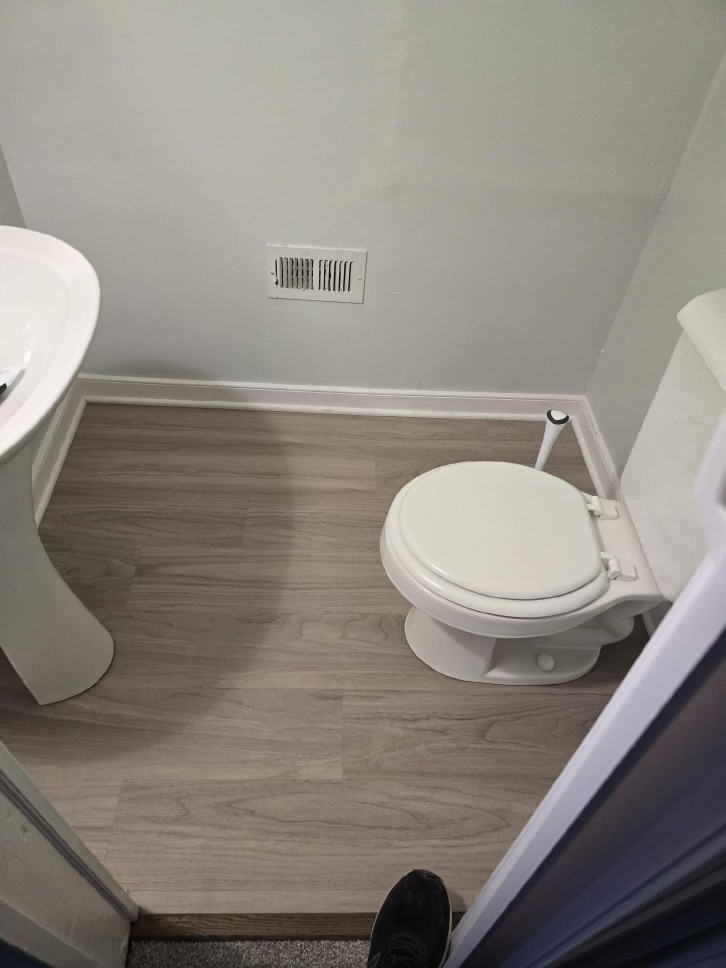
We bought a new vanity for our bathroom. That was about $700 for the vanity, faucet, toilet flusher, and mirror. I sold the old vanity (in rough shape) for $30. And because I’m proud that I did most of it on my own, here’s a picture. I needed Mr. ODA’s help with the supply lines because I lost patience with how tightly they were screwed on and my lack of progress. I cut the baseboards down to size, except I somehow measured wrong on one quarter round cut (I was cutting while it was on the wall). Mr. ODA cut and installed the replacement piece for me.

We finished up the ski season. The kids did great. I was really proud of them for sticking with it. We used our season pass well (i.e., exceeding the cost had we bought individual tickets for each visit). I took two of the three kids to the aquarium, and we took the baby for a procedure at a local children’s hospital. We’ve started tee ball for our oldest. Our March is very full and busy, so we’re getting into the swing of things and keeping track of the schedule.

NET WORTH

Well, we far exceeded that $4 million goal. The market went up big, with our biggest changes being in our retirement account, IRAs, and cash. Our cash increase is offset by the lower amount in our Treasury account. Some of the short term bonds were transferred back into our savings account, and we’ve kept that money in savings since our deck replacement is slated to begin.

2023 in Review: Net Worth

A few years ago, I set out on this journey. I wanted to talk about money so that people would start talking about money. Talking about money is taboo. Someone will act funny talking about what they bought their house for, yet it’s public record that can be found in 2 seconds. People act like it’s “cool” to say they’re broke, as if it’s a badge of honor. I want people to talk about their spending and find ways to move forward so that money isn’t controlling their life.

In addition to that general goal, I’m also sharing lessons learned as we navigate owning rental properties. I hope that information helps both landlords (including potential ones) and tenants. I want tenants to understand the work that goes into owning the house and renting it to someone, and how the statement, “I can own a house for less than rent” doesn’t get you very far because you’re not the one maintaining the rental.

At the end of 2022, I was in the process of moving to a new home, renovating the new home, and was very pregnant with two toddlers nipping at my heels. My posts were just the monthly financial updates (and I didn’t even get to a December post because our baby was a sick little one). It was always in the back of my mind to make a post, but I didn’t have the bandwidth. It took until the last day of June for me to get my feet under me and start posting again. A few years ago, I tried to post twice per week. This year, my goal was once per week, with a schedule of Thursdays. I posted 31 times in 2023. I posted every week from June 30th until December 31st, except for Thanksgiving day.

MONEY

We used to make much bigger moves in our finances – buy a house, sell a house, pay off mortgages. This year, we did things differently. Mr. ODA discovered Treasury Direct. He invests in these short term savings bonds. They’re available from 4 weeks to 52 weeks, but we’ve only held them for 4 or 8 week periods. We had three different insurance claims over the last year or so, leaving high savings balances for a few months. Treasury Direct was a way to get our money to work for us, earning at a faster rate than a regular savings account.

Our net worth increased by almost $400k, which is impressive since there wasn’t a large swing with a new house purchase. In January, home values were still high. However, the higher interest rates over this year cooled the market some, leaving our values $64k lower than January.

The goal all along has been for both of us to quit working. I quit in 2019, but have been doing odd jobs here and there. Mr. ODA’s quit date continues to be pushed back for a variety of reasons, but it’s something we’ve been planning towards. One step towards that goal was that we opened a new checking account. Nearly all of his pay check goes into that account, and we don’t touch it. While I could manually track our money as if we don’t have his income, it was a big step to helping us visualize him not working and how our finances would play out. I’m happy to report that I haven’t felt the strain of not having his paycheck coming into the account.

We opened one new credit card this year. We open new credit cards when we have a large purchase coming up. It started with our IVF journey, and we’ve continued that concept. It’s a “free loan” for us. We could either pay the total sum immediately (typically over $10k) from savings, or we could get an interest free credit card, allow our money to earn interest in savings, and then pay the balance by the end of the interest-free introductory period. That’s the path we choose. We replaced the carpet in our new home – the living room and entire second floor except bathrooms – for over $10,000. That’s sitting on an interest-free credit card right now, and I make $500 payments each month, until I need to pay the full balance at the end of the introductory period.

INCOME

Since I quit working my full-time-Federal-career in 2019, I’ve done several odd jobs. I’ve wanted the small break from being in the house, the small opportunity to have conversations with other adults, and a small feeling of contributing to the household’s finances. 2023 was the first year that I didn’t contribute more significantly. I worked 1 day as a substitute teacher in a preschool; $47 was deposited into our checking account. Comical. Even though in the literal “job” sense, I didn’t contribute much, I did work.

Besides the fact that I had to care for a newborn baby and keep three kids and a dog alive for the whole year….. 😉

I manage our rental properties. This year required a lot of management. I’m managing the work that needs to be done at each property. I’m recording expenses per property. I’m tracking income each month to ensure that we’ve been paid rent from everyone (and one property made this a very frustratingly daunting task).

On top of that, I also have worked to declutter and organize our house. As our last baby grows, we don’t need all the baby accessories that take up space. By selling these, it’s providing the ability to buy things that the kids need now. I brought in nearly $1,000 through that process.

Mr. ODA signed up to be a secret shopper. He goes into restaurants, follows the instructions he’s given, and is essentially reimbursed for the meal. He “made” about $750 doing that. It’s important to note that we’re spending money to get that money though. If he spends $15 on a meal at an assigned restaurant, he may be getting only $15 back from the company. Sometimes they offer a premium if they can’t get people to select the “shop,” but it’s just a few dollars.

CREDIT CARD REWARDS & INTEREST EARNED

Every year I love to tout this category. This year, the interest earned section far outperformed any recent years. I typically make a post where I go into the details of how our credit cards are earned, so this is just an overview. For the sake of this conversation, this is based on rewards redeemed as cash. Citi makes it easy to see how much has been earned/redeemed, but Chase has a portal where things are different. Chase allows for your points to go further if you redeem through their travel portal. That makes it hard to manage “earned” versus “redeemed” for a total each year, because the amount earned is inevitably less than it’ll be redeemed for.

Between all our credit card redemptions for cash and interest earned on checking and savings account, we brought in $4,000.

GOALS

I want to track our expenses more often throughout the year. I want to be able to get a handle on trends we’re making with our expenses and whether there’s an opportunity to cut costs. When I do this review once per year, it’s not giving me a lot to work with.

Mr. ODA is discussing leaving his job this year. It’s something that’s been on the table for several years now, but there’s never been a real reason to leave his flexible job where he has a bunch of leave and benefits.

Mr. ODA is working towards a financial advisor certification though. It’s a big deal, and I’m excited about it. He loves to talk about money and help other people with their finances, so I’m hoping this is a springboard for him to doing more of what he enjoys.

I’d like to work more. The few temporary jobs I’ve had have been more time consuming over a short period of time, whereas this substitute teacher position right now is so sporadic that I’m only working 1 day per pay period. While I appreciate the availability I have, I’m looking for something with a little more consistency (granted, for the Fall semester, I would basically be available everyday of the week, so maybe that will help).

We’d like our deck and patio to be replaced, which will then lead to more home improvement expenses. We plan to build a privacy feature wall under the deck, so that we can add a hot tub on the patio. There’s also an old hookup for a tv, which means some sort of tv set up is planned for out there, which may be further expenses. We have two more bathrooms in this house that haven’t been touched yet, and I plan to do a few upgrades.

A lofty goal will be that we keep our tenants in place and don’t have any insurance claims this year. The last year has definitely been more taxing on us than previous years.

I think the big goal is that Mr. ODA wants to hit $4 million in net worth. Mr. ODA was 30 when we hit $1 million, 34 at $3 million, and hopefully 37 for $4 million (I don’t know when $2 million occurred because we weren’t updating regularly). Being that we’re at $3.98 million now, and that we grew by nearly $400k this year without any drastic moves (buying/selling a house), I think it can happen!


NET WORTH

This “net worth” graph isn’t the best since I didn’t update our net worth from February through June, but I kept those months in there so you can see the trajectory. I’m sad that life got in the way of my updating those data points. If I just post the first and last month, you can see there’s an increase. But that doesn’t show you that there are dips along the way, and everything is based on a single snapshot in time, even though balances are changing daily. I hope that I’m able to track each data point this year and in future years so I can see these trends.

Lease Break Agreement

Last March, it was time to make a decision on renewing the tenant’s lease on House9. There were several variables at play, and we ended up adding “lease break” terms to the renewal agreement. Here’s how and why we did such a thing.

LEASE BREAK CLAUSE

All of my leases are set up as a lump sum fee. This means that if the rent is $1,000 per month, then the lease is a legal binding agreement for $12,000 for the year. If you wanted to leave 6 months into the agreement, I could hold you accountable for the entire sum. In reality, this wouldn’t happen. I’d have to show a good faith effort to re-rent the property once the tenant vacated the property, and they’d only be responsible for the time it was vacant, at most.

The point here is that there is no section of my lease agreement template that allows the lease to be “broken,” and the tenant to leave “early.” In some instances, a tenant will request the flexibility to leave early, and we typically charge up to a month’s rent for that ability. We most often use this for tenants that expressed interest in buying a home. There are some other fee structures that we use depending on the circumstances, but this will focus on those instances where we know in advance that this is a possibility.

ORIGINAL LEASE AGREEMENT TERMS

The tenants had signed their original lease in June 2020. From the beginning, they were clearly money savvy. They had said from the beginning that they were looking for a place they could live until he finished his schooling, which was about 2 years away. They negotiated a two year lease for $1,280. In September 2021, so 6 months before their lease was set to expire, he reached out with an offer. His program was set to end in May 2023, but they didn’t want to commit to any longer than that since he could be placed anywhere upon graduation. He asked to go month-to-month after that.

We agreed to extend their lease until May 2023, but it would be $1,300 (instead of $1,280) between 7/1/2022 and 5/31/2023. We decided not to engage in the month-to-month conversation that far in advance, which he understood.

In March 2023, we started discussions on their status. They were about to have a baby, the market had cooled for buyers, interest rates were high, etc. They didn’t want to rush their buying process. Instead of paying the premium for a month-to-month lease, we decided on another year-long lease, but it would have a “lease break clause.”

NEW LEASE AGREEMENT TERMS

The new lease was executed for $1,350 per month, which was still a bargain for their property. However, we added lease break provisions, as seen below.

The thought process here was that we were protecting our financial interests based on the time of year. First, we required a month’s notice. Our original lease already states that we can have access to the property to show it to prospective tenants, so that wasn’t repeated here (although it is worth noting that this in our lease agreement, since renting while a unit is occupied is not always a given; we struggled with our property manager in KY getting access to our properties (that was a property manager issue)).

I don’t know if there are facts to back this up, but it seems (through my own years of renting, as well as all these years as a property manager) that most people are looking for a rental to be somewhere between May 1 and July 1 as the start. A quick search tells me that the common months are May to September. However, in the south, we start school in mid-August. If you’re not moved by August 1st, I’d venture to say you’re not preferring a September 1st start date.

If the tenant left in the summer months, then the fee was only 1/2 of a month’s rent. We had a good chance of being able to re-rent the property if it was during the summer and before everyone focusing on back-to-school in the end of August/September. If they requested a lease break between September and the end of March, then it was a full month’s rent. This was due to the fact that the turnover process was going to be longer than our typical turnaround, and it would put us at a disadvantage in re-renting the property down the road. We then put that there would be no fee if they left in the last two months of their agreement because 1) we’d likely be able to rent it quickly, and 2) as a way of showing that we’d meet in the middle since they were such great tenants.

EXECUTION OF THE LEASE BREAK AGREEMENT

The tenant had used our property manager as their Realtor for a new home purchase. She tipped me off that they’ve be giving their notice shortly, sometime at the beginning of November. I naively thought that meant they were newly under contract, but by the time their notice was given, they had already closed on their new home. They purposely waited to give their notice so that they had time to move their belongings without being rushed (which is fine; I don’t know why that reads negatively). On November 24th, they let us know that they’d be leaving by 12/31.

While the fee was due upon notice, per the lease agreement, it wasn’t something I was willing to fight. If you’re a good tenant and hold the lines of communication open, I’m happy to treat you as an equal. They paid the fee on 11/29, and then they paid their December rent on 12/4.

LESSONS LEARNED

Honestly, it worked just as planned. We weren’t able to rent the house for January. The lease break fee alleviated the pressure to settle for a tenant just to fill the house because we had the month’s income already accounted for. We’ve done something similar in the past, and this set-up has worked well for us. It gives a little grace to the tenants and real life needs, while still protecting our interests as business owners.

We put the same type of clause in another tenant’s lease. They executed the clause on February 23rd, letting me know they’ll be leaving by the end of March. If they broke their lease in March or April, there was no fee (their lease was set to expire April 30th, so it’s one month early).

Their are times where a tenant doesn’t know up front that they’re going to find a house they love or a job is going to move them. We handle each on a case-by-case basis. Generally, it’s either going to be a month’s worth of rent as the fee or it’s going to be a fee of $250 (the amount I pay to the property manager) and they pay rent until we find a new renter (which has never taken more than 6 weeks, and is typically a few days turn around for me).

LLC Filing with FinCEN

I was chatting with a financially savvy friend of mine, and she asked about filing our Limited Liability Corporation (LLC). I had no idea what she was talking about. Mr. ODA had no idea what she was talking about. I sent a text to 3 of my investor Realtor buddies (in two different states), and none of them heard about it. So I started digging.

Sure enough, if you have an LLC, you’re required to file with FinCen this year.

So here’s my attempt to let a few more people know of this legal requirement that carries fines, yet no one decided an email or mailing to LLC owners (which are filed with the State governments and are required to have physical mailing addresses) would be worth their time and cost of a stamp.

THE CORPORATE TRANSPARENCY ACT

On October 23, 2019, Congress passed this Act. The purpose being “to ensure that persons who form corporations or limited liability companies in the United States disclose the beneficial owners of those corporations or limited liability companies.” Essentially, they’re trying to ‘crack down’ on companies using LLCs as a shell game to move or hide money, or pay into criminal behavior.

It states, “Criminals have exploited State formation procedures to conceal their identities when forming corporations or limited liability companies in the United States.” In 2006, an international body determined that the United States fails to comply with beneficial owner information reporting, and gave a July 2008 deadline to fix it. The United States Federal level had urged State laws to comply, but didn’t follow up, and was cited again for failure in 2016. Since the States didn’t make progress, Congress issued this ruling.

The Act states that nearly 2 million LLCs are formed each year, with few States requiring beneficial owner information. A beneficial owner is generally someone who exercises control over the company, owns 25% or more, or receives substantial economic benefits; there are exceptions listed in the law.

While this was passed in late 2019, they then needed to establish a way to securely collect and retain the information reported. FinCEN established a Beneficial Ownership Information (BOI) website, in which you’re required to enter the pertinent information. It opened January 1, 2024.

Because this is the age where there are scams around every corner, note that this is a ‘.gov’ website, and their logo is below (i.e., don’t enter your personal information into a third party website).

REPORTING COMPANY

A reporting company is those that qualify based on the law’s detail. There are either domestic (registered here, doing business here) or foreign (registered in another country, doing business in the United States) reporting companies.

There are 23 ways a company may be exempt from reporting. The general gist of the exemptions are based on whether you’re already reporting to the government in another form (e.g., banks and accounting firms). “These entities include publicly traded companies meeting specified requirements, many nonprofits, and certain large operating companies.” Don’t assume you’re exempt; be sure to check the list on the official website.

BOI REPORTING

The reporting is straightforward. You will need a legal identification card image uploaded for each person entered in the system.

From the main page, I selected the icon that said prepare a BOI Report. I chose to prepare and submit, so it’s a form within the website. There’s another option that appears to allow you to fill it out in PDF form and submit the form. I preferred the prompts along the way.

Below is a snapshot of the information that’s needed in the initial filing.

When we set up our LLC, our drivers licenses were copied, so this request isn’t for anything more than we’ve already provided to our State. For us, establishing an LLC was solely a way for Mr. ODA and I to create an ownership stake in two properties that we purchased with a partner. Though there are 3 of us listed in the LLC, Mr. ODA and I are 50% partners together, and this other guy is a 50% partner. I pay him out at 50% each month after I collect rent.

It’s very simple; I’m sure there are LLCs with employees and more paperwork. However, I didn’t need a social security number for the beneficial owner(s) or any dollar amounts paid. We did establish a EIN for the LLC several years ago, so I submitted that EIN for the reporting company. Otherwise, I would have submitted my social security number as the company’s identifier.

There are more details associated with the reporting; for instance, you can update your report through their website. However, I’ll leave it to you to dig deeper on all those instances, as I’m just trying to build awareness.

DEADLINES

As with all new systems, there’s a phased approach to the requirements.

If you were already registered before this year, then you have until January 1, 2025 to file the initial BOI report. If you create an LLC during 2024, then you have 90 calendar days from the registration effective date to report. For all LLCs created on or after January 1, 2025, you have only 30 calendar days to report.