EV vs Gas

I’m late to this comparison, but I didn’t have a reason to pay attention to electric vehicles (EVs) until our trip to Denver in July. As seems to be the case regularly there, the rental car company didn’t have any available inventory of gas vehicles, even though that’s what we booked. I’m actually starting to wonder if they have any gas vehicles because it’s suspicious that they thrust these EVs on customers so consistently. Here are some quick thoughts on an EV after experiencing it, but also the gas usage versus electricity usage math comparison we did while there.

EV EXPERIENCE: THE NEGATIVE

It started out stressful. Had we been given a tutorial or any guidance at all, it may have started out easier. However, we started the trip by having to wait in a 90 minute line to even get the car. Then we were greeted by a disgruntled employee who had no intention of helping us. Then when Mr. ODA tried to talk to a manager, she just kept saying “we don’t have any gas vehicles. I can’t do anything for you.” Well ma’am, you could maybe take 2.5 minutes and quell all our fears of the unknown, in a foreign place, while traveling with 3 kids that are 5 and younger.

The biggest issue was our timing. We arrived later in the day, needed to get the kids fed and their bedrooms set up, while also allocating enough time for them to just play and have fun since we’ve been traveling all day. The next morning, we planned to get out of the house and head to the mountains. That’s the problem. We don’t know our range. We don’t know where to fill up or how to fill up. We do know that charging it is not a 4-5 minute process like filling up a tank of gas. We do know that there aren’t super chargers everywhere. There was a lot of “I don’t know what I don’t know.”

Luckily, a friend of ours recently had a similar experience, and she shared some tidbits with us. For instance, there are multiple charger apps you need to download. Then once you download all of them and use the map to figure out where in town the closest one is to what you’re doing, you have to figure out what the data means. “6.6,” $ vs. $$$, “fast charging.” There were different filter options in different apps, but no legend on what these terms mean.

The first charge came while Mr. ODA dropped us off at McDonald’s, drove down the block to a “fast charger,” ran down to eat with us, then ran back to get the car and pick us up. This wasn’t ideal. This was really affecting our trip with this dark cloud hanging over us trying to figure out how to efficiently charge this thing. Plugging a car in while trying to entertain 3 kids for 45 minutes wasn’t how I expected our trip to go.

EV EXPERIENCE: FIGURING IT OUT

ChargePoint ended up being the easiest to use. They have a lot of stations around Denver, especially free ones. We looked for places to eat a meal where we could utilize a free charger and take advantage of the “down” time. It involved walking a block or two each time, but it gave us the peace of mind to get through the next phase.

One morning, we went to Red Rocks. There were a few free charging stations in the parking lot. We plugged in, spent two hours exploring the place, and received about 80 miles on our range, which was plenty for the next day of our trip. That night, we went to a concert at Ball Arena. Instead of parking where most of the other concert-goers parked, we went one block further and parked a well-lit, clean garage. We had to pay to park in the garage, but the charging station was free.

We also learned how to utilize the charging available within the car itself. EVs don’t “coast.” They have regenerative braking. You basically drive the car only using the accelerator, and don’t use the brake. You slightly hold down the accelerator to keep the car moving as you approached a stop, and it charges as that happens. There were different levels you could put the car at to take advantage of this charging process.

GAS VS ELECTRIC COSTS

We spent time figuring out the apps and the types of chargers. We avoided the chargers that had flat fees on top of the kwh charge cost. Almost all of the chargers had a “parking fee,” which meant that if you remained plugged in after the car was fully charged, they’d charge you by the minute for taking up that space. It makes a lot of sense since charging spots are limited, and you want to disincentivize people just walking away from their car for hours.

After we figured out the process of how to use the vehicle and the charging locations, we were able to do some math on the cost per mile. We specifically charged the vehicle either at free locations or in off-peak charging time (there is variable pricing on some chargers). We calculated that the cost per mile came about a few cents higher than if we were in a gas vehicle. However, that could be higher if you were charging during peak time or you needed to use the fast charging locations more often based on your vehicle distance/use. Gas prices in the Denver area were in the high $3.20s to low $3.30s, and we calculated a charge equivalent of $3.34.

There is the opportunity cost of your time. It only takes a few minutes to fill your car with gas. You’re not walking away from an EV charging location in less than 20, and it’ll likely be longer. If you have the ability to charge at your house, while the car is in the driveway, then it changes the equation. Since we were at a rental, that wasn’t an option available to us.

EV EXPERIENCE: END RESULT THOUGHTS

After the initial anger and fear of the unknown subsided, I’m not against EVs. If you can charge them at your own home, they’re great. They’ll get you around town just fine, and you’ll have the convenience of it charging while you’re home and comfortable. Your home charger won’t be a fast charger, but having it plugged in overnight for that 10-14 hour charge wouldn’t be an inconvenience.

I wouldn’t take them on long road trips. There would need to be careful planning of your charge range compared to where charging stations are. Unless it’s a truly a fast charger (15-20 minutes, and more expensive), you’ll need to plan to be somewhere for hours to get a charge. Then there’s the fear of availability when you arrive there, and whether you’ll get a spot because it’s not likely you can just travel down the road a few miles to find another station.


I wrote the initial draft of this in August. So it’s interesting to say – we bought an EV.

Summer Trips

In 2021, we looked to buy a lake house. We tried so hard to find something, and we almost settled on something that didn’t fully make us happy. It was March or April of that year, and we finally stepped back and said, “instead of buying a house here that we feel pressured to come to every weekend, what if we just went on vacation more.” Up until that point, we traveled a good bit, but it was typically with a purpose instead of just traveling for the sake of seeing somewhere new (e.g., one of us tagging along on work travel). We calculated that our mortgage payment on that second house would be $1200 per month. That was our budget for travel each month. I wrote a whole post about it.

Then I got pregnant and we bought a new primary residence in the summer of 2022. Almost all our ‘travel’ that summer was just us going to the new house to work on it before we moved in. Then the summer of 2023 was spent recovering from the newborn phase of that third kid that was unbelievably painful. I was just happy to be sleeping and in a routine again, and I wasn’t willing to leave home much and risk lack of sleep.

We made up for it this summer.


JUNE: MD, NY, OH, MI $1,251

Our first trip of the summer was two weeks long. I was so nervous to manage 3 kids (one of which is still a high maintenance sleeper) and a dog for that long, but I had hoped it would be fine if I prepared correctly. We hit four states.

Our son was on the Oriole’s for his baseball team this spring, so that became his favorite MLB team. It just so happened that they were playing at home on our drive from KY to NY (meaning, if we really wanted to, Baltimore could be on the way). As an added bonus, they were playing the Braves, which is Mr. ODA’s favorite team. So we made that work. We booked a hotel in Baltimore that was pet friendly and walking distance to the stadium, and then we bought the tickets. Actually, we bought two tickets for 5 of us to go. The Oriole’s stadium has a program where if you buy a ticket in the upper section, you can have up to two free tickets for kids up to 9 years old. It’s an incredible program. The detour cost us more in tolls than we’d typically spend on our route. It was worth it. Our son watched the whole game and was so happy with it.

Then we traveled to NY. There’s no lodging cost there because we stay at my dad’s house. We went to the local team’s baseball game one night, hung out at the beach one night, had two cookouts, and went to my cousin’s bridal shower. The bridal shower was the reason for the trip. The Michigan component then was booked as the other side of the family’s annual trip. It didn’t make sense for us to drive home from NY and then back up to MI, so we just buckled up for the two weeks gone. We didn’t eat at any restaurants while we were in NY, so our costs were a couple of grocery trips and our family cookouts.

The trip from NY to MI was 13.5 hours without any stops, so we didn’t want to push the kids that far. We typically do the KY to NY trip in one day. That takes 13-14 hours depending on traffic and our stops. It would take about 11.5-12 hours without kids. We usually do two quick stops and one longer meal out of the car when we drive straight through. But with it starting at 13+ hours, I didn’t want to risk it. Plus, I wanted to arrive in Michigan around check in time, which would have us leaving NY at about 2 am. I covet my kids’ sleep too much to risk that one!

Our stop on the way was Cuyahoga Falls, OH. Again, we needed to find something that was pet friendly without charging us $175 to have the dog there for 14 hours. We found a hotel that didn’t charge for a pet, and it appears that’s because they don’t really care about cleanliness. The room was disgusting. The mirrors looked like they’d never been cleaned, the counters had someone’s old rice on them, the door wasn’t fully attached to its hinges, and the sinks didn’t drain. At least the bedding was clean (I inspected closely). I was grateful to only be there for 14 hours.

We went hiking that morning and then headed to MI, dropping the dog off at a sitter on the way there. We use Rover to find a sitter, which is where the sitter takes the dog into their house. I appreciate this type of care/attention than a kennel; we’ve used this service for 11 years now.

Our MI trip was Mr. ODA’s family trip for the year. His parents treat us to the house, and the kids’ families cover the food. Usually our trip doesn’t involve many extra expenses, but this year we sought out a place with activities, so there was a lot of money spent. We went on a dune buggy ride, walked a windmill island, went to a little ‘dutch village’ theme park, picked cherries, and spent a lot of time at the beach. We usually eat all our meals at the AirBnB, but we did have two meals out and lots of ice cream this time around. Honestly, it was the best trip we’ve taken in a while. I appreciated the ‘vacation’ aspect of it, where we did things around the area and had fun with activities.


JULY: VA $570

This was actually a work trip. Last summer, we didn’t make it to Richmond to do property walk throughs because our baby was such a handful. We’ve had a lot of work done over the last year, and there were a few things noted by tenants that are just easier for us to handle in a few minutes than pay someone hundreds to handle.

We cleaned the siding on multiple houses, checked some gutters, replaced a few things, and painted a front door and front porch. It was a 3 night trip, and we put about 20 hours worth of work into it. It was hard to juggle the work that needed to be done, having 3 kids in tow, and a heat index of over 110 each day, but we got what we could get done. I wrote a post about the work we did earlier this summer. Our expenses were the hotel ($401), gas, and food. We actually had a surprisingly low food expense on this trip considering we stayed in a hotel (lack of kitchen and time).

While there, we were able to see a few of our old friends. However, we planned this trip fairly last minute and had to fit it around other activities already scheduled at home, so we didn’t get as much ‘play’ time as we’d prefer.


JULY: CO $3,350

Mr. ODA’s brother wanted to celebrate his 40th birthday by hiking 14-ers in Colorado. He invited a few people to join, and Mr. ODA spent the first half of this year getting in shape for that activity. Honestly, in January, this idea seemed so far away, so it was exciting when the moment arrived. Mr. ODA wanted to go out earlier than the trip’s original itinerary to acclimate to the change in elevation. That’s where I came in.

We booked a flight for all 5 of us to fly out there on the 18th (well, the baby was free). We spent the weekend around the Denver area, and then I flew home with the kids on the 22nd, while he stayed to hang out with his brother’s crew.

We had to buy flights, rent a car, book lodging, and buy groceries/meals. We did more-than-average entertainment for this trip with a concert and baseball game, so that increased our expenses.

On our first full day, we visited Mount Blue Sky, which is a drive up to the top of a 14er (a summit above 14,000 feet). It was a really unique and cool experience. On Saturday, we hiked at Red Rocks and went to a concert at Ball Arena. On Sunday, we went to a Rockies game and walked around Denver. It was a great trip, and the kids were troopers through all the fun.


AUGUST: NY $430

My cousin got married in NY. Typically, I’d take this opportunity to get my whole family to NY to see my side of the family. However, our oldest started school already, and I didn’t want him to miss any of that, especially on day 3. The whole family flying to NY is expensive, plus we’d have to figure out the babysitting need for while we’re at the wedding. While I have a few people I could call on, it’s more difficult when the intent is for the closest adults I know to be at the wedding.

We booked direct flights for Mr. ODA and me to fly out Friday afternoon and come back Sunday afternoon. We had the kids stay with grandparents for the two nights, and this way the grandparents didn’t have to manage any kid activities except getting our oldest off the bus. Our two flights cost $376.40, and it included a checked bag if we wanted it because of our American Airlines credit card rewards. Parking at the airport is $11 per day, so that was $33. Our original plan was to take the train from JFK to where my dad’s house is, but we pivoted because he offered to pick us up and take us out to dinner. Our meals were covered except for on the way out and the way back, and one coffee I purchased while there. It was a nice little trip where we had fun and could just focus on that versus managing the kids’ schedule, so I appreciated that.


Mr. ODA had two work trips this summer on top of all that we did as a family. Those net us income instead of expenses, so I won’t go into them. I mention it just to point out how busy and entertained we were. I’d say we’re looking forward to winding down, but now baseball and gymnastics start up on top of managing kids at two different schools. But I’m loving it and looking forward to what this next season brings.
Mentality, Consistency, Follow Through

When I was little, we had friends come to our house a lot. When a certain crew came, they raided the candy drawer like they hadn’t eaten in a week. It was quite a binge. It’s because there was no candy in their house. They were fed 3 small meals each day, and that was it. They had the mentality that they needed to get everything they could in a small period of time. Because they hadn’t been taught self-regulation by having regular access to things, they didn’t understand moderation.

To me, I had access to the candy drawer in my house whenever I wanted. Therefore, it wasn’t exciting to me. It was there if I wanted something here and there, but it wasn’t something I felt the need to covet. I do the same with my kids. They have full access to the pantry. They know the things that are “good” for you, and they know they can take that without asking. They do ask if they can have any of the treats in there, and unless it’s close to a meal time, I try to give more “yes” responses than denials (and my denials always come with a reason).

I use this story regularly in my life it seems. It seems focused on a healthy relationship with food, but it’s really an overall concept of understanding the mentality it takes to make informed and beneficial decisions all day, everyday.

DELAYED GRATIFICATION

We did a stent with a multilevel marketing company. They preached “delayed gratification.” It was meant to say that you shouldn’t spend now because you’re going to produce a significant amount of income in the future, and you’ll be able to spend greatly at that point. Unfortunately, Mr. ODA and I are too cynical to watch that unfold. We took note of every “extra” our “upline” spent that wasn’t hitting that mark.

They who would go on a big trip with the statement, “well it’s ok because it’s for my birthday” or “it’s ok because it’s the last big trip that I’m going to take with my mom.” There was always another trip. Or the big, fancy, rent out a space, decorate to the nines, buy a new outfit, birthday party that happened almost annually. There were excuses to justify these actions that were clearly against their “delayed gratification” preaching, but they thought it was ok because they were “debt free.” They didn’t buy a house, continuing to throw money to rent year after year so that they wouldn’t have a mortgage.

There was a guise of having a “big picture” mentality, but the execution of the financials didn’t add up to us. If you were really in delayed gratification mode, the $3,000 you spent on a trip could have been saved towards a 20% down payment on a house at 2.5% interest rate. That’s what Mr. ODA and I did when we had to pay for a wedding and buy a house in the same year. We set a goal to spend no more than $5 per person, per day on food. We didn’t eat at restaurants. We didn’t go on huge trips (although we did do some weekend trips to visit family). Because of those years of ‘pain’ we went through, we bought a house with no mortgage insurance, and that house turned into 4 houses when we sold it.

I digressed. The point here was that creating a mentality of “delayed gratification” is setting yourself up for failure. If you created a habit of proper spending and a mentality of being able to discern whether the cost of something is worth it to you and your goals in real time, there wouldn’t be these “slip ups” of wanting to take that big trip or wanting to fill a void by throwing a lavish party.

In February, I started a diet. I was working out for a year at that point (after having our 3rd baby), and the number on the scale was exactly the same. I felt better, but I wanted that number to go down. I started reading up on diets, and this concept I found clicked with me. If you commit to a diet that is really restrictive, you’re going to fail. If you can’t have any carbs, then you end up having a binge day to make up for that desire. The concept of depriving yourself of something is more thought-consuming than if you had taught yourself moderation.

This diet concept was to alter your eating each day so that it keeps your metabolism on its toes. One day, eat a lot of protein. The next day, eat your carbs. Go back and forth. I was consistent on this for 3 months (see, best laid plans fail – between end of school things and travel, I haven’t put the effort in), and I lost 17 pounds with little effort. I haven’t been paying attention to this eating pattern, and I’ve been stagnant again. The whole point was that if you deprive yourself of something you want, then it’s going to consume you and make you unhappy. But if you eat in a thoughtful manner, then you’re happier and have an easier time reaching a goal and sticking with it.

RIPPLES

The decisions you make today affect tomorrow. The habit formed by thinking you had a hard day and deserve a “treat,” or that “it’s vacation so we should each have a $10 ice cream at the amusement park,” have ripple effects. I have another post about how people make fun of those who say don’t spend $5 on coffee everyday if you want a better life. Most people see it as a literal $5 per day (granted, it’s more like $7 or $8 at this point), do the math, and then say sarcastically “wow I’m a millionaire.” No, it’s the mentality. It’s the concept of teaching yourself that you don’t need to purchase an expensive coffee everyday, or you don’t need to buy lunch everyday at work, or you don’t need to overspend on treats once per week.

Someone once made fun of us because we like to go exploring new towns and find hikes, while his family goes to Disney at least once per year. I’d venture to say that our trips, where we spend time with our family and learn about new places and things, are more stimulating. I don’t hate Disney (Mr. ODA does though 😉 ), but I don’t see it as something to go to every year with no other experiences. But our trips that end up costing about $1,000 allow us to go do more things. We can do more activities when home, we can go on more trips, we can put money into savings accounts for our kids.

This summer, we have plans to be in 7 states outside of our home state. My kids are extremely happy with just the concept of staying in a hotel or “vacation house.” Add in swimming in a pool somewhere, and they’re ecstatic. I don’t have a desire to teach them that vacation is when you get to eat everything you see and buy whatever trinket you want. If you intentionally spend throughout the year, you end up with things that are more valuable to you than if you buy several trinkets just because you’re on vacation (really – when was the last time your kid played with that light up spinny stick from Disney on Ice). I want to teach them the value of their time, their money, and their family. I want to try my hardest to set them up for success because they understand the value of things in the big picture, and not just the instant gratification that lasts for a couple of days because they go that little toy we walked by.

Our Money Management

I manage all our income and expenses (at a high level, like credit card payments, not individual line items). I have a spreadsheet that I set up in 2012 and have used religiously since then. I’ve shared how I set it up in the past, but we’ve entered a new phase that makes my spreadsheet even more important to me.

BACKGROUND

FIRE. Financial Independence, Retire Early. This isn’t a post about FIRE specifically, although it’s the movement that sparked Mr. ODA to go down our financial path.

The purpose of our rental portfolio was always for both Mr. ODA and I to quit working. We had covered my income before any kids were born, but I kept working because there was no reason to not be working. Once our son was born, I took 14 weeks maternity leave (not a separate bucket for Federal employees back in 2018; it came out of my own accumulated sick leave), then I worked about every other day for 8 months while Mr. ODA and I swapped child care roles, and I burned down my leave.

While we don’t plan to work full time, we do plan on keeping part time positions. We’ll work on things that bring us joy, rather than an office job with office politics. Since I stopped working, I’ve done odd jobs, part time. For example, I worked as a census taker and served beer at a local race track over the last 4 years. These were all seasonal, part time positions, with no long term commitment.

Now that I quit working, it’s Mr. ODA’s turn. We hardly skipped a beat when we left my six-figure salary behind (although a pandemic probably helped curtail spending on our behalf!). However, the thought of losing his salary as a safety net and losing insurance are two items that have caused some pause.

THE SPREADSHEET

For you to understand my panic that I’ll get into here, I thought a quick reminder was necessary. This is how I manage our money. It’s nothing fancy, but it works. I don’t miss payments. I can allocate expenses to a specific 2-week period against what income is brought in at that time.

There are two parts to the spreadsheet. Well, there are about 10 tabs, but this first tab, with two sections, is what’s pertinent.

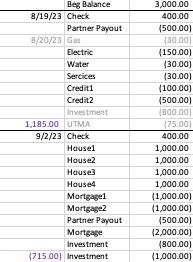
Part 1 is this section. This image is a very scaled down version of the section. We have 13 houses, 6 mortgages that get paid, 6 credit cards that get paid regularly, and a few other lines that I removed.

All numbers are made up place holders, except the investments. I deleted my IRA contribution line because it’s wonky (but I will max out IRA contributions), but I wanted to show how much we’re investing regularly. There’s $75, per kid, per month, going into their investment accounts. Then there’s general investing happening with one $1000 transaction and two $800 transactions per month. Mr. ODA is investing into his IRA to max it out ($6500/12=$541 per month..sort of).

You can see that I’ve listed Mr. ODA’s pay dates at the top, and then his salary income on the next line. The gray section accounts for all rental income. I’ve allocated the income into the salary two-week period that makes the most sense (about half pay me on the 1st or 2nd, and the rest pay on the 5th). The green section shows routine rental property expenses. The entire next section are our personal expenses. The blue is left over from when I was managing two personal homes last summer (but kept it to differentiate our house bills versus other bills). The next gray section (which I’m only just realizing is a second gray and should be a different color as to not conflate the two grays.. what a rookie mistake) accounts for expense that come out of Mr. ODA’s bank account. Finally, I have an “other” section. This is where I capture large expenses that don’t need their own line item because they only happen once or twice a year. Here I’ve put tax payouts that will be due in October (that’s 4 houses worth, and it’s last year’s numbers – because I want to know how this year’s amount owed, when it comes in, changed from last year’s to discern if it’s reasonable or if I need to dig into it).

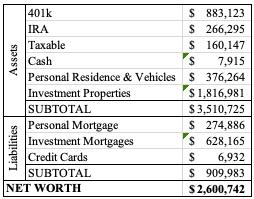
This is part 2. Now, part 1 accounts for the general timing of income and expenses, but it doesn’t perfectly capture the due dates, scheduled payments, or whether I’ve paid it and it’s hit the account.

The top line is linked to the section that I update our checking and savings account balances. Then I transfer all the items per pay period into this list format. In this example, let’s say I’ve already scheduled the gas payment. So I mark it as gray and put the date in the left column. Similarly, our investments are automatic, so I mark them in gray as we get to that two-week period.

At each border lined, I put the total for that section. You can see that at the end of the 9/2/23 pay period, I project a negative balance. Truly, we seem to have more income than I project (rewards cashed out, someone paying partial rent a little early, etc.), so I don’t take any action until I need to. There are Federal regulations regarding savings accounts; so we can only make 6 withdrawals from the savings account before fees apply. I manage these projects to know whether I need to make a withdrawal. If I need to, then I project what other expenses I may have and transfer a little more than I deem necessary.

THE PLAN

So our first step to him leaving is to pretend we don’t have his salary. Mr. ODA set up a new bank account. The majority of his paycheck goes into that account. We still have $250 going into another account, and about $400 going into a third account because we need to meet the requirements of direct deposits to prevent any account maintenance fees.

Our general principals in account management was always to take money into our main checking account, pay out bills for that two week period, and put the balance into savings. However, that wasn’t creating any forced feeling of managing without Mr. ODA’s salary. I’m more of a visual learner, so I appreciated this concept of having the money automatically transferred to a completely separate account.

EXECUTION OF THE PLAN

The first month of this plan had me on edge. The accounting in the checking account meant I was constantly back down to a balance of about $500. When I worked in an office, I was at the computer everyday checking our money. Now that I’m responsible for 3 tiny humans, I’m rarely on the computer. I project out our routine expenses, but there have been plenty of times where a $100 or $500 charge goes through that I didn’t have listed in my expense column for that period. Therefore, I like to keep at least $1000 as a buffer in the checking account to cover those little expense that can add up. So keeping the projection to less than $500 in the checking account panicked me.

Now wait. It’s not that we only had $500. We have a savings account linked to that checking account. We have this online account that’s taking Mr. ODA’s salary and just building the balance because we don’t use that account for anything. We have Mr. ODA’s old personal checking account. And last but not least (as my adorable 3 year old says all day long), we have plenty of investments that can be liquidated within 24 hours. We have the money. It’s just the panic of having the money in the spot where the bills are being paid.

SUMMARY

I’m sure there are easier ways or “better” ways to account for this. I don’t like automatic payments for bills because I like scheduling them against our cash flow. I’ve used this exact set up since 2012, and it hasn’t failed me. Taking full responsibility to pay bills means I am very scared to miss a payment and cause a negative hit on either of our credit reports.

Now that we’ve eliminated about $5,000 per month of income, without changing our spending in any way, I’m interested to see how things go. We have a great spending mentality – we’re not spending on frivolous items and we weigh the cost benefit of a purchase to us. That’s not to say we can’t do better. I’m sure we can be more diligent about our grocery spending or at least cooking what we already have in the house (we don’t spend much at restaurants in a month). I’ve already started tracking our expenses month to be sure we can watch our trends and re-evaluate our spending if needed.

Now that we have this account growing with no need for it to pay the bills, we will use it for fun things. We’re not very good about doing fun things. Two summers ago, we wanted to buy a vacation home at a nearby lake. We decided that instead of spending $1200 per month on a mortgage to go to the same place all the time, we’d plan vacations each month and spend up to $1200 without “guilt.” It was great. We had so much fun. But it lasted 3 months. Having a newborn put a damper on activities, but we’re ready to do the same again.

May Financial Update

RENTAL PROPERTIES

We paid $2,850 in extra principal towards the main mortgage we’re paying down, leaving that mortgage with a balance of $5,500. We had a $4k flooring purchase on another house that has set our pay off timeline a few weeks back, but we’ll still have that mortgage paid off in the next couple of months. We have a rental property that we purchased in 2016 that has flooring that’s at least that old. The carpet has long passed its useful life, and the linoleum in the kitchen and laundry room has started to peel up at the seam. Typically, we wouldn’t want to replace flooring while a tenant still lives there, but they’ve lived with this for almost a year, and they’ve been our tenants since we purchased the house. As a means of keeping the tenant happy, we agreed to replace the flooring in all the rooms except the bathrooms.

We had two of our tenants not pay rent by the 5th, as required by the lease. They’re the two that are typically late, and they’re typically not up front with telling us about it. We’ve said several times that we’re really flexible landlords, but we can’t be flexible if we’re not told what is happening. With one tenant, who had just recently irked us with a plumbing issue and being incommunicado, we didn’t even reach out for information. We’ve had enough of their antics and having to chase them for rent. So I simply sent them their notice of default letter, outlining all their rights as tenants as now required under COVID-related procedures. I received an email letting me know that they’d pay on the 7th. I love their nonchalant response, like they hold the power and will pay whenever they feel like it (hmm). For the other tenant that was late, she texted to say she’d be late with the payment on the 7th, and then on the 7th only paid part of the rent due. She said she was in a car accident and there was an issue with her sick leave pay out, but she’d get it to us when it got fixed. She resolved it on the 12th, although still without the late fee.

We were able to get the invoice on the HVAC replacement for one property, which meant we paid our partner the $3,288 we owed him, on top of his usual $2,167 that we pay out for him to pay the mortgages and then his share of the profits (since I manage all the rent collections).

OUR SPENDING

Our credit card balances are high for several reasons. The $4k flooring purchase; as well as the insurance for one of our properties that isn’t escrowed because we paid off that mortgage, which was $436; an expensive gift purchase that isn’t transparent in the cash and credit line items because that cost was split 3 ways (i.e., we received 2/3 of that cost back in cash, but it’s still reflect in the credit line); and our travel.

We booked a camp site for the end of the month that required payment up front. We just got back from a trip, which increased our spending. But I’ll note that when we travel, we’re not eating expensive meals. Our interest is in the experiences and activities, rather than exploring sit down local restaurants. Our food for 5 days cost us $161 as a family of 4. We also ended up only paying for 2 of the 4 nights in the hotel because the air conditioning was broken, even after they came to ‘fix’ it, and then, when I was checking under the bed to see if any toys or socks got left behind as we were leaving, I found a large, dead roach. We didn’t ask for any comps; one was automatically reflected in my final invoice without my prompting, and then when the manager was speaking to Mr. ODA about his stay, he volunteered removing another night.

We opened a new credit card to take advantage of the bonuses since we knew we’d have this travel and the flooring cost to meet the $4,000 spending threshold for their bonus. This credit card has an annual fee of $95 and no 0% interest period, which goes against our norm when looking to open a new credit card. However, the bonus can be transferred to our Chase Rewards Portal, where we can use it to book travel at 50% the cost. We also received a $50 grocery credit.

ROUTINE UPDATES

  • My husband and I cashed in the last of his savings bonds that we got as children, so that was an extra $735 that we brought it that wasn’t planned.
  • We paid about $6,074 for our regular mortgage payments. Several of our properties had mortgage increases due to escrow shortages. I haven’t figured out which I dislike more: planning for tax and insurance payments, or the large escrow increases that seem to happen year after year. I think it’s the escrow though.
  • Every month, $1100 is automatically invested between each of our Roth IRAs and each child’s investment accounts. I should also note that I don’t speak to other investments because they happen before take-home pay, but my husband maxes out his TSP (401k) each year as well, which I had also done when I was employed.
  • Our grocery shopping cost us $700. Honestly, I don’t even know how to explain that cost jump. I think it’s because my husband shopped some deals at Kroger and Costco, so we stocked up on some things that aren’t part of our routine purchasing.   
  • We spent $200 on gas. Two trips to Cincinnati, our trip to Atlanta, and then more-than-usual trips around town. 
  • $400 went towards utilities. It’s higher than last month because we paid 3 months of our cell phones, which gets us back on quarterly billing as a family. Utilities include internet, cell phones, water, sewer, trash, electric, and investment property sewer charges that are billed to the owner and not the tenant. We still haven’t sought reimbursement from the builder on our electric bill, but this month’s bill was even less than the last month’s. 
  • Our entertainment costs included baseball game tickets for our trip as well as two games later this summer, parking for the games this past weekend, a new shirt for our son, activities for the kids, and the hotel. This past month, we spent $650 on things I’d classify as entertainment related. I also included boarding for our dog ($100) in this total.
  • Speaking of our dog, he had his annual appointment (shots and the year’s worth of preventative medicines), and that cost us $500.
  • We spent $292 eating at restaurants and ordering take out. We utilized a Door Dash credit on one of our Chase credit cards, which was about $30.
  • But! I killed it with running errands this month and actually returning things that needed to be returned. I returned $150 worth of items one day!
  • We paid our State taxes during this period too. Between two states, that was $954. Also, anecdotally, I’ll share that we spent $6.40 to mail our Virginia tax return. We processed our taxes through Credit Karma, as we had done last year. We got through the federal e-file and moved onto the state filing, only to find out that if you’re filing partial states, Credit Karma doesn’t support it. I had to print 70 pages of our federal return, sign it, and ship it off to Virginia.

SUMMARY

Our net worth actually dipped this month. The stock market is the main factor in that, but the house valuation estimates are starting to level off and look more realistic as well.

Between our personal lives and our business life with these rental properties, we were sure kept busy. We expect the Spring months to be a busy time of year, and honestly it feels good to be active again. While we’ve loosened the purse strings for the summer months, especially after having done hardly anything for the last year, it was still a shock to see just how much we spent in these categories. But that’s the benefit of looking at your finances regularly. We can either choose to remain on course with our summer plans, or we can dial it back if we feel this was more than we expected.

Since we know we’re on top of our finances and have set up a healthy mentality when it comes to spending, we’re comfortable looking at this information once a month. If you’re currently developing these money habits, you may want to do these types of check-ins more frequently.

April Financial Update

This month had a lot of money movement – tax payment out, stimulus check in. As I’ve shared before, we don’t budget. But you can start seeing how we’re pretty consistent on where we spend out money. This is because we have a spending mentality that we use to make each decision, rather than giving ourselves a ceiling in each category. I believe some may see a ceiling as a definitive amount to spend (e.g., if I’ve allocated $100 for restaurants this month, and by the last week I still have $75 in that budget pot, then I’m going to go spend it). If you know your long term goals and take responsibility for your decision-making, then you don’t need to pay close attention to each dollar.

With that said, my family came to visit for a week. It was our second’s first birthday, and my dad is helping us finish our basement. With 3 more adults in the house, we spent more than typical feeding them and eating at restaurants versus cooking after spending the day working in the basement. Mr. ODA and I share the same birthday, so we splurged for a nice meal that night. We actually spent about $300 at restaurants over this last month, but thanks to our Chase credit card, we received statement credits for $188 worth of these purchases!

We have also spent more on entertainment. We went to a winery and a brewery, purchased tickets for the local horse race season, and have done other activities now that the weather is nice. The pandemic and winter had our spending lower than our usual amounts, but I expect our spending to be more than it had been in these coming months. We’ve already put together our summer bucket list for travel.

We had all the tenants pay their rent on time, except one who eventually paid. Our rental income is $12,353, and we pay our business partner about $2,100 (we collect the rent and then pay him to cover the mortgages he holds and his half of the ‘profit’ after the mortgages are deducted from rent). We had to replace the HVAC in a rental. Luckily, this rental is owned with a partner, so only half the cost will affect us. We haven’t paid the bill yet, so that will hit next month.

  • We paid about $5,972 for our regular mortgage payments. We put an additional $5,000 towards an investment property mortgage, which now has a balance of $8,665. We also put $5,000 towards one of the properties that we have with a partner, which he matched, leaving that balance at $42k.
  • Every month, $1100 is automatically invested between each of our Roth IRAs and each child’s investment accounts. Our stimulus checks that we received for the kids went directly into the kids’ UTMAs.
  • Our grocery shopping cost us $539.  
  • We spent $91 on gas.
  • $290 went towards utilities. This includes internet, cell phones, water, sewer, trash, electric, and investment property sewer charges that are billed to the owner and not the tenant. We still haven’t sought reimbursement from the builder on our electric bill, but this month’s bill was significantly less than the previous months.
  • About $1300 was spent on supplies for the basement bathroom work. We registered the kids for swim lessons, registered our son for pre-school in the Fall, did more activities with the nice weather, and I made several gift purchases (current birthdays, baby shower, next Christmas (I like buying when I find something that makes me think of a person rather than a mad dash in the Fall to buy gifts)), so that was about $400.

SUMMARY

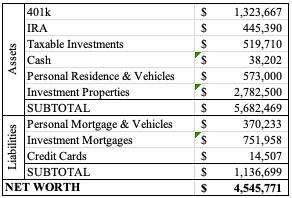
Our net worth has increased over $123k since last month due to our investment accounts and property values increasing. Our cash balance is starting to dwindle down to what we typically carry as ‘cash.’ And our mortgage balance is decreasing more than average due to our goal of paying off two of the mortgages that we’re carrying.