February Financial Update

Before I get into an update, I have a quick perspective moment. Our preschool has a 3.5% processing fee to pay monthly tuition online. Tuition is $265, so the processing fee comes to $9.27. If I paid it online instead of writing a check each month, that would be an extra $83.43 I paid for basically nothing. For perspective, I spent $82 on a grocery run of essentials (e.g., dog food, paper towels, milk, eggs, etc).

RENTALS

I had to give notice to one household by 1/31 if I were to raise rent. Their lease ends 3/31, and that will mark 3 years with me. I was panicking because it’s our most expensive house (it’s also our nicest and biggest, and it’s fairly close to downtown). Rent has been $1750 for the last 4 years. Last year I missed the notification to raise it because a January deadline surprised me, but this year I put it on my calendar for January 1st to do. And then I dragged that calendar reminder through the whole month, only needing to then set an alarm to make sure I did it at 8pm on the 31st. I raised it to $1800 and they accepted within the hour. Phew. They’ve been late three times in 4 years and clearly communicated what was happening each time. We’ve had two major issues at the house that they rolled up their sleeves and helped mitigate the damage before the tech could get out there. They’re just really great tenants.

I had two tenants pay rent before the 1st and one partially pay before. That was surprising since the last two months I’ve had very late payments come through. I still have one person with a partial payment outstanding as of this morning.

We had a water heater go out on Thursday in one property, but otherwise I’m counting all my blessings that we made it through 2 weeks of below freezing without incident.

PERSONAL

I’ve preached monitoring your spending by writing it down for years, but I hadn’t done it. I had done it a few times retroactively, but I never made the time to keep on top of it to make pivots. With Mr. ODA leaving his career, that’s a high six-figure income that we’re without now. I’m working part time, but that’s basically a one-to-one ratio of income to health insurance. I’ve calculated that we need to be about $1350 per month in spending outside of the mandatory bills (e.g., mortgages, utilities, tuition, insurance). My threshold is lower than what Mr. ODA said is his threshold, so this isn’t a hard-and-fast amount, but one that is my “I feel OK if we’re close to this number” concept.

We screwed that up a good bit by purchasing a new vehicle and putting new tires on said vehicle immediately. We also had to pay for a previous heating issue fix in our house and a downpayment on new windows (which, quick side note, are glaringly needed as we go through 2 weeks of single digits and can feel the drafts). I’m also not counting the things that we do as mystery shops since those are effectively reimbursed (sometimes our cost isn’t fully covered since it’s a whole family outing and not a single person, but I’m not drilling down in that detail since I don’t have the specific break down of how Mr. ODA is getting paid). If I take those things out and remove expenses for rentals, then we spent $1597 in January.

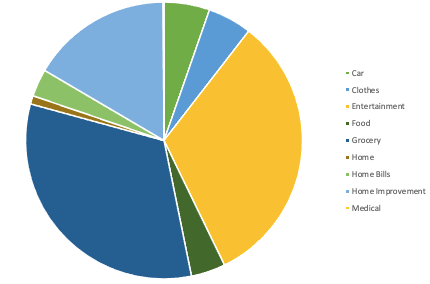
This isn’t the best representation of our spending, but I’ll develop this information as I have comparisons month over month. I also can’t seem to pick a better color scheme without it being a very manual process. Grocery, Entertainment, and Food are our biggest slices there. The entertainment category is basically why I gave up categorizing things years ago. Here I put things like going out for a drink, because while it’s at a restaurant or bar, the sole purpose was to have a drink and hang out. It also includes going to a gymnastics meet with my daughter, my fitbit purchase (I guess because I’m counting it as extra spending and not a necessity), and gift giving costs. We spent $528 on groceries this month, which feels low. I pushed really hard to clear out the food we have in the house already during our 2 weeks of being snowed in, but I hope that this is an accurate representation of monthly spending on groceries.

NET WORTH

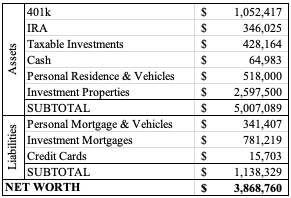
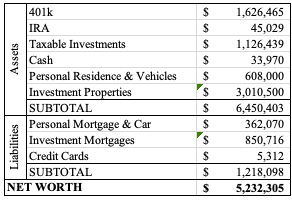
It is higher than last month, so that’s good. Credit cards are carrying $4500 worth of windows, so it’s nice how low of a balance those are outside of that 0% interest balance we’re holding onto. Our investments struggled a bit over the past month, but the payments on mortgages and loans helped offset that.

Intentional Spending

WE CANT AFFORD ICE CREAM

Several months ago, we went on vacation. While there, we got the kids ice cream from McDonald’s. It was $1.79 each. They had been given multiple “treats” during the day (not of the food variety, but riding the carousel and train at the zoo), and I didn’t see it necessary to spend $10-14 on ice cream after a big day. But it was something that would bring them joy, and it would be a surprise since it’s not a regular occurrence.

Our financial advisor told us that he has a saying in his family, “we can’t afford ice cream.” The statement isn’t meant as a literal statement of “we can’t spend $5 on ice cream because then we won’t be able to pay our necessities.” The statement is meant as a frame of mind. It’s meant to teach an understanding that you need to prioritize your spending and have the big picture in mind.

Treating our kids to the occasional ice cream is ok. Giving them the ability to know that ice cream is not going to happen all the time, but we can get it once in a while shows that we have to prioritize our spending and determine where this ice cream splurge fits in our budget and long term goals.

That comes across with a much higher sense of philosophy than I intend for this example, but the general concept is there. We take the time to determine whether spending money on something is valuable to us and worth the cost.

THE STARBUCKS / CONVENIENCE PAIN

So many people knock the concept of buying or not buying a Starbucks. I see things said all the time like, “I didn’t buy my daily coffee this week, so I’m practically a millionaire.” That density is keeping you in your poor mentality. You think that not purchasing a coffee and getting the instant gratification should yield the instant gratification of wealth. Instead, the point all along was on your mentality. Do you find it a priority to spend $6-8 on a coffee routinely? Perhaps that means you’re also thinking you can treat yourself to that new shirt, new shoes. Perhaps that means that you’re also willing to walk into a convenience store, like at the gas station, and buy a soda or an energy drink.

I also think back to a friend who would leave their house to go get a gatorade at the gas station down the road. They once left their house while we were there, bought 3 gatorades, and came home to play a game with us. This was routine. What if you went to the store and bought a case of gatorade? You’d have a cold drink that you want in your fridge on demand, you wouldn’t be taking the time to leave your house, you wouldn’t be spending money on gas, you wouldn’t be adding to the wear and tear on your vehicle (which eventually costs literal money), and you wouldn’t be paying a premium for the same drink.

A quick search tells me I could buy a 28 oz Gatorade for $3.69. I can buy a 12 count of 12 ounce Gatorades at the store for $7.98. In a given sitting, do you really want 28 ounces or can you get by with 12 ounces? Even if you want more and want to drink 2 Gatorades in one sitting, it would cost you $1.26 to have two of them at the ready in your refrigerator.

I recently was behind someone on a drive down a two-lane road. They were going 35 in a 45, in a car that had plastic as the driver side window, half the bumper missing, the passenger mirror missing, and a tail light busted out. They finally got out of my way at the gas station, where I watched them park in a spot and walk into the store.

STOP AND THINK

People don’t think about how that small decision can snowball. You’ve been trained through social media to think that you have “earned” a “treat.” Marketing by these companies tell you that it’s not a big deal to spend your money this way. Be stronger. Think about the decision. Take just one month to physically write down everything you spend. Yes, I mean take a pen and paper, write where you spent money and the amount. Categorize the spending. See if you can find just how much money went somewhere that could have cost you less or was unnecessary. I bet you’ll find at least $100 that was spent unintentionally, and it’s very likely more than that.

The TREAT for yourself is being more financially secure. It’s having the money for the necessities. It’s being ready for an emergency, but still being able to make your mortgage/rent/utility payment.

Expense Analysis

Back when I spent my days working in front of a computer, it was easy for me to analyze our spending. These days, with 3 kids in tow, I’m lucky to record our finances timely. There’s no time for analyzing. But over the past two years, I haven’t been happy with our spending total for the year, so it was time to look into it a bit more. It’s hard to know what has changed since I don’t have month over month, or year over year, trends to compare this data to, but it’s a start.

There are some caveats.

  • I don’t include any spending that isn’t on a credit card here. That means some of our rental property bills aren’t captured (they’re paid via Venmo or check), but I decided that’s ok because I can see that in a different way (a separate spreadsheet). Those expenses are reactive and a necessity to running the business, so it’s not like I can change a spending trend there. I’m more curious about our actual expenses and where our money is going for personal decisions. There will be some rental expenses captured here though.
  • I’m doing this analysis for the first half of the year. If this was for a month at a time (which is a goal), then I’d be able to dive deeper into spending at each place. For instance, at Walmart, those expenses aren’t always ‘grocery.’ However, I don’t have the time to go through all the purchases and siphon out non-food purchases. I did go through most of the Amazon purchases and categorize them.
  • If a purchase was made at Lowe’s or Home Depot, it’s classified as home improvement. It may have been rental property work, but generally it’s related to something we’re doing at our house.
  • If a purchase was made while on vacation (such as amusement park, tolls, hotels, dog sitting) , it’s categorized as ‘vacation.’ If we were on vacation and purchased food, it wasn’t labeled as vacation. All fast food or restaurant purchases for the first half of the year are categorized as ‘restaurant.’
  • If we did an activity from home, it’s labeled as ‘entertainment.’ If we did something related to sports (this includes swim lessons, ticket purchases for performances, etc.), then it’s labeled as ‘sports.’ The entertainment versus sports delineation is because something like a single tournament could be considered entertainment, but I kept all sports items as ‘sports.’
  • None of this includes whether we were reimbursed by someone else for a purchase. For example, we purchased tickets for 15 of us to go to an amusement park on vacation, but we only paid for 4 tickets of that personally. Mr. ODA is a personal shopper for restaurants, so much of our restaurant shopping around town is actually later reimbursed in that process (but not captured here because it’s not a credit card line item).

In the process of going line-by-line on my expenses, I discovered that I never received a refund for something. I placed an order on Etsy for a personalized gift for my niece’s birthday. A few days later, I went to check the status of the order, and I discovered that the shop I ordered from was no longer selling on Etsy. I was frustrated that I received no email that told me my order wouldn’t be fulfilled. I contacted Etsy customer service. At the time, I misunderstood Etsy’s billing process. I assumed it was charged when the item shipped. As I was just going through charges, I realized that the amount was charged on the date of purchase (e.g., not when shipped), and I had never received a response from Etsy. After another frustrating round of attempting to contact customer service this morning, I finally received a resolution. Now my ‘to do list’ has to keep track of this refund appearing. It’s $10.01, so it’s not the end of the world. However, it would be nice if Etsy shuts down a seller (their words), that they manage the outstanding orders without me having to take my time to get it corrected. Plus, if I let every “it’s just $10” go, it could add up quickly.


FIRST HALF OF THE YEAR SPENDING

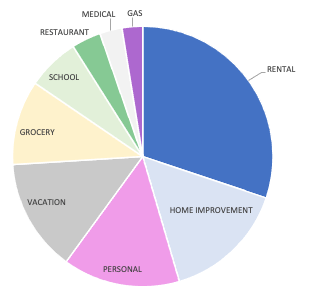
By far, our largest slice of the pie up there is for rental expenses. Honestly, I’m happy to see that so much of our credit card expenses are taken up by rental expenses we had. I pay our insurance premiums (where they aren’t escrowed) via credit card, and I can pay our county taxes for one house with a credit card, which I do for the cash back rewards. There was flooring replaced at one house, which was a significant amount of that slice.

The ‘home improvement’ category includes new patio furniture we purchased, but were reimbursed by insurance (a tree fell on our deck). It also includes the electrician work and dirt fill purchases that we needed for the deck rebuild. Our house has a few more fairly large projects we want to complete, so I expect that to continue being a larger chunk.

I know that our “grocery” expense isn’t completely groceries. I’d like to focus on this category of spending more in the second half of the year. I want to quantify what’s purchased at Walmart that is actually grocery versus personal shopping type purchases. I think that our grocery purchases are higher than they should be, but I can’t put my finger on exactly why. Historically, I’ve blamed it on ‘bulk’ shopping; Mr. ODA will go to Kroger for the “buy 5” type sales. I’m not sure that’s it though.

We don’t eat at restaurants very often. We usually eat at fast food places while we travel or are away from home at an inopportune time. When we’re at home, we’re usually eating at a “personal shopper” experience where our food cost is mostly reimbursed (although that’s not captured in the chart).

Our health insurance deductible is $3,200 per year, so we expect slightly more than that each year in the medical expense category (and based on how deductibles work, that expense is front loaded in the year). I actually pre-paid a bill at a child’s urgent care visit. I paid them $50, but that visit, along with two more visits since then, came to a total of $12. I’m waiting for their reimbursement of that difference.


PERSONAL SPENDING

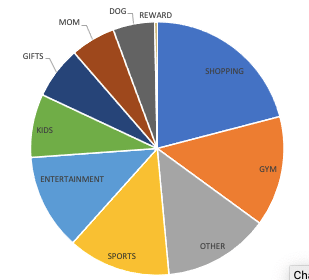
I’m going to dig deeper into the ‘personal’ category. I labeled a bunch of things as ‘personal’ as a means of not having too many small slivers of the overall spending pie. This includes all gifts, needs for kids (new shoes), clothing for kids, gym membership, sports, etc. It includes a ‘shopping’ category. I spent some time going through my Amazon orders and categorizing them, but the ‘shopping’ category was too daunting and difficult to parse out further. About a third of the ‘shopping’ category is Amazon orders through Mr. ODA’s account that I didn’t pull up to categorize. The rest is random purchases that were probably related to gifts or kids clothing.

For entertainment, this is small things like going to the movies (which we go for $2 per ticket), bowling, and aquarium. The largest chunk of this pie part here is actually 4 season pass lift tickets for our family’s future winter season. I put the ‘mom’ category to see what I’ve purchased for myself that wasn’t a necessity (e.g., a travel cosmetic bag, baseball shirts to wear to my son’s games), as well as my one hair cut and one pedicure that I’ve gotten this year so far. The ‘other’ category is boring stuff – utilities, car maintenance, professional fees, etc.

Had I gone through my Walmart orders in detail, I would have been able to identify some more purchases that could be removed from ‘shopping’ and put into other categories. For instance, the ‘dog’ category is actually higher because I order his glucosamine and tooth cleaning treats from Walmart most of the time, and that’s a monthly expense. His annual vet appointment is in the Fall, so this will be a larger slice of the pie for the end of the year.


SUMMARY

Our annual credit card payment total for the last three years have been about the same. While it’s a ‘win,’ that it isn’t increasing, it’s still at a number that I don’t like. Mr. ODA has been working towards a ‘retirement’ date. We’ve pushed it back just because his job hasn’t significantly impeded our lifestyle, but the day will eventually come. If it’s next year, I’d feel better if our credit card payments weren’t as high.

I went into this expecting my grocery category to be higher than I’d prefer. I didn’t identify much of what is causing that, so I’ll try to focus heavily on watching that expense each time it hits the credit card, rather than trying to remember what each purchase entailed six months later.

I was surprised to see the gas category such a small sliver of the pie. We’ve done a lot of trips (although, I suppose a majority were in July, which isn’t captured in this data). It appears living in a smaller city and doing things mostly on this side of town means we’re not having to fill up our tanks too often.

Overall, I didn’t notice any egregious spending. We don’t spend for the sake of spending. This year we traveled more than we had the previous two years, but mostly our spending is the same. Now that we’re two years into our house, there are less projects that we’re putting money towards. I’m encouraged that now that I’m looking at this, I’ll be able to identify areas to scale back.

Mentality, Consistency, Follow Through

When I was little, we had friends come to our house a lot. When a certain crew came, they raided the candy drawer like they hadn’t eaten in a week. It was quite a binge. It’s because there was no candy in their house. They were fed 3 small meals each day, and that was it. They had the mentality that they needed to get everything they could in a small period of time. Because they hadn’t been taught self-regulation by having regular access to things, they didn’t understand moderation.

To me, I had access to the candy drawer in my house whenever I wanted. Therefore, it wasn’t exciting to me. It was there if I wanted something here and there, but it wasn’t something I felt the need to covet. I do the same with my kids. They have full access to the pantry. They know the things that are “good” for you, and they know they can take that without asking. They do ask if they can have any of the treats in there, and unless it’s close to a meal time, I try to give more “yes” responses than denials (and my denials always come with a reason).

I use this story regularly in my life it seems. It seems focused on a healthy relationship with food, but it’s really an overall concept of understanding the mentality it takes to make informed and beneficial decisions all day, everyday.

DELAYED GRATIFICATION

We did a stent with a multilevel marketing company. They preached “delayed gratification.” It was meant to say that you shouldn’t spend now because you’re going to produce a significant amount of income in the future, and you’ll be able to spend greatly at that point. Unfortunately, Mr. ODA and I are too cynical to watch that unfold. We took note of every “extra” our “upline” spent that wasn’t hitting that mark.

They who would go on a big trip with the statement, “well it’s ok because it’s for my birthday” or “it’s ok because it’s the last big trip that I’m going to take with my mom.” There was always another trip. Or the big, fancy, rent out a space, decorate to the nines, buy a new outfit, birthday party that happened almost annually. There were excuses to justify these actions that were clearly against their “delayed gratification” preaching, but they thought it was ok because they were “debt free.” They didn’t buy a house, continuing to throw money to rent year after year so that they wouldn’t have a mortgage.

There was a guise of having a “big picture” mentality, but the execution of the financials didn’t add up to us. If you were really in delayed gratification mode, the $3,000 you spent on a trip could have been saved towards a 20% down payment on a house at 2.5% interest rate. That’s what Mr. ODA and I did when we had to pay for a wedding and buy a house in the same year. We set a goal to spend no more than $5 per person, per day on food. We didn’t eat at restaurants. We didn’t go on huge trips (although we did do some weekend trips to visit family). Because of those years of ‘pain’ we went through, we bought a house with no mortgage insurance, and that house turned into 4 houses when we sold it.

I digressed. The point here was that creating a mentality of “delayed gratification” is setting yourself up for failure. If you created a habit of proper spending and a mentality of being able to discern whether the cost of something is worth it to you and your goals in real time, there wouldn’t be these “slip ups” of wanting to take that big trip or wanting to fill a void by throwing a lavish party.

In February, I started a diet. I was working out for a year at that point (after having our 3rd baby), and the number on the scale was exactly the same. I felt better, but I wanted that number to go down. I started reading up on diets, and this concept I found clicked with me. If you commit to a diet that is really restrictive, you’re going to fail. If you can’t have any carbs, then you end up having a binge day to make up for that desire. The concept of depriving yourself of something is more thought-consuming than if you had taught yourself moderation.

This diet concept was to alter your eating each day so that it keeps your metabolism on its toes. One day, eat a lot of protein. The next day, eat your carbs. Go back and forth. I was consistent on this for 3 months (see, best laid plans fail – between end of school things and travel, I haven’t put the effort in), and I lost 17 pounds with little effort. I haven’t been paying attention to this eating pattern, and I’ve been stagnant again. The whole point was that if you deprive yourself of something you want, then it’s going to consume you and make you unhappy. But if you eat in a thoughtful manner, then you’re happier and have an easier time reaching a goal and sticking with it.

RIPPLES

The decisions you make today affect tomorrow. The habit formed by thinking you had a hard day and deserve a “treat,” or that “it’s vacation so we should each have a $10 ice cream at the amusement park,” have ripple effects. I have another post about how people make fun of those who say don’t spend $5 on coffee everyday if you want a better life. Most people see it as a literal $5 per day (granted, it’s more like $7 or $8 at this point), do the math, and then say sarcastically “wow I’m a millionaire.” No, it’s the mentality. It’s the concept of teaching yourself that you don’t need to purchase an expensive coffee everyday, or you don’t need to buy lunch everyday at work, or you don’t need to overspend on treats once per week.

Someone once made fun of us because we like to go exploring new towns and find hikes, while his family goes to Disney at least once per year. I’d venture to say that our trips, where we spend time with our family and learn about new places and things, are more stimulating. I don’t hate Disney (Mr. ODA does though 😉 ), but I don’t see it as something to go to every year with no other experiences. But our trips that end up costing about $1,000 allow us to go do more things. We can do more activities when home, we can go on more trips, we can put money into savings accounts for our kids.

This summer, we have plans to be in 7 states outside of our home state. My kids are extremely happy with just the concept of staying in a hotel or “vacation house.” Add in swimming in a pool somewhere, and they’re ecstatic. I don’t have a desire to teach them that vacation is when you get to eat everything you see and buy whatever trinket you want. If you intentionally spend throughout the year, you end up with things that are more valuable to you than if you buy several trinkets just because you’re on vacation (really – when was the last time your kid played with that light up spinny stick from Disney on Ice). I want to teach them the value of their time, their money, and their family. I want to try my hardest to set them up for success because they understand the value of things in the big picture, and not just the instant gratification that lasts for a couple of days because they go that little toy we walked by.

January Financial Update

As an intro for newbies: I write a monthly finance post. These posts started out as a way to manage our dollars spent per category. It evolved to show insight into my monthly money management and thought process. It’s also meant as a way to remind people that they should be looking at their money regularly.

Every month, I’m looking back at my spending, looking at trends on the higher level (e.g., why is my credit card higher than I expected), and sharing the rental property expenses and activities that I’ve accomplished.

I typically post on Thursdays. Unfortunately, life got in the way. I had 98% of this written, but I hadn’t updated our accounts until 10 pm, so this is now posting off-schedule, on Friday morning. Sorry about that!

RENTALS

I suppose with 13 houses, it’s inevitable that I’ll have to keep track of one.. or a few.. to collect their rent. One tenant is set up to pay twice per month (they pay a premium for this). They paid both parts of December late, and the first part of January late. They pay a late fee with that. I had two other tenants pay late by a few days, but they communicated this up front, and I didn’t collect late fees.

I’ve been sharing that I have a tenant who has been behind on rent since October 1 and has communicated very poorly. By the end of December, she was caught up with rent due, but no late fees. We’re now 11 days into January without any payment. My frustration with her was that she didn’t communicate at all for the first two months, and didn’t keep her word on anything that she said she was going to do, but didn’t tell us that something would change. I always say that I’m willing to help and work with you, but you have to talk to me. If I have to beg you to tell me what the plan is, I can’t help.

I paid a carpet cleaner $250 and paid a painter $2000 for a house that we’re turning over. The carpet was new before the last tenant, but they were there for over 3 years, so it had to be done. They didn’t damage the walls, but my property manager said that all the walls looked like different colors, and I didn’t trust “touching up” 4 year old paint. The paint looks amazing, so I’m happy I went for the whole house.

I paid just over $1000 as a deposit on 3 new windows for a house, which are scheduled to be replaced on Monday (a couple of weeks for new windows far exceeded my expectations!). We had replaced the majority of windows when we bought the house. However, at the time, the kitchen and bathroom windows were considered an irregular size, and we were told they were going to be $2000 just themselves, when we were paying $2000 for all the other windows. I don’t know what pricing scheme changed in 5 years, but now all sizes are the same price, and the 3 of them are $2000 now.

We had a tenant ask to be released from his lease, which we concurred to. We had terms associated with that, which I’ll share in a separate post. We were able to get a couple into that house with no loss of rent, which has been appreciated.

We’re under contract with our handyman to do work on a house, so that’s over $5,000 of cost that is waiting to rear its head out there.

PERSONAL

This was a month of spending in activities. I signed up for a 5k in August with “early bird” pricing, our daughter’s acro class had semester tuition due, and the kids’ monthly school tuition was paid as usual. Mr. ODA bought a new battery for his car and installed that. On somewhat of a whim, we replaced our back door, which was over $1100 added to Mr. ODA’s credit card.

Just before Christmas, we took a trip. It was just to Cincinnati, which we regularly do as a day-trip. However, we wanted to accomplish a few things this time around. We went to Top Golf for 90 minutes and lunch, let the baby nap at the AirBnB, went to Zoo Lights, spent the night, and then went skiing the next morning (the kids’ first time!). We already purchased season passes (and equipment) for skiing for 4 of us, and had already purchased the zoo annual membership. Without the cost of those two things, our trip cost $330 for Top Golf, lodging, parking (we stayed in the city), a ski lesson for our 5 year old, and food. Our lodging for 1 night was nearly $200 and was significantly more than we’d typically spend on lodging. However, we’re still in a phase of life where the baby needs the be in a space by himself so he sleeps for a nap and through the night. That means we look for a place with at least 2 bedrooms and 2 bathrooms, or 3 bedrooms and 1 bathroom (bonus points for master-sized closets or an extra bathroom with no windows for me to black out). We then made 2 day trips since then, and the kids are doing awesome on skis.

NET WORTH

Our cash has decreased, but that was offset to taxable investments because of our Treasury Direct accounts. Even with our extra spending, our credit card balances are comparable to last month’s. The increase in net worth from last month is mostly due to increases in our investment accounts.

This year’s goal is to hit $4 million net worth. Mr. ODA said that to our financial advisor via Instagram, and he didn’t share that publicly because it wasn’t relatable. The point in sharing here is that, well it’s January and people set goals, and to note that even if this goal specifically isn’t attainable to you in the short term, know that we also once had an account balance well below where we’re currently at. Consistent investing in the market (maxing out the 401k, maxing out the Roth IRAs, and establishing regular investing and watching the market) is a large contributing factor to where we are 10 years later. If I take the investment properties out of the equation, we’re still over $2 million net worth. That doesn’t happen overnight, and it’s something you can start working towards today.

Vacations & Their Cost

Here’s an unpopular opinion: you don’t need to buy all the amenities to have a good vacation.

Our financial advisor has a saying in his family, “we can’t afford ice cream.” If they wanted to, they could clearly pay for their family to have an ice cream night on vacation. However, they choose not to spend their money in such a way for the sake of the big picture.

The point I’m trying to make here is that you need to stop and think about an expense. I can’t remember what the item was, but when I went to pay for it, it was $8. It’s not that I couldn’t afford to purchase something at $8. It was simply that this item was worth $2 to me. The value of it was not $6 more of my money.

This post (or rant) started because of this Facebook post that was made in a local mom’s group. Apologies for the large image, but you couldn’t read the numbers until I got it this big.

Quite a few people echoed my point – stop with the add-ons. You can have a great day without the additional amenities/activities, and without the all day dining options. We had a season pass to the Cincinnati Zoo. We ate before we entered, packed snacks, and then ate on the way home if needed – at McDonald’s, with deals (we lived over an hour away from the zoo, so sometimes we couldn’t plan it to have only one meal while out). At a similar place to Kings Island, I know people who have packed coolers and left them in the car because you’re allowed to exit and re-enter.

Not buying extras holds true for any event. Your kid doesn’t need a $20 light up wand, that will be promptly forgotten about at the 48 hour mark, at Disney on Ice. The show itself was exciting and a “treat,” so let it stand alone. Your kid doesn’t need a $15 ice cream at the theme park. Simply let them enjoy the experience without developing a sense of entitlement or expectation that they’re going to get a “treat” every time you’re out.

I completely understand the mentality of “go big” for vacations because it’s a special time. But what is that worth? I know some people spend all year saving up to go to Disney, and they want the “full” experience. Disney itself is very expensive, but then you start spending on gift shop paraphernalia and food in the park, you’ve now spent a small fortune for hours of entertainment.

DISCIPLINE

Instead of only being disciplined for those few days per year, focus on the question: what is each individual dollar worth? I have an entire post where I share the thought process and conundrum I faced for purchasing a $4 weighted tape dispenser. Seriously. While you’ve “saved” for this vacation, what if that saving mentality helped you be able to pay your regular bills along the way? Or what if instead of spending extra money on vacation, that money went towards paying for school supplies? It’s all about creating the mentality and discipline to ask yourself what the value of something is, both to you and to the economy – if you’d pay $2 for a water bottle outside a stadium, is it worth paying $6 inside the stadium? Or could you plan ahead and bring your own water?

This irritation isn’t only for vacations. A friend of mine would leave their house to go to a nearby gas station to buy gatorade and soda bottles. You were at home! If going to the gas station is a regular occurrence, and you enjoy drinking soda out of a bottle, why don’t you get a multi-pack and keep it in your refrigerator? Then there’s the person I used to live across the street from who would order door dash regularly. It probably averaged to once per day; some days there was two deliveries, and some times she may skip a day. Then she posted a GoFundMe for help to pay for her tuition and books to finish her RN. She also posted all the amazing toys (excessive and expensive) she got her kids for Christmas, while also complaining about her son’s behavior being out of control, and that her daughter was being so bad that she got tv in her room taken away – wait, why does a THREE YEAR OLD have a tv in her room? So tell me again how you can’t make ends meet, and how you need help finishing your degree, while you have zero discipline on spending the money you do have. Why is it everyone else’s problem to fix for you when you’re putting no effort yourself? I’ve digressed.

OUR RECENT TRIP

We just went on a trip to Jellystone. My son had asked to go back to a cave since we left a cave last year. He’s obsessed with space and Earth. He was 4 at the time of this trip. For 2 adult tickets, all 5 of us were able to take a 2-hour tour at Mammoth Cave (children 5 and under are free). That was $40 worth of entertainment. I figured it was a good time to take advantage of their pricing structure before it would become $60 next time we’d try to go. While I felt the $40 was worth our time and money, I mildly regret it. His excitement for the caves was worth it, but we missed out on activities at Jellystone that I think they would have enjoyed. At 4 years old, we could have easily skirted the cave desire because he doesn’t know that a cave is 20 minutes away when we’re at this location.

We paid $433 for a 4 bedroom cabin for two nights, and that included a $50 charge for bringing a pet. We packed all our food for all the meals. My choice to allow the kids to stay up way past bedtime and for the two older ones to share a room cost us on day 2; I promised them ice cream if they powered through the cave, so that was $14 for all of us to have ice cream, which wouldn’t typically be an expense we incur. Other than the cost of gas to go 260 miles roundtrip, we spent nothing else.

There were opportunities to pay for things. We could have rented a golf cart for $70 per day. We could have paid for the mining sluice, which didn’t have a price advertised, and would have been 3 minutes of entertainment. We actually did try to do their obstacle course, but none of our kids were tall enough. Instead, we took advantage of their amenities. We drove pedal cars, played at their numerous playgrounds, went swimming, went to their beach to play in the sand and swim, ran around the splash pad, did their craft times, attended their character greetings, played bingo, played minigolf. We probably just sat at the cabin for a total of 3 hours between 3 pm check in on day 1 and 11 am check out on day 3; we even let the kids stay up until 8:30/9 (their usual bed time is 6:30).

UPCHARGES

So let’s look into amenities at GWL. I’m going to look at Mason, OH’s location. First, because it’s the one closest to me, so I’m familiar with it, but also because whenever there’s a Groupon for $99 nights, Mason is always $149. That tells me that Mason’s probably on the middle-to-higher end of amenities and their cost.

For a weekend in October, my room options range from $410 to $1035 per night. They provide a rate calendar option for you to see the rates on other nights because you may feel that $1035 for a night in a water park and hotel is absurd (I hope you do….). I also encourage booking with a code (there’s a Facebook group that shares active codes for deals), using a Groupon, or planning in advance and being flexible on dates.

You select a room option (I picked $410), and then it offers you a late checkout option. Check out is 11 am. For $50, you can stay in the room until 2 pm. What are you going to do with your room between 11 am and 2 pm? When this option is presented to you on the screen, what are you thinking? Are you thinking it must be a necessity because it’s being offered? Are you thinking that it’s needed because you don’t want to “leave” at 11 am? Or are you really thinking about the cost/benefit ratio of this charge? Are you expecting to be done with the water park for the day at 1:30, so you’ll go shower and change before the 2 pm check out? If I’m spending the day at the resort, I don’t see where I need the room between 11 and 2. I have one exception, which is very specific right now. If I hadn’t just paid $400 for a night there, I may consider the upgrade because we still have a napping kid from 11-1, so that could be helpful, but that’s not worth the additional $50 to me, personally.

GWL does a good job at pushing their pass options. There are 3 levels, ranging from $50-70. The options include a variety of: MagiQuest, Build-A-Bear, Mining Sluice, mini golf, bowling, GWL goggles, $5 to the arcade, candy, and an ice cream. Purchased individually, the price for the pass is a better deal by a few dollars than if you purchased these individually. However, do you have the time to do ALL of these activities and enjoy the water park? If you’re staying one or two nights, you likely don’t have the time to get the most out of everything. Don’t forget that they offer several ‘free’ activities (e.g., yoga, character greetings, bed time story, crafts, etc.) each day as well, not to mention that you’ve just spend $400 on the stay to play in the water park.

Don’t forget that on top of the room rate, there are taxes and a resort fee. If I wanted to stay for two nights with 2 adults and 3 kids (even though one is less than a year old), with no extra purchases, my total is $1,023.70. That’s $820 for the room, $124 for taxes, and $80 for resort fee.

These options that are presented don’t even include all the options you can pay for. For instance, you can rent a cabana. You have to call to book it, but I’ve seen it priced at $200 and at $500 for it. It’s not private. It’s not secluded. It’s not secure for your belongings. Make sure you ask yourself what you’re getting for that cost and if that money could be put to better use.


As a kid, we used to go to Lake George. We joked that it was our vacation from our vacation. The point of Lake George was to do nothing. You played in the pool at the hotel, walked the town, and got ice cream each night. It was relaxing. I remember lots of our trips, but Lake George sticks out as a favorite. Even our trips that were busy – it was busy because we were sightseeing and driving far; it wasn’t busy because we were paying for activities and trinkets.

We went to Disney on Ice, and my son still thanks me for the experience; he didn’t get any trinkets while we were there, and he still loved the experience. Your kids will remember the time they spent with you. That’s the point of the vacation – spending uninterrupted time with your family, not making it an exhausting, jam packed few days where kids are overstimulated and sleep deprived.

This isn’t a parenting advice post. It’s simply a moment to stop and think about your spending. Take the time to determine whether a dollar spent on an activity is worth that dollar’s cost in your day’s/week’s/month’s/year’s goals. The tape dispenser. Truthfully, I didn’t know it only cost $4. Regardless, I still took the time to consider whether buying this thing that I need for 1-2 days per year was really worth spending our money on, or could that money be put to better use.

In 2021, we purposefully took trips each month. We had looked into buying a vacation home, and we decided that we’d rather go to different places each trip than the same place over and over. The mortgage was going to be about $1200, so we allocated that much as our trip budgets. In May, we spend $618; June was $200; July was $690; August was $1069. I say this for perspective.

Take the time to analyze the spending that you’re doing, independent of the deals being offered. Will that one trip be worth the cost of it? Will the money spent for that trip be worth anything that you may have to give up to make that trip happen?
Financial Freedom

Our church had a series about “taking significant steps toward financial freedom.” In their terms, financial freedom doesn’t mean FIRE (Financial Independence, Retire Early), which is usually what we’re referring to here. They mean that they want people to be free of financial burdens and not “bound up” by finances. Mr. ODA and I have been in control of our finances for a long time now, so this isn’t teaching us much about what to do differently. However, I’ve enjoyed learning their perspective and have several take aways to share.

Many have heard of Dave Ramsey when it comes to christian-based financial teachings. Dave tells you to pay off all your debt and pay cash for everything. We disagree with that approach. Debt is not bad when it’s used responsibly and you’re being a good steward with your finances, and that’s what our church’s lesson is too.

People seem to think it’s ‘cool’ to talk about how ‘broke’ you are. And yet, it’s taboo to mention if you’re in a good position with your money. What if we made it so that you’re taught that when you find someone in a better financial position than you, you ask questions and learn what decisions got them to that position?

The lesson is how to manage your mentality with money. It’s not about restricting your spending or making you feel guilty for buying your coffee, but it is about how you make informed decisions day-to-day that grow you towards a position where money isn’t controlling every aspect and decision of your life in a stressful manner. If you take control of your money, instead of your money controlling you, you’ll work towards eliminating that stress.

THE WHY

The workbook starts by asking you to determine your net worth. Money-in minus money-out is your cash flow, while assets minus liabilities are your net worth. The goal here is the gauge the current status of your money and where you should probably plan to be. There’s also an exercise where you determine your motivation. Are you motivated by freedom from financial burden, having a feeling of security, having power, or through love and giving? When you determine your “why” behind making money, you know what direction to go.

Making more money isn’t always the right answer. To make more money, you may need to take on a second job or more hours at your current job. Is putting that time in worth the extra money that you’ll bring in? Will putting those extra hours in make you more happy? If not, perhaps decreasing expenses is that way to go to make ends meet. If you don’t have the ability to take time for yourself or do things that bring you joy or have “down time,” then it’s not worth taking more time from your week.

I quit working in May 2019. Since then, I’ve done odd jobs just out of excitement, not financial need. I learned different industries and only had to commit part time. I was recently feeling the pull to find another part time job. There’s a consignment sale that comes into town twice per year, and they were hiring. They said they pay $8 per hour with at least a 4 hour per shift commitment. The consignment sale is being held 30 minutes from my house. That means that a 4 hour shift requires me being out of the house for 5 hours. The gas to get there and back would cost me about $7 per day. That means I’m out of the house for 5 hours (away from nursing my baby and being with my kids) for $25 before taxes. That cost/benefit ratio was not worth it to me.

THE PLAN

My favorite analogy given was to a plumber. A plumber doesn’t just start laying pipes in walls and hope it works out. He will have a plan of how to get water from the source to the faucet. Without that plan, how would you know that the water will get to where you want it to go? Same with money. If you don’t have a plan for your money, how will you know that it’s going to the right places with minimal effort? Without a plan, that’s where the stress comes in.

If you’re worried that you’ll be able to pay your electricity bill, then money is controlling your life. Sit down and make the plan. Allocate funding to the necessities first. It’s ok to eat at a restaurant or buy a coffee, but is putting your money towards those expenses creating financial freedom or causing more stress?

Mr. ODA and I have a money-spending mentality, rather than a budget. In my opinion, when you create a budget, you’re either looking to spend everything you’ve set aside in that ‘envelope,’ you’re willing to move money around without discipline, or you think of left over money in that ‘envelope’ as a bonus and you spend frivolously. If you put $500 for the month’s groceries in an envelope, but you only spend $450, what are you doing with that $50? I’ve seen it happen plenty of times that someone splurges. Instead, Mr. ODA and I weigh every single purchase. Literally every purchase, I swear. I told the story about my weighted tape dispenser.

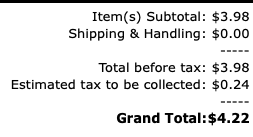
Every single year, I sit on the floor and wrap Christmas gifts. I don’t seem to notice during the year when I’m doing birthday gift wrapping (or perhaps I’m quick to grab a bag instead of wrapping paper for those instances), but at Christmas it’s apparent. I need a weighted tape dispenser. Having to find the tape on the floor in a mess, then having to use two hands to get a piece of tape off the little plastic dispenser, is just so much stress. It was YEARS of thinking “I need a weighted tape dispenser. Nah, I don’t need it for just this one week every year.” I finally bought one. It was $4.22. I agonized over this purchase because I didn’t feel it was truly a necessity and it turned out to be less than $5.

Grab your bank account statements and credit card statements. How much money did you spend? In what categories did you spend that money? Was it for necessities or was it spending that creates a strain on your ability to pay the necessities?

This is an exercise worth doing if you feel you’re drowning. I see posts daily in my mom groups that people say they make “good money,” but they can’t seem to pay the bills. I want to intervene. “Did you stop at the gas station on the way home from work to get a gatorade?” You could buy a 16 pack of gatorade, put it in your refrigerator, and have it waiting for you when you get home, which is probably about the same amount of time for not stopping at the gas station to make that inflated purchase.

So many people don’t seem to realize how fast those daily, small expenses add up. Ask yourself if there’s a better way to get such gratification, but in a way that furthers your dollar earned. Create the habit of weighing each purchase, determining if it brings you joy, and then either walking away or purchasing it. Know that if you purchase it, that will have ripple effects. So if you’re worried about paying that electric bill, then that instant joy gratification wasn’t a step towards financial freedom, where money isn’t controlling you.

Our Money Management

I manage all our income and expenses (at a high level, like credit card payments, not individual line items). I have a spreadsheet that I set up in 2012 and have used religiously since then. I’ve shared how I set it up in the past, but we’ve entered a new phase that makes my spreadsheet even more important to me.

BACKGROUND

FIRE. Financial Independence, Retire Early. This isn’t a post about FIRE specifically, although it’s the movement that sparked Mr. ODA to go down our financial path.

The purpose of our rental portfolio was always for both Mr. ODA and I to quit working. We had covered my income before any kids were born, but I kept working because there was no reason to not be working. Once our son was born, I took 14 weeks maternity leave (not a separate bucket for Federal employees back in 2018; it came out of my own accumulated sick leave), then I worked about every other day for 8 months while Mr. ODA and I swapped child care roles, and I burned down my leave.

While we don’t plan to work full time, we do plan on keeping part time positions. We’ll work on things that bring us joy, rather than an office job with office politics. Since I stopped working, I’ve done odd jobs, part time. For example, I worked as a census taker and served beer at a local race track over the last 4 years. These were all seasonal, part time positions, with no long term commitment.

Now that I quit working, it’s Mr. ODA’s turn. We hardly skipped a beat when we left my six-figure salary behind (although a pandemic probably helped curtail spending on our behalf!). However, the thought of losing his salary as a safety net and losing insurance are two items that have caused some pause.

THE SPREADSHEET

For you to understand my panic that I’ll get into here, I thought a quick reminder was necessary. This is how I manage our money. It’s nothing fancy, but it works. I don’t miss payments. I can allocate expenses to a specific 2-week period against what income is brought in at that time.

There are two parts to the spreadsheet. Well, there are about 10 tabs, but this first tab, with two sections, is what’s pertinent.

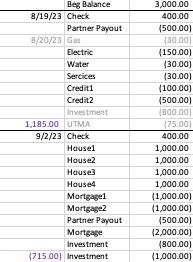
Part 1 is this section. This image is a very scaled down version of the section. We have 13 houses, 6 mortgages that get paid, 6 credit cards that get paid regularly, and a few other lines that I removed.

All numbers are made up place holders, except the investments. I deleted my IRA contribution line because it’s wonky (but I will max out IRA contributions), but I wanted to show how much we’re investing regularly. There’s $75, per kid, per month, going into their investment accounts. Then there’s general investing happening with one $1000 transaction and two $800 transactions per month. Mr. ODA is investing into his IRA to max it out ($6500/12=$541 per month..sort of).

You can see that I’ve listed Mr. ODA’s pay dates at the top, and then his salary income on the next line. The gray section accounts for all rental income. I’ve allocated the income into the salary two-week period that makes the most sense (about half pay me on the 1st or 2nd, and the rest pay on the 5th). The green section shows routine rental property expenses. The entire next section are our personal expenses. The blue is left over from when I was managing two personal homes last summer (but kept it to differentiate our house bills versus other bills). The next gray section (which I’m only just realizing is a second gray and should be a different color as to not conflate the two grays.. what a rookie mistake) accounts for expense that come out of Mr. ODA’s bank account. Finally, I have an “other” section. This is where I capture large expenses that don’t need their own line item because they only happen once or twice a year. Here I’ve put tax payouts that will be due in October (that’s 4 houses worth, and it’s last year’s numbers – because I want to know how this year’s amount owed, when it comes in, changed from last year’s to discern if it’s reasonable or if I need to dig into it).

This is part 2. Now, part 1 accounts for the general timing of income and expenses, but it doesn’t perfectly capture the due dates, scheduled payments, or whether I’ve paid it and it’s hit the account.

The top line is linked to the section that I update our checking and savings account balances. Then I transfer all the items per pay period into this list format. In this example, let’s say I’ve already scheduled the gas payment. So I mark it as gray and put the date in the left column. Similarly, our investments are automatic, so I mark them in gray as we get to that two-week period.

At each border lined, I put the total for that section. You can see that at the end of the 9/2/23 pay period, I project a negative balance. Truly, we seem to have more income than I project (rewards cashed out, someone paying partial rent a little early, etc.), so I don’t take any action until I need to. There are Federal regulations regarding savings accounts; so we can only make 6 withdrawals from the savings account before fees apply. I manage these projects to know whether I need to make a withdrawal. If I need to, then I project what other expenses I may have and transfer a little more than I deem necessary.

THE PLAN

So our first step to him leaving is to pretend we don’t have his salary. Mr. ODA set up a new bank account. The majority of his paycheck goes into that account. We still have $250 going into another account, and about $400 going into a third account because we need to meet the requirements of direct deposits to prevent any account maintenance fees.

Our general principals in account management was always to take money into our main checking account, pay out bills for that two week period, and put the balance into savings. However, that wasn’t creating any forced feeling of managing without Mr. ODA’s salary. I’m more of a visual learner, so I appreciated this concept of having the money automatically transferred to a completely separate account.

EXECUTION OF THE PLAN

The first month of this plan had me on edge. The accounting in the checking account meant I was constantly back down to a balance of about $500. When I worked in an office, I was at the computer everyday checking our money. Now that I’m responsible for 3 tiny humans, I’m rarely on the computer. I project out our routine expenses, but there have been plenty of times where a $100 or $500 charge goes through that I didn’t have listed in my expense column for that period. Therefore, I like to keep at least $1000 as a buffer in the checking account to cover those little expense that can add up. So keeping the projection to less than $500 in the checking account panicked me.

Now wait. It’s not that we only had $500. We have a savings account linked to that checking account. We have this online account that’s taking Mr. ODA’s salary and just building the balance because we don’t use that account for anything. We have Mr. ODA’s old personal checking account. And last but not least (as my adorable 3 year old says all day long), we have plenty of investments that can be liquidated within 24 hours. We have the money. It’s just the panic of having the money in the spot where the bills are being paid.

SUMMARY

I’m sure there are easier ways or “better” ways to account for this. I don’t like automatic payments for bills because I like scheduling them against our cash flow. I’ve used this exact set up since 2012, and it hasn’t failed me. Taking full responsibility to pay bills means I am very scared to miss a payment and cause a negative hit on either of our credit reports.

Now that we’ve eliminated about $5,000 per month of income, without changing our spending in any way, I’m interested to see how things go. We have a great spending mentality – we’re not spending on frivolous items and we weigh the cost benefit of a purchase to us. That’s not to say we can’t do better. I’m sure we can be more diligent about our grocery spending or at least cooking what we already have in the house (we don’t spend much at restaurants in a month). I’ve already started tracking our expenses month to be sure we can watch our trends and re-evaluate our spending if needed.

Now that we have this account growing with no need for it to pay the bills, we will use it for fun things. We’re not very good about doing fun things. Two summers ago, we wanted to buy a vacation home at a nearby lake. We decided that instead of spending $1200 per month on a mortgage to go to the same place all the time, we’d plan vacations each month and spend up to $1200 without “guilt.” It was great. We had so much fun. But it lasted 3 months. Having a newborn put a damper on activities, but we’re ready to do the same again.

Credit Card Rewards

A while back, I wrote about how, if you really wanted to put the effort in, you could be maximizing credit card rewards. If you don’t want to put the effort in that I’ll get to in a second, then you could at least have one reward-earning card that you use for all your purchases and pay off each month.

Important reminders:

We don’t use cash. Everything goes on a credit card unless it’s prohibited or there’s a service charge that outweighs our rewards.

We pay off the balance of every credit card every month. We have never paid interest on a credit card balance.

Let’s dive in.

REWARDS

Credit card companies are offering rewards for using their card for purchases. Some even give a reward for making payments on it too. The rewards can be in a point system, cash back, or incentives for specific companies (e.g., Delta, Disney). We prefer more generic reward options, but some people like to use a specific reward card. The best reward credit card for you is one that matches your spending habits.

An example of a specific reward credit card would be a a Disney card. As you earn money, it goes towards their trip to Disney. Psychologically, they feel that their expensive annual trip to Disney is “paid for.” While this may work for some people, our thought process is that if I earn $1,500, then I have the flexibility to put it towards a Disney trip or can buy something else.

The simplest way to collect rewards is to have an all-category-cash-back credit card (e.g., 1% cash back on all purchases). However, to make the most, you could be using multiple credit cards so you can earn extra rewards in different categories. Then you need to know which card to use when, and also keep track of your statement periods so that you pay it off in full each month. A category type credit card can give rewards in multiple categories (e.g., 4% on gas, 3% of restaurants, 1% on all other purchases), can rotate reward categories (e.g., first quarter is 5% on gas, second quarter is 5% on groceries), or can be geared towards one specific category all the time (e.g., 5% on gas). There are typically earning caps in these categories.

CHOOSING A REWARD CREDIT CARD

Each credit card company has a variety of cards that offer different rewards. You can decide what fits your spending pattern the best. If you don’t want to identify the categories that you spend, then the Citi Double Cash is a great “catch all” with no annual fee and no reward earning cap. You earn 1% cash back on each dollar spent, and then an additional 1% on each dollar paid towards your credit card balance. We deposit our earnings into a checking account instead of a statement credit, because we learned that we don’t earn cash back on the statement credit made.

Some credit cards have an annual fee. We typically shy away from anything that has an annual fee because we don’t like paying money to spend money, but we did have a couple of exceptions. For instance, one card had a $450 annual fee. You earn 3% points (one point is the equivalent of a penny if cashed out) on all travel and dining purchases and 1% points on everything else, but if you redeem the points earned through their travel portal, you get a 50% bonus. One of the rewards was reimbursement of $300 worth of travel costs. The card reimbursed the cost of TSA Precheck too, which as $75, and had a DoorDash credit of $30. Then the last $45 of the fee was offset by the rewards granted through point usage. But the annual fee increased to $550, and we no longer thought it was worth keeping and that the cost would be fully offset by the rewards.

We also look for a sign on bonus. If we’re going to have our credit checked, we want to capitalize on it. Sign on bonuses are typically additional cash back or points once you hit a certain spending threshold. For example, the card may say “once you spend $3,000 in the first 3 months, you’ll earn a statement credit of $300.”

In addition to a sign on bonus, we would also prefer opening a card that offers a 0% introductory rate. I’ve shared before that we most often look for a new credit card because we have a large expense coming. When faced with paying for in-vitro-fertilization out of pocket, we opened a new credit card that had 15 months worth of 0% interest. This way, when we paid the tens-of-thousands owed, we gave ourselves an interest free loan. That particular credit card was only used for that expense because the reward categories were worse than other cards we had. However, we didn’t close that card because it helps our credit by having more of credit line open.

OUR REWARD USE

Besides the Citi Double Cash, we’re partial to the Chase options out there. We use different cards for different categories, and then use the Citi for anything that doesn’t fit into a category.

Between 5 credit cards, we brought in $4,232 worth of rewards last year. That’s money in our pockets that we did nothing except spend other money to get. In the past, it’s usually about $1,500 per year that we bring in with credit card rewards. The amount in 2021 was higher due to sign-on bonuses that were earned in a previous year, and then the credit card changed their reward redemption options, allowing us to pay ourselves back for restaurant purchases. We had previously been using the rewards to purchase travel needs through their portal, but we were able to dwindle down our rewards with this reimbursement change.

What could you do with a “free” and “extra” $1,500?

If you’re smart with credit cards, they can be a powerful tool to create financial flexibilities.

Reaching Goals

Whether you have a lofty goal of paying off a mortgage or a short term goal of not struggling to pay rent each month, it helps to establish a plan. The first step should be learning your relationship with money instead of mindless spending paycheck to paycheck. Last month, I mentioned budgeting and how it can lead to overspending instead of spending wisely. I also mentioned the envelope system and not liking it.

The envelope system is where you establish your spending categories and put cash in the envelope each month. When the money is gone from the envelope, that’s it. Don’t borrow from another envelope. If there’s money left over in an envelope, it can be added to next month’s envelope to increase your spending, or you can use that money to treat yourself to something. In few articles that I read did I see that the extra money should be put towards your goal.

THE GOAL

The first step is to write your goal down. What is it? How long do you think it will take to reach it? I’ve learned that establishing interim goals helps reach the bigger goal that may seem too lofty.

The second step is to track your expenses. Look at what you’re spending your money on. Start categorizing your spending. Can you see that you’re spending more than you thought on something other than essentials? Is hitting up the drive through several times a week costing you more per month than you realized? Have you purchased decorations for your home that aren’t on display, but you’re scraping together rent or mortgage for the beginning of each month? Are you paying up-charges and delivery fees for a meal delivery service instead of going to pick it up yourself (or cooking your own meal)?

MONEY RELATIONSHIP

I have experience living paycheck to paycheck. It’s not like we’ve always been in a position where we’re not worried about how to pay our bills. I thought if I shared two defining stories from our finances, it may trigger an idea for you.

College

I lived on campus for the first two years of college. My parents were paying my tuition, and they said that either I needed to take out a loan to pay the following year’s room and board, or I had to be a Resident Assistance to get free boarding. I didn’t want the responsibility and having to be in my dorm so much to be an RA (I never researched it; I was just 20 and knew everything.). I decided the best approach was to live off campus because I’d be able to pay my living costs monthly instead of in two large chunks at the beginning of each semester. If I broke down the monthly cost of the ‘room and board,’ it was $1533 per month (and only for 9 months of the year). I figured I could live for less than that, while paying month-to-month as I earned income, if I moved to an apartment. My rent off campus that first year was $650/month. My utilities were about $150/month in the winter. I don’t know how much I spent on food, but I know it was the bare minimum. It wasn’t that I was purposely trying to be debt-free and a hero; I just simply didn’t know how to get a loan, so that wasn’t an option to me.

I had a job at JCPenney. I was making 5.15/hour (minimum wage in 2006), and I worked outside of my school schedule as much as I could. I was able to pay my rent every month because that was my priority. I dipped into my savings from my summer jobs, but I mostly changed my lifestyle. I packed my meals with peanut butter and jelly sandwiches for when I was working. I ate pasta for dinner. I didn’t go to restaurants often. I wasn’t in a phase of life where I wanted to go to bars, so my social life was hanging at my boyfriend’s house, where he lived with 3 other guys, drinking cheap beer and watching tv. I made sacrifices in my spending so that I could pay rent every month. I didn’t want to pay a late fee every month. If I could just barely afford $650, I certainly didn’t want to owe an extra $65 because I couldn’t pay rent by the first of the month.

There is one caveat in my story that first year. Since I was making just what it took to have a roof over my head and food in my stomach, I chose to forego heat. Do you know where Albany, NY is? It’s into freezing temperatures in October. It was fine – I had sweatshirts, sweatpants, socks, slippers, blankets. I lived on the first floor of a two story home, so that helps keep the temperature reasonable into October, but I knew I couldn’t last through the days of teen temperatures without eventually turning the heat on. My parents found out that I didn’t have my heat on, and they sent me $100/month to cover that. So I did get assistance. They sent me that for 6 months to cover my utilities, and that was the last assistance I received.

My parents paid my tuition, which was $2,175 per semester in 2004. Yes, less than $5,000/year for my college education.

Buying a House

Mr. ODA and I wanted to buy a house and settle down. We had each been part of a training program at work that would end with our placement anywhere in the country, so we weren’t in a good position to purchase a house in Albany, NY. Mr. ODA got placed in Pennsylvania, while I was still employed in their NY office. It wasn’t handled well, so we started looking for other options. I accepted a job in Washington DC, and Mr. ODA went to Sterling, VA; we moved to an apartment in Fairfax, VA to live in between those two places. We chose an apartment because we didn’t know anything about Virginia and needed a place to live while we scoped it out.

This wasn’t a scenario where we couldn’t afford to live, like my college example. This was a situation where we set a goal, and to achieve that goal, we needed to spend less.

Mr. ODA was saving and preparing for a house in the $150-200k range, not the $350-500k range as a first time home buyer. So we needed a plan to come up with over $70k worth of the downpayment and closing costs.

We set a goal of spending no more than $5/day/person on food. We ate a lot of peanut butter and jelly sandwiches, pasta sides, chicken nuggets, canned vegetables, etc. That threshold meant we weren’t paying to go out to lunch at work. We were eating the bare minimum at dinner. We were eating any leftovers that were in the refrigerator. We didn’t have a desire or lifestyle where we would want to go out for a drink or buy a lot of things, so it wasn’t hard to scale back in that area. After a month or so of doing this, we decided that happiness should be part of the equation too, and we started going out to a restaurant no more than once per week.

This isn’t a magical story where we went from $10k in savings to $75k in 6 months, but we were able to increase our savings a decent amount. We each took a residential loan from our retirement accounts, and we borrowed $5,000 from Mr. ODA’s parents. We didn’t expect to find all the funds needed, but we were able to decrease the amount of money we had to borrow from our retirement accounted by changing our spending pattern.

Our rent at the apartment, including utilities, was over $1800/month. When we purchased our house, our mortgage was $1576 and our utilities averaged $150/month.

REACH THE GOAL

If you don’t know where your money is going, you don’t know how to get your money to work for you. If you don’t take the time to evaluate whether or not you’re spending wisely, then you don’t know if there’s wiggle room in your budget to put you in a position that you’ll be more comfortable. Create a relationship with money. Know where each dollar is going. Determine if you should make changes to your spending to reach the goal, or if you should find a way to create additional income.

There’s usually a way to create more room in your budget with your spending. Some examples are to eliminate alcohol purchases, reduce your restaurant spending (whether it’s not going to restaurants as often or it’s changing how you order – do you need the steak; do you need a soda, or could you get by with water and drink a soda at home), reduce your home decor type purchasing, put your heat down a degree or two.

Instead of complaining that there are bills to pay, change your mentality to take control of your money instead of it controlling you.