2023 in Review: Rentals

After several years of very minimal time having to be put into rentals once they were rented, 2023 made up for it. We had a lot of damage to properties, a lot of tenant payment issues, and just a general “can we not talk about rentals for ONE week please” moments. But even with that frustration, this is still the best.

All of these stories were elaborated on in posts throughout the year. This is meant as a summary of all our activities. You can search for the stories through keywords on the website, or just email me, and I’ll elaborate.

PROPERTY MANAGEMENT

In January, I took over management of our Kentucky properties. When we moved here in 2020, it was easier to maintain status quo. In Virginia, we had established contacts in the trades we’d need, and we felt comfortable there. In Kentucky, since we hadn’t lived there, nor did we have direct management of the properties (plus, the property manager did a lot of work in house), we just left it alone and kept paying the management fees. We bought a 4th property in Kentucky in 2022, and I kept it under my management. Through that process, I grew more comfortable with the area and any trades people I would need. Then over the course of 2022, the property management issues finally were painful enough that we cut ties.

We had cut ties with our first management company who was doing zero of the work they were supposed to do. In the process, we learned a few ways we wanted to see a future management company operate. We negotiated some of the fees that this company had. I didn’t foresee how frustrating that would be. For instance, they’d charge us 10% of the contracted price when hiring a company if they couldn’t do something in house. I said, “that’s what management is, and what I’m paying you for monthly.” They agreed to not add 10% to contractor payments. But I never saw the invoices, even when I asked for them, so it was hard for me to know whether I was being charged by them correctly. It turns out, I was always charged that extra 10%, and I needed to request the refund, every single time.

Problems really got bad when a single employee claimed we didn’t pay something we had and immediately charged us for it (over $1,000). We had to get the owner of the company involved. It was a mess. I finally said that’s enough, and even though I had a one month old baby, I took over management. Luckily, we had a clause in our contract that allowed us to cancel the contract (by either party) with 30 days notice.

I met with each of the 3 properties’ tenants they had under management, and I executed my own leases with them. First, their lease was a mess and disorganized (and had errors that were crossed out and initialed). Second, I like having my template in place so that I know what it says, and how it’s laid out. I recently learned that my VA property manager’s lease didn’t have some key information I would have preferred to see there, so I even started using my leases for the properties she manages.

INSURANCE CLAIMS

After having no insurance claims for all our homeownership years, we had three this year. One was on our personal house, and two were rental properties. I covered our own issues in a previous post; a wind storm caused a tree to fall on our deck, one (well, one and a half) on the fence, and a few limbs on the driveway.

We had a bad wind storm come through in March. The tree fell from the back of the property and hit the roof of a rental property. By some miracle, there was not a single puncture of a limb into the house. The roof sustained the fall and weight of the tree. We didn’t even need to fix the roof, just the fascia board and gutter. Insurance was super easy to work with. An adjuster came out, reviewed the damage, and issued a check.

We had another rental property with the water heater in the attic (instead of the crawl space or just anywhere better conditioned than the attic). A 2-week freeze came through in December 2022, and it froze the pipes. When it thawed, water just poured through the ceiling and into the house. There was 2 inches of water everywhere. The ceiling in the master bedroom, master bathroom, laundry room, and part of the kitchen caved in. The walls in the master bedroom and bathroom needed to be taken down to the studs and rebuilt. The bottom 2′ of all the walls in the house had to be torn out and put back together. All the flooring (that we had put in 5 months earlier) had to be replaced. And with all of that said, it actually wasn’t that bad of a process. Since insurance covered everything, it was just what it was. If I had to pay for each step, it would have been more painful (in time, contractor management, and cost). We were “out of commission” for about 3 months, but insurance even covered lost rent.

I sit here and type this while my back deck is still damaged. By the time we got through our claim with the insurance company, we were months out from the contractor getting to us. I’m hoping it’ll be replaced by May.

MAINTENANCE CALLS

I was surprised to realize that we only replaced two dishwashers and one refrigerator this year. Then I realized it’s probably because we’ve replaced almost all the other ones in the last few years – yikes.

We had a house cited by the City for unsightly conditions in the front yard. The tenant mowed and cleaned up some things right away, and we hired someone to come cut up a fallen tree limb that we didn’t know about.

We had another house cited by insurance for not having a handrail on the front stoop (even though we’ve owned this house for 6 years at that point, with the same insurance). We had our handyman install one for us. While he was there, he fixed the ceiling in a bedroom where there had been water damage.

We paid for a flat roof to be fixed, after several years of fighting it and it continuing to leak (it’s so hard to find a roofer to work on a flat roof). That was a debacle because he was delayed for weeks, didn’t communicate, and then took it upon himself to change the scope of work. I wasn’t happy with the new scope and forced him to uphold the contract and do it right.

One house was completely painted during the turnover. We also had the tile and cast iron tub in that house newly epoxied (and then learned that it didn’t even last a year and is flaking).

We also had a new one – wildlife traps. A tenant had a raccoon living in her attic. The management company “fixed” it, but didn’t actually. I hired a professional when I took over management. They didn’t catch anything over the course of a few days, so they were confident nothing was in the attic. They then repaired the hole.

And then the usual – several plumbing/HVAC issues that were resolved throughout the year. Those will always be there. We had a big one with a water main line leak due to trees infiltrating the pipes (and unfortunately, that wasn’t the first time we’ve done that type of work).

We spent $15k across the 13 properties (some had $0 spent) on maintenance calls.

INCREASE IN TAXES AND INSURANCE

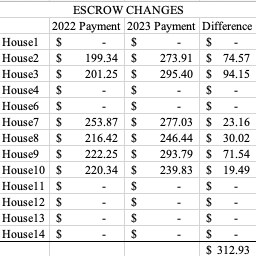
In November, I had posted about how our taxes and insurance charges have increased over the previous year. Our escrow accounts increased by $312 in payments. Our taxes were over $3,400 more than the previous year’s payments, and our insurance policies increased by over $1,000. Both the tax assessments and the replacement value costs were increased by these entities to reflect the higher home prices over the last few years, and that caused a higher-than-expected increase in all these costs. Some tax jurisdictions took their time in catching up their assessments to the skyrocketing prices of 2020/2021, but some took advantage of it right away. We have two houses where the taxes over the last 4 years have hardly changed, but we have others where the costs increased significantly.

INCREASE IN RENTAL INCOME

Our total income in 2023 increased from 2022 by almost $12,000. Although, I’ll note that we had over $4,000 paid from a rent relief program in January 2023 that really counted some towards 2022 amounts owed.

Most of my rent increases went into effect in 2022, just based on how the years played out. I had two properties increase by $50/month each in May 2023.

When the tenant flooded the house, we were able to upgrade a few things in there. In that time, the market rent always increased. So we went from $1200/month to $1600/month in rent over that time. It ended up being a problem because the new tenant lost her job, but that becomes a problem in 2024, after we struggled with her paying rent from October 1 through February.

We also had tenant turnover in another property, where the rent went from $800/month to $925/month. The previous tenant had been there several years. We had decent numbers (e.g., covering of expenses) on the house, and she kept struggling to pay on time, so I didn’t have the heart to increase the rent on her. It was my way of giving her a break because she had done something really big/difficult in her life. When we put it on the market, it wasn’t an ideal time of year, so we went low at $925. This tenant asked to leave mid-lease. We ended up re-renting the house at $995.

We had another tenant buy a house and vacate their lease early, leaving us to re-rent it for January 1. We were able to get someone in by February. Luckily, their lease break fee for that time of year was a month’s worth of rent, so we technically weren’t out of any income for that month-long gap. We were able to re-rent the house at $1,650 (from 1,350); that’s not realized until 2024 income though. We also took a leap of faith on this new tenant, who didn’t completely meet our criteria, but she asked for a chance; hopefully when I’m making this post next year, I haven’t regretted the decision to rent to her.

SUMMARY

This year, we had one tenant egregiously not pay rent on time, another tenant continuously pay late by a few days (although for their track record, paying 33% of payments due late is actually low), and a few who needed a bit more time (and communicated in advance) so we didn’t charge them a late fee. We had two houses with insurance claims, two major expenses (main water line replacement and flat roof repairs), and about $9k worth of other maintenance expenses on the houses.

I took over management of 3 of the 4 properties in Kentucky that were under a property manager. We added a house to the Virginia property manager’s portfolio. We had to turn over two properties in the winter wasn’t ideal, but we made it work. Technically, it was 3 properties over the winter, but one gave notice in 2024. We increased the rent on two houses by $50/month each to cover large increases in taxes and insurance payments.

Overall, this was a time-consuming year. We spent more time managing these properties and dealing with issues than any previous year. I can’t say that there was a single month where we just collected rent without any calls or discussion with a property manager. Heck, I could handle the “is it ok if I pay rent on the 9th” type messages, but this year was more than that. Here’s to hoping that everything is moving smoothly in 2024.

December Financial Update

I’m not even sure where to start for this month. It has been a whirlwind. There were a lot of tax payments last month, and this month I was still paying those among several other things.

PURCHASES

I purposely paid my credit card statement a little earlier than the due date so that it wouldn’t be that high for this update, but then I put a bunch of charges on it over the last two days. To catch you up – we’ve been holding money in our savings account for as long as possible. When we were getting 0.2% interest on it, it didn’t matter when I paid the card, so I typically paid it shortly after the statement closed. Now that we’re getting 4.22%, it’s worth keeping the money in there to earn interest, and then paying the credit card closer to the due date.

Our regular-use credit card is currently holding: $300 towards my dad’s iPhone (I should really share that mess of a story in purchasing that) (also, that doesn’t clearly account for my sisters having paid $200 towards that because that’s just “cash” in our checking account balance), $500+ of the kids preschool tuition, renewing our zoo membership for $139 (honestly, 5 of us enjoying the zoo for the year for that price is wonderful), over $200 for signing our son up for tee ball, two car insurance payments, and a rental insurance payment. I don’t typically go through the charges like that, but it’s just been a bunch of just-big-enough charges to grab my attention on our credit card balance. We drove to-and-from NY, so our gas station payments are higher than average too. As a reminder, the credit card balance you see also includes $10k worth of new carpet that we’re paying slowly on a 0% interest credit card.

RENTAL PROPERTY EXPENSES

I paid two of our Richmond houses’ taxes. The taxes are due on January 14th, but if I pay them this year, then it reduces what’s viewed as our ‘profit.’ I make sure to pay any known January bills in December of each year. Those two houses are so tiny, so their tax payments being so much larger than they once were kind of hurt (I’ve discussed the increases in property assessments, thereby increasing taxes). It was about $2,000 paid out (on top of all the things I paid over the last two months).

I also had to pay two supplemental taxes for Lexington. Government entities not meeting deadlines is a pet peeve of mine (I used to work for the Federal government). Last year, I completely missed that paperwork I received was a supplement bill for education, and then I received a penalty.I thought it was their typical assessment notice since it was outside of tax payment time. Luckily it was a few dollars, but I was so lost. This year, I paid close attention when I received an extra tax-related document. This supplemental bill was for trash services. Again, a few dollars. But think of all the extra paperwork, staff hours, postage, payment processing cost to collect an extra $20 from every house.

RENTAL PROPERTY INCOME

We had two tenants give us notice that they’re moving out. While extremely unfortunate timing on the year, I’m also human and understanding of their need. One tenant had a traumatic work event that led to him being laid off, and another family bought a house. We’ll find a way to get the houses re-rented as soon as possible, even though our vacancy time may be longer than it would have been if we were looking for a May 1st or June 1st renter. We have someone interested in both houses at this time, so that’s encouraging.

We had 4 tenants not pay in full. They all reached out to me to let me know in advance, and they paid what they could by the 5th (I always appreciate that – it holds them accountable, and it allows me to not foot all of the bills that I have to pay on the houses). As of the end of the 5th, we were short over $3,000 worth of rent ($1300 of that was for the house that has been late since October 1st and is finally working towards paying their debts).

As of today, we’re short $2,400. The tenant who’s playing catch up only has a balance of $960 left, which is great (that’s been a long road). Another tenant typically pays $750 on the 5th and 19th. So they’re not late on $750, but they are late on the $375 they didn’t pay in the first half of the month (this is a special scenario that we put in place for them because they couldn’t pay all at the beginning of the month, so we increased their rent as a concession to being able to pay twice per month without creating more late fees for them… but they’re still late).

NET WORTH

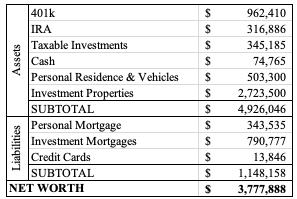
The market significantly increased over the last month. We also had $28k come in as part of our insurance claim; our cash increased by $35k though, so there’s an additional savings in there. And even though we had large expenses on our credit cards, it’s still slightly down from last month.

BONUS STORY

Mr. ODA and I wait for Black Friday deals to purchase our iPhones. We typically purchase every 3 years. I usually bite for a new phone so that the camera is better, but I’m suspicious that Apple is sending updates to alter the clarity of photos on older phones. How can I take these BEAUTIFUL pictures for the first few months of having a phone, and then all my pictures are grainy suddenly? ANYWAY.

Walmart had a deal that you purchase the iPhone 14 on a payment plan, and they give you a $350 Walmart gift card. These are the deals we typically seek. Apple is still getting their full price for the phone, but Walmart is offering a deal to bring our net to $0. When you want to purchase the phone from Walmart, it asks you to log into your carrier’s account. For this phone, it’s Verizon. We spend hours trying to figure out who the primary account holder is and what that log in it. Verizon does it where you can create your own log in and see you phone’s data at any time, but to see the entire plan’s data, you have to be the account holder (makes sense, but complicates this particular instance). The primary account holder is my mom’s phone number. Who died in March. We finally get assistance with that and log into the account through Walmart. It brings up all the lines on the account, we select my dad’s number, and then it gets to step 2. It says they can’t verify the address on the account and we need to go to Walmart mobile desk in a store. I call Verizon. Can’t help. I call Walmart. They keep telling me to put the item in my cart, which isn’t how you purchase a phone. So no help.

I finally bite the bullet, and on the Saturday after Thanksgiving, march myself to the nearest Long Island Walmart. They can’t help because they need the phone in the store. I swear if I were at my Walmart in Kentucky, they would have helped me. It was actually at the point where I was going to risk waiting until Tuesday so that I could have my phone desk people help me. The Walmart employee actually wasn’t flippant or trying to blow me off; I believe he genuinely thought he couldn’t help me. What needed to happen was that he called their help desk people, and then he was the mediator to figuring out the address. I figure this because a Walmart customer service person transferred me to such a person, who said he’s not allowed to talk to me and has to have a Walmart employee talking to him on my behalf.

I gave up. Sunday comes. I hope that some “overnight” processing of information has magically cured the process. It didn’t. I call Verizon again. Some angel of a lady answered the phone and actually helped me more than I could have imagined. I told her that I wanted the Walmart deal because all the Verizon deals require me to change my plan to unlimited data. I let her know that I’ve already spoken to several people, and they keep trying to convince me that I get a “free” iPhone while my plan increases $30 per month in perpetuity (versus $23 per month for 36 months for the phone). She offered me a deal that equates to $5/month for the phone for 36 months. So I put 100x more hours into this than I should have, but it ended up working out in our favor!

Rental Cost Changes from One Year Ago

I keep updating my investment property tracking spreadsheet to reflect the current costs of insurance and taxes. My tracking shows last year’s amount, which I use as an indicator on whether I need to look further into this year’s bill (e.g., is the amount a reasonable increase?). For so many years, most of our insurance policies changed by a few dollars; now, I’m seeing large swings in what’s being charged. Where jurisdictions were slow to change property assessments, they’re now catching up, which increases the taxes.

As a renter, your rent is increasing to cover these costs of the landlord/owner. Here’s a comparison of my fixed cost increases against my rent rate increases. As you’ll see, I’m not trying to get top dollar out of these properties because the market has increased so much (and that leaves me more exposed if someone doesn’t pay their rent on time). My rent increases barely cover the cost increases that are happening on some of these houses. Remember that while I’m showing fixed costs, this isn’t covering the maintenance calls that I receive and how they’re more expensive than they once were also.

ESCROW, CONCEPTUALLY

In most cases, for a traditional mortgage, an escrow account is set up. It calculates your taxes and insurance payments for the year, divides by twelve, and is added to your principal and interest payment for the mortgage. In addition to covering the total payments to be made, there’s also a requirement that the balance of the account never falls below twice the required monthly payment.

If your taxes owed for a year are $1500, and the insurance is $300, then your monthly breakdown is $150 ($1500+$300=$1800; $1800/12=$150). The minimum monthly required balance is $300 (twice the $150).

As taxes and insurance increase each year (typically), there’s an analysis done to ensure the projected monthly balance never falls below that $300 threshold. If the balance is projected to fall below the required minimum amount, then it triggers an increase in your escrow payment. Your escrow payment will increase to cover the shortfall, but also to cover the new projected costs to be paid. So while you may be offered the ability to make a one-time payment to cover the shortfall, your mortgage payment may still increase to cover the projected costs. For example, if last year, your tax payment increased to $1750, and your insurance to $350, then your monthly payment to cover those charges is $175 ($1750+350=$2100; $2100/12=$175). Your mortgage will increase by $25 per month because now your escrow agent knows the projected costs to cover are higher.

The analysis uses the current year’s amounts owed to project the coming year’s monthly balances; it doesn’t account for the probability that these amounts increase each year, which essentially means that there’s perpetually a shortfall. In other words, while in Year3, they know that there was an increase in costs from Year1 to Year2, they don’t inflate the costs of Year2 to cover Year3 projected payments.

I prefer to not have an escrow, but at this point, for any mortgages we have, they’re all escrowed. We have six of thirteen houses with escrow. While I pay more as my mortgage to feed into that escrow account, it means I don’t have to manage the annual or semi-annual payments. On the contrary, this means I need to be managing our finances to prepare for large outlays throughout the year on seven houses (in the last quarter of the year, I’m paying out over $8,000 to cover taxes owed).

ESCROW REANALYSIS

This post was prompted by a notification that an escrow reanalysis was done on a mortgage that was just transferred to a new company. I thought that their break down was the most clear I’ve seen. A quick note – your escrow will pay the bills that come due, regardless of the balance in the account, even if it means it’ll overdraw the account.

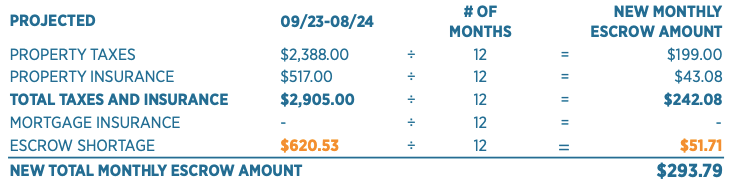
They clearly showed that the anticipated property taxes are projected at $199 per month (although, I’ll reiterate that this is based on last year’s actual outlay numbers, which aren’t accurate for the coming year). Then they show that the taxes are $43.08 per month. They then go as far to show the total of these two required outlays. There’s verbiage that explains the required minimum in the account must be twice the total taxes and insurance ($242.08 * 2 = $484.16).

There’s another detailed breakdown of each month’s escrow income and outlay (that I don’t have pictured here) that shows the month that is projected to fall below the required minimum. That month’s account balance is -$136.37. The difference between the required amount of $484.16 and the negative balance of $136.37 is $620.53 (pictured above). When that’s broken down by month, it’s $51.71. Take the total taxes and insurance payments and add the shortage amount to get the new monthly escrow amount of $293.79, a change from $222.25.

Below, they show you that there is no change in the principal and interest payment, then it shows how the current escrow payment is adjusted to the new escrow payment, along with the shortage amount.

I created this table to show the differences between escrow payments over the two years. I kept the houses that don’t have an escrow because it can be compared to a future table in this post. There is no House5 in this table because we sold it several years ago (houses didn’t get renumbered because House5 still exists in terms of tax documentation).

TAX AND INSURANCE UPDATES

Each year, we see an increase in these amounts. Usually it’s across the board, but Kentucky districts had kept the housing assessments the same through the pandemic. As housing prices increase, your property assessment can be increased by your tax jurisdiction. The assessment increasing leads to an increase in taxes. This is why people getting excited that house prices in their neighborhood are selling higher than expected isn’t great if you’re not planning on selling any time soon; those increases in values means you’re paying higher in taxes.

In Richmond, VA, the property taxes are $1.20 per each $100 of the assessed value. In 2022, House2’s value $163,000. In 2023, the value was increased to $203,000. And let’s not forget that we purchased the house for $117,000. While it’s nice that the home values in the neighborhood are increasing significantly (and we knew the area was going to get better and better based on development happening), we can’t realize this gain until (and if) we sell. So in the meantime, we’re paying higher taxes on this amount. Although, I suppose the assessment could be even higher because the actual value of this house is probably more like $260,000.

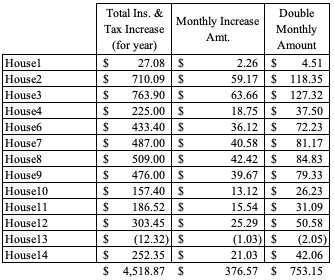
Among 13 houses (don’t get confused – there’s no House5 up there because we sold it), I need to cover a total cost increase for taxes and insurances of over $4,500. This doesn’t include the higher costs of trades people if there are any maintenance calls, so this increase is the bare minimum for me to keep my same income.

RENT INCREASES

I constantly see complaints about the cost of rent, or that a landlord is increasing rent. Unless we’re looking for a tenant to move, our general philosophy is to increase rent $50 every two years. This worked fine because home assessments increased at a slow, reasonable rate until recent years. Now jurisdictions are capturing these larger increases based on those inflated sale numbers when competition was high in from 2020 through 2022.

In some cases, the rent for the area brought it in a higher amount than compared to our purchase price of a house. In those cases, we went several years without increasing the rent. Looking back, that probably wasn’t the best idea because now we’re behind on capturing how significant these last few year’s fixed costs have increased. However, the trade off to that is that we’ve kept great tenants in the house, haven’t had to pay to turnover the unit, and have minimal maintenance calls.

This table shows the total increase in insurance and tax payments from 2022 to 2023 in the first column. I divided that by 12 to get the monthly amount of that increase (second column). Then, since I said we typically increase our rent by $50 every two years for the same tenant, I multiplied that monthly amount by 2. I’m showing that if we want to only increase rent on long term tenants every other year, then I need to plan ahead on how much my costs are increasing.

This isn’t a perfectly accurate capturing of our cost increases since I’m not going back to 2021 to capture those changes in amounts, but it’s a general estimate. This shows that if I were to increase all houses by only $50 every two years, it’s cutting into my bottom line. Only 6 of the houses have increases less than $50 for two years.

SETTING THE RENTAL RATE

Let’s pause and talk about “bottom line.” Landlords have investment properties to make a profit. They’re looking for an income stream.

I regularly hear people say they can own a house for less than their rent, which is likely if you’re speaking only on principal and interest of a loan. However, you need to qualify for that loan. You may not have 20% down, so you may be required to pay private mortgage insurance (PMI). You may not have good credit, which means you’re probably going to pay a higher interest rate than I’m currently paying. You need to be able to cover taxes and insurance, which means you’ll have an escrow account set up, which increases your monthly mortgage payment. Then there’s all the other costs of home ownership.

That’s where people forget. When your hot water goes out, you call me. I spend $1,500 for about 2 hours worth of someone’s work to replace that. When you have a water leak, I spend $3,000 for a day’s worth of 2 plumbers’ work. When a storm drops a tree on your house, I’m the one spending hours on the phone with insurance, finding a contractor, getting quotes, and paying the contractor $3,700 before I get insurance reimbursement. Those are the big unexpected expenses. That doesn’t include all those smaller plumbing problems that cost $200 or $500 at a time.

Then in some cases, I probably put time and money into the house to even get it ready to rent to you. I didn’t always buy a house that was ready to live in. You may have projects that need to be done when you first move in also, so which costs money. Those are expenses that I’m trying to recoup through my rent rate also.

There may be other costs to my ownership that I’m trying to recoup through the rent, such as property management. I may have to pay someone else 10% of the rent, every month. I am projecting that there are going to be costs that I need to pay for also (e.g., water heater, roof replacement, plumbing issues). When I need to pay a plumber $3,000, I’m not coming to the tenant to say “I now need $3,000 to cover this cost.” Instead, I’ve set my rental rate the expect such a large payout on my part.

Not only am I trying to make sure that my rent is set at the right about to cover the costs that I’m putting into owning and maintaining the house, I’m also hoping that I’m going to make some money off owning this house so that I can live. I don’t get to pay myself for the hours I put into managing the property. Whether or not I have a property manager, there is still time that I put into managing the houses. Would you want to work for free?

BACK TO RENT INCREASES

While we manage each house individually on setting the rates (asking ourselves: do we think the tenant can absorb the increase, do we have to increase to cover actual costs now), this shows that our monthly income was increased by $475. If you look back at our total monthly increase in expenses of just taxes and insurance, it’s about $375; add in the cost increases for property management (increased rent means increased fees because fees are based on the rent price), and our fixed costs went up $415. On a whole, we’ve offset the increases.

However, you can see if we had one or two houses, some of those increases could be significant. House3 is costing us $64 more for each month, but our increases are typically about $50 at a time. We’ve had the same tenant in this house since we bought it. A $50 increase every two years hasn’t kept up with our costs. Since we have other houses, it helps cover the costs on House3.

House2 and House3 are identical in layout. House2 has been upgraded to all LVP, whereas House3 has carpet everywhere except the kitchen and bathrooms (granted, it’s new carpet two years ago). Since we purchased these two homes with tenants, rent was already set for us. House3 has been the same tenant since we bought the house, and the increases have brought us to $1200 per month in rent. House2 has been turned over 3 times: the first was a divorced lady who moved back in with her ex-husband; the second was there for several years, but we began having a lot of issues with her, and we told her the lease was up; the third was the one who flooded the house in December, and causing the need for the fourth. Now we’re renting that house at its market value of $1600. That means House3 is operating at a much lower rent than we could get if we rented to new tenants. However, the tenants are wonderful, and we’ve purposely not raised the rent on them in significant ways because we don’t want to cause them to move.

SUMMARY

Cost increases in rental properties can be significant over the years. With the rising costs of all goods and services, property values weren’t immune. The increase in property values leads to an increase in an assessment, which means an increase in taxes. That cost is relayed to the tenant, as this is a for-profit business. I’m trying to make an income for my family with rental properties.

I’m not trying to price gouge tenants, but make a fair living based on the costs of owning these houses. My first goal is to not turnover tenants, so I do what I can to make my tenants happy by taking care of the houses and not creating drastic rent increases each year. Secondly, I’m not going to set a price that my tenant can’t afford, thereby putting me in a hard position where I don’t have rent paid. Having multiple properties helps to offset the costs so I don’t have to play catch up on one or two houses worth of higher expenses, by putting my long-term tenants in an uncomfortable position where they can’t afford the rent.

September Financial Update

RENTAL FINANCES

It’s the calm before the storm with rental payments. We’ll owe multiple jurisdictions’ tax payments over the next month. We only have 5 houses with an escrow account, so I’m responsible for insurance and tax payments on my own. I don’t mind it because that means I don’t have to keep money tied up in an escrow account balance, but it does mean that there are large outlays multiple times a year that need to be properly accounted for.

I recently made a post about late rent payments this month. The one who I continue to charge late fees didn’t even pay on the day they said they would. I despise having to hunt tenants down for payment. She emailed me that “September 5th payment” would be late (ugh … it’s due on the 1st, maybe plan for that day instead), she said it would be paid on the 8th. I had to ask on the morning of the 9th where the payment was. I was giving her a few hours to respond and planned to send a notice of default. Lucky for them, I got distracted and busy, and I didn’t get around to it. They finally responded Saturday night that they had lost power and were distracted, but they sent payment then.

I paid out the invoice from our handyman that I had been waiting on, which was $810. I had mentioned that I’m waiting for an invoice from our HVAC guy, but I think he’s not charging me for the service since he had to go back after installing a new condenser. I’m STILL waiting on the roofer to complete the job on one rental. I signed the proposal on July 5th. He finally started the job at the end of August, but decided to change my scope of work without approval. That delayed the project another week. Then I have no idea what has happened over the past week and a half, but supposedly it’s finally done.

A plumber came out for a hot water heater issue at one of the properties. The tankless water heater wasn’t powered on. I don’t even know how that happens, but it seems like something that may become a bigger issue. The company even said they don’t service or work on electric tankless water heaters, so I don’t even know where we would go from here.

PERSONAL FINANCES

In my last financial update, I mentioned that our insurance adjuster had finally came out, three weeks after the tree falling on our deck. He took a week to get us the estimate. We then responded the next day with all the errors and omissions in the estimate. It then took 3 weeks for our email to be acknowledged (even with multiple phone calls). We finally escalated this two weeks ago (State Farm doesn’t make it easy to escalate beyond your desk adjuster answer the phone), had an estimate redone by our adjuster (supposedly) about 12 days ago, who then told us the supervisor approval process would be 3-4 days. Giving the holiday of Labor Day and benefit of doubt, we didn’t push it until Monday, hoping they’d do the right thing and get us information. Mr. ODA saw that we had been reassigned a field adjuster on their portal. So guess what? For an event that occurred over 10 weeks ago, we’re starting over! Lovely.

I paid the kids’ tuition for preschool late. Luckily there’s no late fee charged. The school “opens” links each month. I tried to pay it around the 20th of August for September because I knew the last two weeks were going to be crazy with visitors. When I couldn’t pay it that day, I completely forgot about it. I was part of the “hey, you didn’t pay” email from the director – so embarrassing. Our oldest is going 5 days a week, so now his tuition is $350 per month; our second’s tuition is $175 per month.

Our 0% introductory interest rate on our credit card we opened 15 months ago expires at the end of this month, so that’s over $5k that needs to be paid. Then our credit card statement balance owed on our regular card is about $4,800 because of large rental property expenses. I haven’t paid it yet because I need to transfer money from savings, so I’m waiting until the last minute to do that so we can earn interest on that amount.

NET WORTH

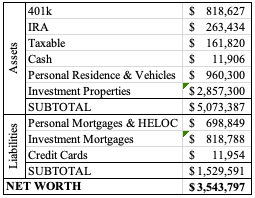
Nothing too exciting to note here. Credit cards are still high, but that will be significantly different next month with our 0% interest card being paid off.

I asked Mr. ODA for his 401k updated amount yesterday, and he made a comment that I should wait to update until today because the market went up yesterday. I had already done the majority of the work, but an ailment and children meant I didn’t get to posting yesterday. So this morning, I updated just our investment account totals to see the difference. The chart above is yesterday’s numbers. Today’s 401k, IRA, and taxable investment account totals are $10,000 higher today than yesterday. That means that if I had updated the numbers today instead of yesterday, we’d be showing an increase in net worth from last month’s update by about $6,000. Instead, I’m showing a slightly lower net worth by about $4,000. It just goes to show how much the market can affect the numbers on any given day, and my net worth in trending generally upwards, but it may not seem that way because of one day’s market closure.

September Financial Update

Whew, we’ve been busy. Son turned 4. Lots of traveling. Kids started school. Managing two houses. Managing the rentals. Being 7 months pregnant.

We’ve been working on our old house to get a lot of the things moved to the new house, while keeping enough there to live. A slow move sounded great in concept, but dragging this out for 3 months now, with another 6-8 weeks to go probably, has been rough. We unload the car, put it in the new house dining room, and then I need to unpack all that and find it a home. Then we come with another dump of things right after I clear that out. It’s been exhausting. Meanwhile, I’ve been painting almost all of the new house, changing out light fixtures, changing out some electrical switches/outlets that were dated, etc. Mr. ODA has started working on the rebuild part of the bathroom renovation, so we happily have gotten all the electrical work that we wanted to do done (we need to hire an electrician to run a line for the dryer), and then got the shower framed. He’s also been working on the yard and landscaping, which is a big project because the original owner of the house put in a lot of landscaping, and then the people who owned the house for about a year before us didn’t maintain any of it.

We’re listing the house this week, and we’re hoping for a reasonable offer ASAP and a closing at the beginning of November. That closing will pay off our mortgage (~$265k) and our HELOC (~$82k).

RENTAL PROPERTIES

October brings a lot of rental bills. KY’s property taxes are due in October and November, and none of the houses we have here are escrowed, so I need to plan on about $6,500 outlay. Right now, we have a HELOC on our last primary residence, so I have that to fall back on. Typically, I project out 2 months of expenses, and I know how much I have “left over.” The “left over” usually is paid towards a mortgage or, currently, our HELOC balance; in the Fall, I plan to have that “left over” go towards the taxes. Luckily, our houses in Virginia that aren’t escrowed have the tax payments due half in December and half in June.

While our credit card balances are high (we’re carrying a large balance on one that’s 0% interest), we didn’t have a lot of expenses this past month. Mr. ODA’s work trip hotels and restaurants are on the credit cards that will get paid this week, and we’ve had higher gas expenses because of my driving to/from NY and then capitalizing on Kroger incentives so filled up one car. Other than that, we’ve only eaten at restaurants sporadically and have been focused on getting projects done, so haven’t gone out much.

This is the first month of the newly executed lease with a tenant who paid late every month. Their rent total increased for the convenience of paying twice a month (although the total owed now is still less than their rent and late fee they had been paying). They paid the first half on time, and they haven’t paid the second half, which if it’s not paid by the end of today will incur a late fee. Rent was $1450, so they were paying $1595 every month. Rent is now $750 twice a month. If they pay on time, it’s $1500 per month. If they pay half late, then it’s now $1575 per month.

I submitted the security deposit charges to the tenant that moved out. She asked a question about the charges on the list, but then didn’t acknowledge by the deadline. We need to have our property manager file the charges in court. Somehow it’s the 19th of the month, and we haven’t pursued that yet because we’ve been so busy.

Other than that, we didn’t have any service calls on any of the houses, and everyone else has paid their rent.

NET WORTH

We have a busy October planned. I hope we’ll finish the projects at the new house and be close to closing the chapter of our last house. Our investments have declined significantly (almost $91k!) from last month. Our cash is higher than usual because of the cycle timing for this update compared to the bill due dates. And finally, the credit cards are higher than usual, and they’re higher than last month, but that’s because we’re purposely carrying a balance on a 0% interest card. So while our overall net worth has decreased over $33k since last month, the stock market issues have been offset by paying down mortgages and increased property values.

Filing Taxes

We filed our taxes. It just takes so long, but it’s easy. This year I recorded what I did and how long it took, so I wanted to share.

I’ve shared that I record transactions all year long. Inevitably, a few things slip through a crack. So I go through everything I have on file to make sure I can support a charge I’ve recorded (e.g., receipt) and that I haven’t missed entering something in my spreadsheet (e.g., I have a receipt for work, but didn’t put it in my spreadsheet).

DC TAXES

Mr. ODA works for a DC office, but lives in KY. The paperwork information got crossed, and he ended up paying taxes to DC for a little while. Apparently DC is used to this mistake. There’s a form he filled out, attached a copy of his W2, and mailed it to DC. He received a full refund within a couple of weeks! I couldn’t believe the timing of it and how it easy it was!

STEP 1

My first step was to load all my mortgage documents for the houses that we still have mortgages on. I need to know the mortgage interest for the year and what they paid out in taxes from escrow. For some reason, it never tells me the insurance payments made on the tax document, so I need to go through my email or look at the line-by-line escrow to see when and how much was paid for insurance. I estimate the mortgage interest each year, but I don’t have the final amount until January.

STEP 2

Then I go through my email files. I try to get most of my receipts via email (e.g., Home Depot and Lowes are good about tying your credit card to your email address so I keep everything filed electronically). This took me just over 3 hours. I went through each email receipt to see if I had it recorded properly. I found 2 or 3 transactions that I had receipts for, but they weren’t recorded in my spreadsheet. I also found out that I didn’t record any of my final December transactions (i.e., stormwater utility bills and property management).

STEP 3

After I go through everything I can electronically, I move on to my paper files. We have a lot of our insurance through State Farm, and they don’t email me receipts for payment, nor can I look up previous payments made on their website. So I keep a paper copy of all the insurance documents for each house. We had a huge debacle with two of our KY houses and insurance last Fall, so I had to make sure I had all of that recorded accurately. I used to rely on the paper stormwater utility bills that I pay directly, but this year I just went into our checking account and verified the amounts that I paid against what I recorded. Since most of my transactions are kept electronically (especially with having property managers, so they’re sending me the bills they receive electronically), the paper checking was only about an hour this year. It used to be longer, but I’ve streamlined my electronic filing so mostly everything is in there.

STEP 4

After just over four hours of “prep” work, we move on to the tax software.

Mr. ODA entered our W2 information, we both pulled up all our investment account statements, and then we got into the investment properties. It’s tedious, and each year we have to remember how we matched our terminology to the system’s terminology (why can’t I keep better notes on this?!). We got into a groove and knocked out half the properties in about 80 minutes before taking a break. We focused on the 3 properties that we received one 1099-MISC for first, which involved going back and forth on some screens. Then we knocked out some of the easier houses. The next night, we finished off the rest of the houses in about an hour.

We usually call it complete at that time, but we don’t submit right away. We take a few days to see if we think of something we may have missed (whether investment property or personal finance), and then we submit. We usually owe Federal and State tax every year, so we’re never in a rush to get this done and pay. Somehow, we get a refund for Federal this year, but we still owe the State.

SUMMARY

About 6.5 hours of tax work, after being pretty on top of it all year. People ask us why we don’t use someone to do it instead of putting all that time in. It’s not that easy. If we had to send our information to an accountant, we still would have to gather all our receipts and send them over. I think it’s easier to look at my receipt and record it, rather than gather all my emails and send them to an accountant (not to mention Gmail is not a great mail system in this regard because you can’t easily add emails to new emails). Then we have to field all their questions regarding the documentation that I send, which will inevitably be frustrating to me. It’s all around cheaper and easier to do it this way.

Should you take the raise?

Yes.

It seems it’s time to revisit this discussion.

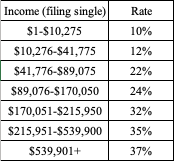
A raise does not mean you’re making less money because it’s “taxed more.” The tax rate is not greater than 100%, which means each individual dollar is not taxed at a rate greater than or equal to that dollar. The highest tax rate for 2022 is 37%. So even if you’re at the highest tax bracket, you’re still bringing home 0.63 cents on the dollar. So let’s revisit the United States tax system: marginal tax brackets.


MARGINAL TAX BRACKETS

Your income is taxed by the IRS according to a marginal tax bracket. This means that each dollar fits into a separate “pot” to determine how much it’s taxed. This does not mean that if you make $15,000, it’s all taxed at 12%; or if you make $95,000, it’s all taxed at 24%. This means that each dollar that fits into these “pots” is taxed at its respective rate. For ease of seeing how the math works, this post is just going to assume you’re filing single, but there are other options, which changes the bracket amounts.

Let’s say you make $80,000, and you’re considering a raise to $95,000. This is a difference of $15,000 in gross income. Only $5,925 falls into your “new” tax bracket. Your net raise (take home pay, barring any other deductions for the year) is $11,581.50, and you’re paying $3,418.50 in additional taxes.

Let’s do an example where you receive a raise, but you stay within the same tax bracket. You’re making $80,000 and offered a 5% raise, which would bring your salary to $84,000. You would make another $3,120 in net income, and you’re paying $880 in additional taxes (which is 22% of the salary increase).


Making $90k instead of $80k does not mean that your entire pay check is now taxed at that higher rate. This is the common misconception about earning more money. Each dollar is taxed within the bracket it falls into. In 2021, single filers get taxed on 10% of their income up to $10,275. That means that the first dollars they earn are taxed at 10%, but the $10,276th dollar they earn is taxed in the next bracket, or 12%. The 12% bracket goes to $41,775. Similarly, the $41,776th dollar they earn will be taxed at 22%, and so on.

Mr. ODA posted about how bonuses are calculated by your payroll processors back in 2019. I’d rather take the additional money in my pocket than worry about how it may appear to be taxed more when you see a new paycheck.

Year in Review: Part 1

Just over a year ago, I decided it was time to put more effort into sharing what we’ve been through. When I’m looking to learn something new, I like to find examples of how other people handle it. I want to know the places they struggled and how they learned. I find it a better way to form my opinion than by reading an article that doesn’t have any meat in it, only providing an outline.

In the last year, I learned that blogging wasn’t as easy to keep up with as I thought it would be. I have a list of topics still to cover, so it wasn’t a matter of content. But raising two kids hinders my ability for an uninterrupted thought process to write an article, unless I get to it before they wake up.

The blog was started by Mr. ODA in 2018. He wrote a few posts, and then it sat for two years. I decided to pick it back up in January 2021. During 2021, we published 65 posts. Each month, I wrote a post about our financial update; I included any major expenses, how management of rental properties was going, and how our personal spending may have changed month-to-month. I shared our purchase of 11 out of 13 of our properties, our sale of one property, refinancing mortgages, paying off mortgages, renting properties, maintaining properties, etc. I also shared just general life decision making along the way.


Part 1 for my year in review will address what happened with our rental properties. I’ll dive into our personal finances in Part 2.

As a quick recap, we have 12 rental properties. Nine of them are in Virginia, and three of them are in Kentucky. Two of the houses in Virginia are owned with a partner because we still had cash available to buy more houses, but at the time we had the maximum number of mortgages allowed by Fannie/Freddie (max is 10). The houses were purchased between February 2016 and September 2019. All 3 houses in Kentucky are managed by a property manager, who gets 10% of the monthly rent each month. I manage 5 of the Virginia houses personally, and then we have a property manager who manages the remaining 4, who also gets 10% for each house.

RENTAL PROPERTY MORTGAGES

In January 2021, we completed a refinance of one property, and then in December, we completed three cash-out refinances. The loan balances on these 4 properties increased; one increased because closing costs were rolled into the loan balance, and the other 3 included $190k worth of equity taken out from the houses and creating new loans.

We went from 11 mortgages (two of which are actually owned by a partner) down to 8. House 6 had a balance of $26,447 coming into 2021, and that was paid off by June. Two other houses had a total balance of $157,500 at the beginning of the year. Their balances dwindled through regular monthly payments and one lump sum payment right before we completed the cash-out-refis and completely paid them off.

We have been working on paying down another mortgage that is owned with a partner. Between the two of our families, we paid off about $44,000 additional principal for that mortgage. We’re matching each other’s additional principal payments so that the math is easier to follow, so we can only make additional payments in line with what he can do also. We each owe about $10k on this mortgage now.

Even though there were so many mortgage-related transactions in the year, our overall loan balance only decreased by $6,000.

The market has continued to rise due to the limited supply, and so our home values on the rentals actually increased over $500k over the last year.

RENTAL PROPERTY LEASES

We turned over 1 property the whole year! The tenant that was living there had already told us that they were renting until they found a place to buy, so we knew they wouldn’t be long term tenants. We had a relationship with them from a previous house, when they had moved out of the area and then back. They had a poor experience renting in another area and reached out to us since they appreciated us as landlords. They found a house towards the end of their first year, but we let them out of the lease early. Their lease was slated to end October 31, 2021. We don’t usually have leases that start/end in the Fall if we can help it, but we had let the previous tenant out of her lease early to purchase a house also. The tenant said she was able to be out at the end of August, and we preferred moving the lease closer to the summer months anyway.

We raised the rent on 6 properties.
– The one house that was turned over went from $1200 to $1350 per month. However, we added a property manager who gets 10%, so our cash flow only increased by $15 per month.
– Two of our properties have long term tenants; the rent is significantly below market value, but we value not having to turn over the house. These houses are on a cycle where we increase the rent $50 every two years.
– Our KY property manager tried to increase rent on the 3 properties she manages. One was increased by $25, another by $5, and the other one cried that she couldn’t afford an increase. That’s the one where we plan to increase by $75 next month, and if she doesn’t accept, we’ll turn it over and get $75-$100 more per month.
– We increased rent by $150/month for one of our properties that we have with a partner. It was a risk, but this is a house that claims 3 people live there, but they have 5 queen size beds in the house. We figured either they leave and we get several big things fixed up that have been deferred because of all their things in the way, or we make up for all the years that we didn’t manage their rent and didn’t increase it. They accepted the increase.

RENT COLLECTION

We were very grateful that we made it through those initial months of the pandemic without tenants not being able to pay rent. We had a few people let us know that they were laid off or unable to work (e.g., restaurant business), but we learned most of our tenants worked in the health care field. So while we made it through 2020 without many issues, 2021 brought more challenges. Nothing was insurmountable, and it wasn’t debilitating financially, but it was still something to manage.

We had some big struggles with non-payment of rent on one house. She was 31 days late paying August rent, then she didn’t pay September’s rent, and then she applied for rental assistance to cover September, October, and November, which we didn’t receive until February 2022. That was all on top of her generally being a week late in paying through the beginning of the year too. She doesn’t maintain employment, she doesn’t communicate, and we’ve just had something new and different pop up as an issue every few months. We eventually received January 2022’s rent, but we still haven’t received all of February’s rent – just in time for March rent to be due.

We have another property (the one that was raised $150 per month) that is perpetually late. They eventually pay, and they’re getting better about actually paying the late fee (when they pay rent 20+ days late…), but they were late for 10/12 months of the year.

Everyone else paid their rent on time. In general, we’re lenient with late fees and issues. If you reach out to us and mention that there was a hiccup and you’ll need one more pay check to pay rent, our response is typically: please pay what you can now, pay the rest next week, and don’t worry about the late fee. However, when you don’t communicate and/or you’re consistently weeks late and we’re having to carry the expenses, there needs to be a consequence to incentivize you getting back on track.

RENTAL EXPENSES

We replaced the flooring in House3 ($4,000), hot water heater in House9 ($1,500), HVAC in House10 ($3,300), washing machine in House10 ($250), and HVAC in House12 ($3,900). We also had various electrical and plumbing work that needed to be done in several houses. We also spend about $7k per year in property management fees.

Usually turn over is an area that requires us to put a lot of money into a house. Luckily, the one house that we turned over this year only required some paint work, and we didn’t have any other turnovers.

While it’s nice that our assessments have increased and our housing values have increased in our net worth calculation, it comes at a price. Our taxes have increased on all the properties. In total, they’ve increased over $2,500 in just the one year (meaning, that doesn’t include all the previous years worth of assessment increases that have occurred!).

GOALS

In this year, we hope to add one more rental property to our portfolio. We’ve been actively working on it, but this market is crazy! We’re not willing to overpay on a property and get into a bidding war just to be done with the search. It’s interesting to see that we haven’t bought a new rental property in almost 2.5 years, when we had purchased so many all at once. We had gone back and forth with saving for another down payment or just paying off more mortgages after we paid off House6 in June. Once the cash-out-refi was a possibility, we decided to go ahead with purchasing another property. We’ll self-manage whatever we acquire. We had been looking in Virginia and Kentucky, but have started to settle into a Kentucky property (I like the laws for tenant/landlord relationships better in Virginia) so that we can save the 10% management fee and the expensive leasing fee, since housing prices are significantly higher than what we’d prefer for the rent ratio we’d be getting.

We have 8 houses that still need negotiation and/or lease termination coming this year. Two houses have already agreed to their rent increase, and we just need to get the new lease signed. Five houses will be offered a new lease term with a rent increase (averaging about $50 per month on the increase). One tenant will be asked to leave at the end of her lease term.

We want to remove the tenant from House2 at the end of her lease term. She has been a concern in numerous legal ways, does not hold steady employment, and the house is well under market value rent. Turning over that property will require us to go to Virginia to work on it. It’ll need repainted, the carpet will probably have to be replaced, and I worry that she’ll do some damage when we tell her we’re not interested in renewing her lease.

SUMMARY

I like to look at the details of the rental properties all at once in this format. Sometimes, I get caught up in all the things that I need to get done, and I feel like it’s so much work. In those moments, I forget that there are most days of the year where I don’t even think about the properties. Even when expenses seem to be piling on top of themselves, to look back and see that our expenses totaled less than $15k over 12 houses is encouraging. We’ve also reached the point where we’ve replaced most HVACs and several roofs, which are areas that can create problems that compound on themselves, whereas a replacement is expensive, but then I don’t have to get all the calls that something went wrong.

Tax Season

W2s and financial statements are arriving in the mail. It’s time to submit your taxes. We file our own taxes. And that surprises people every year.

We have 12 rental properties, two of which are owned with a partner. Mr. ODA works full time. I work random jobs, but produce income that requires filing. This sounds like it can be complicated, but it’s not.

Mr. ODA projects out our tax liability all year long, and he makes adjustments in his W2 paycheck to account for what we’ll owe. Our goal every year is to owe. Our philosophy is that if we get money back, that’s just an interest free loan the government has had from us all year. I can make a whole post on how getting excited for a tax return shouldn’t be a thing, but I’ll just leave it at. But you can’t owe too much, because then you have to pay a penalty. It’s a careful balance that I entrust Mr. ODA with and don’t ask any questions.

This post focuses on having business-type expenses. If you file just W2 income, then it’s not something you need to manage all year long, but you can still do your taxes on your own!

BUSINESS EXPENSES

The key to getting through tax season is knowing that it takes work all year long, not just in the one week crunch time to file your taxes. Schedule E is going to require you to put your income and expenses, per property, not as a whole, so it’s important to have expenses assigned to a particular house. If you record income and expenses as they occur, it’s less of a hurdle when the year is over. By recording the activity all year, it then becomes a verification process when the year is over, thereby reducing the possibility of missing something or recording something wrong.

At the beginning of every year, I create an Excel workbook to track each property’s expenses. I use it as a projection of income, a projection of expenses, and a way to keep track of re-occurring expenses (e.g., stormwater utility bills I can’t assign to the tenant for payment). I set up each property on a separate spreadsheet within the workbook to identify all known costs for the coming year.

Not all of these categories apply to each property (e.g., HOA, prepaid points), but I found it was easier flipping between each spreadsheet if they were uniformly set up. There’s also a chance that you’re carrying appliance depreciation costs. Appliance purchases aren’t captured as a one-time cost in the year of purchase; the purchase is required to be depreciated over its useful life (e.g., a $500 dishwasher purchased on January 1 is depreciated over 5 years, so it’s $100/year worth of an expense claimed on your taxes). As I incur expenses or need to adjust my income, I record it per property.

After the end of the year, I then verify what I’ve recorded. I make sure that I have the right income for each property (e.g., were there late fees collected, were there rent concessions granted, were there non-payments). Then I go through each property’s paper folder I have filed to make sure I’ve recorded anything I have a receipt for. Then I go through my electronic folder for each property, and this is where nearly all my record keeping is (e.g., I have Lowe’s and Home Depot automatically email me receipts for a purchase, and all my contractor work is billed via an invoice emailed to me). I’m verifying that I have a receipt for any expense that I incurred and recorded already. I’m also verifying that I haven’t missed recording an expense that I have a receipt for.

Once I have everything verified, I let Mr. ODA know that the business expenses are ready. Inevitably, we’re waiting for some final investment account documentation to be available before we can input our data, but we’re mostly ready to go.

TAX SOFTWARE

Each year, we hunt for deals on websites that will allow us to pay nothing or a minimal cost for filing our taxes. We’ve spoken to a couple of financial people to see whether having a CPA do our taxes would be better, but they always agree that inputting in Schedule E is the only way to go, which is really straight forward. If we’re trying to not pay to file our taxes online, then we don’t want to pay someone to enter the data on our behalf if they’re providing a benefit outside of that. I know several people who use a tax accountant to file their taxes, and they rush around looking for all their documentation to provide that person. That seems more overwhelming to me, and it just seems faster to be on top of it myself than gathering receipts and being ‘on call’ to answer questions.

Filing our taxes is usually a 2-3 hour process. It’s not complicated, but it’s time consuming. We’ve found the best way to do it is having Mr. ODA input the data, as I pull the information he needs. I keep a tax folder to file all the paperwork we receive around this time of year (mortgage statements, investment account statements, etc.). I have that file handy, as well as all our account log-ins. I’m trying to pull information as fast as I can while he’s entering it and clicking through the software. Sometimes there’s something that trips us up because there seems to be a change each year, but we mostly have a groove by now.

If you haven’t filed your taxes on your yet, take this as a sign to give it a try!

Expense Tracking

In January, I mentioned how I have a very detailed spreadsheet to track my expenses. I started this spreadsheet concept in 2012 when my husband and I started combining living expenses. We also moved from NY to PA to a VA apartment to a VA house in a matter of 22 months. I needed to have a way to make sure I didn’t miss any bills. I didn’t want to rely on receiving the bill itself in the mail or in my email before paying it. I chose to develop the spreadsheet based on our pay check dates, which were every 2 weeks.

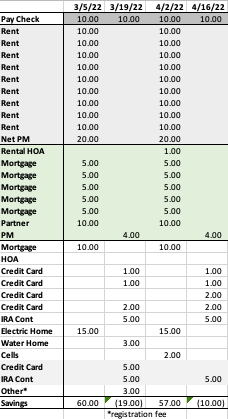
Here’s my sheet, in essence. Pay no attention to the actual numbers in this screenshot, as I didn’t take the time to make sure they were made up but still proportioned to each other. The format is exactly as I use it though. I set it up at the beginning of each year.

For the entire year, I record the pay check receipt across the top of the sheet. The dates are based on the day the money hits our account. This has changed over the years, as we used to get paid on Tuesdays, but now Mr. ODA’s pay check shows up in our account on a Saturday.

The first section, which is all gray, is the rental income. I then record all the rental income near the 1st of the month. If a pay check isn’t near the first of the month, I record it for any pay check date that shows up in the first 10 days of the month. Realistically, I receive the majority of our rent on the 5th of each month, so it doesn’t make sense to record it as a projection any earlier than the 1st, and as near the 5th as I can. The ‘Net PM’ is because I don’t collect rent on our KY houses; the property manager collects rent, removes their expenses, and then we receive the net by the 10th of the following month.

The next section is the light green, which captures routine expenses on the rental properties. I record the HOA due date every 3 months, each month’s mortgage payment, the payout to our partner (I take in all the rent each month and then pay him out his half plus our half of the mortgage payment), and then the VA property manager’s expenses.

The white section covers all our personal expenses.
– The bottom two gray lines are simply an indication to me that those affect Mr. ODA’s account and not our main checking account.
– I pay our personal mortgage near the 1st of the month (some time between the 1st and the 10th, but I typically prioritize this getting paid as close to the 1st as possible).
– Our personal residence’s HOA is only due one per year, which is why there’s nothing on that line for this particular snapshot.
– Then I have all our credit card payments. For the year, I project based on the previous year’s average bill. As I get closer to the statement end period, I update the projection. If I project that a credit card bill is going to be $1000, but as we spend through the month, we had more expenses than I thought, I update the projection on the spreadsheet to reflect that. So where it said $1000, I may put $1700 to cover my savings projection.
– I project our my utilities too. I know that I have an electric and water bill each month, and I have a cell phone bill that I pay in 3-month increments to my sister-in-law for a family plan. When setting up the sheet for the year, I simply keep the same numbers from last year for the utility lines. While I can log into my account and see the details, it’s easier if I already have it laid out like this. Then I can see, “last year, for this month, my bill was only $40; why is it $70 now?” One caveat here is that I usually keep the lines on this sheet to those items that are going in or coming out of our checking accounts. The water bill can now be paid by credit card (since we moved to KY last year). Technically, I should remove that from the sheet because I track bill due dates separately from this part of the sheet, but since I’m used to tracking the water bill’s due date like this, and I like seeing how the bill changes from last year’s amount due, I’ve kept it on the list.
– I have our IRA contributions listed as well, since that’s a big chunk that comes out each month. The maximum contribution into a Roth IRA is $6,000. We have automatic contributions twice per month, so that’s actually $500 out of each ‘pay check’ grouping.
– The “other” line is for expenses that happen every year, but they aren’t worth having individual lines because there’s only one or two payments per year. As I type that, perhaps my own HOA payment could be added to the other line since it’s only paid once per year. In Virginia, we had personal property tax that would be due each year. We also have our taxes that we owe (because we purposely plan our taxes so that we don’t get a refund because that means you’ve given Uncle Sam an interest free loan). We have vehicle registration fees due. All these ‘one off’ payments are recorded on the “other” line and then I describe the expense two lines below with the asterisk.

As for the savings projection, this is probably mislabeled. It has always said ‘savings,’ but it’s really just the net of that two-week period’s income and expenses. To know if I’m in good shape (if perhaps I’m in a position where my account balance is being kept really low), I net the two ‘savings’ next to each other (so I would add the $60 and the -$19 to know that my income from that first two-week period will cover my expenses for the second two-week period also).

In practice, as I receive the income or I pay a bill, I change the text from black to gray. This tells me that it’s paid and accounted for. I also update to actuals as I go. So if I projected a credit card payment to be $150, but the actual payment was $147.34, that’s what gets put in the sheet when I make the payment. This helps me track actual amounts through the year, as well as sets myself up to create projections for the next year.

I have a separate tab in my workbook that tracks additional income for the year. For example, when I was working part time, I recorded that income on that other spreadsheet. Each time we get money from our credit card rewards, it gets recorded on my income spreadsheet. By keeping track of our additional, unplanned, income, I have the ability to identify our actual savings net for the year. I take the ‘savings’ bottom line from this spreadsheet and add all the additional income we’ve brought in from the other sheet.

While I’m not budgeting the details of our expense categories (e.g., $300 per month for groceries), I’m tracking my income and overall expenses based on bill payments. Last year, I had tracked my expenses by category to see if overspend in one area in particular. I didn’t keep up with it though because the billing cycles didn’t line up with when I’d be running my financial update, but I hope to get in a better grove this year. This set up makes me feel comfortable that I’m not missing a bill. If I get to the end of a 2-week period, and I haven’t grayed out an amount, then I know it’s time to investigate why I didn’t receive mail or an email prompting me to pay a bill. Usually what happens is I’m tracking Mr. ODA’s credit card payment and wondering how much longer he’s going to wait to pay it until the due date. 😛

I hope that was easy to follow. I don’t want to put all our exact numbers in there, but I wanted to share how I “budget.” If you have any questions, don’t hesitate to reach out!