The common goal in the FI/RE (Financial Independence, Retire Early) community is to reach a point where your net worth is 25x your annual spending, meaning your expenses are 4% of your net worth. This is an extreme oversimplification of things because of the number of variables associated with where your net worth might be, and how to access it. For example, retirement accounts have requirements to be met before drawing funds; while you may have hit the 4% expense to net worth ratio, it may not mean that you have that money liquid to cover your spending.
When the ODAs started down the path of FI/RE, we did it with a real estate rental portfolio. This path of net worth growth really doesn’t fit the traditional mold. It provides regular cash flow, rather than an account with a balance that’s drawn down.
As mentioned in previous posts, there are numerous ways to make money in real estate. The path we have taken is probably one of the simplest and most repeatable for anyone. We own a portfolio of single family rental houses, most of which were bought straight from the MLS. These basic properties are in basic neighborhoods with regular tenants. Nothing special. We acquired these properties by focusing on the 1% rule in real estate – try to secure 1% of the property’s purchase price in monthly rent. Another oversimplification of how things really go, but if we were able to find a $100k property that rents for $1,000 a month, we know we’re going to make money long term.
For these properties, we typically put 20%-25% down and finance the rest through a conventional mortgage. We find a tenant, and then the 4 ways to make money in real estate go to work for us: appreciation, tenant mortgage pay-down, tax advantages, and most importantly for our situation and FI/RE – cash flow.
I want to talk about how we can reach a FI/RE number through real estate cash flow differently and more quickly than using traditional stock market investing.
The $100k house had a 20% down payment and mortgage rate at 5% interest, which brings the monthly principal and interest payment to $429. Add another $121 for taxes and insurance (using round numbers here!), $100 for maintenance and capital expenditures savings, and $100 for a property manager; this comes to $750 worth of monthly expenses. At $1,000 per month of income, you have $250 per month of cash flow in your pocket. $250 per month equates to $3,000 per year of cash flow. With the $20,000 down payment and about $5K in closing costs, it means that our $25k investment nets us $3k per year in cash flow.
Circling back to the 4% rule for stock market investments, $3k in cash flow requires a savings of $75k. But we only had to invest $25k! We’re banking on the monthly cash flow, rather than a “stagnant” savings.
We took that math and ran with it. Our rental portfolio has 12 houses in it. While we’ve shown in prior posts that each house’s numbers aren’t as clean and simple as this example (some better, some worse), if we take that $3k annually and multiply by the 12 properties, we have $36k in annual cashflow for only $300k invested.
What would you rather need to produce $36k income – $300k or $900k?
Can you scale a rental portfolio to reach enough annual cashflow such that you can live off the cash flow?
Rental property investing is not completely passive. We have tenants to manage, properties to maintain, property managers to manage, income and expenses to track for taxes, lending efficiencies to explore, and the list goes on. But if you’re willing to put in a little work to reach financial independence (the FI part), you can do it substantially faster by finding strong properties to provide significant cash flow than if you were to take the totally passive route of simple stock market (index fund) investing.
Note, there’s nothing wrong with that – we have a substantial position in the stock market due to the tax free growth benefits of retirement accounts. The power of real estate investing saw our net worth grow faster than we’d have ever dreamed since we bought our first rental in 2016. The proof is in the pudding and we advocate to anyone to just get started!
Spring is a time for lease renewals or preparing to re-rent a house.
Spring and Summer are times when people are most active in the real estate market. It’s the best time to be listing your house for sale and for rent, which may yield you a better sale/rent amount because of greater competition. This timeframe is likely most active because of the better weather for moving and the school year – if a family is looking to move, they’re more likely to do it when they don’t have to transfer their kids to a different school district mid-school-year. Personally, when I was in college, nearly all the rentals were available in May or June. I remember being frustrated that I couldn’t get an August lease and had to pay for the summer months even though I’d be back living at my parents’ house. Now that I’m older and have more experience, it all makes sense. Below, you can see the increase in applications processed by SmartMove (the way we process tenant applications) that occur during the summer months, which indicates the most active time in the market.
We have seen this reflected in our days-on-the-market and rent prices. When we can list a house in the Spring months, we’re able to get it rented with very few days vacant. Houses that we’ve closed on at the end of the Summer (when school starts) and in the Fall have taken us more time to find a tenant, and we’ve had to reduce our asking monthly rent amount.
For those houses that we had purchased in a less-opportune time of year, we’ve worked to get them back to a Spring-time market for renewal.
We purchased two in September 2019 that we weren’t able to get rented until November 1st that year; we offered those tenants an 18 month lease so that their lease expiration would become May 31st.
We did similar with a house that we purchased in August. After that first year, a prospective tenant tried negotiating the list price for rent, and we said we were willing to reduce the rent a bit for an 18 month lease; they agreed, and we got our rental on a Spring renewal.
We recently had a tenant break their lease (with our concurrence), so that house has a lease expiration of October 31st now. We intend to offer a 6 month lease term to that tenant when the time comes.
With that said, we have lots of activity at this time of year.
We have 9 houses in Virginia and 3 in Kentucky. These markets are so different for us. We do our best to work with our tenants to encourage them to continue renting with us. I wrote about this in detail in my Tenant Satisfaction post.
Here’s a break down of how we handled all the leases that are expiring at this time of year.
In Kentucky, one lease was set to expire at the end of April and another at the end of May. These two properties are under a property manager. She attempted to increase the rent for a new lease term, but the tenants pushed back. Landlords don’t have a lot of leverage in a pandemic. Since the property manager is the one who handled the communication, I don’ t know what the details were. We believe both these houses are rented for less than market value, so that’s unfortunate. But, we’re grateful that both tenants renewed their lease for a year, so we don’t have to work to turnover the houses. Within reason, we’d always rather rent for a few bucks under market value than to handle turnover and lost rent (vacancy) by trying to maximize monthly cash flow.
In Virginia, we have an array of situations. Richmond was quick to acknowledge the property value increases that have occurred over the last year or so. This means that they increased our assessments, which effectively increases our property taxes.
We have the first two properties that we bought in that market, which are next door to each other and both have long term tenants (one since we before we purchased it, and the other is the second tenant who moved in a year after we purchased). We inherited their rent at $1,050, and then we increased it to $1,100 two years ago. With the property assessment increases, it was time to raise their rent again for this July. I initiated a letter to each of them stating the rent will increase as of July 1, which gave two options: they could leave the property by June 30th in accordance with their lease, or they could sign on for another year at the increased rent rate. Both chose to stay in the property, and they signed another year at $1,150. This is still below market value for the houses, but we’re happy with the lack of maintenance needs in these houses over the last 5 years. We’re in the middle of replacing the flooring in one of the houses. That house has a family of 5 and a dog living in it, so it’s not surprising that it’s worn out faster than the identical one next door with one person in it.
We have a 2 bed, 1 bath house that rents at $795. She’s been in the house since July 2018, which means that her lease ends June 30th of this year. Based on the 1% Rule (i.e., we’re looking for the monthly rent to be 1% of the original purchase price) for this house, our rent goal is $635. Since we’ve exceeded that goal for the life of our ownership, and the house hasn’t cost us much in maintenance, we chose to not increase her rent if she wanted to renew for another year, which she did. She has also spent some of her own money to spruce up the house and make it her home, and we recognize the value to us that her efforts also bring.
Another house reached out to us and asked if we were willing to renew her lease for another year. She’s been there since we purchased the house in 2017, and we’ve never increased her rent. She usually pays rent early and doesn’t ask for anything. The 1% Rule puts us at $660, and we’ve been collecting $850. Since we’ve been lenient on rent increases, I thought it a good idea to re-evaluate her terms. I plugged all the numbers into Mr. ODA’s calculation sheet to see how we were doing since the taxes increased so much on this house. Our cash-on-cash return (which we aim to be at 8-10%) came back at 19.8%. A rent increase for the sake of increasing rent isn’t worth it for such a good tenant, so we agreed to renew her lease for another year at the same rent. She wrote back: “omg thanks so much for the good news!” Happy tenants = good tenants, remember?
As for the others that I haven’t mentioned:
Two of our houses were put under a two year lease last year, so they didn’t require any action from us this year.
We have another house in KY that has a lease ending 7/31 and is under a property manager. We’ll offer a renewal option for them (i.e., we’re not interested in asking them to leave), but we haven’t worked out those details yet. Since we’re very hands off for our KY houses, we don’t know the satisfaction level of those tenants to gauge. Historically, we’ve had trouble renting this unit, costing us long vacancy times, so if we can renew their lease for even the same rent, we’re happy. Plus, having a 7/31 end date starts pushing us closer to the Fall for any future year-long rental agreements.
One of the houses that we have with a partner has a difficult tenant. I mention the tenants almost every month in the financial updates because they don’t pay their rent on time, and getting information out of them is like pulling teeth. They’ve rented there long before we owned the property, and their rent has always been $1,300, which is well below market value. We plan on offering them a drastic rent increase and a new lease term (we’re still managing under the previous owner’s lease agreement) in July for their September 30th expiration term.
While we don’t have any houses to turn over, we’re going to get into each house this summer. Since so many of our houses don’t typically have turnover, we don’t get into them as often as we should to make sure things are running correctly (i.e., don’t want small issues to go unnoticed and cost us in the long run). Specifically, we need to make sure that the HVAC filters have all been changed and verify there aren’t any red flags. I plan to give the tenants at least a month’s notice before we enter, so that if there are any maintenance activities they should have been performing, they have time to get it situated. I’ll walk through with our typical move in/out inspection form and note any concerns or areas of interest. I also understand that by being visible, I’m opening myself up to being asked for things that a tenant may not necessarily ask for via email or text, but I’ll cross that bridge when I come to it. For now, we’re just grateful that we have no houses to turn over and no expected loss of rental income for the year thus far!
Buying a new car is exciting! It’s shiny and clean, and it’s all yours. Well, after a couple of vehicle purchases, Mr. ODA and I learned a few things. And in the end, we’ve decided that buying a “pre-owned” (used…) vehicle is a more practical decision. So while I understand that this approach isn’t for everyone, maybe I can break this down in a way to get you on board.
Whether you’re buying the vehicle new, buying it used, or leasing it, you’re going to have basically the same costs of ownership after the initial purchase. You’ll need to pay for the registration, insurance, and taxes on any of these options. In all cases, you’re going to have to purchase fuel to make the car work. Unless you’re purposefully looking for a new vehicle after a short amount of time and ignoring maintenance, there will be maintenance costs (e.g., oil change, new tires, other fluids). However, the cost of those maintenance activities will depend on the vehicle.
In some states, you also have a personal property tax that may be an up-front tax on the vehicle, or could be an annual tax based on the vehicle’s value. Examples – In Georgia, there’s a one-time Title Ad Valorem Tax that is 6.6% of the fair market value of the vehicle at the time of purchase. In Virginia, there’s an annual personal property tax. Make note of this – the tax is directly related to the value of your vehicle. The more expensive and new the vehicle, the more you’re going to pay to Virginia in taxes – every year. At least each year that passes, the value of the car decreases, and therefore your tax owed decreases.
DEPRECIATION
I’ve brushed on depreciation with the mention of a car’s value; that was the biggest determining factor for our move towards purchasing pre-owned vehicles. Depreciation is the loss of value over time. A very literal definition from dictionary.com says, “a reduction in the value of an asset with the passage of time, due in particular to wear and tear.”
While the value of a car decreases each year, it’s not a linear amount of value that’s lost each year. According to Edmunds, a car loses about 20% of its value in the first year. That means that if you spent $30,000 on the car, you probably can only sell if for about $24,000 after one year. Depreciation slows down after that first year, but the value continues to decline.
Source: Edmunds.com Depreciation Infographic
No matter the vehicle, you lose the most value as soon as you drive it off the lot. This is where purchasing a pre-owned vehicle is beneficial; someone else endured that largest loss of value.
You can look into Certified Pre-Owned (CPO) Vehicles, versus just a used vehicle, to give you peace of mind. According to cars.com, a car can only be labeled as CPO after a dealer has certified to the manufacturer that the car passed a multipoint inspection, which can encompass 150 or more items, and repairs have been completed as needed. A CPO vehicle comes with a free car history report, which will show you all the maintenance activities performed, as well as any accidents. A CPO vehicle may even come with a warranty and be in better condition than a non-CPO car. They are supposed to have been reconditioned to like-new condition, and they come with additional benefits that may not be provided on other used cars. But, CPO cars will cost you a bit more on average than a “regular” used car due to this due-diligence and other benefits.
RISKS OF PURCHASING A USED VEHICLE OVER A NEW
When buying a used vehicle, you have to weigh the cost against what you’re receiving (as you would with any purchase, really). Even when buying a new car, there’s no guarantee that it will work perfectly, but you’ll be covered by warranties and (hopefully) a reputable dealership. With a used car, you are taking on a risk that there are issues caused by the previous owner, including not knowing how the car was maintained. Was it owned by someone who followed the user manual, maintaining the right fluids and putting the right gasoline in it? What was their driving style – was it hard starts, stops, and turns with aggression, or was it a gentle, defensive driver that owned it? Was it owned by someone who knew they were getting rid of it in 1-3 years, so no maintenance was necessary in their mind and it wasn’t driven with care?
The question you ask yourself is whether you’re willing to take on this risk of how the car was treated for the cost you’re paying, and what that initial loss of value really means to you.
LUXURY VEHICLES
CPO vehicles began with luxury vehicle lines, but they’re more widely available now. If a luxury vehicle is something you’re interested in, there are some things to keep in mind. Not only does a luxury vehicle cost more up front, the maintenance, and possibly the fuel, will cost more as well. These are recurring costs that you should be considering when taking on the responsibility of a new vehicle.
An Audi was my dream car. I could not wait for it to be my time to make that purchase. Then I started hearing stories about how my friends’ Audis were in the shop. Not only were they costing them for having to be in the shop more than my car, but the maintenance itself was more expensive! I was used to paying $19.99 for an oil change on my Honda Civic in Albany, NY. The thought of paying $75 or more for an oil change because it’s an Audi was gut wrenching to me. Then there’s tires. I paid about $400 to put four new tires on my Chevy Equinox. Tires on an Audi? Double. I didn’t look into the cost of insurance, but usually it ends up being more to insure these sportier vehicles.
I had to truly take the time to consider how much I wanted this vehicle – was it something I needed and would accept the increased ownership costs, or was I ready to let go of this dream?
KEYS TO THE PURCHASING PROCESS
Don’t talk to the salesman in terms of monthly payment. I had quite the experience holding strong to my “what is the total cost of the vehicle” question and not talking about the cost in terms of monthly payment. I don’t want anything buried in my monthly payment. I repeated “don’t worry about what I want to pay month to month or how much I can afford in terms of a monthly payment.” I wanted to buy the car for $17,000. He wouldn’t say yes or no. He kept offering us a different monthly payment, and then we’d sit there, do the math, and say, “nope, that comes to $17,500.” You’d think after the first, or second, time we did this, he’d catch on that we’re not playing his antics and would be verifying the principal of the loan. We were there for hours. Hours. I got it though.
Know what price you want for any trade-in vehicles. When you trade in a vehicle to the dealership, you’re eliminating the hassle of selling it yourself (e.g., how do you market your car, how do you let someone test drive your car, how do you negotiate to get what you want?), but you’re probably not getting top dollar for it either. We’ve traded in two vehicles.The first was straight forward. The second had a fair market value of maybe $6,500 in fair/good condition (e.g., broken antennae, scuffs in the trunk from our travels and house work, a broken door arm rest from where the dog would stand on it to look out the window). Even though the car’s cosmetic issues were factored into the fair market value cost, it’s hard to say we would have been able to get $6,500 selling it personally. When the dealership offered me $5,000, I accepted it. The vehicle looked good, but it was those small details that would add up to any private buyer with a fine tooth comb, and I didn’t think I had a leg to stand on to negotiate over a few hundred dollars with the dealership.
OUR RECENT USED CAR PURCHASE EXPERIENCE
We found our used vehicle through cars.com. There are several online search tools you can use, as well as just showing up to a dealership. My search parameters were fluid: I’m willing to pay for the right value, versus “I have $20,000 to spend, what can I get?” I wanted a van, probably a Pacifica, with relatively low miles (I’m talking about averaging less than 12,000 miles per year), and somewhere around $20k. The Pacifica is set up where the base model has all the features I’d want, so I didn’t have to do a lot more manipulating of features (Chrysler has a lower tiered minivan with less features, versus 6 or more levels within the ‘Pacifica’ itself). The biggest deal breaker for me was leather seats – in that we did not want leather seats. I’d trade off the slightly more effort in cleaning the seats for not feeling extra cold or extra hot when we get in the car (and I have car seat mats under my kids’ car seats that protect the fabric anyway).
The dealership that had the van that best hit our search parameters was just over an hour away. We weren’t able to get there until near closing time, so I rushed through the review of the vehicle. In the future, I plan to do the following better:
Check all doors open and close correctly, without rattle, several times. Drive the car somewhere else, and open and close all the doors again.
If you have removable and/or movable seats, move them. Spend the time figuring it out. I couldn’t figure it out, so I just gave up and said “it’ll be fine.” They’re not fine. I didn’t know it because I didn’t know how it was supposed to work, but after using it a few times, I figured out that one works right, and the other gets the job done, but isn’t ‘right.’
Look for dirt. Don’t assume that a dealer’s deep clean is deep by any means. The car was dirty, but I put faith in their final ‘detailing’ process. They didn’t even wipe the dirt off the driver’s side arm rest or the back wall of the trunk. But they cleaned an obvious orange stain on the carpet.
Drive it on the highway. I get nervous about taking the car too far from its ‘home’ before it’s mine. Do it. See how the car operates at highway speed for more than a mile. Two kids at the dealership, COVID precautions, and it being near closing time meant I rushed myself. There’s a rattle that I should have noticed, but I didn’t drive the van more than a few miles up the road.
I negotiated a buff out of scrapes (maybe as far as gouges) on one of the panels of the van. They said they would ‘attempt’ it, but they weren’t making any promises because the paint was gone. But they did it! The panel looked brand new, and I’m so glad I got something right!
The average cost of a 2017 Pacifica was around $21,000 on these websites (the sites themselves give you a lot of data to see this type of information). The one we went to see was listed just below $18k, so I knew it wasn’t going to be in mint condition. The question is always: what is your tolerance and is the as-is product worth that value to you? It was to me.
We were about to trek all over for two months with a lot of our stuff (like an entire crib and mattress), two kids, and a dog. I wanted the van. During my test drive of the van, I noted quite a few scratches (possibly in the realm of gouges) on one of the door panels. I really didn’t know what I could or couldn’t ask for, so I countered their offer with $17,000, buffing the door panel, and detailing the vehicle. They accepted! I was happy with the imperfections against the price and was now the proud owner of a 3 year old van.
I’m 7 months in to owning the van, and I love it. I got its first oil change a couple of months ago, and the mechanic said the car is in excellent condition and then was surprised when I said I bought it used. We have put the van to the test with all our travel and house work. I hauled 12 sheets of drywall, a bath tub, a toilet, and a vanity with its counter.
STORIES WE’VE HEARD
“I’m looking for a new car because I just made my last payment on this car.” What? You WANT to always have a car payment? Is your car broken or not functioning well? Is it worth purchasing another brand new vehicle, paying the loan for 5 years, and then repeating the cycle? In my opinion, it is not. Try relishing in your newfound $300, $500, $700 each month that you don’t have to pay towards a car. Enjoy the car that you know you can rely on. You’re still paying all the maintenance costs on a vehicle, so you’re not really saving anything, unless you’ve planned it so that you drive so little that your tires last you those 5 years. Another variation: “We get a new car every three years, but it’s ok because we pay it off early so we own it outright.”
“I’m going to lease so I can get a new car every 3 years.” Why do you need a new car every three years? The dealer is loving the fact that they can count on you to rent the car from them for the car’s three most expensive years of ownership, only to give it back to them and do it all over again, and again. Is your goal to keep up with the Joneses or to make solid financial decisions?
LONG TERM COST OF OWNERSHIP
Manufacturers have reputations, based on years of empirical evidence, dictating how long their vehicles usually last and how well they hold their value in the resale market (e.g., Toyota is known for retaining value well). If you can avoid the early stages of a car’s life by buying something a few years old, keep it for many years, maintain it well, and choose a brand that has a strong track record for resale and “car life,” then you can hit the trifecta of a smart purchase.
Mr. ODA is still driving his first adult car. A Nissan. While it was bought new, he has kept it for 11 years thus far and it still runs strong. Each year he owns it, the original purchase price compared to the depreciation to date lowers the average annual cost of his ownership. Since 11 year old cars are depreciating at a very slow rate, if he keeps it maintained, he can save a lot of money compared to the other option of ‘upgrading’ to a newer car that would inherently cost him more money to own each year. Had he bought it 3 years later, it’s possible he could’ve purchased for half the price and still would have owned it for 8+ years while cutting 5 digits off the total cost of ownership. In hindsight, and with our view looking forward, that 3 years of owning it “new” isn’t worth $10,000+.
SUMMARY
The main point here is to be aware of the immediate depreciation of a brand new vehicle’s value. Allowing someone else to take that large value decrease by driving it off the lot can save you money, while still getting a fairly new vehicle. Through Certified Pre-Owned programs, you may even still be covered under vehicle warranties as if you purchased a new vehicle. Or, you can pay still a little less, accept a bit more risk, and get a used car that hasn’t gone through the CPO process. When making the decision on whether to lease, buy new, or buy CPO/used, be sure you’re well informed and weigh all the factors against how this purchase will affect your money, both in terms of cash flow and net worth.
I shared the background of our decision to move to KY in my last post. Here, I am going to break down the details of our moving decisions, mostly focused on the financials. My next post will be how we made housing decisions.
MOVING LOGISTICS
I was spoiled. Every single move I did between college and this past year was orchestrated and paid for by the government. NY to PA; PA to DC; DC to Richmond, VA. I didn’t touch a thing. Movers came and packed up all my things for one day. Then they came the next day and loaded a truck. Then they delivered my goods and put the boxes and furniture in the right rooms.
On our way to Richmond, VA, we decided to build our house, so we needed temporary housing. That also meant that we needed storage. The movers packed up our things and brought them to storage until I called to schedule the delivery to our house. I asked for one step extra that time – unpack all the boxes and take away the boxes and packing material. I never thought it was necessary because I liked having things clean and organized in boxes that could be pushed to a corner. Well, having them lay everything out on a flat surface (they didn’t put things away in cabinets and such) made me have my entire house unpacked and put away in a weekend. Yup. S P O I L E D!
Fast forward back to our move to KY. I no longer work for the agency that paid for relocation; I wasn’t taking a new job that would have made me eligible anyway; and Mr. ODA’s agency doesn’t pay for relocation, nor was he taking a new position.
So where do I begin?
We’re moving from one state to another, 500 miles.
We need storage for an indefinite amount of time, but something like 7-8 weeks.
How am I to pack up a house, while still needing things to live and managing an infant and toddler?
What’s the financial threshold for this adventure? Am I looking at 10k or 30k? What’s the itemized cost of each step for me to determine if it’s worth the money? Can I parse out each step?
How big of a storage unit do we need?
How much do I need to pack for our ‘homeless’ time? Oh, and it’s covering summer (with beach time) and fall temperatures.
It cost us $5,500. We did a lot ourselves.
I started by trying to find a quote at all the “pod” type places. Several of them required me to make a phone call. You know what’s really not easy to do with an infant and toddler? That’s right, spending time on the phone. My absolute most favorite is when there’s an automated message that I need to verbally respond to, while kids are screaming (whether positively or negatively) in the background, and the robot just keeps saying “I’m sorry, I didn’t get that. Let’s try again.” Eh, digressing like usual…
I went with UHaul. Their website wasn’t able to create my order, so I had to call. It kept claiming my goods would be stored only for the 500 mile trek, and kept trying to pick a delivery date one week after pick up. But once I called them, they were able to get it all squared away.
UHaul’s boxes are smaller, about half the size of the big ‘pod’ type things you’re used to seeing in driveways. We liked that if we ordered 8 boxes, based on their recommendation for our house size, but didn’t use all of them, they wouldn’t charge us for the unused boxes. Unfortunately for that plan, we ended up needing a 9th box. They were super accommodating; since their truck carries 5 boxes at a time and our order required two trips anyway, they just loaded the extra box on the second truck without charging us for the drop.
I had called the ‘all inclusive’ type movers before making this decision. Their quotes were anywhere from 12k to 35k. Well, once we heard that we were looking at about $4k for UHaul, it wasn’t worth the luxury option. The $4k included the boxes being dropped off and pickup in VA, shipping to KY, and storage for 2 months in KY. It didn’t include delivery from storage to our house in KY, but more on that shortly.
Mr. ODA had faith that I could pack up the house while raising children. 🙂 I did it! Also, with the help of many neighbors, I didn’t pay for a single box. One neighbor works for CVS and was able to bring home their boxes from deliveries, and several others dropped their Amazon or old moving boxes off for me. We purchased packing paper, bubble wrap (I actually liked the packing paper better), and packaging tape from Walmart.
Closing was the 18th, so I hired movers for the 16th. There were several questionable reviews about movers not showing, and I wanted the buffer to pivot if that came to fruition for us. It was $415 for 2 movers for 4 hours. They ended up coming with a trainee, so they had more help, but didn’t get everything packed. Our house was 2,850 square feet across two floors, with 4 bedrooms. The part that wasn’t factored in well was all the storage that was kept in our walk-in attic and all the things in the garage. They were able to get the house emptied, but didn’t do most of the garage. We had a friend come help with the odds and ends, but it was worth it to pay for the movers. They could get things out of the house a lot faster than if we had done it ourselves. Our movers weren’t great about not hitting the walls and being nice to our furniture (I walked in to one guy trying to move part of our sectional down the stairs by himself, and just let it slide down the first set of stairs – beautiful). Perhaps if we paid a bit more, we could have gotten a better team, but nothing broke and the worst was just paint scuffs.
UHaul came and picked up 5 of the finished boxes on the 16th, so that was nice to have them off the street in under 24 hours.
The plan was to deep clean the house on the 17th and close on the 18th. I hung out with friends on a nice day and didn’t get nearly enough done. We had to figure out where to sleep for that last night without most of our things, so we kept the kids’ cribs and an air mattress available. So on the morning of the 18th, we threw the rest of our things in the last UHaul box right before the lady came to pick up the last of the boxes around 8 am. I was so worried about boxes being there on closing day, but it worked out well that the truck driver said she could come first thing that morning to clear the rest of the boxes.
Then it was time to gather the things we deemed necessary (or unpackable in storage) for our two months before our new home was ready. We packed up the van with all these things, which took significantly longer than I expected it to. We had to be out of the house for the final walk through by 11 am, and by some miracle, our 5 month old daughter slept until we had to wake her up to take down her crib at 10:50! We were literally throwing things in the van while the buyers waited for us to get out of their way. I was disappointed in myself.
UHaul would store our things near the pick up or drop off location. I chose the drop off location for storage because we didn’t have a definitive date for closing on the new house. I wanted to be able to give a few days notice for taking our things out of storage versus waiting two weeks from notice to get to us, and having the possibility of delays (which were quite common during the pandemic).
There was a hiccup on the back end of this transaction though. We paid about $200 for the ‘box drop and pick up’ at our packing location. We couldn’t figure out why we only had a $1300 option on the unpacking end. When we arrived in Kentucky, we went over to talk to someone about it and see if we had more options in person. It turns out that their reason for not having the $200 option is because they don’t have the flat bed truck! Crazy. They had trailers to rent, but most carried one box at a time. They had one trailer that could carry 2 at at time, but then we also needed to rent their truck that could tow that weight. We had a couple of weeks to figure out the logistics of moving day and how long it would take to have to make so many trips back and forth to UHaul, which was 25 minutes away.
We rented the truck and 2-box trailer, and we hired a guy who used to work for that UHaul location to be our box runner. We had him pick up two boxes and drive them to our house. We had a team of friends and family here to unload the boxes into the driveway (luckily it was a beautiful 60 degree November day). Then while the guy drove back for two more boxes, our friends here took things from the driveway/garage and brought them to the right rooms inside. The plan seemed perfect, but it turns out that the process of bringing things inside was about 1/10th of the time it took for that guy to go back and get two more boxes, so there was a lot of down time. But hey, none of our friends were upset about down time! We paid the box runner for 6 hours of his time and gave him a tip. We had some issues because he didn’t fill the gas tank when he brought it back, so we got charged for that (which we were pretty unhappy about after giving him a substantial tip), but UHaul took the charges off our card for that.
For dropping 9 boxes, moving the boxes 500+ miles, and storing them for 2 months, we paid $4,420. Then add in the $420 for the movers on the packing end and $500 for the driver on the unpacking end. That was significantly lower than our 10k expectation!
We have purchased 16 properties directly (3 personal residences) and 2 properties indirectly (partner); we’ve sold 3 properties. All houses have been mortgaged because we choose to leverage our money rather than own them outright (at least at first). This post covers the closing process in terms of clearing the loan processing.
Your loan must pass through underwriters before being approved and issued. The underwriter is evaluating your financial statements to determine risk and credit worthiness. While you’re given a pre-approval based on your credit score and report, the underwriter is verifying there are no other risk factors in the details. I’ll probably never cease to be amazed at what an underwriter focuses on – sometimes they want every account’s statement and several explanations, and sometimes they want you to confirm you don’t own a property that you never did own while ignoring the accounts you do own.
While a deadline is rarely given, you should provide the paperwork within a couple of days. The longer you take to gather the required documents, the more you jeopardize being able to close on time (the timeframe is set within the purchase agreement).
The are several documents that are going to be requested every time that you can keep filed away or know to start gathering them when you make the offer (some need to be more current than having them filed away). Inevitably, there will be follow up requests from the underwriter, so it’s best to get these files to them as quickly as possible.
Most recent 2 years of tax returns
Usually we just hand over the PDF version of our tax returns. One time, we actually had to fill out a transcript request form on the IRS page.
Proof of income (e.g., W-2)
Most recent paystub(s) (e.g., cover 30 days)
Color copy of drivers licenses
Most recent 1 or 2 bank statements
At the beginning of our purchasing, we had to provide a statement for every account (e.g., retirement, investments, banks). Over time, the request has become more focused on showing the statements associated with the accounts that will be used for funds as closing. I don’t know if this is related to our credit worthiness, or if it’s simply how they’ve streamlined the process. Here’s an example that shows they only requested accounts that make up our closing funds.
Proof of paid earnest money deposit (EMD)
EMD is a deposit made along with the signed contract. It’s the buyer’s showing of good faith to purchase the home. There are different expectations on the amount of the EMD. Sometimes it’s 1% of the purchase price, sometimes it’s a flat rate. We’ve just followed our agent’s lead on the amount to put on there, and it’s usually $1000 or $2000. The EMD is held by your Realtor’s office and credited to the total due at closing. If the buyer breaches the contract, the buyer may forfeit this deposit to the seller (e.g., backing out of the purchase without invoking a clause within he contract, such as the home inspection clause).
Proof is usually given by showing the check image along with the bank statement from the account it cleared.
Insurance agent contact information
This isn’t always known at closing, but you’ll need to provide your agent’s information before closing so that escrow can be set up. If the property won’t be escrowed, then you’ll need to provide proof of an executed policy before closing.
When investment properties are involved, you’ll need to provide documentation associated with those properties. For instance, a mortgage statement may be sufficient if you have the taxes and insurance escrowed. If you don’t have it escrowed or don’t have a mortgage, then you need to provide the current tax statement and insurance declaration. You’ll also be asked whether the property is subject to an HOA, and, if it is, you’ll provide a statement or coupon book showing the payment schedule. Neither Mr. ODA nor I are patient when it comes to illogical requests. For example, we were asked to give mortgage statements for all of our properties, as well as tax documentation and insurance policies for every property. Well, if the property is escrowed, then I don’t have tax paperwork because it’s sent to the bank, nor should I have to prove that the taxes are paid since it’s managed by the bank. I eventually provided all the tax documents though – it just took a while.
There may be large deposits or withdrawals that you’re requested to explain. For instance, I had to sign a statement that the deposit in our account was from the sale of our house. While it can be tracked with paperwork, there are many instances where the underwriter wants the details explicitly stated, versus making assumptions. For the example below, I provided the corresponding withdrawal from our main checking account.
Our first home purchase was at the same time as our wedding (we closed on our house on July 15 and got married on August 4!). A NY wedding isn’t cheap, and we were attempting to pay 20% down on our DC suburb home ($$$), so there was a lot of money movement around this time. Since my parents were helping pay for the wedding, we had large cash deposits into our account that had to be explained. We also had several investment account liquidation transactions. The underwriter had a hard time following the flow of money, and it took me several, very detailed, emails to show how each liquidation entered our checking account. We also had to provide gift letters, which stated we were gifted these sums of money and there was no expectation of paying it back (thereby creating another liability). That’s probably been the hardest closing in terms of our financial status, to date.
You may be requested to provide updated bank statements closer to the closing date, especially if there’s over a month between the initial documents given and the closing date. When you go into a closing, you’re told that it’s not a good idea to open new credit cards, make large purchases, or do anything along those lines that would affect your credit worthiness. They run a recheck of your credit before closing to ensure your credit card balances are about the same, and that there’s been no new credit opened in your name. Verification of more recent bank statements accomplishes the same.
We’ve had two closings delayed.
House 5‘s sale was about 6 weeks delayed due to the buyer’s lack of responsiveness. They didn’t respond to information requests quickly and struggled to provide the necessary documents to underwriting. Unfortunately, as the seller, our only ‘play’ is to take their EMD and walk away. If it’s bad enough, this is worth it. But it brings you back to square one. This was an off-market deal, which is enticing to see through rather than attempt to list and sell it. If we decide not to sell, we’re now looking at January or February before we had a renter; it could be even longer since we struggled in the summer to find someone for the house. Plus, the EMD doesn’t cover the lack of rent we experienced while under contract, where we expected to lose only one month of rental income, but it turned into 2.5 months. We had our Realtor (who was a dual agent, unfortunately for this matter) lean into the attorney on the buyer’s side after already being weeks beyond the contract’s closing date. By the time their delays were acknowledged, it was Christmas, which delayed closing into January, unfortunately.
Houses 12 and 13 were purchased together (and not yet discussed here). That closing was delayed a week, and it was completely the loan officer’s fault. We, the consumer, obviously get no restitution for their mishap. He didn’t order the appraisal timely and then had to put a rush on it, but it still didn’t come in on time. He created several errors in our paperwork (including the house number of one of the purchases). It got so bad that we just worked with the title agency, and she was awesome at getting all the documentation in order, even if it was a week later and Mr. ODA had to be my power of attorney!
Be prepared and be responsive. Understand that the bank is doing their due diligence and you want to be able to close on the loan and purchase that property. While there will be several requests for information, keep in mind that it’s over a short period of time and will soon be over.
An amortization schedule is a document that is a huge spreadsheet of numbers that tells banks and their software how to apply your monthly mortgage payment. It defines the amount of each payment going to principal to pay off the loan balance, and the amount going to interest for the bank allowing you to borrow their money.
Let’s rewind. How does the bank figure out how much your monthly principal and interest payment is going to be? This is a function of several things:
Loan amount (purchase price minus down payment)
Interest rate
Loan term (length)
Want to see a formula for that?
loan amount = x
interest rate = y
loan term (months) = z
Looks like a blast doesn’t it? I saved this formula into my spreadsheet for evaluating properties so that once I fill in the purchase price, expected down payment, loan length, and the predicted rate from my lender, it will auto-populate the monthly mortgage payment amount. I then take that number and can calculate predicted cash flow based on a rent estimate.
Back to the point of the post. Loans with long terms borrow the money for a long time. Loans with high rates borrow the money more expensively. In both cases, the early stages of the amortization schedule give much more money to the bank as your fee for borrowing (interest) than they do to pay down the loan. This is because every dollar of that loan principal is being borrowed and needs paid for.
In the first payment, the entire principal amount borrowed is in that formula above, so it’s expensive to the bank to give you that money. Fast forward 15 years of a 30 year loan and you have far less outstanding principal left, so the interest charge associated with that is less. Since your total monthly mortgage payment (principal and interest, ignoring escrows) total doesn’t change, the interest applied towards a smaller balance leaves more ‘room’ to pay toward more principal.Basically, the bank gets its money out of your monthly payment first, and what is left over can go to principal pay-down.
DAILY INTEREST
To better explain the cost of borrowing each dollar over time, it’s likely easier to break it down into daily interest. An amortization schedule calculates the cost to the borrower for giving you the bank’s money on a per day basis. So while I have access to $X for the whole month, I owe the bank for every day I’m carrying that principal. Multiply by 30 and that’s what the bank charges me for interest for the month. Then, remember that the leftover is what goes to the principal pay-down.
How to calculate. Divide your annual interest rate by 365 to get your daily interest rate. Multiply that rate by the outstanding principal to get your daily interest charge. Multiply that by the days in the month (or most banks use a standard month length = 365/12) and come up with the interest the amortization schedule charges you for that month’s payment.
We mentioned the different types of amortization we’ve seen in the House 1 post. This loan calculated your monthly principal part of the payment by the exact number of days in the month so each month’s proportion of principal to interest varied up and down. This is in contrast to what most banks do that I mention above.
THEORETICAL EXAMPLES
A pretty standard rate in the last decade is 4% on a 30 year fixed mortgage. Lets say the loan amount is $100k. Plugging that into my formula above, we get a monthly payment of $477.42. Above are the first 10 payments on that loan. Only about 30% of your monthly payment is actually paying down principal at the beginning. It takes 153 payments (i.e., months) before the amount of each payment going to principal is actually more than paying interest. Total interest on the full loan in this scenario is $71,869.
Now lets look what happens when we change it to a 15 year loan. The total payment jumps to $739.69 because you are paying the principal down twice as fast. But, the first payment you make is already $406.35 worth of principal pay down. Compare it to the first loan example in the terms of daily interest. The rate is the same. The amount is the same. So the interest due for the month is the same. But because your amortization schedule knows that you’re paying the loan off much earlier and requires a larger total payment, the leftover for principal pay-down is far more substantial.
Next, look how much quicker the interest charge drops after just 10 payments compared to the first example. $320.98 vs $328.95. This is because you are paying principal down more quickly, so the outstanding balance decreases and the daily interest is then lower too. Total interest in this scenario is $33,143.
In this example, we move back to a 30 year loan, still at $100,000, but we bumped the rate to 6%. The total payment rises to nearly $600, and the principal to interest ratio of the beginning payments is quite poor. Only 17% of the payment is going to principal pay down, which means that the daily interest is high, and stays high for many months. It’s not until month 223 (18 years later!) before the amount of principal in each payment is higher than the interest payment. Total interest in this scenario is $115,838.
Side story – Mr. ODA’s parents paid off their 30 year mortgage on their residence in 12 years. As a child, Dad would explain to me their process. They printed out the amortization schedule and put it on the fridge. Each month, based on their regular cash flow of life, they would choose ‘how many months’ they wanted to pay to the loan. So they’d make their regular payment, then they’d pay the principal portion of the next 2-3 months on the amortization schedule also. They’d make some really gnarly extra payments with weird dollars and cents, but it was a calculated decision. Then they’d cross those months off the schedule, knowing that with that extra payment, the interest that was tied to that principal portion on the schedule was simply avoided/canceled, by paying that principal early. This was a powerful tool to help me understand how the loan process worked, and one that help create the foundation for me to look at time value of money, opportunity cost, guaranteed return vs potential invested return, etc. Dad missed a lot of stock market gains by accelerating a 30 year mortgage to 12 years, but very few people ever regret owning the roof over their head free and clear – with a byproduct of NO MORTGAGE PAYMENTS for the 18 years that would’ve been remaining! Now he can make more investments with that leftover cash flow of life.
Amortization schedules are one of the largest “gaps” in understanding for the typical mortgage customer. They typically get told what to pay each month and ascribe to a “set it and forget” mantra that they know in 30 years, their house will be owned free and clear. Anytime before that, why bother understanding the background math?
As you can see in the examples, a shorter loan means faster pay down with less interest overall, and a lower interest rate means a smaller payment. When looking at loan options, understanding how the math operates to get to your options can help you determine what your priorities and goals are, and how to execute them.
In our recent refinancing post we talked about analyzing when was a good time to refinance our existing loans and which ones we’d target first. Simple advice you can find on the internet is that it’s a good idea to refinance if you plan to keep the property for longer than the result of closing costs divided by monthly payment. Most times this was about 2 years for us. You can see above that the 6% example had a $123 larger monthly payment than the 4% example (30 year term). So if closing costs are $2,000, it would only take 16 months (2000/123=16) to “break even” on a refi to go from a 6% loan to a 4% loan. No brainer!
There’s another hidden benefit there too, that gets missed to make it even shorter than 16 months. Look at the principal portion of the monthly payment. On the 6% example, it’s only $99 on payment 1, but on the 4% example it’s $144. That’s another $45 benefit! You’re paying down the principal at a faster rate. Add that extra principal portion embedded within the monthly payment to the $123 lower payment savings ($123+45=$168) and you get a “break even” point of only 12 months ($2000 closing costs/$168=11.9)!
Understand how your mortgage math works so that you can speak intelligently to a lender, ask good questions, and set yourself up with the best scenario for your finances and your future.
When we purchased the majority of our investment portfolio in 2016/2017, primary mortgages with excellent credit were sitting around 3.5% and investment property mortgages were about 4.5-5%. We thought these were amazing rates. Fast forward to a once-in-a-lifetime pandemic. A new baseline for low rates is created: We closed on our primary residence in November 2020 at 2.625% with nothing special about getting that rate.
Let’s go back to early pandemic days in the spring of 2020. Mr. ODA is always watching the market, but was particularly interested in the mortgage interest rates because we were coming up on the 61st month on our primary residence’s 5/1 ARM. Just a couple of months into the pandemic, we decided to move, so the ARM refinance (refi) became moot. But since rates were so low, he looked into refinancing our investment properties.
There are a few caveats. With the first company, we couldn’t refinance loans that had a balance less than $100k and be able to maximize the pricing structure they advertise so proudly ($0 closing costs). There was also an investment property fee, and took a long time for both of these to close.
As with the original loan, you’ll want to weigh the financial cost of refinancing against what the new rate will save you. When we looked at the variables, only 2 of our loans were worth pursuing a refinance.
In 2020, we refinanced House 9 from 4.875% to 3.625%. Our monthly payment went from $778.80 to $674.55.
The original loan amount on this property was $110k originated on 9/22/2017. We had paid it down to about $105,800 (shows how slowly the amortization schedule works for you in the early years), but with the closing costs rolling into the new loan (and cashing out $2,000), the balance became $111k. Eek, seems counterintuitive to refinance to a higher balance, but it’ll save us in the long run. We have greater cash flow each month with the lower mortgage payment, a larger percent of the monthly payment goes toward principal vs interest (amortization schedule again!), and we’ll save ourselves over $9k in interest over the life of the loan, if we make no additional principal payments.
We refinanced through a “zero closing costs” type entity. However, there are stipulations to what counts as $0, and investment properties aren’t exactly that. We had to pay an ‘Investment Property Fee’ of $2,358.75. The company paid the closing costs (e.g., credit report fee, title fees, recording fees) worth $548.91. We paid our prepaids, but also received a lender credit of $300. Essentially, we paid a slightly higher rate than the market would offer because the company rolls its closing costs into that rate, akin to paying points or receiving lender points to shift your rate up and down.
Mr. ODA initiated the refinance through an application in the beginning of March. We were quickly informed that we wouldn’t even be assigned a loan officer for two weeks. At the end of those two weeks, we were told they still didn’t know if they could move forward with our refinance. A week later, Mr. ODA followed up, and they had approved us to move forward. We were patient through the process, but it wasn’t until mid-May that we finally closed (in a parking lot, under a tent = pandemic closing #1!).
We rent this property for $1,280 and pay a property manager 10% of that. Minus the $674 mortgage and we’re still sitting quite pretty. While we reset the payoff clock by 3 years by starting a new 30 year mortgage, the extra money working for us in future years will far outweigh the costs of refinance.
In January 2021, we refinanced House 7 from 5.05% to 3.375%. Our monthly payment went from $664.31 to $559.34.
Our loan balance was $85,616, and the closing costs of $3,108 were rolled into the new mortgage. We also cashed out $2,000, so our new loan amount was $91k. The $2,000 was the most that could be cashed out during the refinance; we chose to take the cash out because we could make that money work elsewhere (e.g., pay down a mortgage with a higher interest rate). Even with the higher loan amount, the interest rate is so much lower that we’ll save over $15k in interest.
An appraisal was required as part of the refinance, which is how we learned that the house that we purchased for for $110,500, is now appraised at $168,000!
So, we rent it for $1,200 and self manage but only have to pay a $559 mortgage now? HELLO cash flow!
This closing was done at our kitchen table in KY through a VA-based loan officer. Mr. ODA initiated this loan in November, and we closed in January. A notary came to our house to go through all the paperwork, but it was all wrong. I enjoyed the “we never make mistakes” type of response from the Title company, and I pointed out that their paperwork did not match the lender’s paperwork that we had sitting at the table. Since the closing was at 6 pm, it was after hours for everyone and we couldn’t get an answer quickly, so we sent the notary home. We spoke with the loan officer an hour or so later and pointed how how each closing document had different numbers on it, and she went to work fixing it.
Theoretically, every investment property we own could’ve benefited from a refinance. And we would have with the “zero closing cost” company over time without their own pandemic policies getting in the way. If the loan amount was less than $100k, they would make you pay the closing costs AND would arbitrarily add 0.375% to the advertised rate. BUT, they wouldn’t let you pull equity out as cash to get the loan back up to $100k. So, that crushed our dreams a bit.
With options limited to “traditional” lenders’ pricing structures, we had to evaluate our future goals for the property and where the loan balances and rates already stood. Not to mention, there’s the time and complexity that comes with refinancing while hoping rates continue to stay low.
The lender we normally use has closing costs around $3k. This means that with the extra principal proportion and smaller monthly payment resulting from a refi, we need to balance against $3k to determine how long it will take to break even. Properties with small balances and properties with decent rates (mid 4%) would take longer to break even. Since we pay down our mortgages relatively systematically to achieve greater portfolio cash flow, some of our 30 year loans won’t be around for 30 years. And what if we wanted to sell the property to ‘1031’ to a different one? Our portfolio also has 15 and 20 year loans with great rates that wouldn’t be beneficial for us to pay to lower that rate.
There are a lot of moving parts when deciding whether or not to refi, and its very rarely free, especially with rental properties. But if the numbers work, it should be a no-brainer to pull the trigger and make it happen. Your future self will thank you!
There are many teachings out there that talk about a safe, sustainable, and efficient way to wealth being many streams of income. This diversifies and provides multiple avenues for growth, but also mitigates risk and protects your larger portfolio against any one stream failing.
Our financial portfolio meets those goals. Instead of having an emergency fund sitting in a savings account earning 0.03% interest (that’s literally our savings account interest rate, and that’s the ‘special’ relationship rate), our money is put to “work,” earning more money for us.
INDEX FUNDS
Probably the simplest and most common example of multiple streams is index fund investing. A quick read of JL Collins’ “The Simple Path To Wealth” will teach you that through index fund investing, you have an ownership share of every company the index fund covers. Some are matched to S&P 500 companies, some to International, some to the DJIA, and most to the “Total Market.” Mr. and Mrs. ODA invest in the “Total Market Index Fund,” through Fidelity, in our IRAs and taxable investment portfolio. By owning a small part of every publicly traded company, we own that many streams of income. Any one company going belly up will only be a blip on the radar of that index fund, and, over enough time, it will go up, and up a lot. This is as risk free of a true investment as you can get.
Being Federal Employees (Mrs. ODA no more, though), we both have access to the Thrift Savings Plan (TSP) for our 401k’s. The TSP provides a group of 5 index funds to choose from: Government Securities, Fixed Income Index, Common Stock Index, Small Cap Stock Index, and International Stock Index.
In times of market upheaval, we can ‘escape’ to the Government Securities fund, and pending a nuclear winter or alien attack, is guaranteed to be paid (TSP.gov). However, with this little risk also comes little reward, so it won’t grow fast. With index funds and a safety spot, our TSPs are about as low risk a retirement investment as you can have. Note that Index Funds through Fidelity or Vanguard (for example) and the TSP have the industry’s lowest fees on their funds, so we won’t lose our nest egg to management costs either.
REAL ESTATE
Outside of anything related to the stock market, we have 12 single family rental properties. Each of these houses operate as their own small business, with long term tenants in most of them (that have thankfully all been able to maintain rent payments through the pandemic). If one or two houses did lose their tenant, or have an AC break, or a roof needing replaced all at the same time, the other houses (businesses) can pick up the financial slack. A few of the properties are owned outright, so the lack of a mortgage certainly helps the whole portfolio’s cash flow. And actually, we did have to replace/repair multiple roofs and HVAC units at the same time in the summer of 2020! On top of the individual homeowners insurance we have on each house, we have a Commercial Liability Umbrella Policy covering anything above and beyond the individual policies.
DIVERSITY
We also have some money tied up in more actively managed mutual funds – investments we owned before we discovered index fund investing – and individual stocks. However, I can’t bare the capital gains taxes required if I were to sell them and shift that money over to an index fund. But – they’re there in case of an emergency.
That Federal job I mentioned – I’m lucky to have about as much job security as any W2 employee can have in this great nation. Through the shutdown a couple years ago, I had 2 paychecks delayed, but my rental properties made it so that I didn’t have to worry about our finances. Otherwise, a safe, consistent paycheck is something I can count on – with health insurance for our whole family that comes with an annual out of pocket maximum of only $10,000.
So we have a W2 income, 12 rental property small businesses providing monthly cash flow, and a slew of stock investments diversified across all markets. We have diversity that mitigates risk and shields us from small “emergencies” manifesting themselves as such.
We view “medium” emergencies as something that can be solved with a new credit card deferring needing to truly “pay” for our expenses until life gets back to normal. You’ve seen apast post discussing our perspective on strategic credit card usage (and the Chase cards specifically). Twelve to fifteen months of no interest on a credit card can get anyone out of a financial bind when emergencies hit. We haven’t found a reason to NEED this option, but know that it’s always out there if the perfect storm of bad luck were to ever hit.
For these “small” and “medium” emergencies, stocks could be sold before we would need to be faced with something like not being able to pay utilities, buy food, or get foreclosed on. We simply don’t view a “large” EMERGENCY cropping up with any higher than a near non-zero probability given the shielding and structure we have built out of our total financial portfolio.
I can’t fathom what that perfect storm would look like. Six months of expenses can easily be found in selling our stocks if all of our tenants suddenly stopped paying rent, for example. But if a pandemic isn’t going to make that happen, what would?
All this to say – Mrs. ODA and I keep very little cash liquid to cover our “emergency” fund. Outside of a couple thousand in our checking account to cover regular monthly/cyclical financial obligation fluctuations, we don’t have any dollars NOT “working for us.” Whether it be investing in index funds, contributing to IRA/401k, or paying down mortgages to eventually achieve more cash flow, we put all our money to work. We see the rewards of this strategy far outweighing the risk of encountering a debilitating financial emergency, and therefore don’t follow the traditional personal finance advice of keeping X months’ living expenses in cash handy at a moment’s notice.
When reaching out to a loan officer, there are a lot of options to choose from. I’m hoping to break down the decision-making here. I’ll share how we ended up with several different options, too.
Basically, it boils down to:
Put enough down to avoid paying Private Mortgage Insurance (PMI)
Don’t pay more than 20% unless there’s a decent incentive.
Don’t pick a loan term shorter than 30 years unless there’s a decent incentive.
Carefully evaluate any Adjustable Rate Mortgages (ARMs).
PMI
I broke down PMI in a previous post: PMI – Private Mortgage Insurance. We suggest doing whatever you can to meet the requirements to avoid paying this. The cost of PMI can be a couple hundred dollars per month, which is money that can be put towards the principal balance of your loan or other bills, rather than in the bank’s pockets. There are also hoops to jump through to remove PMI early, which may include paying for another appraisal on the house ($400-$700!).
LOAN TERMS
A conventional loan will likely require 20% to avoid paying PMI. There are some loan options out there that may allow a smaller down payment without a ‘penalty’ (e.g., PMI, higher interest rate), but 20% is the standard, and is usually required when purchasing an investment property.
There may be an option to put down more than 20% or you may think you can afford to pay a higher mortgage each month, so you’re interested in a shorter loan term. Unless there’s an incentive (e.g., lower interest rate, better closing costs), stick with the bare minimum to get the loan.
If there is an incentive, you’ll need analyze the math and your goals to determine if committing extra money to a higher down payment or a larger monthly payment is worth it. If you have extra cash each month, you can pay more towards your principal rather than pigeon holing yourself into a higher monthly payment. Plus, if you have more cash liquid, you may be able to purchase another rental property, which will increase your monthly cash flow.
While we evaluate the loan terms on every house purchase, I’ll share the details of the two most “unconventional” options we chose. Two things to note: 1) lenders add a ‘surcharge’ to the rate for it being an investment property, typically around 0.75%, which means the rates aren’t going to be the great, super-low, rates being advertised; and 2) the term “point” means a fee of 1% of the loan amount.
HOUSE #2
For House #2 (purchased in 2016), we were informed that if we put 20% down instead of 25%, the rate would increase 0.25% on average. If we assume a 30 year conventional loan, 20% down at 4.125% equates to about $69,700 paid in interest (assuming no additional principal payments); 25% down at 3.875% equates to about $60,800 paid in interest. By putting an additional $5,850 as part of our down payment, we saved about $9,000 in interest over the life of the loan.
Once we determined that we’ll put 25% down, we then had to figure out the appropriate loan length. On this particular offer, 30 year amortization wasn’t an option for us because we would have had to pay a point to get a competitive rate. We chose a 20 year amortization because the house already came with a well qualified tenant, we didn’t expect a lot of maintenance and repair costs due to the house’s age, and we didn’t have an immediate need for a higher monthly cash flow based on our place in life at the time.
While our long term goal was to have rental property cash flow replace our W2 income, this house was early in our purchasing. At the time, we were focused more on paying off House #1 (higher rate and a balloon payment after 5 years). Frankly, we didn’t truly understand the power of real estate investing at this time, and didn’t know how much it would accelerate the timeline for us to meet our goals. By decreasing our loan length, we increased our monthly payment, but also lowered the total interest paid over the loan’s life by over $22k. Since more of our monthly payment is going towards principal reduction than had it been a 30 year amortization, this loan isn’t on our priority list to pay off early.
HOUSE #3
For House #3, we evaluated the rate sheet for the loan term, interest rate, and down payment percentage again. This house was purchased a few months after House #2, so those rate decisions were fresh on our minds. We were quoted several options: 1) 20% down at 4.25% for 20 or 30 years, 2) 25% down at 3.75% for 20 or 30 years, or 3) 25% down at 3.25% with 0.5% points for 15 years.
As you can see, there’s no incentive to pick the 20-year term because it’s the same rate as a 30-year term. If we have additional cash, we can make a principal-only payments against the 30-year term rather than unnecessarily tying up our money.
At first, we thought paying points was an absolute ‘no.’ However, points aren’t a bad thing. Paying down your rate up front can save you an appreciable amount in interest. Plus, points are tax deductible.
Now for the breakdown of each options. Let’s say the house purchase was $110,000 (because it wasn’t an exact number, and it’ll just be easier to use a ‘clean’ number like this). Microsoft Excel has an amortization template where you can plug in the loan terms and see the entire amortization schedule.
Option 1: 20% down payment equates to a loan amount of $88,000; the annual interest rate is 4.25%; the loan is for 30 years, with 12 payments per year. If we make no additional payments, this totals about $67,800 worth of interest paid over the life of the loan.
Option 2: 25% down payment equates to a loan amount of $82,500 at 3.75%. If we make no additional payments, this totals $55k worth of interest paid over the life of the loan. This requires an additional $5,500 brought to the closing table, but saves almost $13k in interest. It also decreases our monthly principal and interest payment (i.e., not including escrow) from Option 1 by $50.
Option 3: 25% down payment, 3.25% interest, and 15 years (instead of 30 years) equates to just under $22k paid in interest. To obtain the 3.25% rate, it required “half a point.” If a point is 1% of the loan amount, that would be 1% of $82,500. This rate only required 0.5%, so that meant paying $412.50 as part of closing costs along with the additional $5,500 of down payment required for 25%. However, the shorter loan length means that monthly payment is increased (between Option 2 and Option 3, the difference is $197.63).
For about $6k, we pay a higher monthly payment, but we also save a significant amount of interest over the life of the loan. The short loan term of 15 years means this one is also not on our radar to pay off while we focus on paying down other, higher interest and higher balanced, mortgages. In this case, the benefits of the big picture math outweighed the increase in monthly payment.
We are five years in on this mortgage and are already seeing significant reduction in the outstanding principal due to the amortization schedule becoming favorable more quickly. In 10 short years more, our house will be fully paid for, through rent collection, without a single dollar of extra principal payments from our other financials. What a great feeling.
ADJUSTABLE RATE MORTGAGES (ARMs)
An adjustable rate mortgage can be beneficial depending on the terms and how long you expect to own the house. For us, we expect to hold our investment properties for a long time, so it wasn’t worth the risk of an ARM. Many times lenders won’t even offer an ARM on an investment. However, when we purchased our DC suburb home, we knew we didn’t expect to be there for more than 5 years, so we chose a 5 year ARM.
After a positive experience with that decision, we also chose an ARM on our second primary residence. We chose a 5 year ARM, even though we expected to be there longer than 5 years. We figured we would either accept the new rate, if there was one, at the end of the 5th year, or we would refinance when necessary. As a result, Mr. ODA monitored rates and refinance options over the last year or so. Unexpectedly, we sold that house 3.5 months shy of the end of the initial ARM term so we didn’t have to do anything.
I break down all the details of an ARM and our decision making in a recent post.
SUMMARY
When I reach out to my lender to ask what the rates of the day are and begin the process of locking a rate on a new loan, I ask for options. These options are in the form of a “rate sheet.” When you ‘lock’ a rate, you’re actually locking the ‘rate sheet,’ not the individual decisions of loan length and percent down. For every house, we evaluate the rate savings that can come from doing something less “conventional” than a 30-year fixed at 20% down mortgage. Our decision is based on what’s best for our goals and our cash in-hand.
As shown above, in our early decisions, we favored shorter loan terms for rate savings. but since House #3’s purchase, we noticed how much more we cared about low monthly payments and low down payments to allow us to buy more properties along the way. Every investment property loan since House #3 has been the ‘standard’ 30-year fixed at 20% down. Because of this perspective shift, we were able to buy six properties in 2017, which gives us about $2,000 in monthly cash flow that we can then use to pay down mortgages.
We have several Chase credit cards, both that are active and ones that we used in the past. As we shared in the past, we open new credit cards when we have one or several large purchases to make, so we’re typically looking for a 0% introductory rate for at least 12 months, a sign-on bonus, and no annual fee. We also do a little bit of travel hacking, so even if the card doesn’t hit these typical ‘requirements’ of ours, we’ll open a card if it comes with a sizable sign-on bonus.
Chase offers several cards that have specific rewards categories (e.g., airlines, Disney). However, our general thought process is that if you earn “cash,” you have more flexibilities than being tied to one specific category. Weigh your lifestyle; if you’re the family that does Disney every year no matter what, then maybe a Disney bonus is worth it for your finances.
CHASE CREDIT CARDS
I highlight several of the Chase cards and their main bonuses in a previous post. We currently are using: – Chase Sapphire Reserve: Has an annual fee, comes with a statement bonus after spending a certain amount after opening, $300 in statement credits as an annual reimbursement for travel, earn 3X points on grocery store purchases per month, dining, and travel booked after the statement credit is earned, and several other bonuses. – Chase Freedom (now called the Freedom Flex): No annual fee, rotating 5% cash back reward categories each quarter (e.g., gas, internet, grocery). – Chase Freedom Unlimited: The offerings on this card are slightly different than when we opened them, so I’ll focus on what’s currently available. Sign-on bonus of $200 cash back when you spend $500 in the first 3 months from account opening, no annual fee, 5% on purchases made through Chase Ultimate Rewards, 3% on dining and drugstore purchases, and 1.5% on all purchases.
We’ve also been able to utilize their business card options. However, since several reward categories overlap with others that we have, these are no longer active. We met the requirement for the sign-on bonus, then slowly paid down the balance on the card (while always making more than the minimum payment) over the 0% introductory period, ensuring we had a $0 balance before the interest rate’s introductory period expired. We typically leave a credit card open, but don’t use it, when we’re no longer benefiting from the card’s rewards (e.g., when the reward overlaps with another credit card we use frequently), but we did close the Ink Business Preferred because of the annual fee. – Chase Ink Business Unlimited: Earn 1.5% cash back for business purchases, offers a sign-on bonus and introductory 0% interest, and has no annual fee. – Chase Ink Business Preferred: Earn 1% points for all purchases and 3X points for shipping, advertising, internet and phone, and travel. This card has an annual fee of $95.
THE REWARDS PORTAL
We utilize several Chase cards for differing types of bonuses. Chase allows you to transfer points earned from different Chase cards into one account. This is a big bonus for us because we have the Chase Sapphire Reserve card, which offers 50% more value on the points earned when they’re redeemed for travel through Chase Ultimate Rewards than if you took them out based on their straight cash value (e.g., 50,000 points are worth $750 toward travel). That means we’re earning more cash back on those categories and then more when we use those points for travel costs.
Here’s an example: Currently we get 5% cash back on internet with the Chase Freedom card. We pay our internet bill of $45 each month for this quarter. We earn $2.25 cash back or 225 points that gets transferred to the Sapphire Reserve travel portal, where it’s now worth $3.375 for booking travel costs.
We have used the portal several times to book our hotels, car rentals, and flights. Most recently, we searched for a hotel stay. We were able to search for the lodge, review the different types of rooms, and book using our points. Here’s the breakdown of our purchase within the portal.
Chase is also offering 50% more value (100 points equals $1.50 in redemption value) when you redeem points for grocery store, dining, and home improvement store purchases, as well as donations to select charitable organizations. We utilized our points to give ourselves statement credits for several restaurant purchases from the past 90 days that were made on our Sapphire Reserve card.
SUMMARY
We’ve strategically opened new Chase cards over the last 10 years. I wouldn’t recommend opening 3 new cards at once, but, like us, open them as you have a need to cover large purchases. A large purchase looming allows you to meet a fairly high spending threshold to earn the sign-on bonus (e.g., spend $4,000 in the first 3 months to earn a bonus), and opening a new card should give you a 0% introductory interest rate so you can give yourself a free loan for a year or sometimes longer.
Chase offers an array of cards, which have different reward offerings. A positive to Chase’s portfolio is that you can merge your rewards earned on different cards into one portal. This has been especially beneficial because we have the Sapphire Reserve, where your “points are worth 50% more when you redeem for airfare, hotels, car rentals and cruise lines through Chase Ultimate Rewards®.”
DISCLAIMER: Chase has no affiliation with this post; we just love what they have to offer. Be sure to read all fine print on the cards discussed here, and don’t assume we’ve covered all the details that are required to earn the bonuses. All Chase card names and their rewards portal name are registered trademarks of JPMorgan Chase & Co.
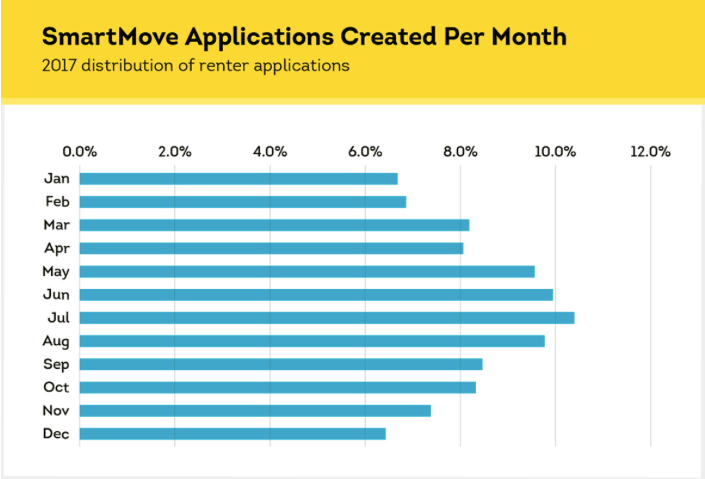
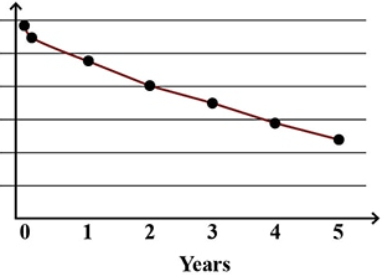







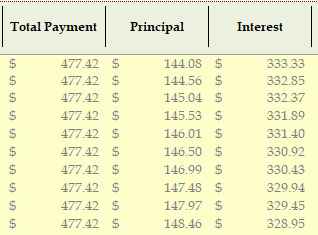
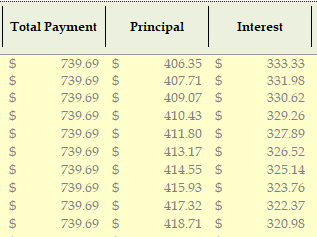

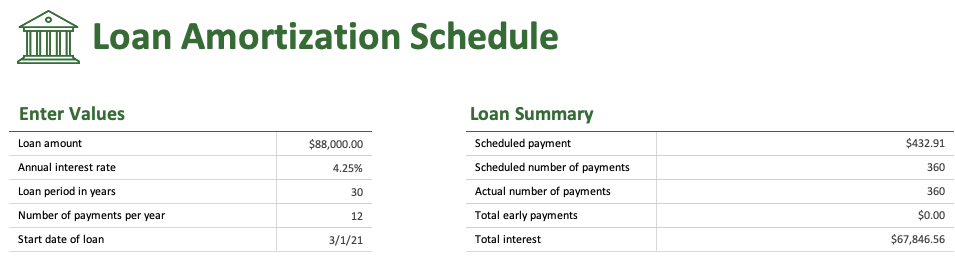

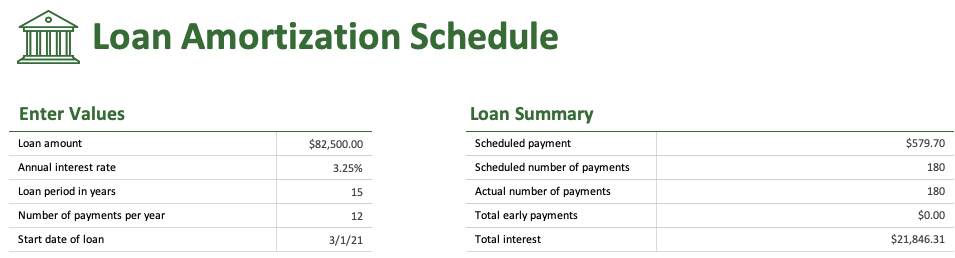

 One Dollar Allowance